Artwork
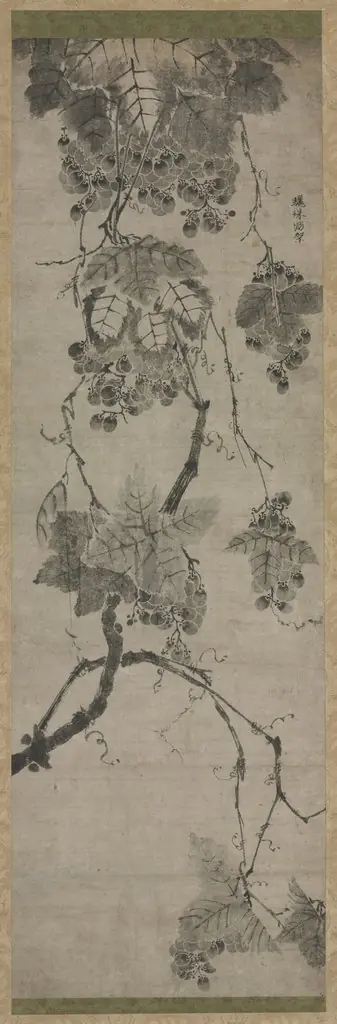
松村呉春筆 葡萄図|Grapevine
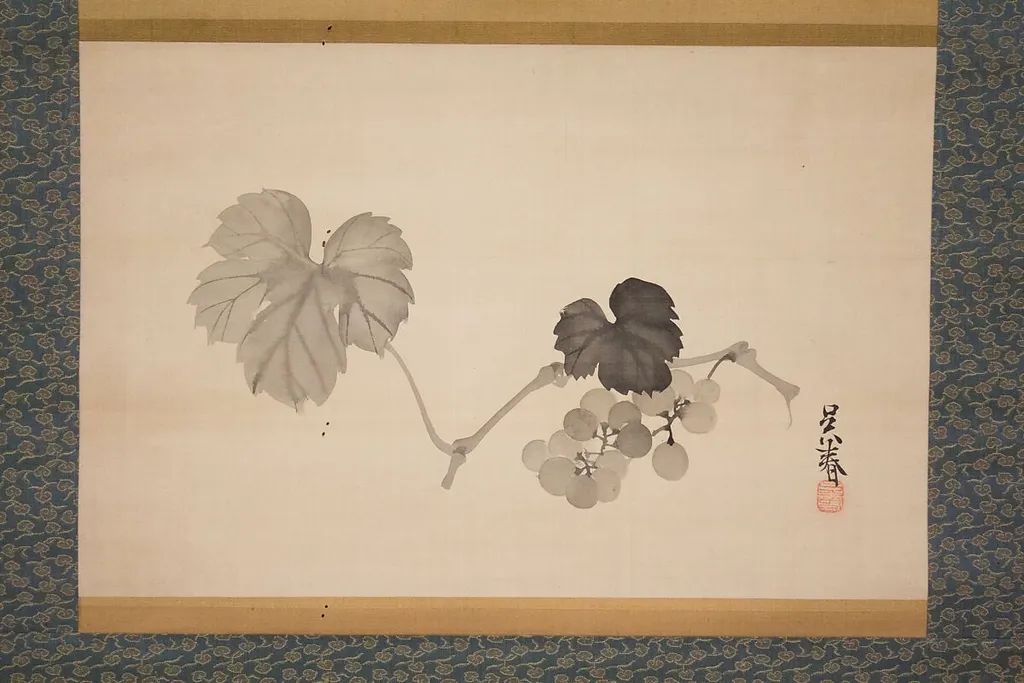
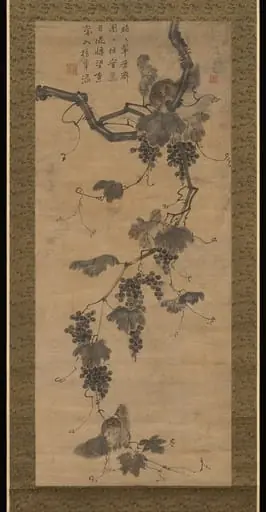
松村呉春筆 葡萄図|Grapevine is an ink painting by the Romanticist artist Matsumura Goshun. It dates from 1790 and is held in the collection of the Metropolitan Museum of Art.
About this work
Overview
Created in 1790, this hanging scroll by Matsumura Goshun presents a solitary grapevine branch rendered in ink on silk. The composition is minimal, focusing on the twisting stem, dark leaves, and clusters of grapes that appear as dense drops against a muted gray background. The work exemplifies the artist’s interest in quiet, contemplative still‑life subjects.
Subject & Meaning
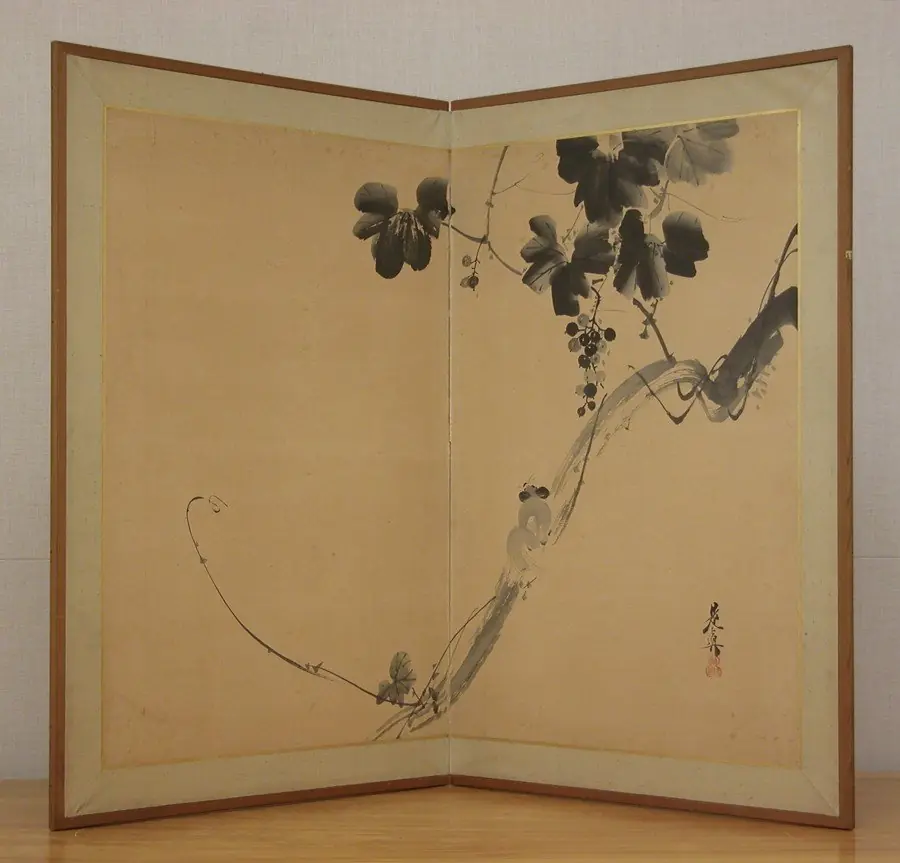
The painting centers on a single grapevine, a motif that in Japanese visual culture often symbolizes abundance and the transitory nature of fruitfulness. By isolating the vine from any surrounding objects, Goshun invites viewers to consider the natural form itself, emphasizing the delicate balance between growth and decay inherent in the grape’s ripening.
Technique & Style
Executed with ink on silk, the piece employs loose, wet brushstrokes that allow the pigment to bleed into the fabric, giving the leaves a sense of vitality. The contrast between the deep, almost black ink of the foliage and the softer gray of the silk creates a subtle depth, while the spontaneous handling of the brush conveys a restrained, almost meditative atmosphere.
History & Provenance
Goshun painted this work shortly after departing from his teacher’s studio, marking a period of artistic independence. The scroll’s provenance traces back to private collections in the late Edo period, later entering museum holdings where it has been displayed as an example of Goshun’s early solo practice.
Context
During the late 18th century, Japanese art saw a shift from the bold, decorative prints of the ukiyo-e tradition toward more understated ink works. Goshun’s grapevine reflects this transition, aligning with the literati aesthetic that favored simplicity, personal expression, and the study of natural subjects as a means of scholarly contemplation.
Artist & collection