Artwork
Squirrel on Grapevine
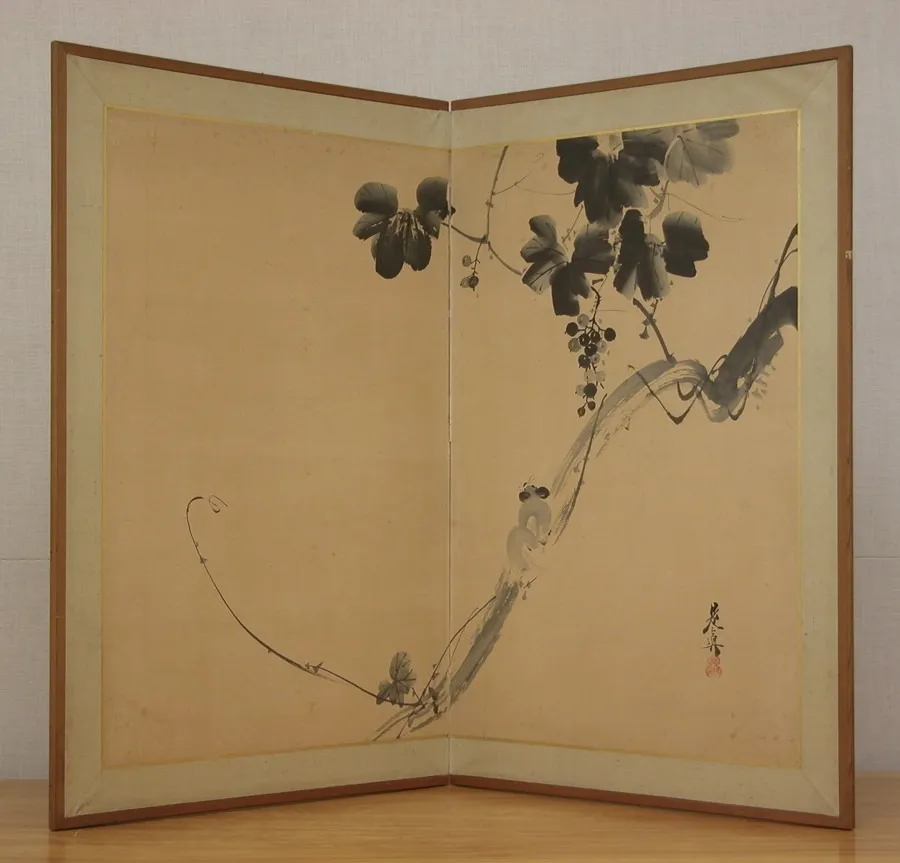
Squirrel on Grapevine is an unspecified painting by the Ukiyo-e artist Shibata Zeshin. It dates from 1849 and is held in the collection of the Metropolitan Museum of Art.
About this work
Overview
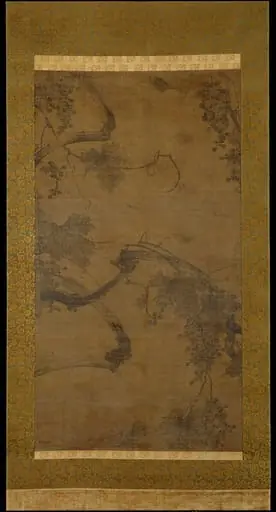
Created in 1849 by the Japanese painter Shibata Zeshin, “Squirrel on Grapevine” is a two‑panel folding screen now in the collection of the Metropolitan Museum of Art. The work presents a modest composition of a small squirrel clinging to a twisting vine, set against a largely unadorned background that emphasizes the dark silhouettes of grapes, leaves and the animal.
Subject & Meaning
The scene captures a moment of quiet observation in nature: a squirrel ascends a curved grapevine, its tiny form rendered with clarity against the stark backdrop. While no explicit narrative is provided, the juxtaposition of the animal with cultivated vines may allude to themes of harmony between wildlife and cultivated garden spaces, a common motif in Edo‑period art.
Technique & Style
Zeshin employs brisk, expressive brushwork for the foliage and fruit, allowing the grapes and leaves to appear animated and spontaneous. The squirrel is delineated with precise yet economical strokes, its posture conveyed through a single, confident line. The composition’s minimal background and the flowing vine that spans both panels create a sense of continuity across the screen’s surface.
History & Provenance
Painted during the late Tokugawa period, the screen entered the Metropolitan Museum of Art’s holdings in the 20th century, though the exact acquisition details are not publicly recorded. Its presence in a major Western institution reflects the growing interest in Japanese decorative arts that followed the opening of Japan to international trade and the subsequent influx of Edo‑period works into museum collections.
Artist & collection