Artwork
Untitled
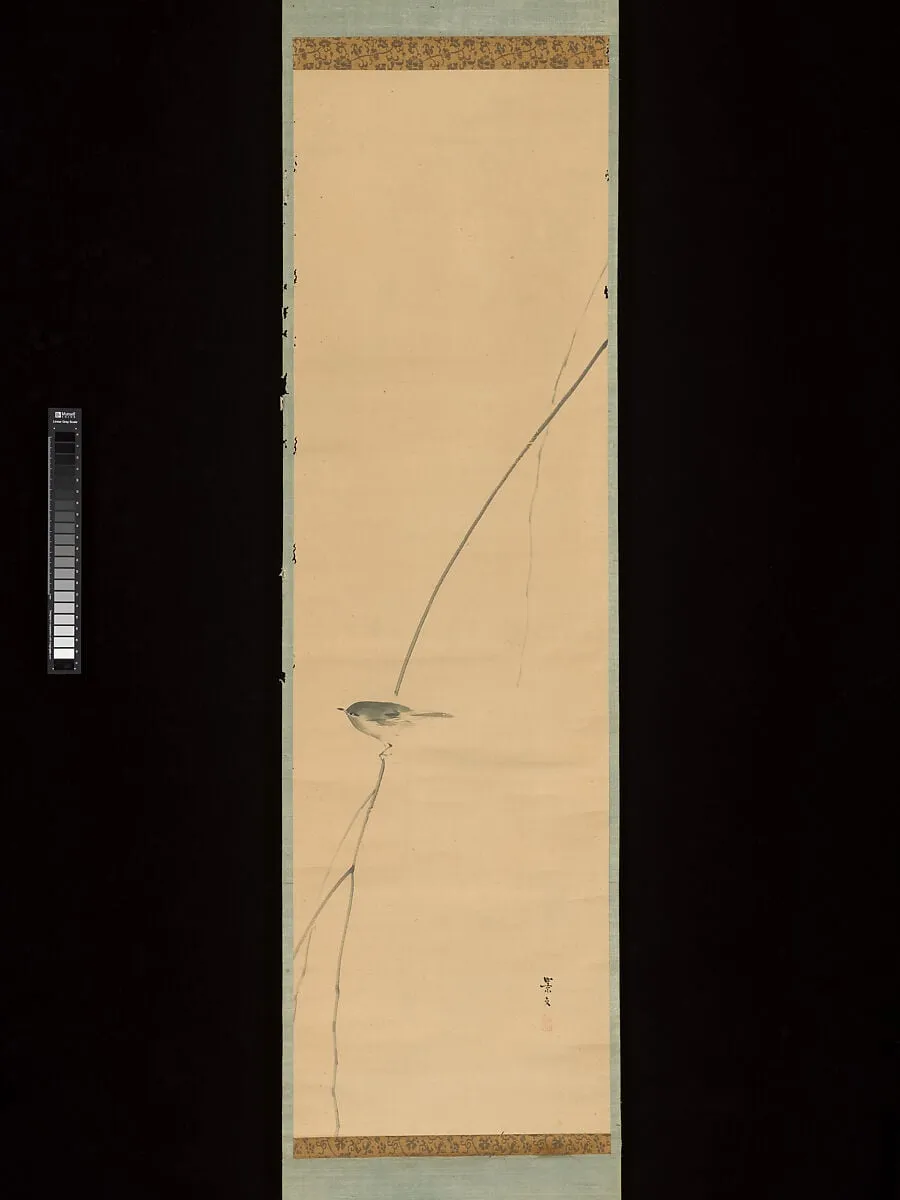
Untitled is an ink painting by the Romanticist artist Matsumura Keibun|Matsumura Keibun. It dates from 1811 and is held in the collection of the Metropolitan Museum of Art.
About this work
Overview
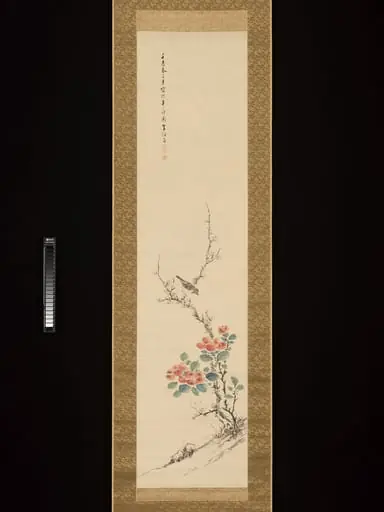
Created in 1811, this hanging scroll by Matsumura Keibun depicts a small bird perched on a bare branch, its wings partially extended as if it has just alighted.
Created in 1811, this hanging scroll by Matsumura Keibun depicts a small bird perched on a bare branch, its wings partially extended as if it has just alighted. Soft pink blossoms drift through the composition, rendered in watery ink and pale color against a minimal background. Executed in ink and color on paper, the work exemplifies Keibun's synthesis of traditional Chinese literati aesthetics with a distinctively Japanese sensitivity to seasonal immediacy. Produced during a period when Kyoto artists were revisiting classical Chinese models, the painting reflects Keibun's departure from rigid formalism in favor of looser, more expressive brushwork. The composition balances the stillness of the branch with the implied motion of the bird and falling petals, capturing a fleeting moment of natural tranquility. This piece underscores Keibun's role in the Maruyama-Shijo school, where observation of nature was combined with poetic suggestion. The work stands as a representative example of early 19th-century Japanese bird-and-flower painting, demonstrating how Keibun adapted older stylistic conventions to convey a fresh, intimate vision of the natural world.
Subject & Meaning
The focal point is a small bird with wings partially spread, as if it has just alighted. Adjacent to the bird, faint pink blossoms drift in the air, suggesting a fleeting moment in a quiet natural setting. The scene conveys a sense of transience and calm contemplation.
Technique & Style
Keibun employs fluid ink washes combined with light washes of color, allowing the forms to emerge with a soft, watery quality. Brushwork is intentionally loose; the branch curves organically rather than adhering to strict linearity, reflecting a shift away from rigid Chinese models toward a more spontaneous Japanese aesthetic.
History & Provenance
The work originates from Keibun’s period in Kyoto, a time when Japanese painters were re‑examining earlier Chinese artistic conventions. While specific ownership records are scarce, the scroll remains attributed to Keibun and is representative of his early 19th‑century output.
Artist & collection