Artwork
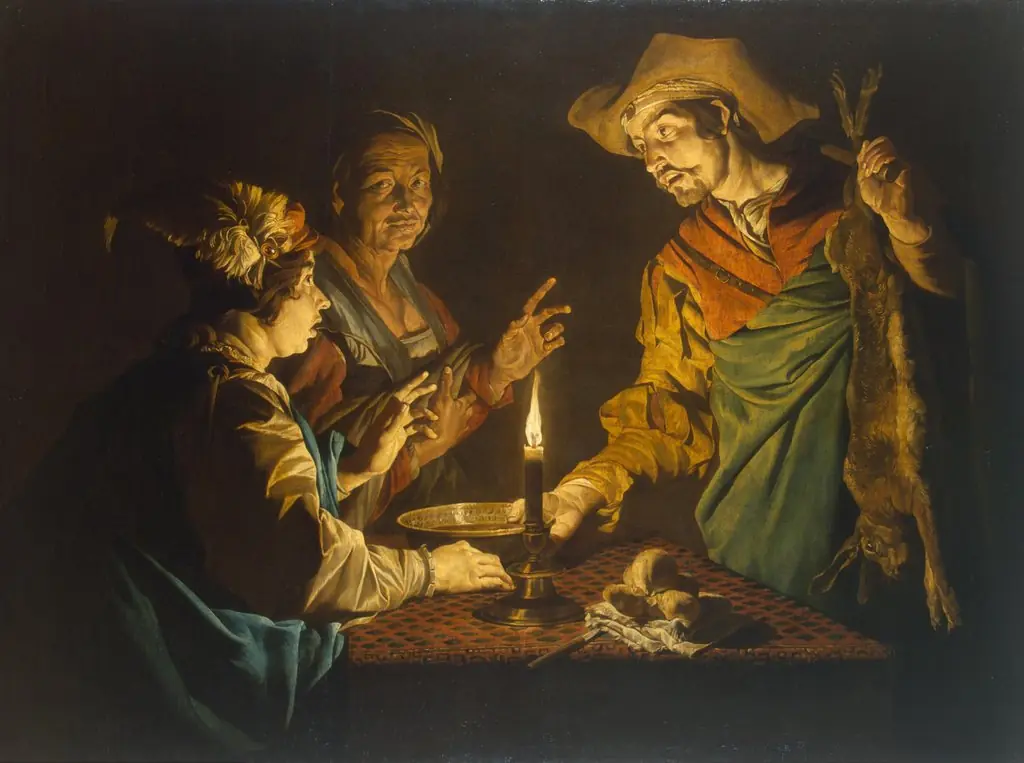
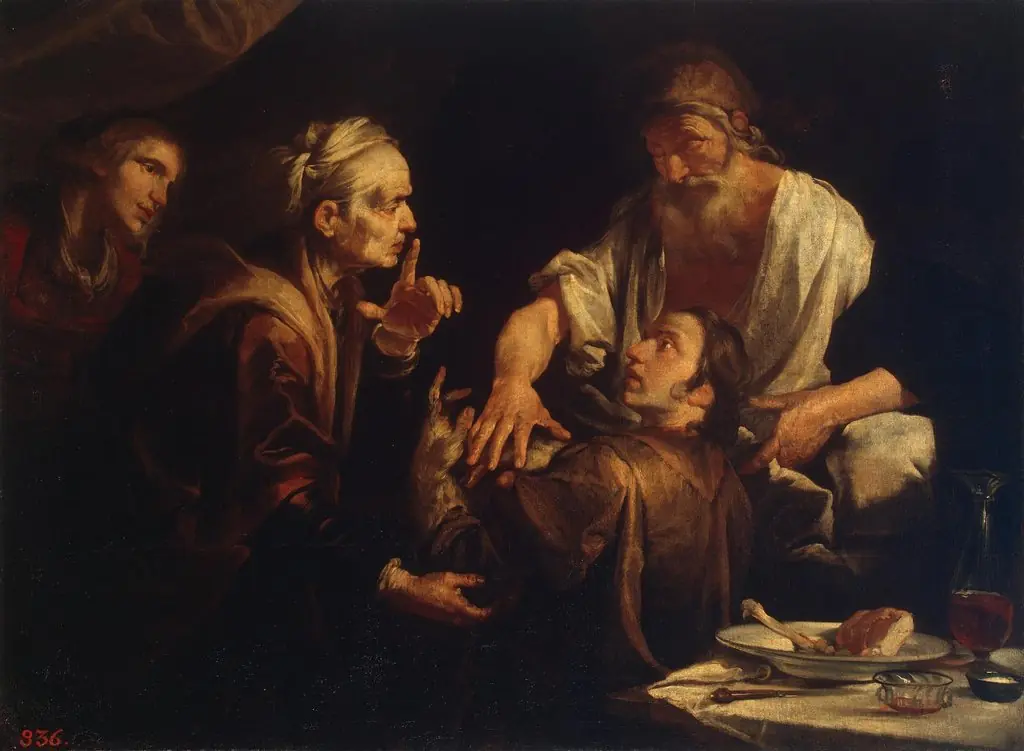
Esau, returning hungry from the hunt, sells his first birthright to Jacob for a pottage of lentils(Genesis 25:31)
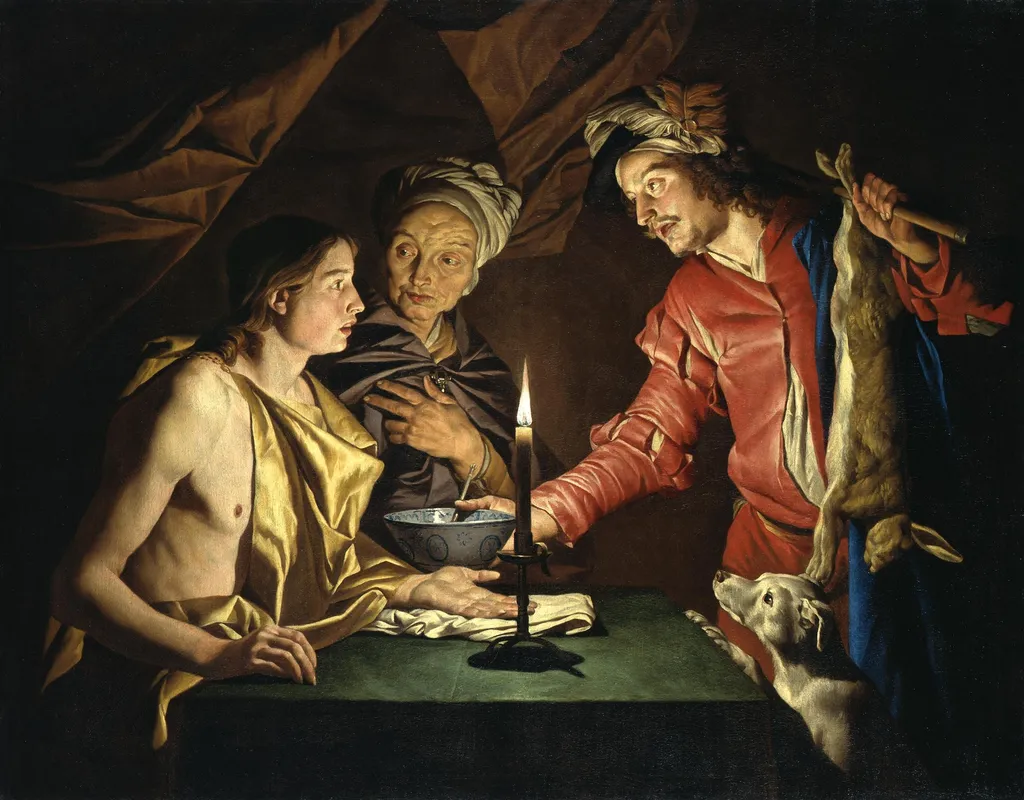
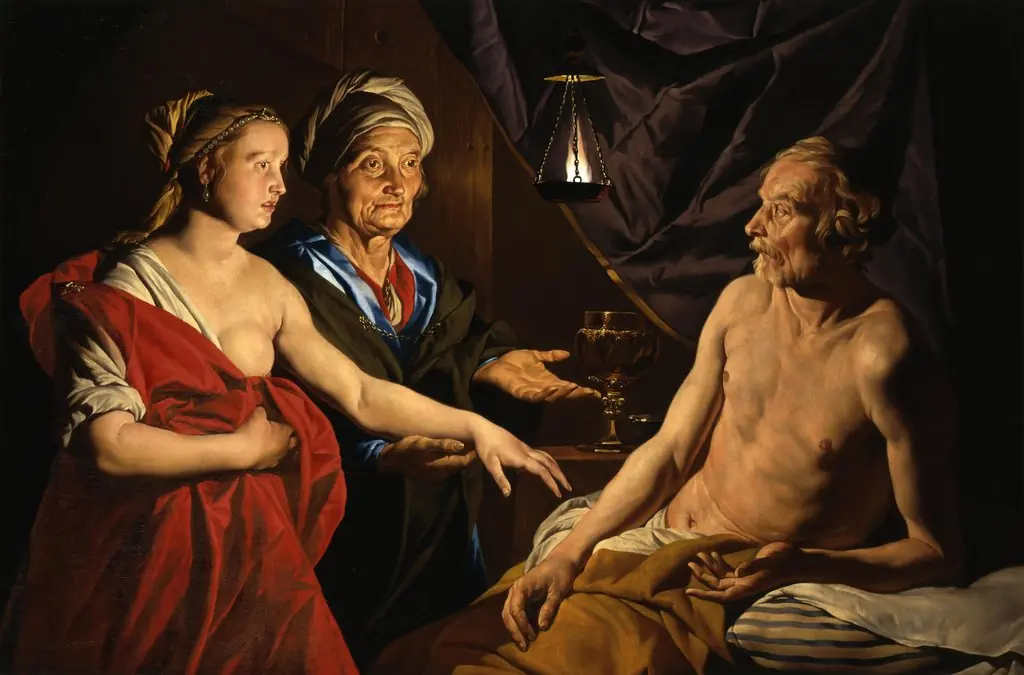
Esau, returning hungry from the hunt, sells his first birthright to Jacob for a pottage of lentils(Genesis 25:31) is a paint painting by the Early Baroque Italian artist Matthias Stom. It dates from 1643 and is held in the collection of the Gemäldegalerie Berlin.
About this work
Overview
Stom, active in Italy during the early Baroque era, employed the dramatic lighting and emotional intensity characteristic of Caravaggio’s followers.
Painted in 1643 by Matthias Stom, this work illustrates a pivotal moment from Genesis in which Esau relinquishes his birthright to his brother Jacob in exchange for a meal of lentils. Stom, active in Italy during the early Baroque era, employed the dramatic lighting and emotional intensity characteristic of Caravaggio’s followers. The scene is rendered with quiet gravity, avoiding theatricality in favor of psychological immediacy. The painting resides in the Gemäldegalerie, Berlin, as part of its collection of 17th-century religious narratives.
Subject & Meaning
The painting captures Esau’s moment of weakness: exhausted from the hunt, he trades his ancestral inheritance for immediate sustenance. Jacob, seated calmly, offers the lentil stew with quiet resolve. The act symbolizes the consequences of impulsive desire versus long-term spiritual responsibility. The absence of overt conflict underscores the moral weight of the exchange, framing it not as a betrayal but as a quiet, irreversible decision with generational implications.
Technique & Style
Stom uses chiaroscuro to isolate the figures against a shadowed interior, directing attention to the bowl of food and the men’s gestures. The candle’s glow illuminates textures—the roughness of Esau’s tunic, the steam rising from the lentils, the dog’s fur—grounding the sacred moment in tangible reality. Brushwork is controlled yet expressive, avoiding embellishment. The composition is tightly framed, enhancing the intimacy and tension of the transaction without distraction.
History & Provenance
Created during Stom’s Italian period, the painting entered the Berlin collection in the 19th century, likely through acquisitions of Northern Baroque works. Its attribution to Stom has been consistently supported by stylistic analysis, particularly in its use of light and figure modeling, which align with his known works from the 1630s–1640s. No significant alterations or restorations are recorded, preserving its original tonal balance and emotional clarity.
Context
In mid-17th-century Europe, biblical scenes remained central to religious and moral instruction in art. Stom’s choice to depict this lesser-known episode reflects a broader interest in psychological depth over spectacle. His work diverged from the grandeur of Rubens or the violent intensity of Ribera, instead favoring subdued, contemplative moments that invited personal reflection on human frailty and divine covenant.
Legacy
Though not widely exhibited outside specialist circles, the painting exemplifies how Caravaggisti adapted narrative restraint to convey theological gravity. Stom’s focus on quiet moral turning points influenced later genre painters interested in interiority. Its preservation in Berlin ensures continued study of how early Baroque artists used light and gesture to transform scriptural moments into intimate human experiences.
Own this work as a print
Artist & collection
Artist
Matthias Stom or Matthias Stomer (c. 1600 – after 1652) was a Dutch, or possibly Flemish, painter who is only known for the works he produced during his residence in Italy. He was influenced by the work of non-Italian…