Artwork
Isaac Blessing Jacob
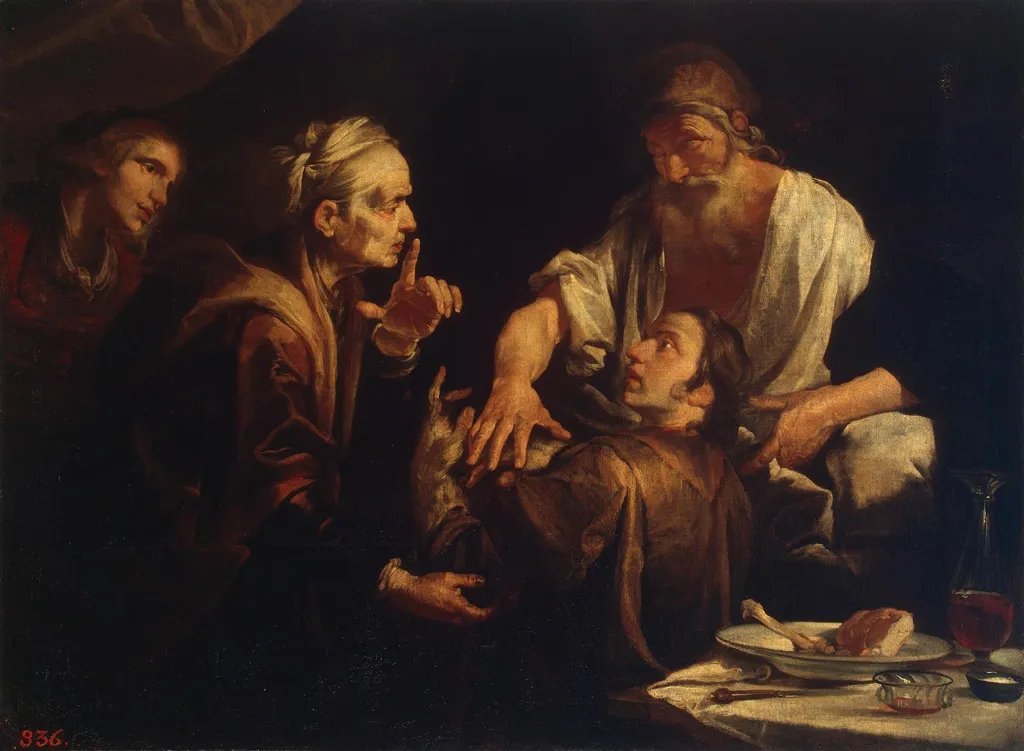
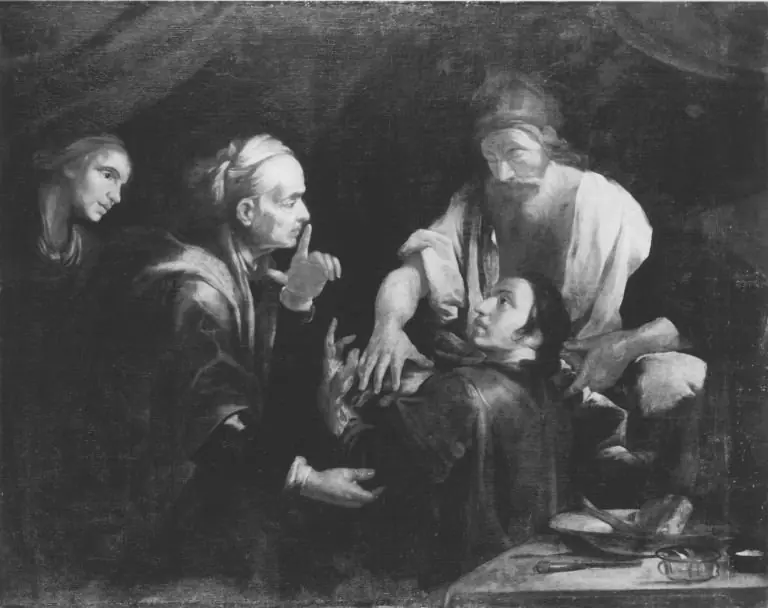
Isaac Blessing Jacob is an oil painting by the Early Baroque Italian artist Gioacchino Assereto. It dates from 1640 and is held in the collection of the Hermitage Museum.
About this work
Overview
Painted in 1640 by Gioacchino Assereto, *Isaac Blessing Jacob* is an oil-on-canvas work from the early Baroque period.
Painted in 1640 by Gioacchino Assereto, *Isaac Blessing Jacob* is an oil-on-canvas work from the early Baroque period. Assereto, a prominent Genoese artist, rendered this biblical narrative with quiet intensity. The painting is part of the State Hermitage Museum’s collection, where it stands as a representative example of 17th-century Ligurian religious painting, distinguished by its restrained drama and focused composition.
Subject & Meaning
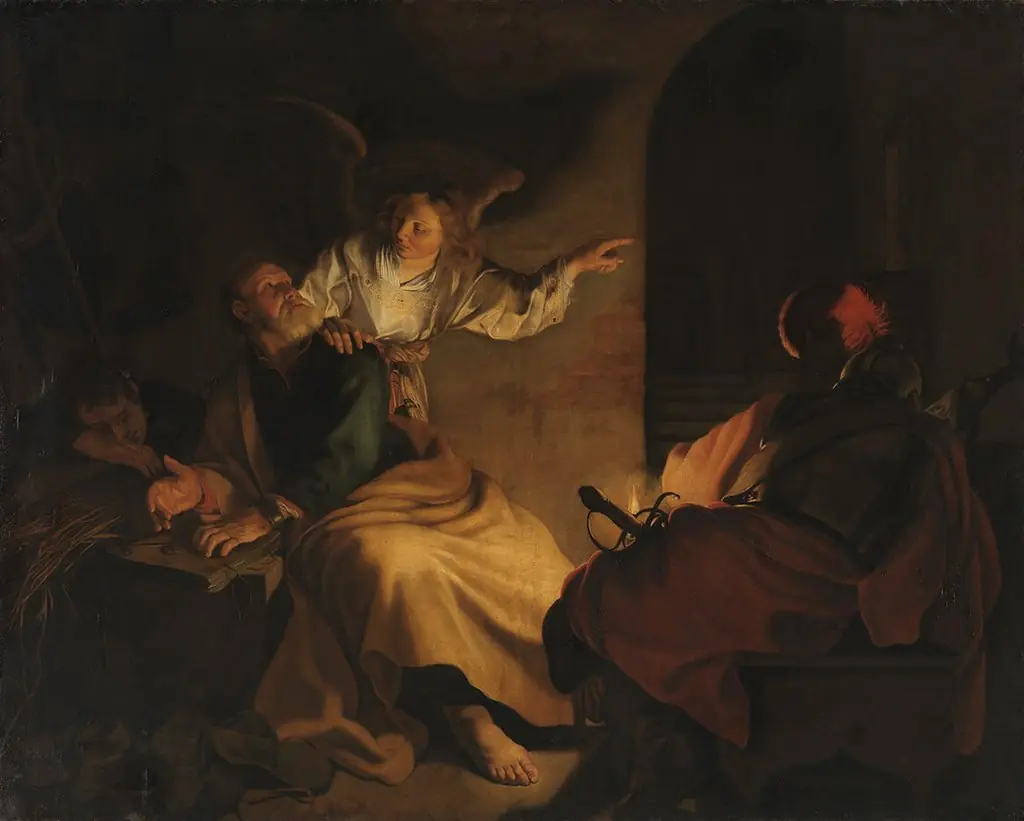
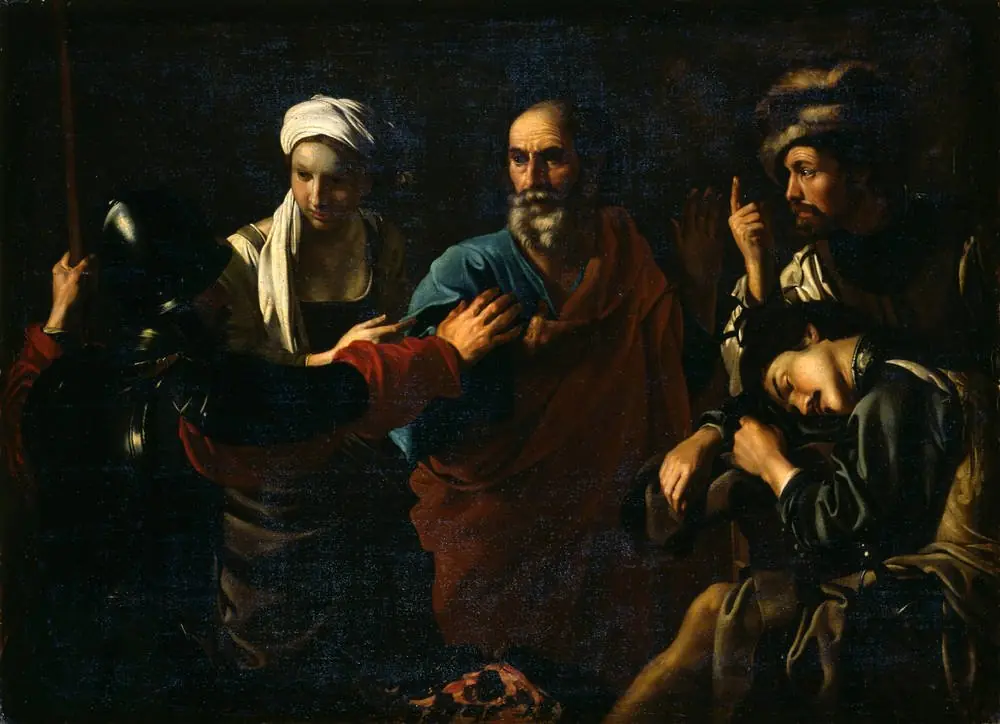
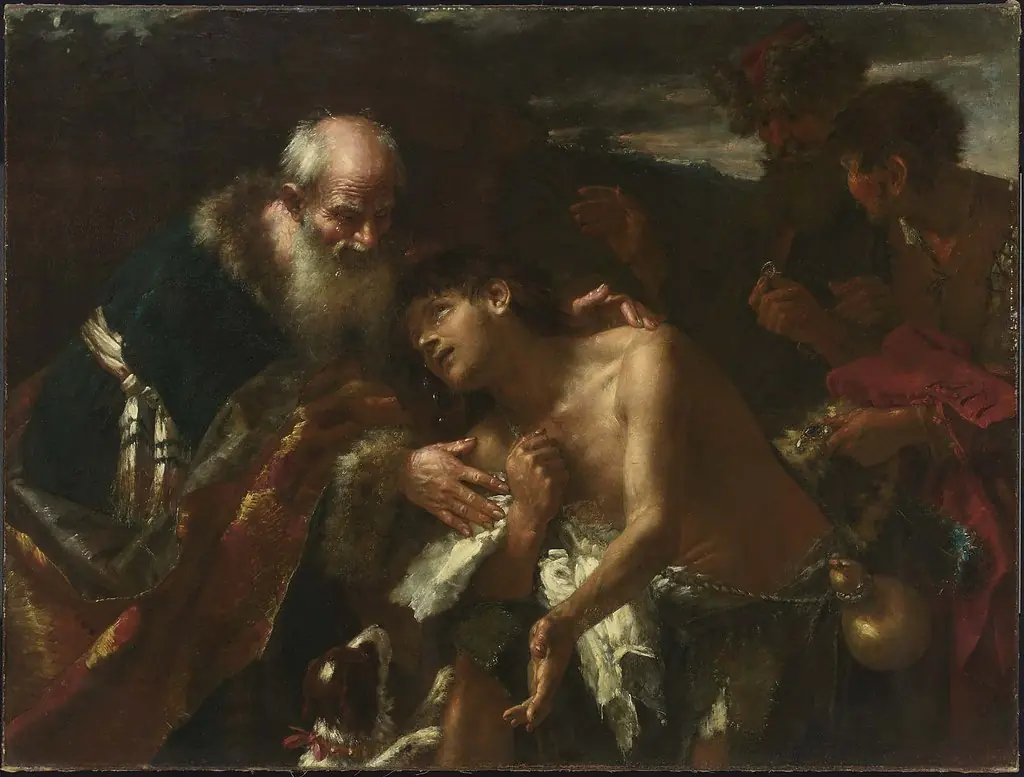
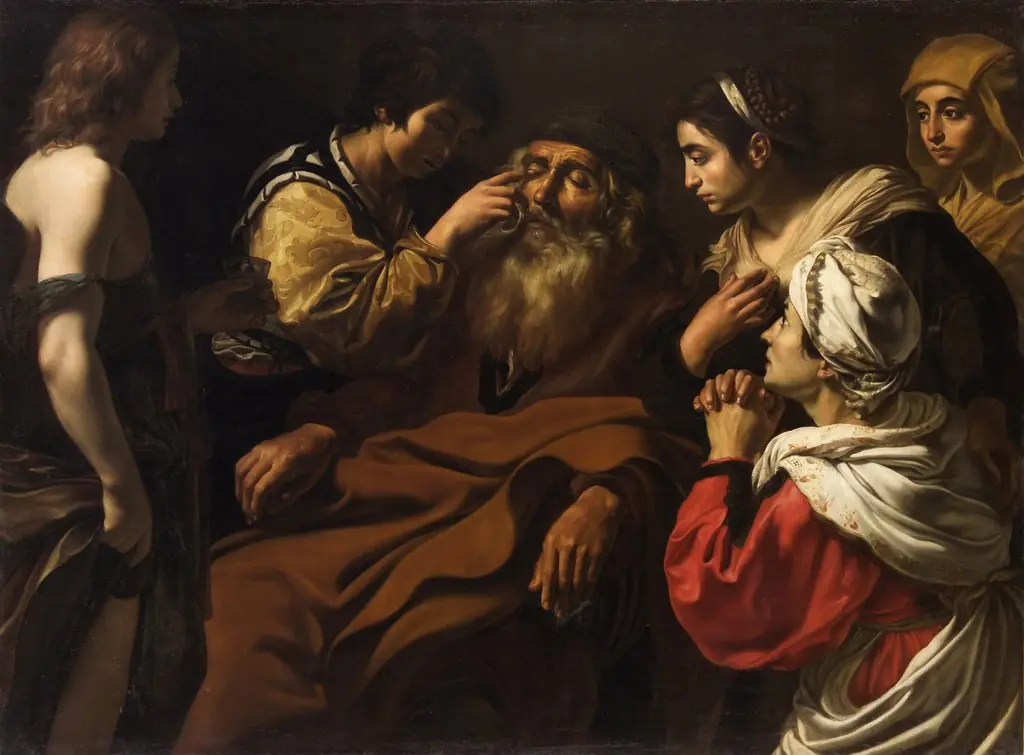
The scene illustrates Genesis 27, in which the blind patriarch Isaac bestows a sacred blessing upon his younger son Jacob, deceived into believing he is his elder son Esau. The moment captures tension between divine will and human deception. Isaac’s upward gesture suggests divine authority, while Jacob kneels in submission. The watching figure, likely Esau, observes in silence, heightening the moral ambiguity of the moment.
Technique & Style
Assereto employs chiaroscuro to model the figures with sculptural solidity, directing light toward the faces and hands to emphasize emotional weight. The shadows recede deeply, isolating the trio in a dim interior. Skin tones are rendered with warm, subtle gradations, while the table’s modest objects—meat, glass, bowl—anchor the scene in tangible reality. Brushwork is controlled, avoiding theatricality in favor of psychological nuance.
History & Provenance
Commissioned during Assereto’s mature period, the painting entered the Hermitage collection in the 19th century, likely through imperial acquisitions of Italian art. Its presence in St. Petersburg reflects the Russian court’s interest in Northern Italian Baroque works. No significant alterations or reworkings are documented, and the painting has remained in stable condition since its acquisition.
Context
In mid-17th-century Genoa, religious subjects were favored by patrons seeking moral clarity amid political instability. Assereto’s style, influenced by Caravaggio and his followers, emphasized naturalism and emotional restraint over grandeur. This painting aligns with a regional trend toward intimate, psychologically grounded biblical scenes, distinct from the more flamboyant Roman Baroque.
Legacy
Though not widely reproduced, *Isaac Blessing Jacob* remains a key example of Genoese Baroque narrative painting. Its quiet power and technical precision influenced later Ligurian artists who favored subdued drama. Today, it is studied for its understated handling of biblical tension and its contribution to the evolution of religious imagery in early modern Italy.
Own this work as a print
Artist & collection
Artist
Gioacchino Assereto (1600 – 28 June 1649) was an Italian painter of the early Baroque period and one of the most prominent history painters active in Genoa in the first half of the 17th century.