Artwork
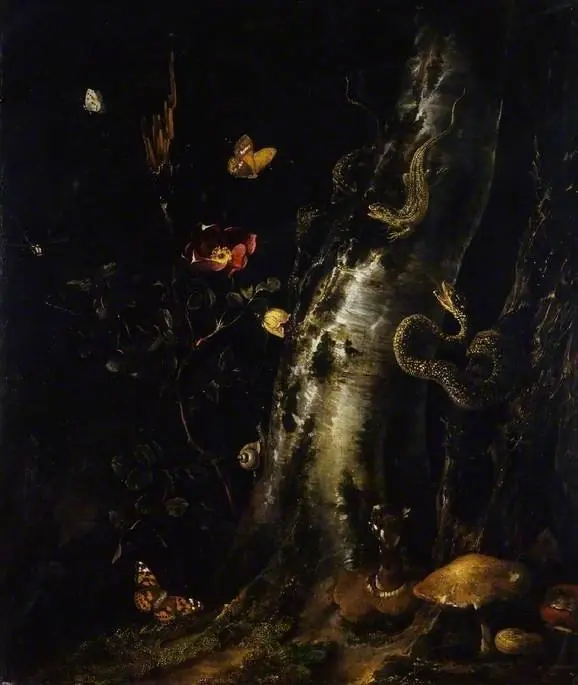
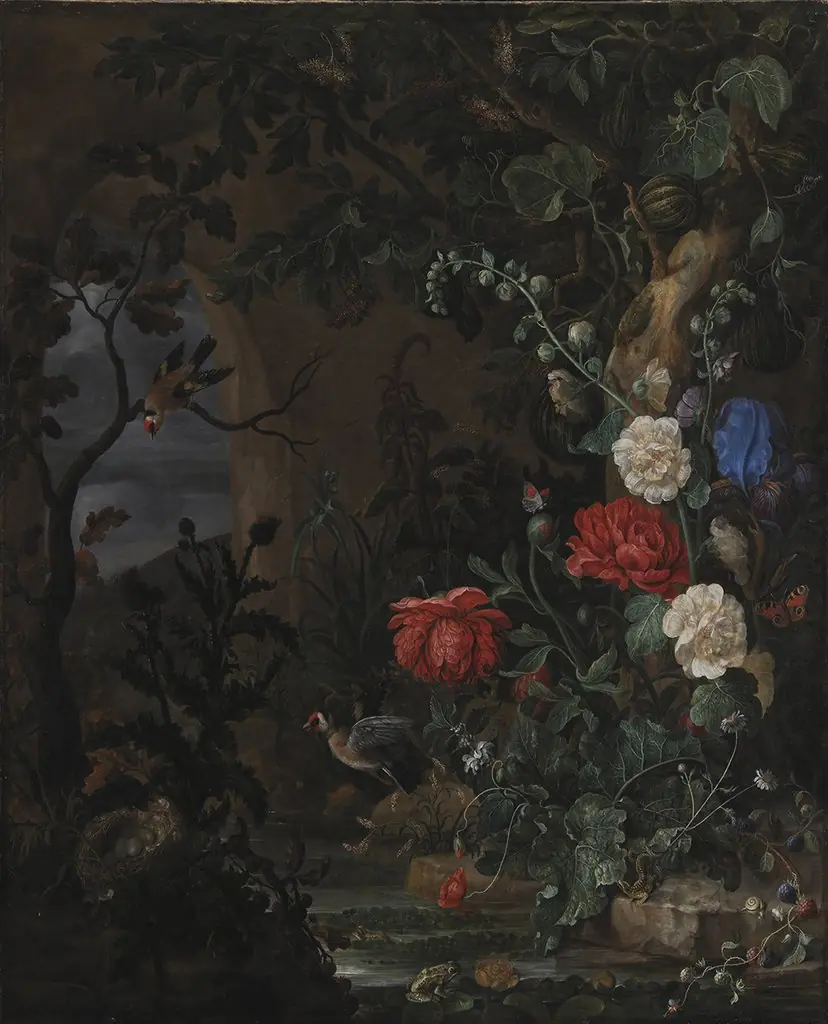
Flowers, a Hedgehog and a Frog
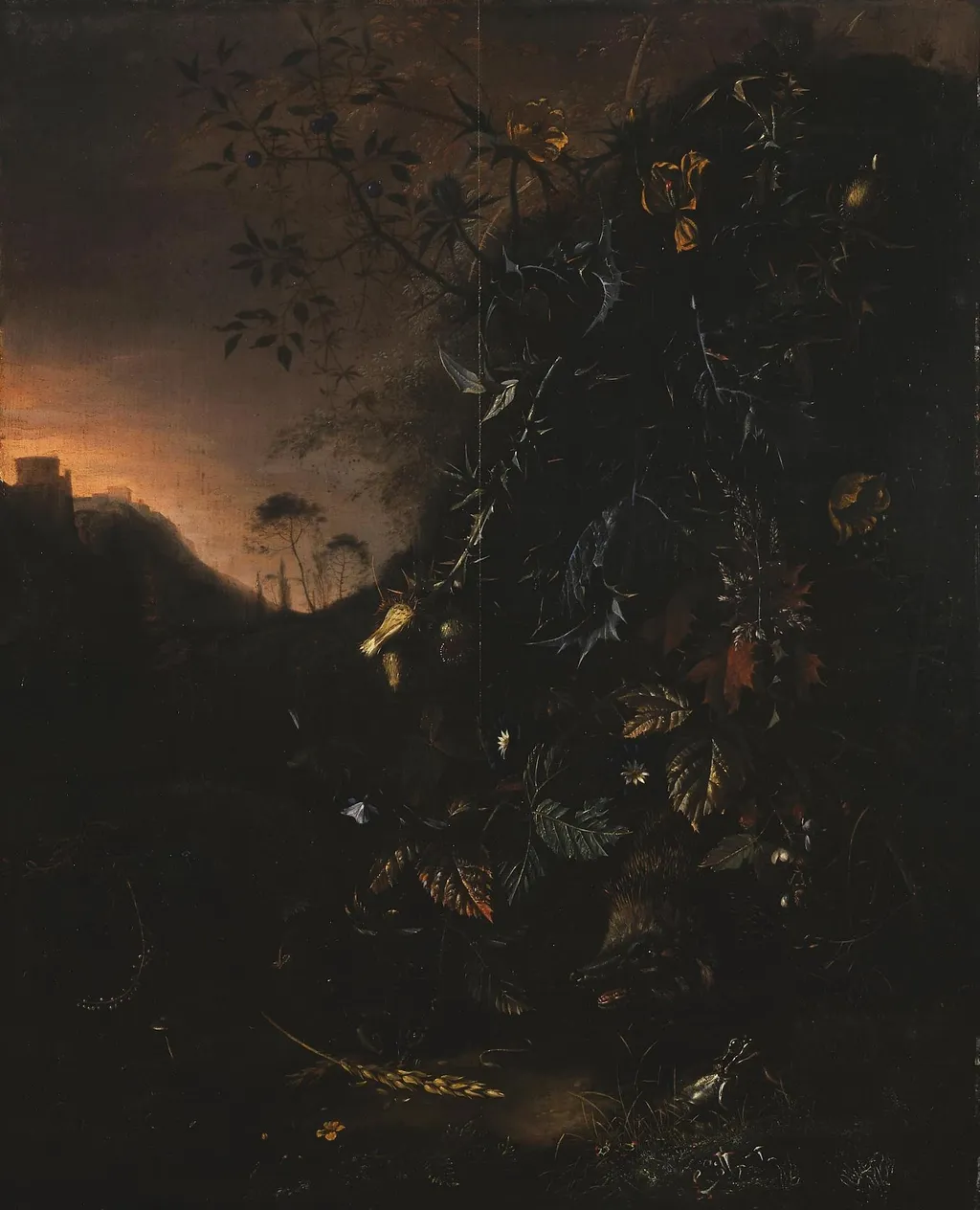
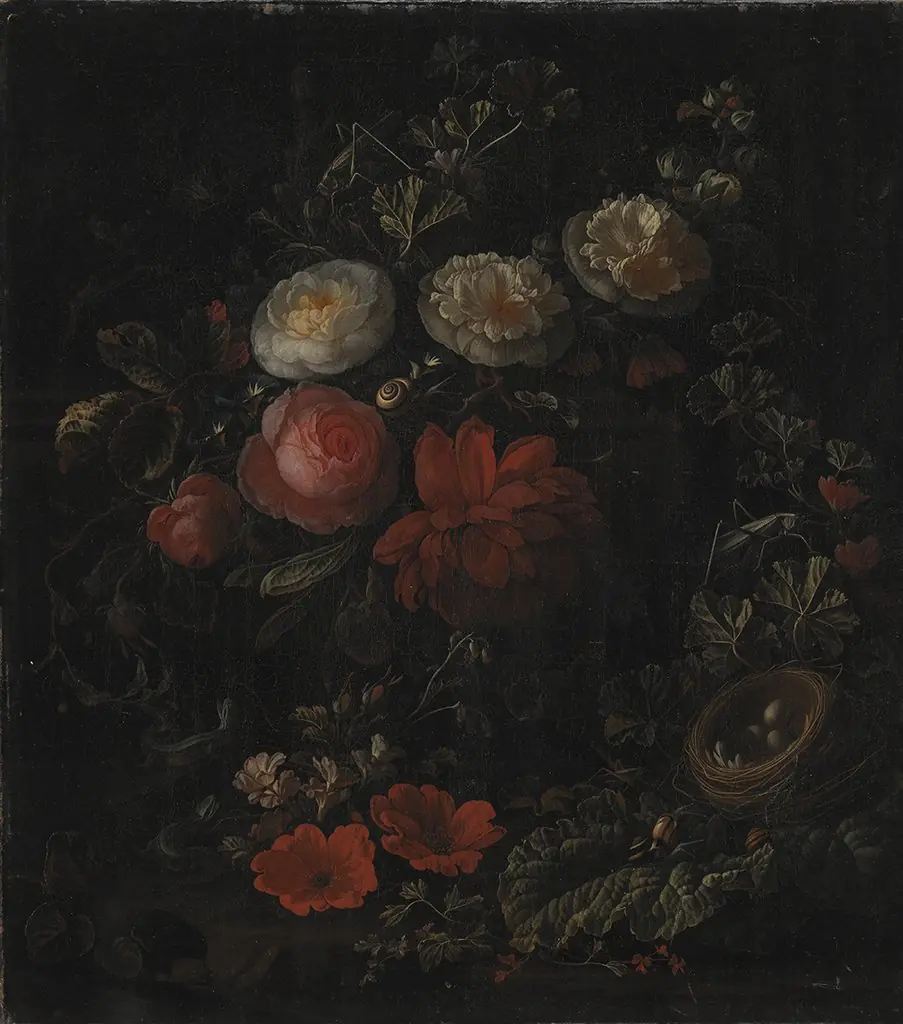
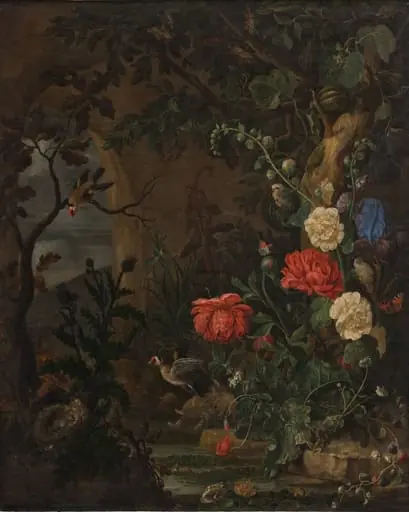
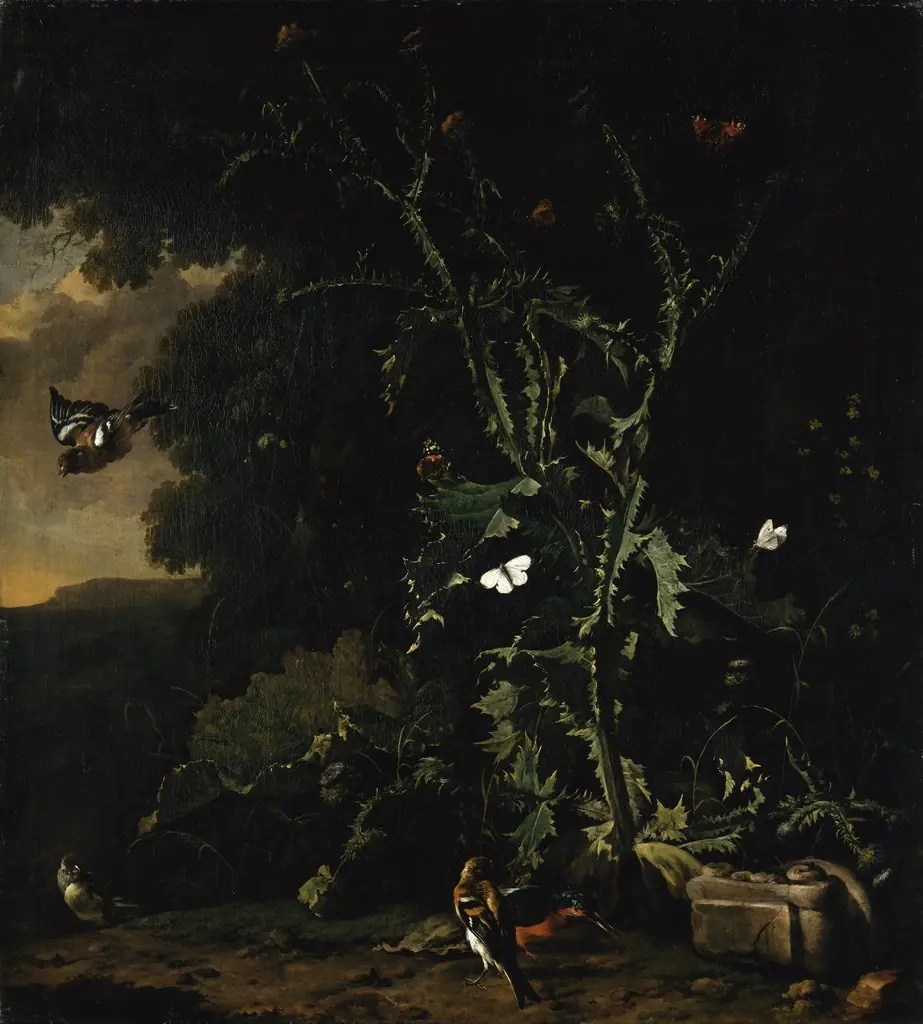
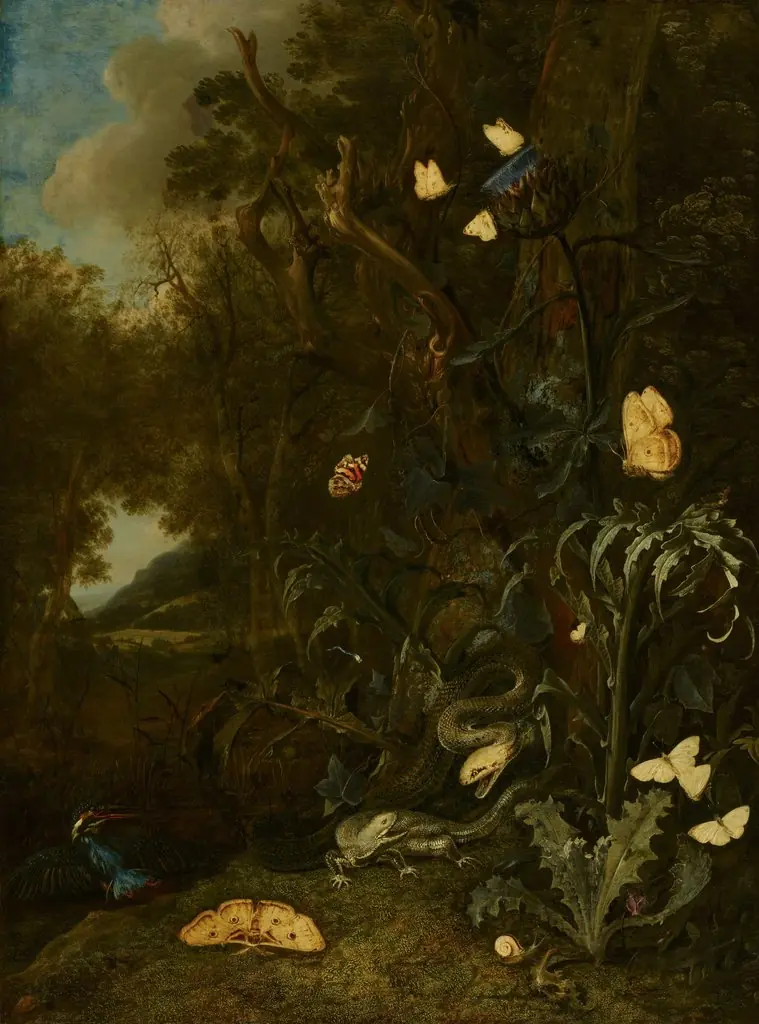
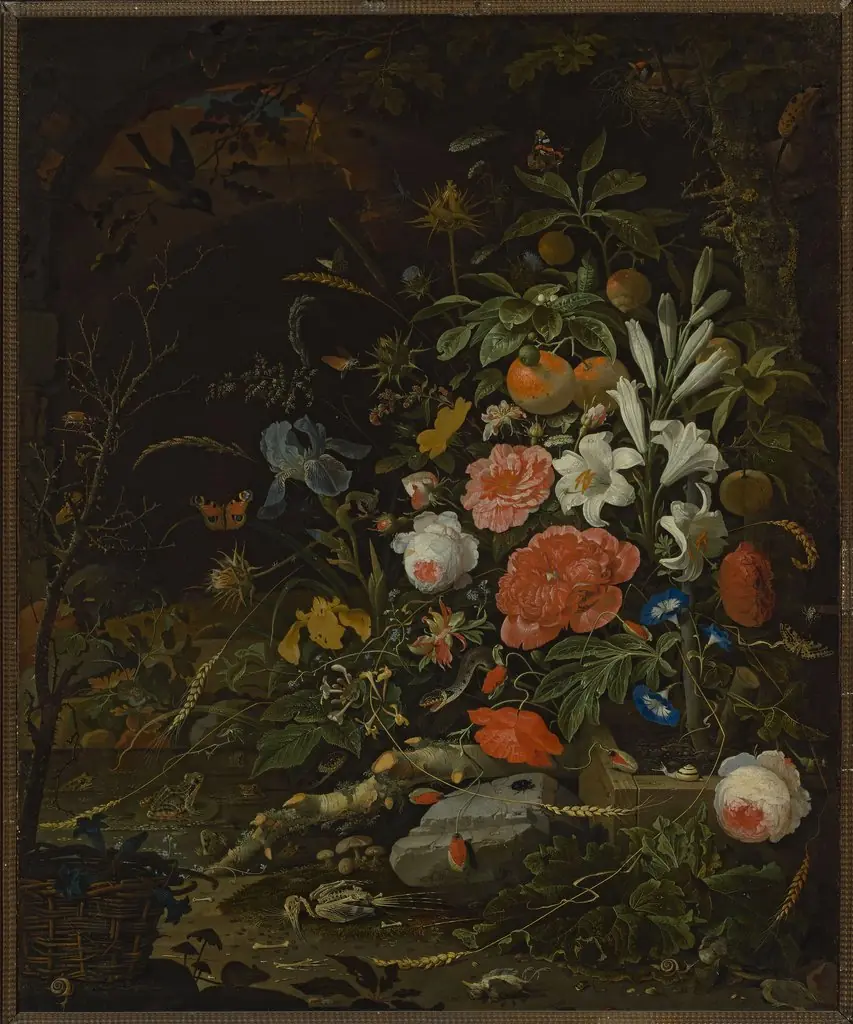
Flowers, a Hedgehog and a Frog is an oil painting by the Dutch Golden Age artist Matthias Withoos. It dates from 1660 and is held in the collection of the Hermitage Museum.
About this work
Overview
Painted in 1660 by Matthias Withoos, this oil-on-canvas work belongs to the Dutch Golden Age tradition of still life painting.
Painted in 1660 by Matthias Withoos, this oil-on-canvas work belongs to the Dutch Golden Age tradition of still life painting. It presents a quiet ensemble of cultivated flowers, a hedgehog, and a frog, arranged with deliberate stillness. The composition avoids theatricality, favoring close observation of natural forms against a dark, unobtrusive background that enhances the clarity of its subjects.
Subject & Meaning
The painting juxtaposes cultivated blooms with wild creatures—a hedgehog resting on stone and a frog perched on a leaf. These elements suggest a quiet convergence of the domestic and the natural world. The animals appear not as symbols but as observers, their presence inviting contemplation of life’s subtle rhythms rather than conveying allegorical messages common in other still lifes of the era.
Technique & Style
Withoos employed fine brushwork to render the delicate textures of petals, spines, and amphibian skin. The oil paint is applied with precision, capturing subtle variations in light and surface. The dark background isolates the foreground, heightening the tactile realism of each element. Color is restrained yet nuanced, emphasizing botanical accuracy and the quiet interplay of form and shadow.
History & Provenance
The painting has been part of the State Hermitage Museum’s collection since at least the 19th century, though its earlier ownership remains undocumented. It reflects Withoos’s known practice of integrating small animals into floral arrangements, a trait shared with other Dutch still life painters of the mid-17th century. Its survival in good condition speaks to its consistent preservation within institutional collections.
Context
Created during a period when Dutch artists increasingly turned to nature as a subject of empirical study, the painting aligns with broader cultural interests in botany and zoology. While not a scientific illustration, it mirrors the era’s fascination with cataloging and observing the natural world, blending artistic skill with a quiet reverence for organic detail.
Legacy
Withoos’s work, including this painting, contributes to the understated branch of Dutch still life that prioritizes observation over symbolism. Though less celebrated than contemporaries like Jan van Huysum, his integration of fauna into floral compositions influenced later naturalistic painting. The piece endures as a quiet testament to the artistic value placed on minute, unadorned natural phenomena.
Own this work as a print
Artist & collection
Artist
Matthias Withoos (1627–1703), also known as Calzetta Bianca and Calzetti, was a Dutch painter of still lifes and city scenes, best known for the details of insects, reptiles and undergrowth in the foreground of his pictures.