Artwork
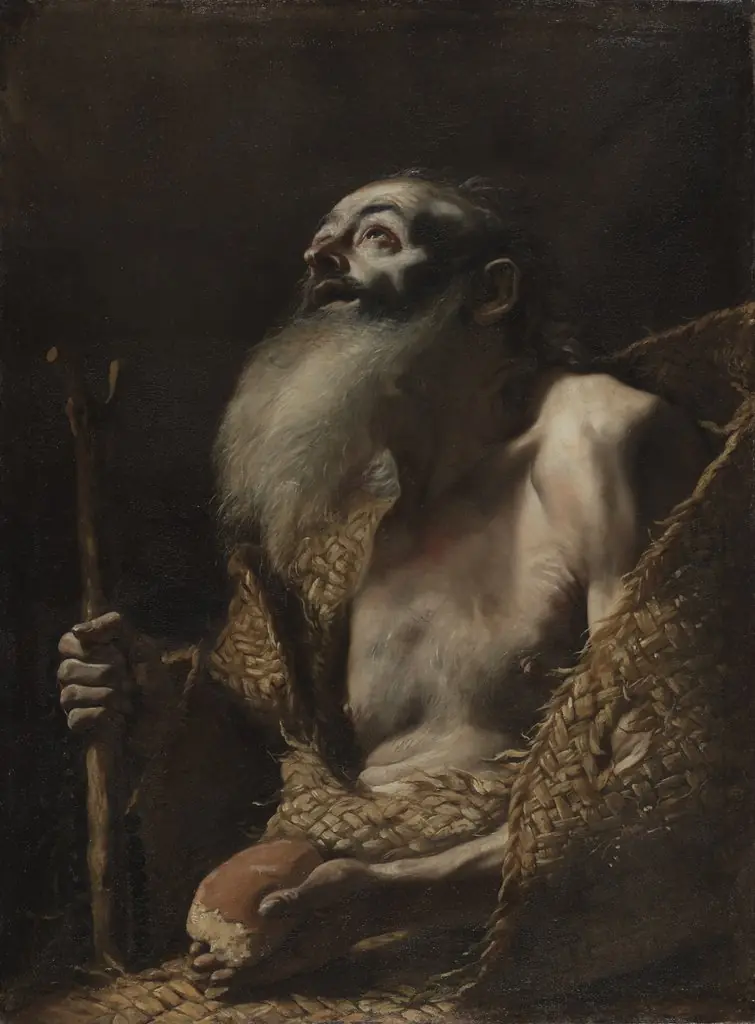
Saint Paul the Hermit
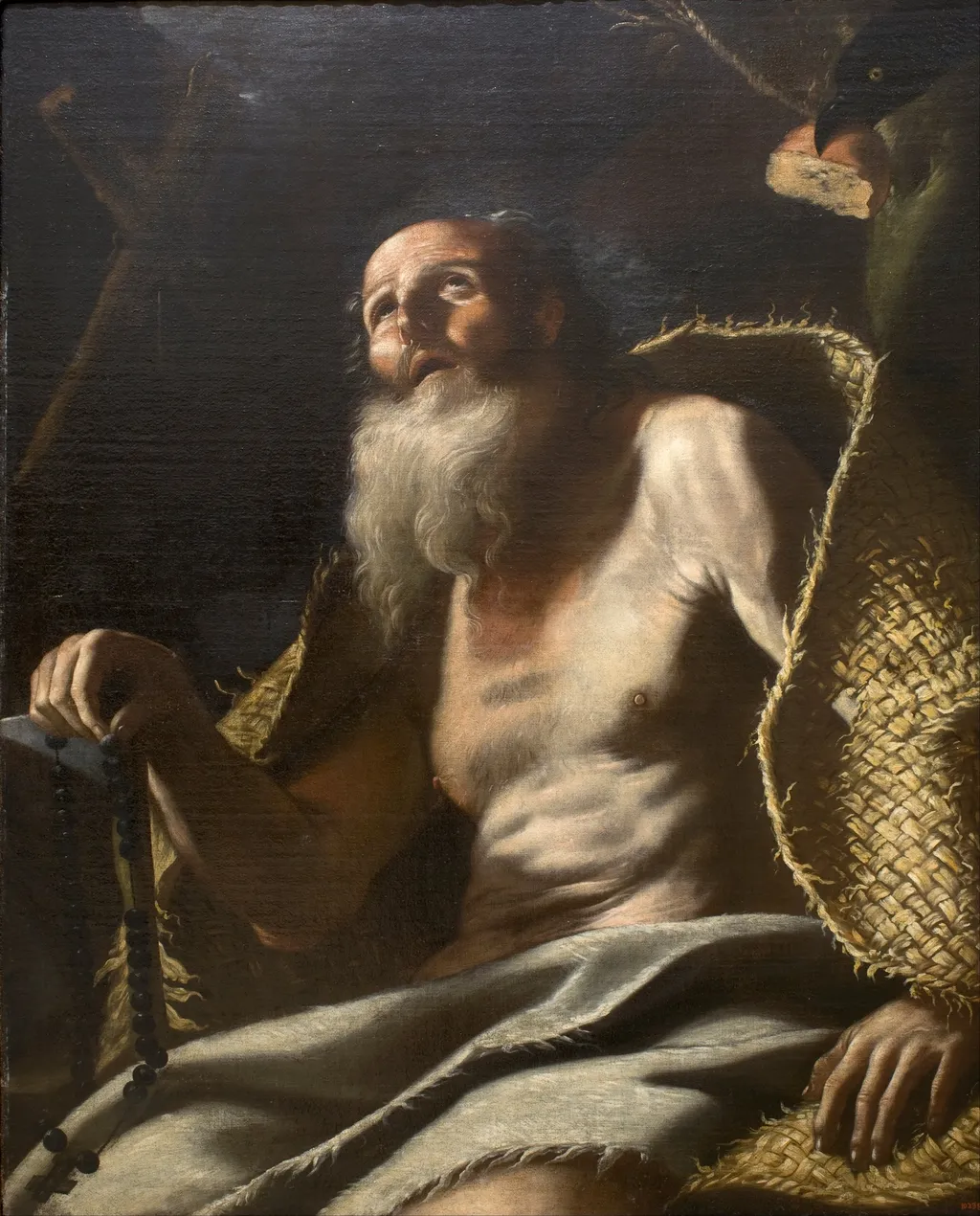
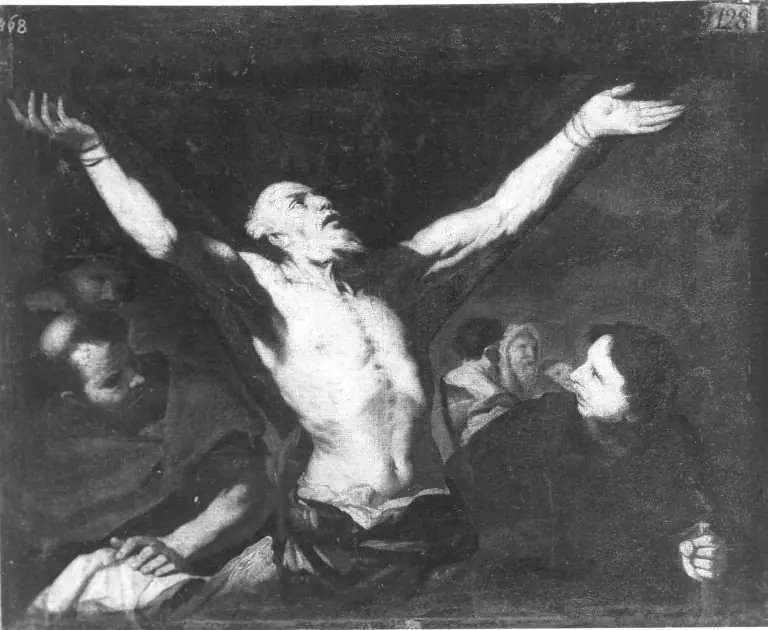
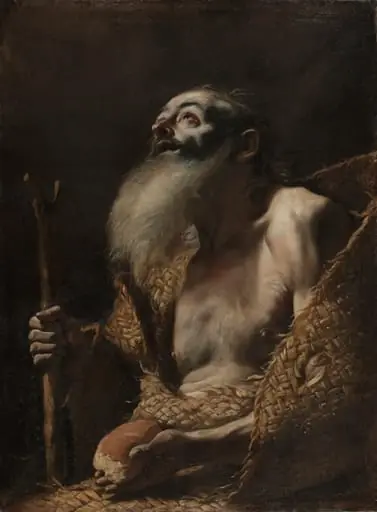
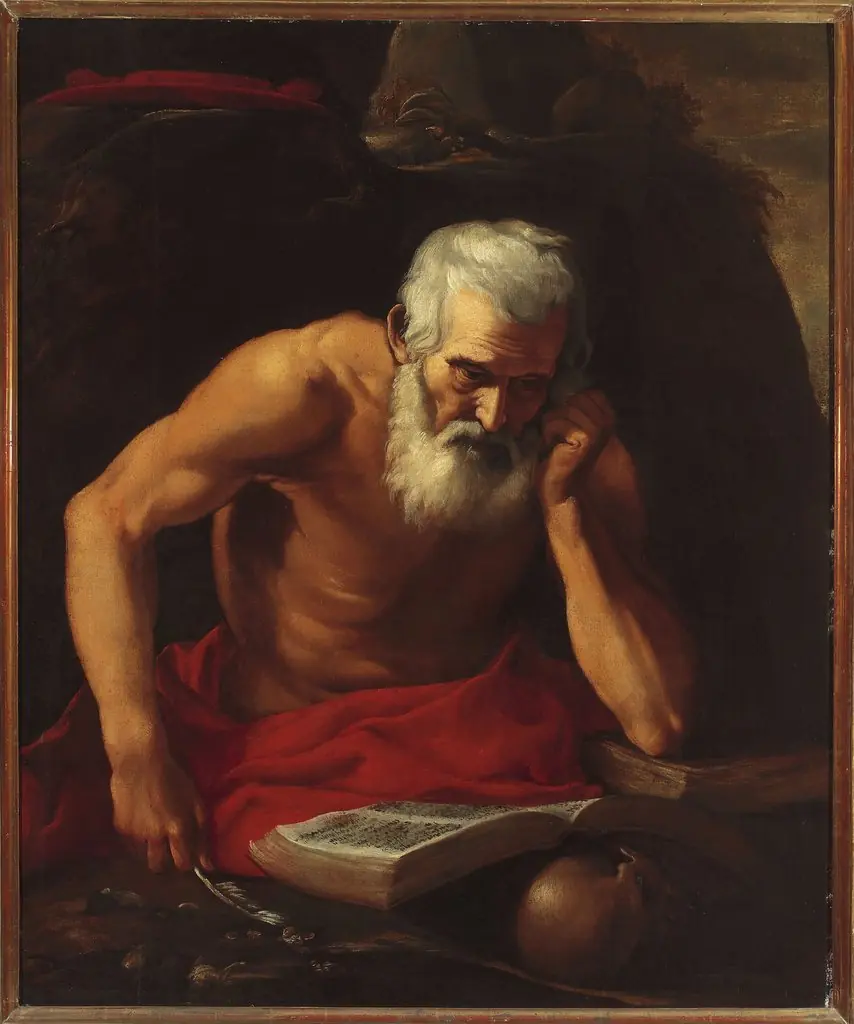
Saint Paul the Hermit is an oil painting by Mattia Preti. It dates from 1650 and is held in the collection of the Museu Nacional d'Art de Catalunya.
About this work
Overview
The composition centers on the elderly saint, characterized by a long white beard and unkempt hair, seated upon rugged rocks in a desolate landscape.
Mattia Preti's 'Saint Paul the Hermit,' executed in 1650, depicts the first Christian hermit in a moment of ascetic solitude. The composition centers on the elderly saint, characterized by a long white beard and unkempt hair, seated upon rugged rocks in a desolate landscape. Preti renders the figure shirtless, emphasizing his physical frailty and the harsh conditions of his desert exile. A golden woven basket rests against his arm, a traditional attribute referencing the raven that brought him daily bread. The painting exemplifies the artist's mature Baroque style, heavily influenced by Caravaggio's use of tenebrism. Dramatic chiaroscuro illuminates the saint's face and torso against a dark, atmospheric background, creating a stark contrast that heightens the spiritual intensity of the scene. This work reflects Preti's dedication to religious themes and his ability to convey human suffering and divine presence through realistic detail and emotional depth. Created during a period when the artist was establishing his reputation in Italy before his permanent move to Malta, the painting demonstrates his mastery of light and texture within the context of Counter-Reformation religious art.
Subject & Meaning
The figure represents Saint Paul of Thebes, traditionally regarded as the first Christian hermit. The inclusion of the cross alludes to his faith, the raven recalls the bird that sustained him in the desert, and the rosary emphasizes his contemplative prayer life. Together, these elements convey themes of solitude, divine providence, and spiritual perseverance.
Technique & Style
Preti employs a pronounced chiaroscuro, allowing a single light source to illuminate the saint’s face and torso while casting deep shadows across the surrounding rocks. This contrast heightens the tactile quality of the skin and the texture of the stone, creating a dramatic, three‑dimensional effect characteristic of Baroque naturalism.
History & Provenance
Created in the mid‑17th century, the painting entered the collection of the Museu Nacional d’Art de Catalunya, where it remains on display. Its attribution to Preti is based on stylistic analysis and archival records linking the work to the artist’s output during his Sicilian period.
Own this work as a print
Artist & collection

Artist
Mattia Preti was an Italian Baroque artist who worked in Italy and Malta. He was appointed a Member of the Order of Saint John.