Artwork
The Beheading of Saint John the Baptist
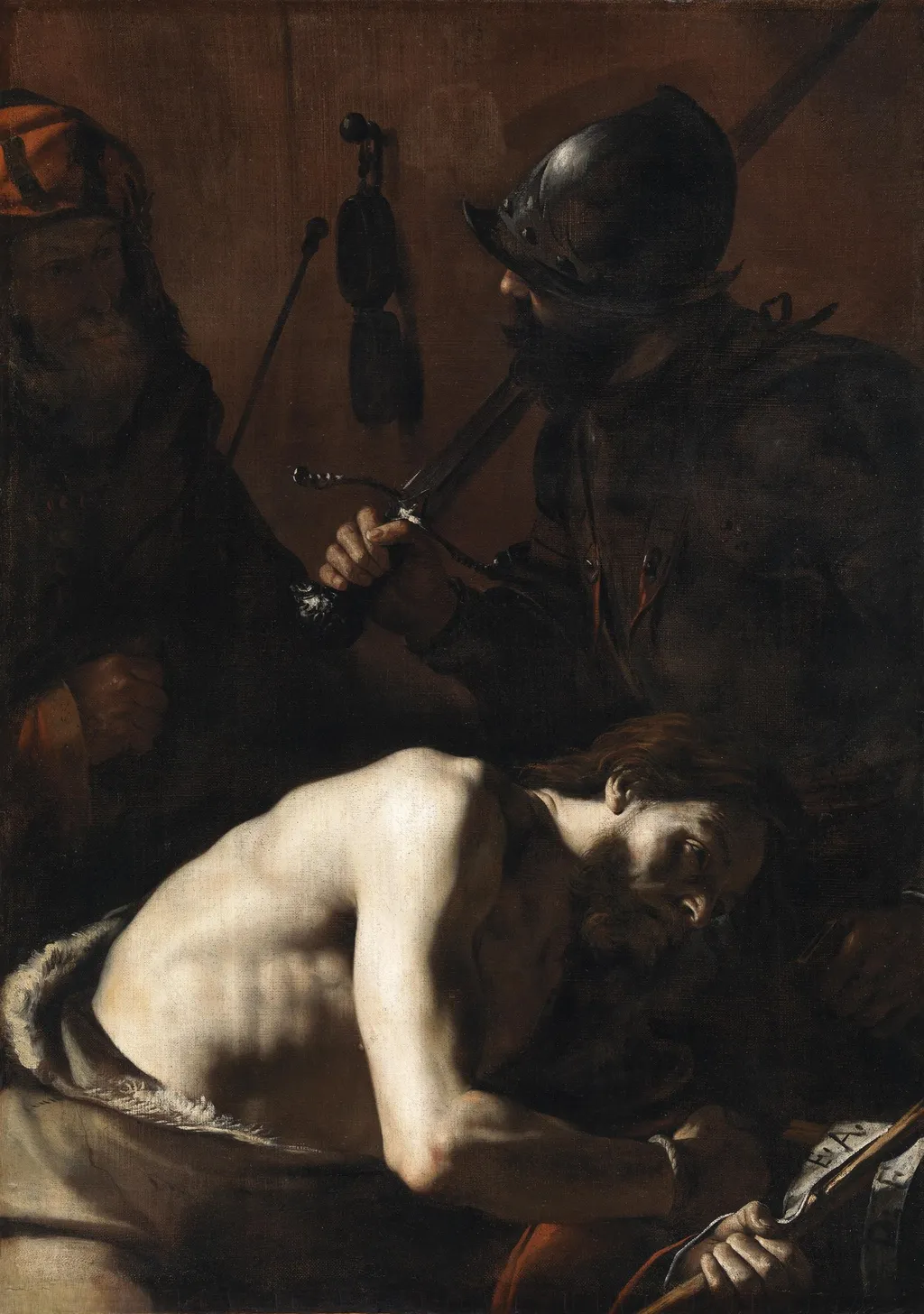
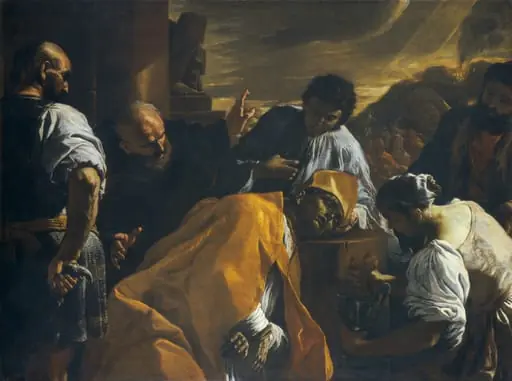
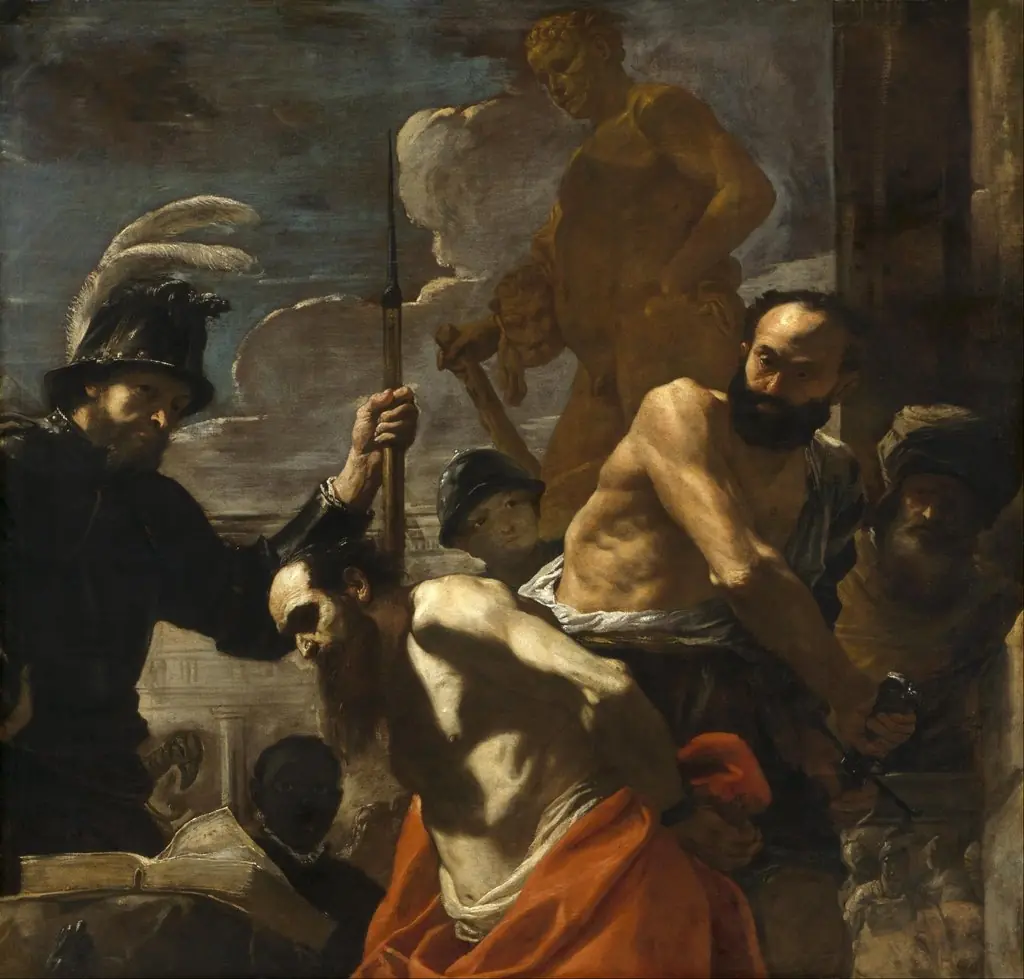
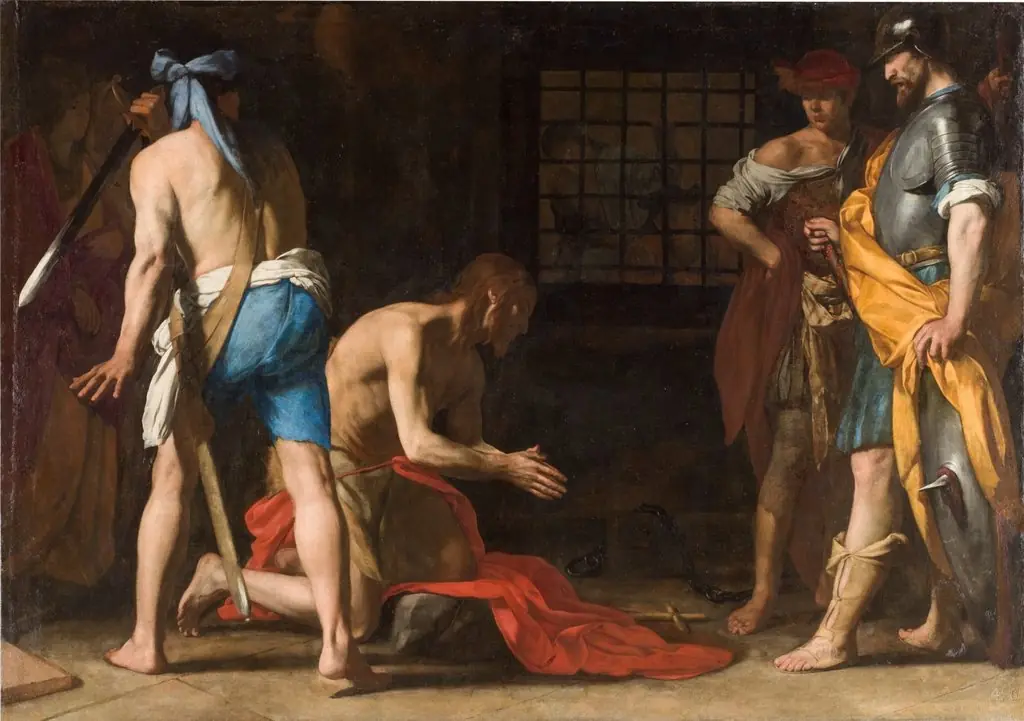
The Beheading of Saint John the Baptist is an oil painting by the Early Baroque Italian artist Mattia Preti. It dates from 1640 and is held in the collection of the National Gallery of Ireland.
About this work
Overview
Mattia Preti’s oil on canvas, dated 1640, portrays the violent climax of the biblical martyrdom of John the Baptist. The composition captures the precise instant of the saint’s execution, rendered with a stark contrast of light and shadow that emphasizes the drama of the scene. The work is part of the collection of the National Gallery of Ireland.
Subject & Meaning
The painting focuses on the moment when the head of John the Baptist is about to be severed. A heavily armored figure, concealed by a helmet, kneels with a sword poised above the prone body of the saint, whose outstretched arms convey shock and suffering. The narrative underscores themes of sacrifice and the brutal enforcement of power.
Technique & Style
Preti employs a pronounced chiaroscuro, allowing illuminated patches of flesh and metal to emerge from a surrounding gloom. The intense lighting creates a three‑dimensional effect, heightening the tension of the encounter. Brushwork is tight in the foreground, especially on the gleaming armor, while the background recedes into deep, undefined shadow.
History & Provenance
Executed in the early Baroque period, the canvas reflects Preti’s mature style after his Roman apprenticeship. It entered the National Gallery of Ireland’s holdings in the 20th century, where it remains on display as an example of the artist’s religious commissions for Southern Italian patrons.
Own this work as a print
Artist & collection

Artist
Mattia Preti was an Italian Baroque artist who worked in Italy and Malta. He was appointed a Member of the Order of Saint John.