Artwork
Martyrdom of Saint Andrew
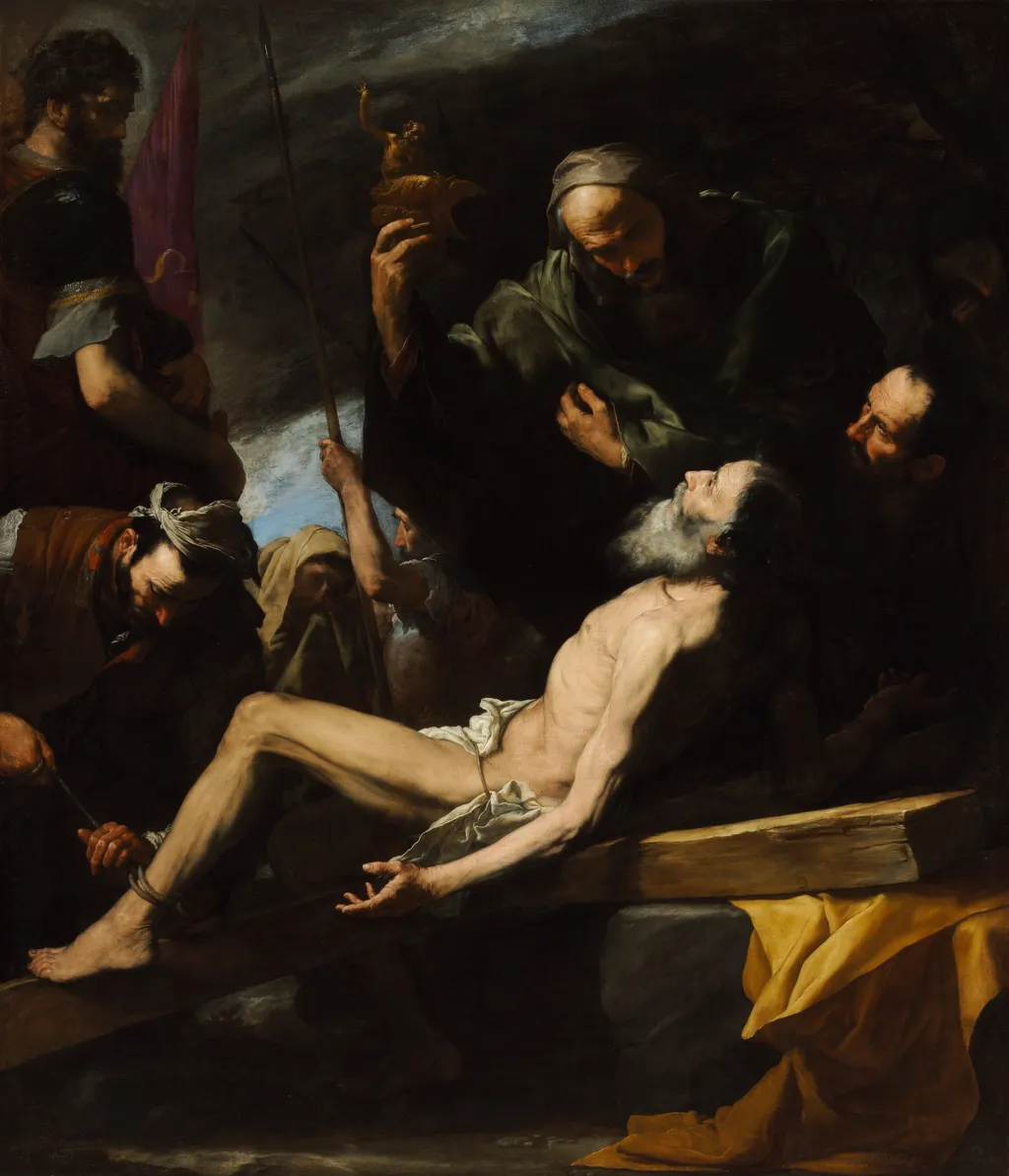
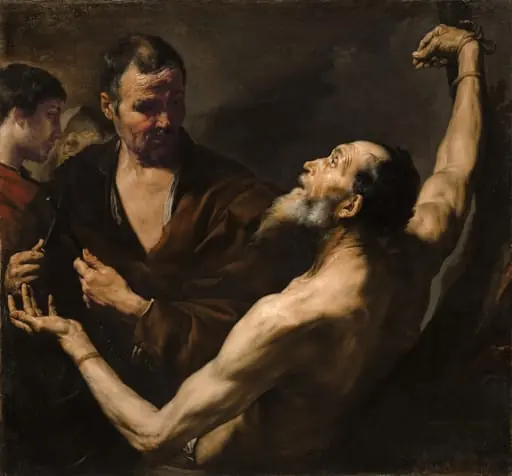
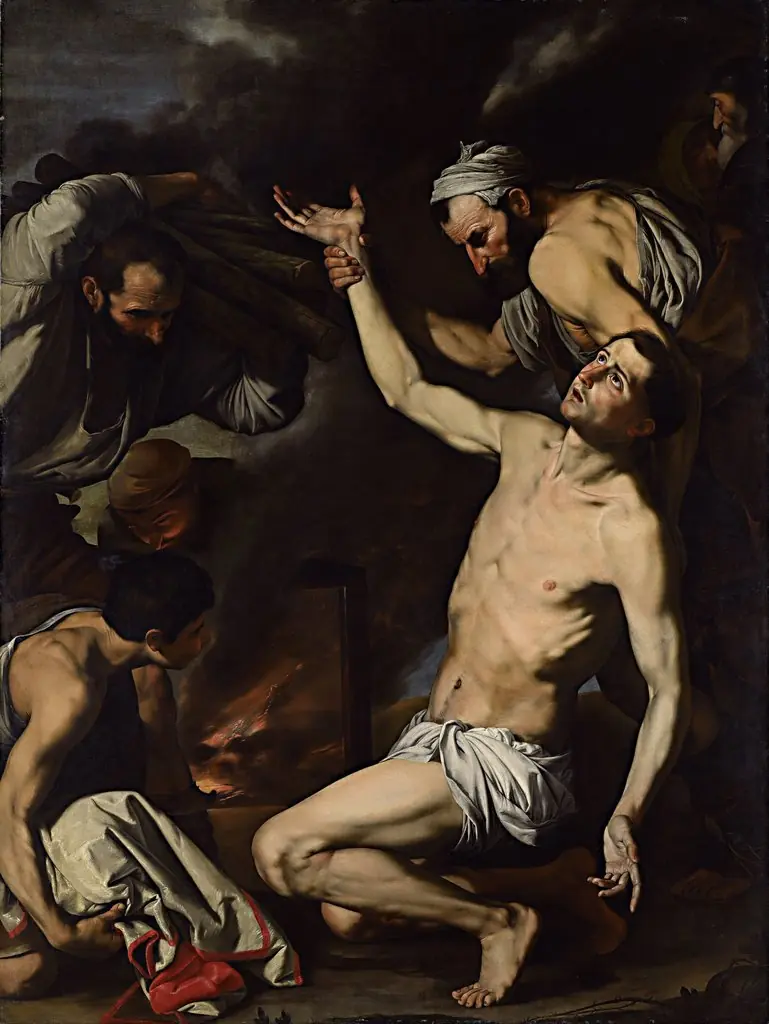
Martyrdom of Saint Andrew is an oil painting by the Early Baroque Italian artist Jusepe de Ribera. It dates from 1628 and is held in the collection of the Museum of Fine Arts, Budapest.
About this work
Overview
Created in 1628, this oil painting by the Spanish-Italian artist Jusepe de Ribera portrays the execution of Saint Andrew, one of the original twelve apostles. The work centers on the saint’s figure, bound to an angled wooden cross, while a group of onlookers—identified as soldiers or executioners—populate the background, contributing to a tense narrative scene.
Subject & Meaning
The composition captures the moment of Saint Andrew’s martyrdom, emphasizing his physical vulnerability: he is depicted nude except for a white cloth around his waist, his legs folded to the left and his torso arched backward. The presence of a spear and a red flag among the surrounding men underscores the violent, ritualized nature of the execution and the early Christian theme of sacrifice.
Technique & Style
Ribera employs a stark chiaroscuro, juxtaposing deep shadows with illuminated flesh to heighten drama and focus attention on the saint’s contorted body. The angled cross and the dramatic lighting create a sense of movement, while the detailed rendering of the figures in the background adds depth and reinforces the overall tension of the scene.
History & Provenance
Signed and dated 1628, the painting belongs to Ribera’s mature period, when he was active in Naples and known for his realistic, often brutal religious subjects. Although specific ownership records are limited, the work has been catalogued among Ribera’s oeuvre and is referenced in scholarly studies of his treatment of martyrdom themes.
Own this work as a print
Artist & collection
Artist
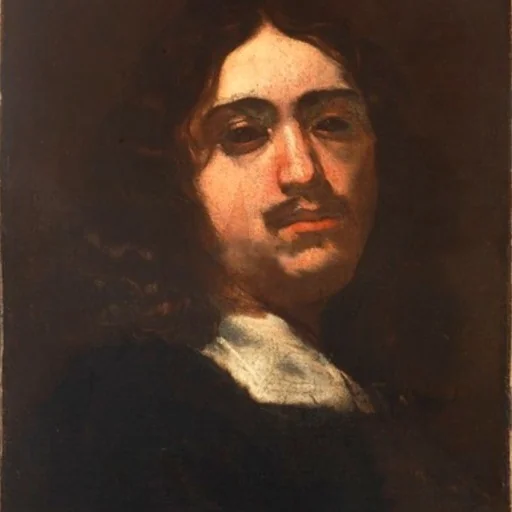
Jusepe de Ribera (Valencian: ; baptised 17 February 1591 – 3 November 1652) was a Spanish painter and printmaker.