Artwork
Rocks in Belle-Ille
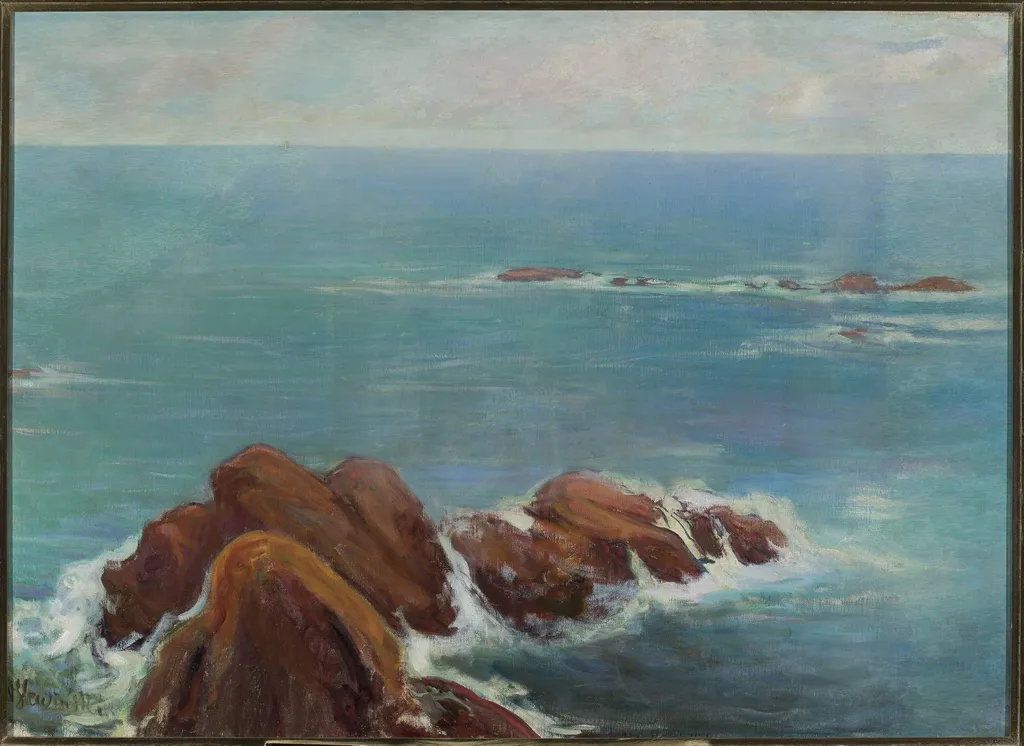
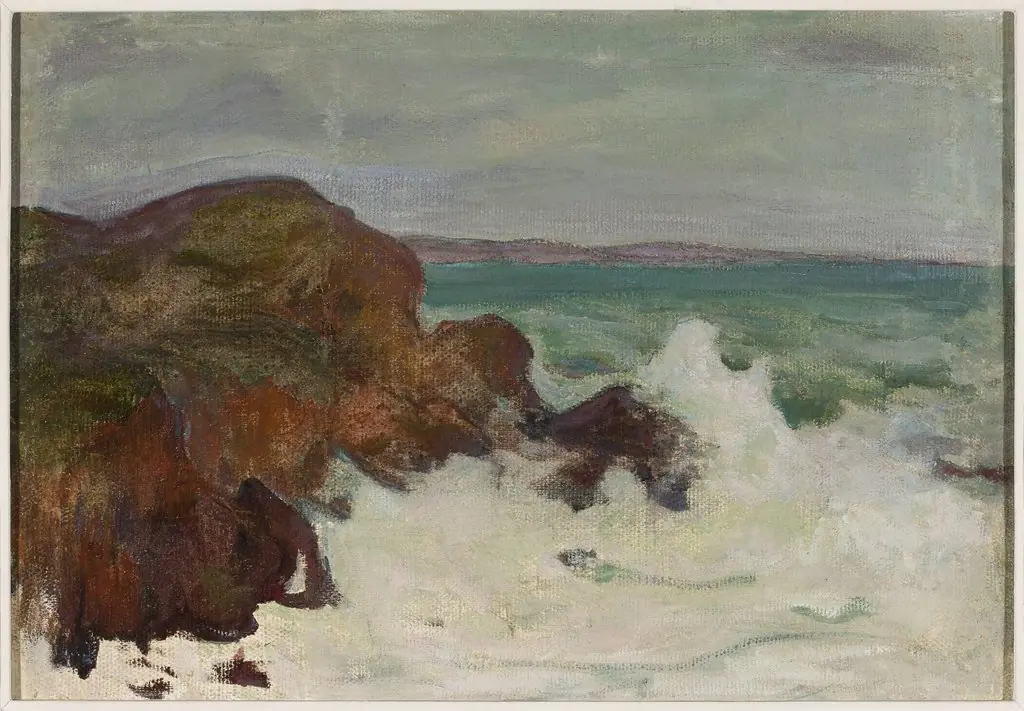
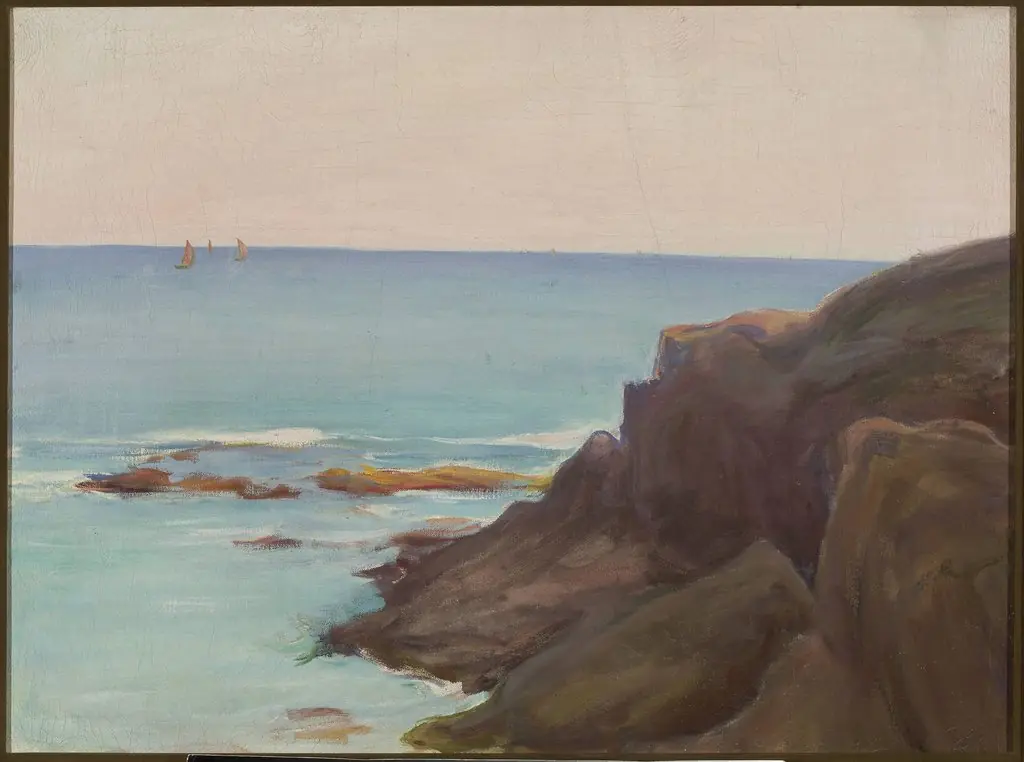
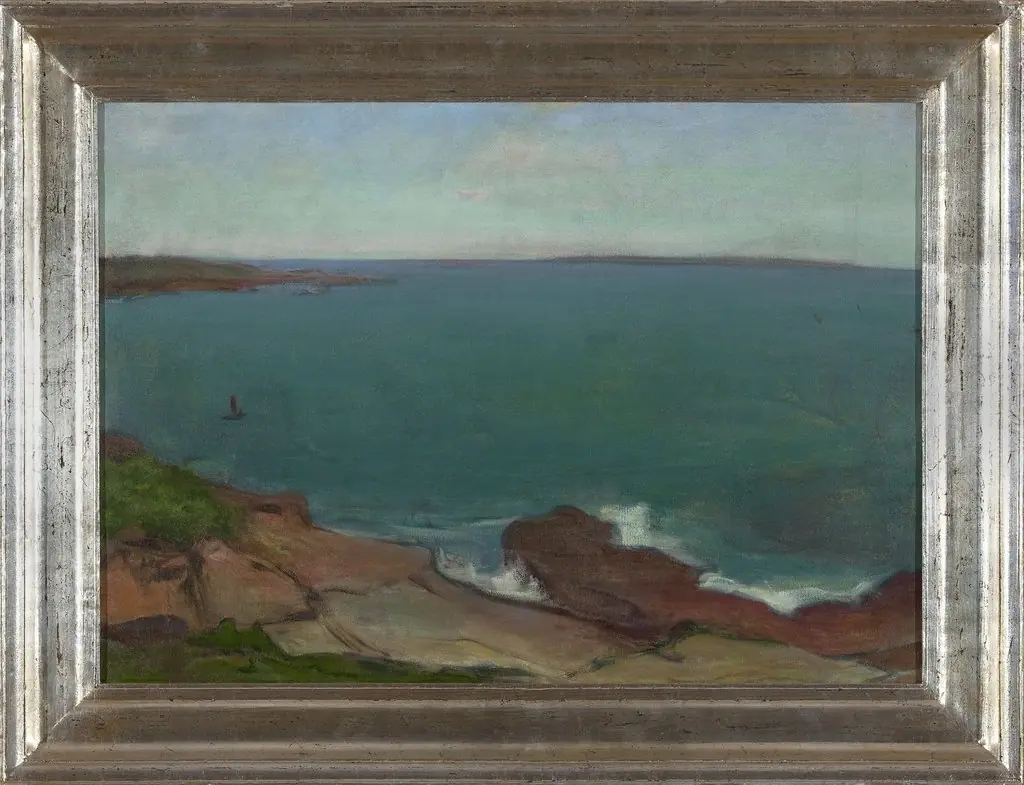
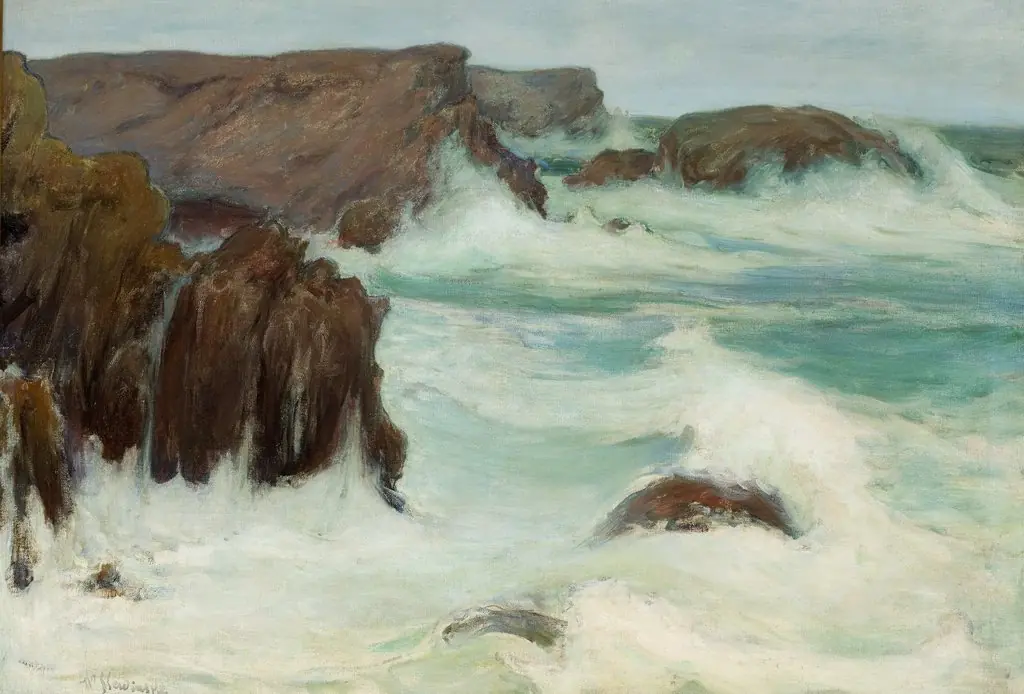
Rocks in Belle-Ille is an oil painting by the Post-Impressionist artist Władysław Ślewiński. It dates from 1904 and is held in the collection of the National Museum in Warsaw.
About this work
Overview
Władysław Ślewiński’s *Rocks in Belle‑Île* (1904) is an oil painting that presents a quiet coastal scene. In the lower part of the canvas, a cluster of rocks occupies the foreground, rendered in warm, earthy hues, while a smooth expanse of sea stretches toward a distant horizon under a sky tinged with soft blues, whites and faint pink‑orange light.
Subject & Meaning
The composition captures a tranquil moment on the Breton coast, suggesting the solidity of the rock formations against the gentle movement of water. The muted palette and calm atmosphere convey a sense of stillness, inviting contemplation of the natural landscape’s enduring presence.
Technique & Style
Ślewiński employs visible brushwork to model the rocks, creating texture that contrasts with the smoother treatment of the sea and sky. The handling of color and form aligns with post‑impressionist tendencies, emphasizing expressive surface qualities over strict realism.
History & Provenance
Created during Ślewiński’s mature period, the painting reflects his engagement with modernist currents after studying under Paul Gauguin. It entered the collection of the National Museum in Warsaw, where it remains part of the institution’s holdings of early‑20th‑century Polish art.
Context
Ślewiński was a prominent participant in the Young Poland movement, which sought to infuse Polish art with contemporary European influences. *Rocks in Belle‑Île* illustrates his synthesis of French coastal motifs with the movement’s broader aim of revitalizing national artistic expression.
Artist & collection
Artist
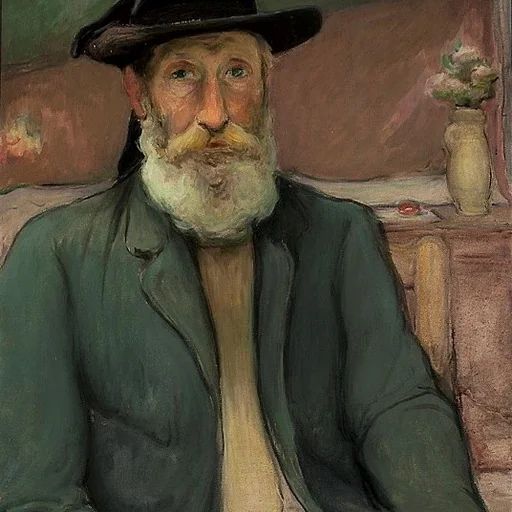
Władysław Ślewiński (1 June 1856 – 24 March 1918) was a Polish painter. He was one of Gauguin's students and a leading artist of the Young Poland movement.