Artwork
Place Saint Georges
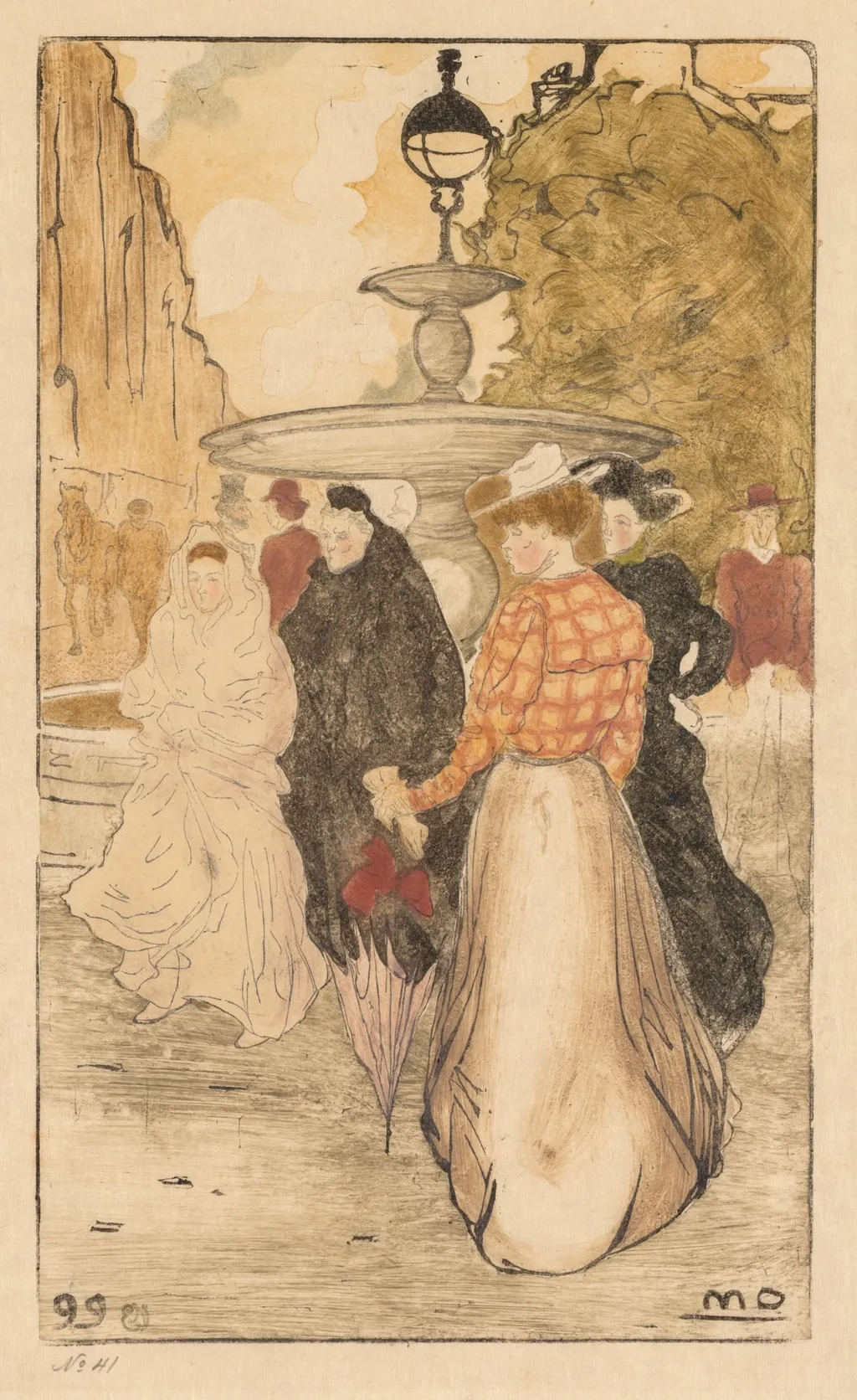
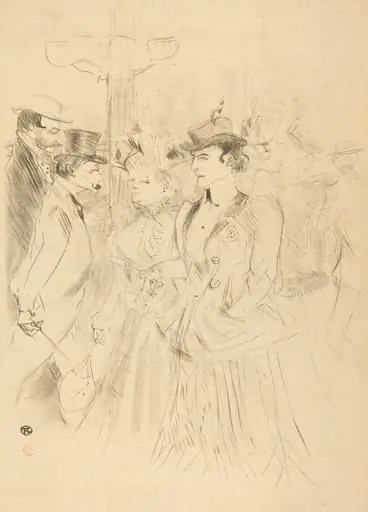
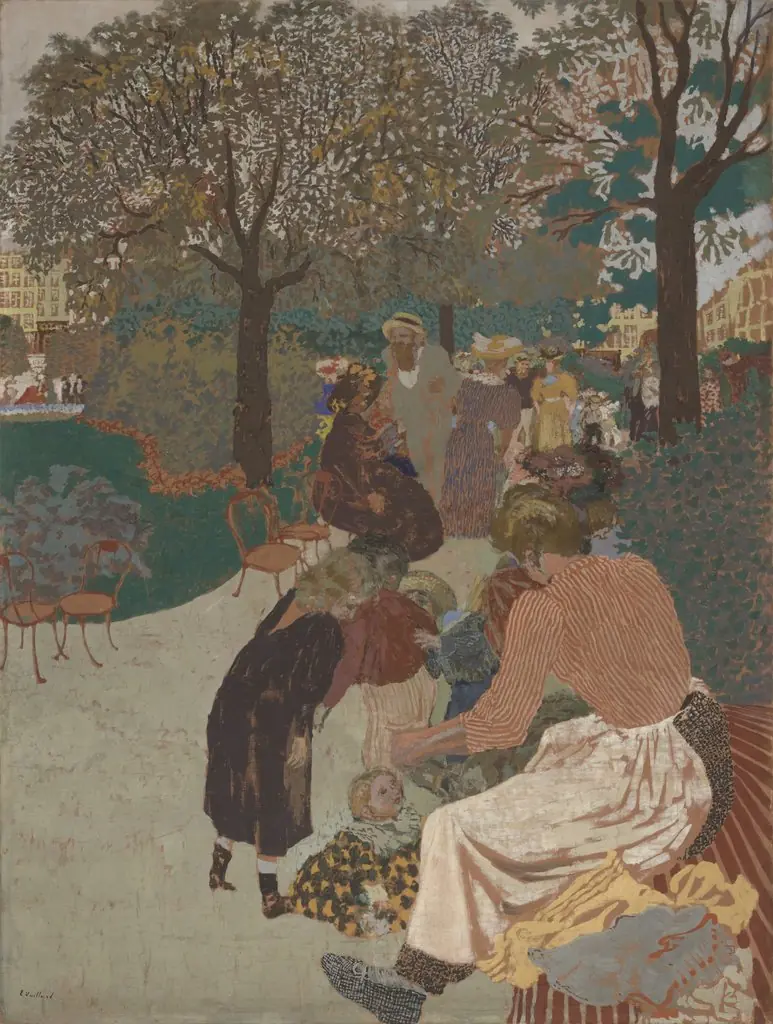
Place Saint Georges is a print by the Impressionist artist Maurice Delcourt. It dates from 1899 and is held in the collection of the Cleveland Museum of Art.
About this work
The artist has used a range of colors to capture the scene, from the warm tones of the stone fountain to the cool blues and greens of the surrounding buildings.
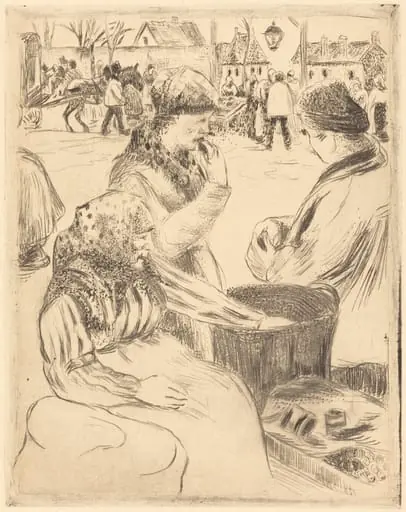
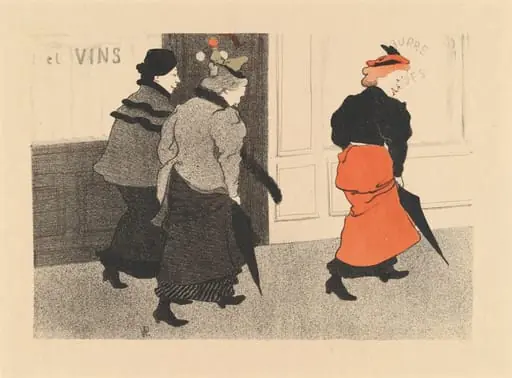
In the painting, a group of people are gathered around a fountain in a public square. The scene is set in the late 19th century, with women in long skirts and men in hats and coats. The atmosphere is lively, with people chatting and strolling through the square.
The artist has used a range of colors to capture the scene, from the warm tones of the stone fountain to the cool blues and greens of the surrounding buildings. The brushstrokes are loose and expressive, giving the painting a sense of energy and movement.
The painting is a great example of Impressionism, a movement that emphasized capturing the fleeting moments of modern life. To learn more about this style, check out the Impressionism movement.
Overview
Place Saint Georges is a late 19th-century print by Belgian artist Maurice Delcourt, dated 1899. It depicts a bustling public square in a European city, centered on a stone fountain. The work is held in the collection of The Cleveland Museum of Art and reflects the artist’s engagement with urban life during a period of rapid social change. Though often associated with painting, this piece exists as a print, suggesting broader dissemination of the scene.
Subject & Meaning
The scene captures ordinary citizens—women in long dresses, men in coats and hats—interacting near a central fountain. No single narrative dominates; instead, the composition conveys the rhythm of daily life: conversations, casual strolls, quiet observation. The absence of religious figures or overt symbolism suggests the square itself functions as a secular gathering space, reflecting the quiet secularization of public life in late Victorian Europe.
Technique & Style
Delcourt employs loose, fluid lines and muted tonal contrasts to suggest movement and atmosphere. The palette favors earthy stone hues against cooler blues and greens of surrounding architecture, creating visual depth without sharp definition. The print’s handling echoes Impressionist concerns with light and transient moments, though its medium and precision distinguish it from oil painting, favoring clarity over atmospheric blur.
History & Provenance
Created in 1899, the work entered The Cleveland Museum of Art’s collection through documented acquisition, though its earlier ownership remains unrecorded in public sources. As a print, it likely circulated among collectors or was produced in limited editions, aligning with late 19th-century trends in art reproduction. Its preservation reflects institutional interest in European urban scenes from the period.
Context
In the 1890s, European cities were reshaped by industrialization and expanding public spaces. Fountains and squares like Saint Georges became social hubs where class boundaries blurred. Delcourt’s focus on such a setting aligns with broader artistic interest in modernity—not as spectacle, but as lived experience. The work stands apart from grand historical narratives, instead honoring the quiet choreography of everyday life.
Legacy
Though not widely exhibited outside institutional collections, Place Saint Georges contributes to the understudied body of Belgian printmaking from the fin de siècle. It offers a quiet counterpoint to more famous Impressionist canvases, demonstrating how the movement’s observational ethos extended into graphic media. Its endurance in museum holdings underscores its value as a document of urban social texture.
Artist & collection