Artwork
The Water Carriers
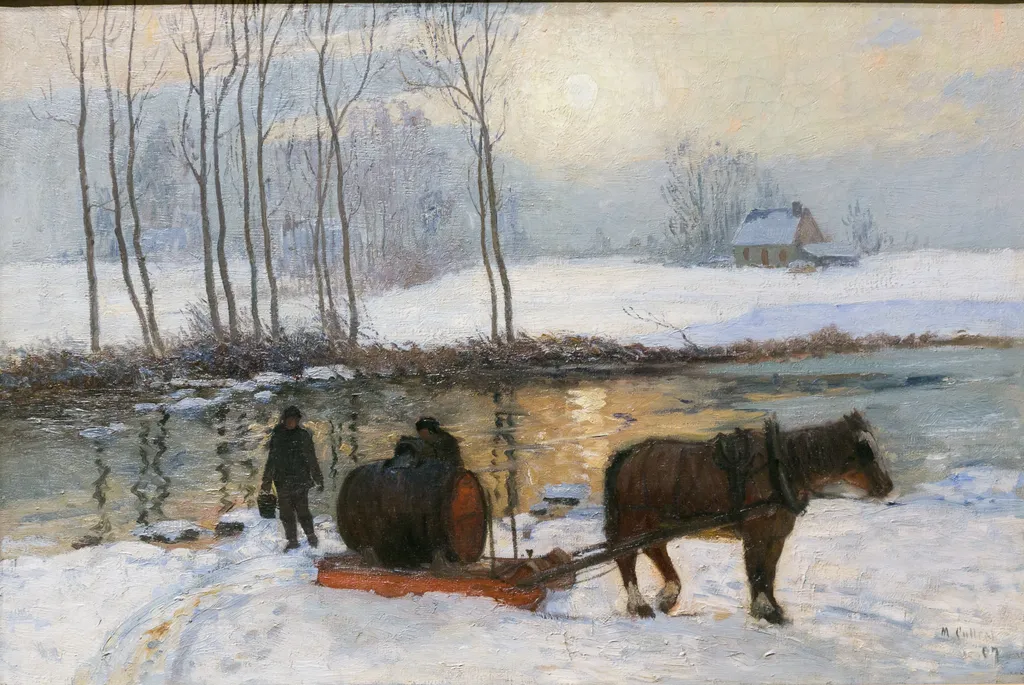
The Water Carriers is an oil painting by the Impressionist artist Maurice Galbraith Cullen. It dates from 1907 and is held in the collection of the Montreal Museum of Fine Arts.
About this work
Overview
It depicts a quiet winter scene in rural Quebec, capturing a moment of daily labor amid snow-covered terrain.
Painted in 1907, *The Water Carriers* is an oil on canvas work by Canadian artist Maurice Cullen. It depicts a quiet winter scene in rural Quebec, capturing a moment of daily labor amid snow-covered terrain. Cullen, known for bringing French Impressionist methods to Canadian subjects, used this piece to explore the interplay of light and atmosphere in northern winters, a recurring theme in his oeuvre.
Subject & Meaning
The painting portrays two men and a horse hauling water in large barrels on a sled, one man carrying an additional bucket. The scene reflects the practical rhythms of rural life in early 20th-century Quebec, where access to clean water required physical labor even in freezing conditions. There is no dramatic narrative—only the subdued dignity of routine, rendered with emotional restraint.
Technique & Style
Cullen employed loose, visible brushwork to convey the texture of snow and the roughness of wooden sleds and clothing. His palette is restrained—dominated by cool grays, muted blues, and earthy browns—emphasizing the subdued winter light. The brushstrokes suggest movement in the air and the weight of the load, while the soft edges between elements create a sense of atmospheric depth without sharp definition.
History & Provenance
Created during Cullen’s most active period, the painting has remained in Canadian institutional hands since its completion. It entered the collection of the Montreal Museum of Fine Arts in the 20th century and has been regularly exhibited as part of the museum’s focus on early Canadian landscape painting. Its provenance reflects its significance in the development of a national artistic identity.
Context
Cullen painted this work during a time when Canadian artists were seeking to define a visual language distinct from European traditions. While influenced by French Impressionism, he adapted its techniques to the unique conditions of Quebec’s winters—its sharp light, long shadows, and frozen landscapes—offering a local alternative to the more colorful southern scenes favored abroad.
Legacy
The painting stands as an early example of how Canadian artists translated Impressionist principles to their own environment. Cullen’s focus on ordinary rural life and the subtle effects of northern light helped shape a trajectory for Canadian art that valued observation over idealization. *The Water Carriers* remains a reference point in discussions of regional realism and the evolution of Canadian painting.
Own this work as a print
Artist & collection
Artist
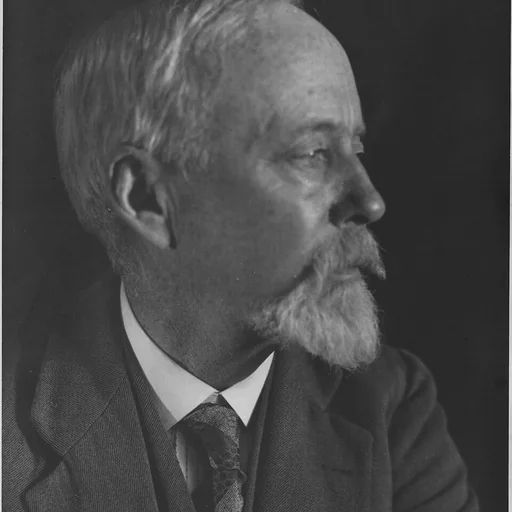
Maurice Cullen (June 6, 1866 – March 28, 1934) is considered to be the father of Canadian Impressionism because he was the first artist to skillfully adapt French Impressionism to Canadian conditions.

 Winter Landscape
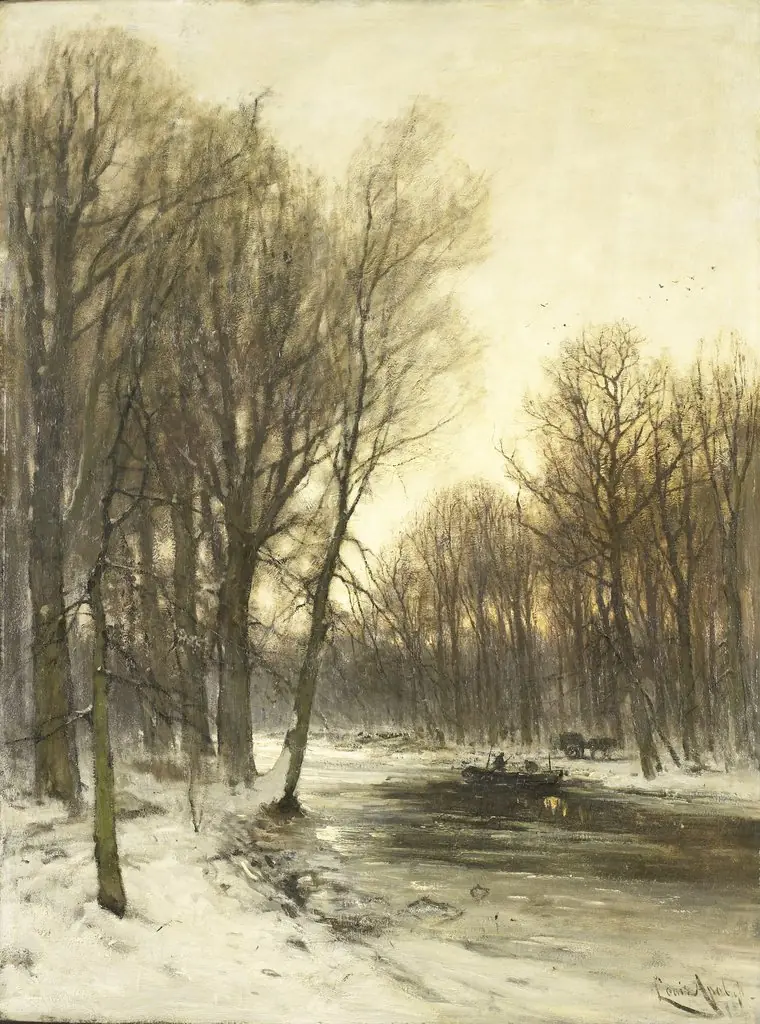 An Afternoon view of Snowy Woods
 An Afternoon view of Snowy Woods
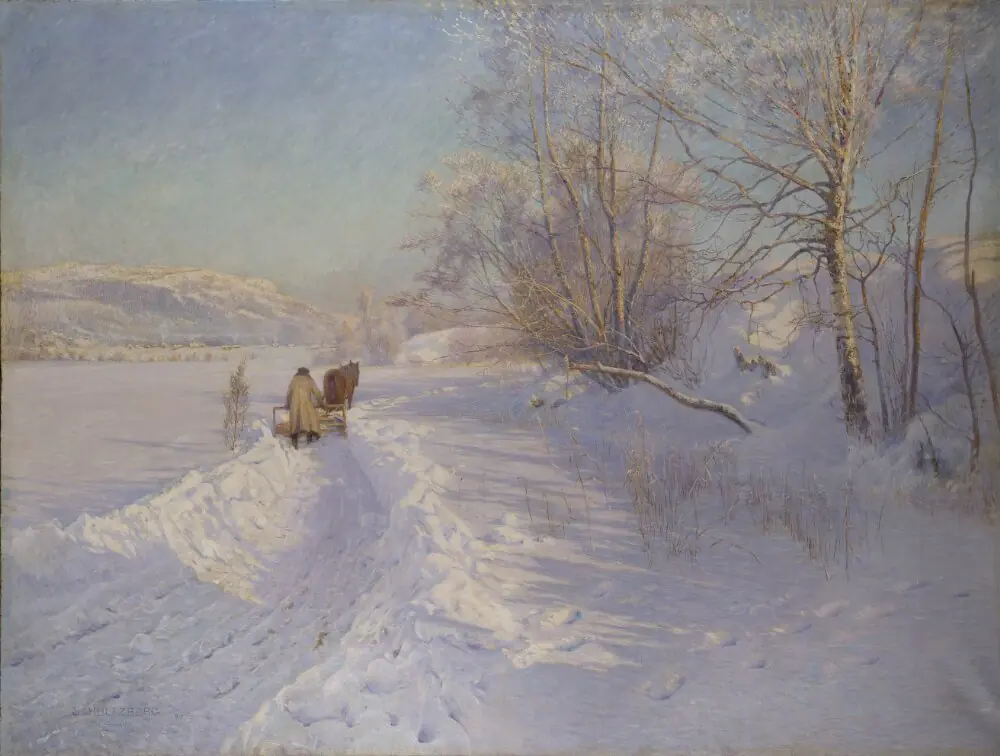 A Winter Morning after a Snowfall in Dalarna
 The Winter Sun
 Le Champ-de-Mars en hiver
 Winter Scene on the Ice with Wood Gatherers
 Winter Landscape
 An Opalescent River
 Watering the Cattle on a Winter's Day
 Suburban winter landscape
 Forest Stream