Artwork
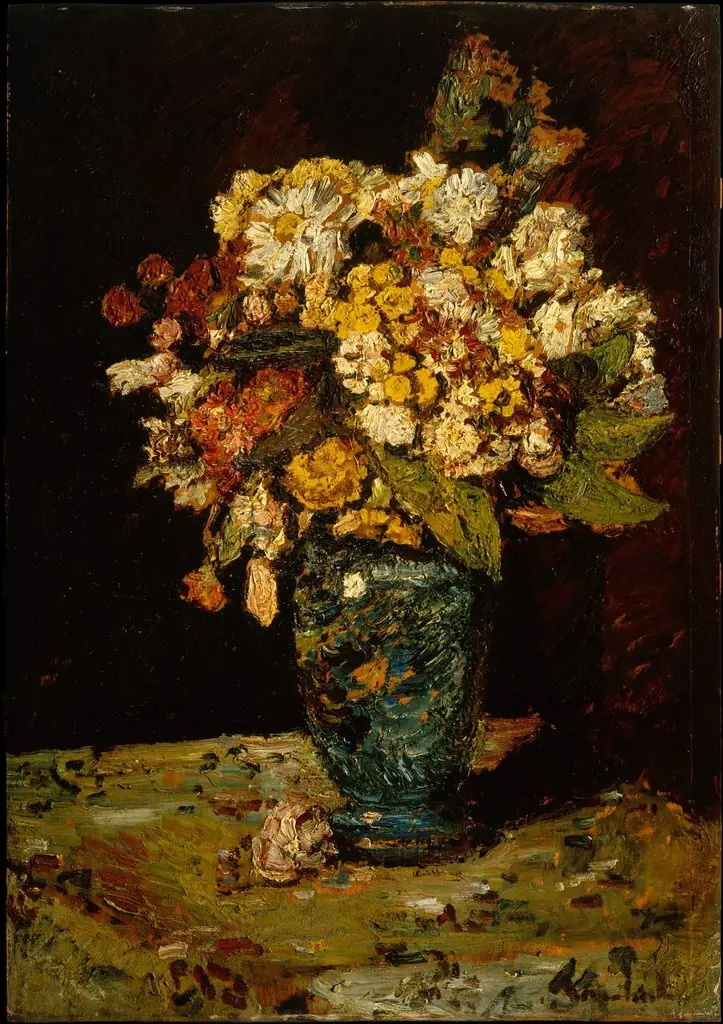
Flowers in a Vase (Zinnias)
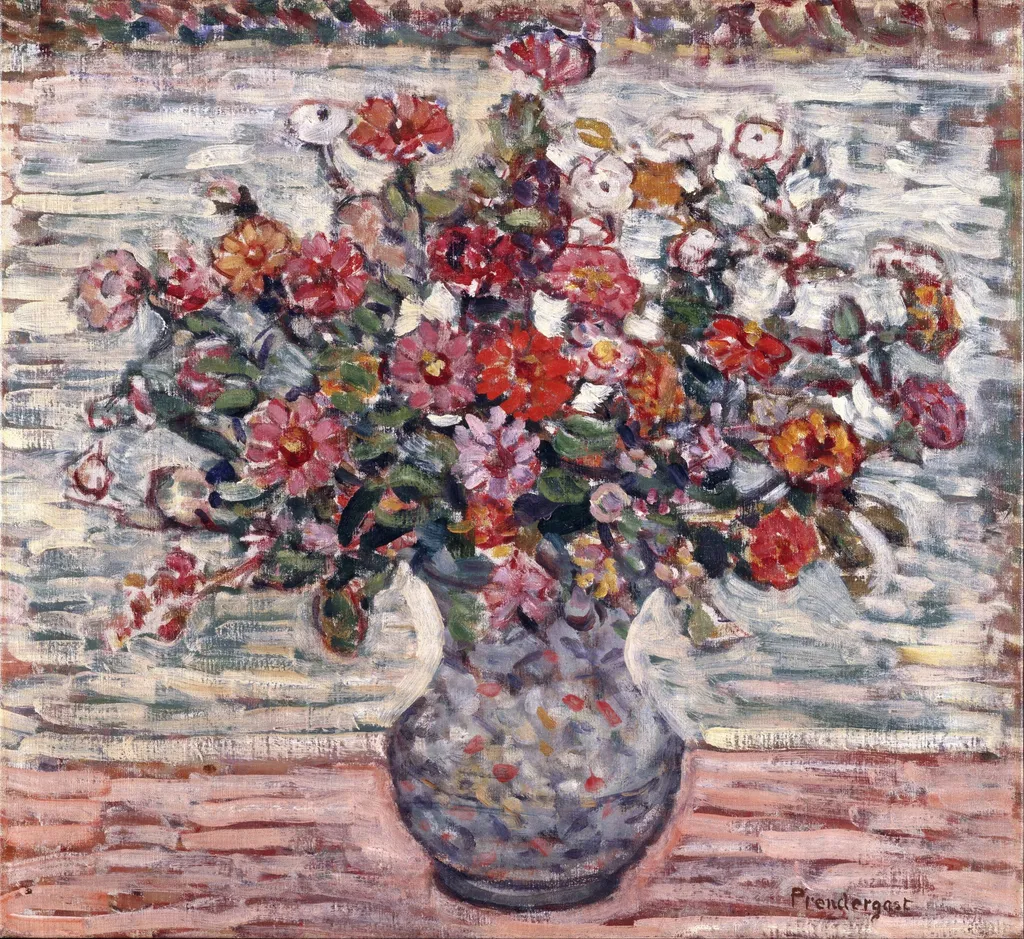
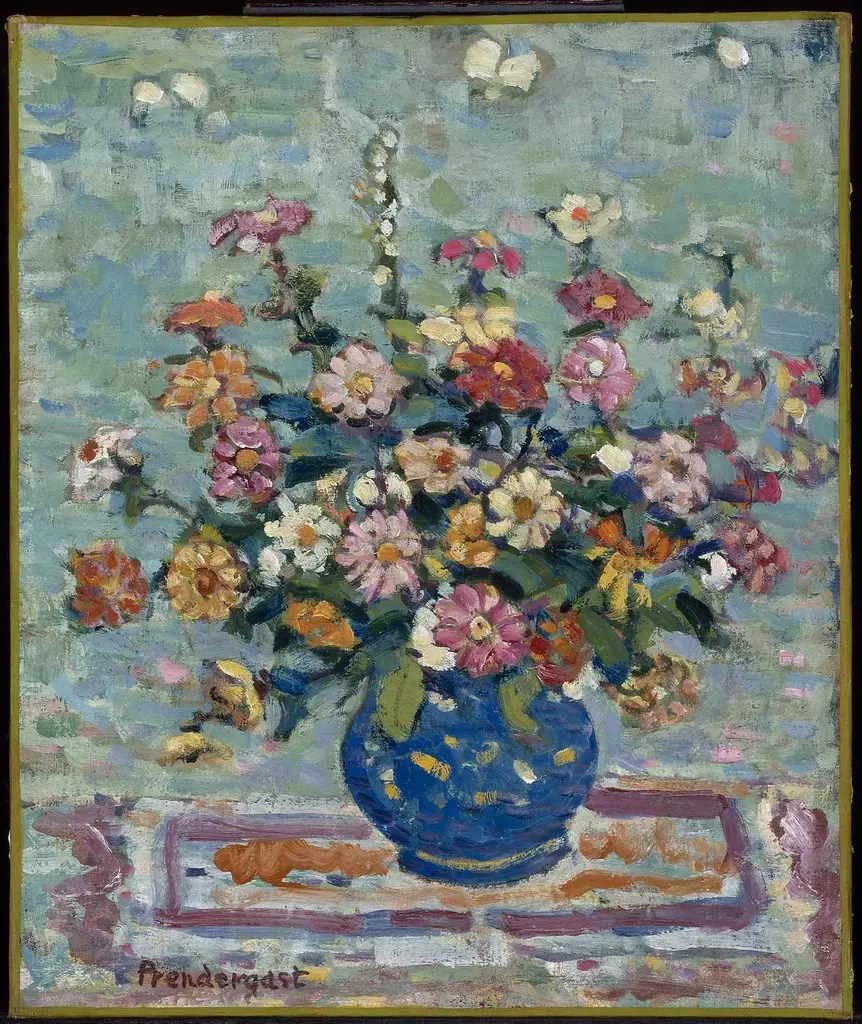
Flowers in a Vase (Zinnias) is an oil painting by the Post-Impressionist artist Maurice Prendergast. It dates from 1911 and is held in the collection of the Brooklyn Museum.
About this work
Overview
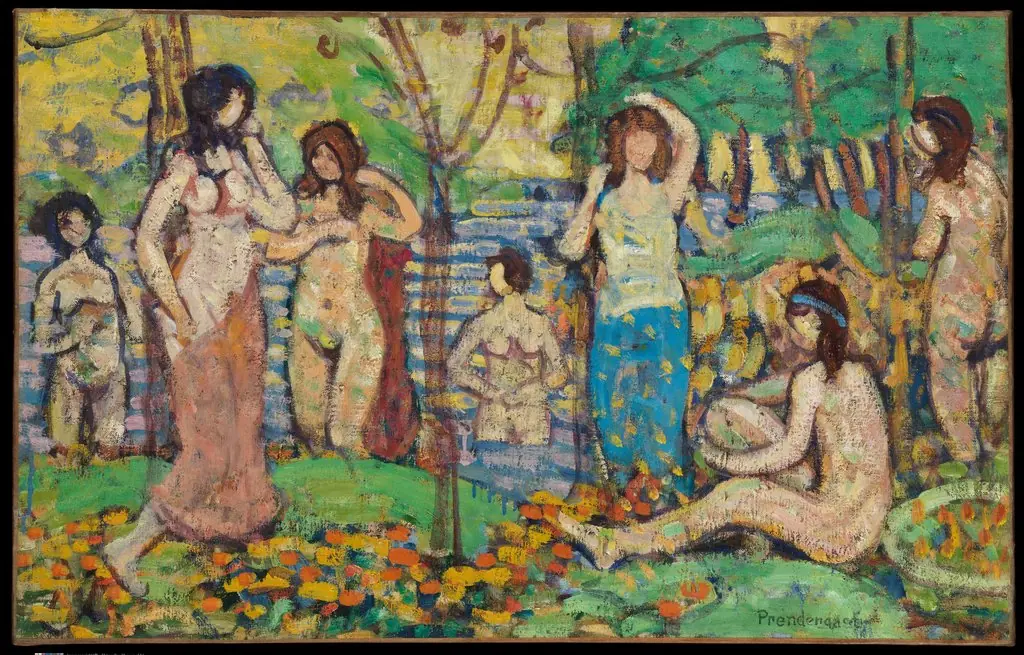
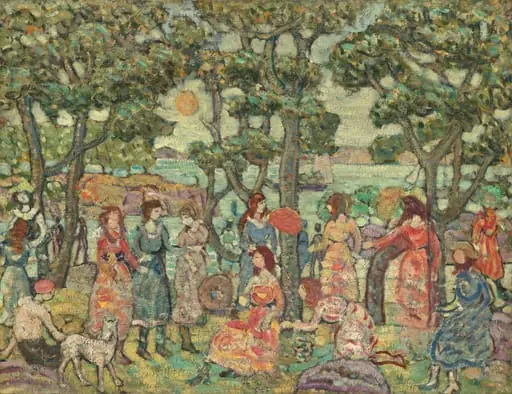
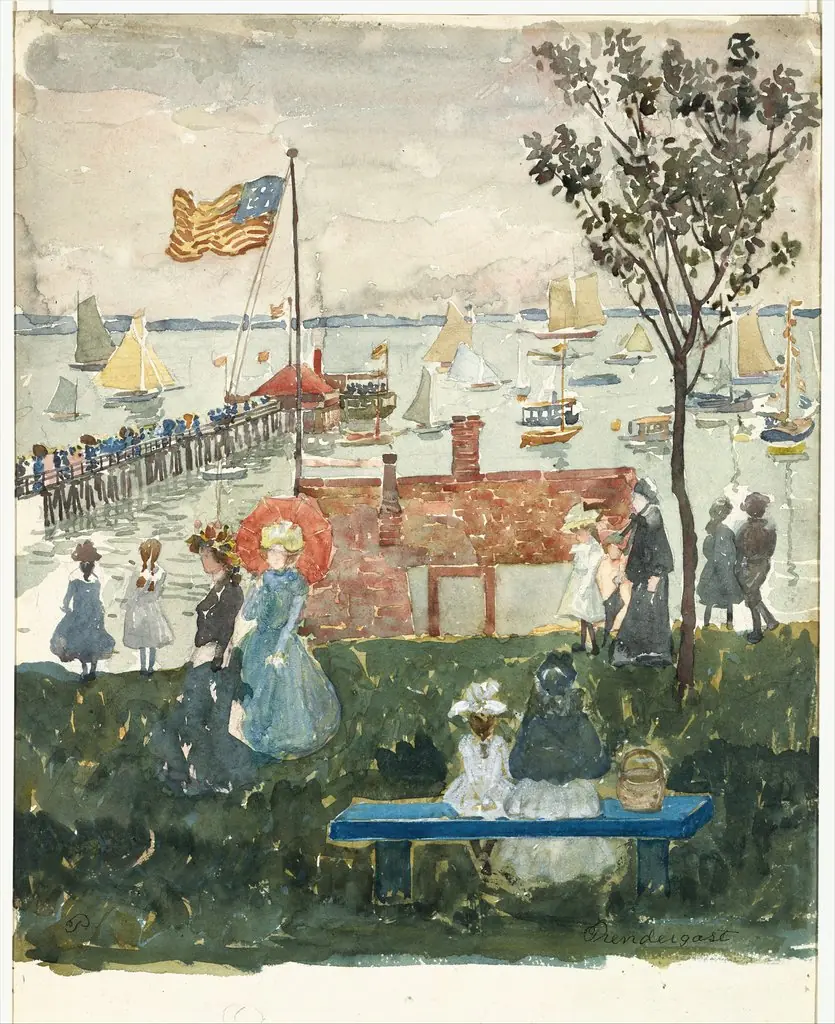
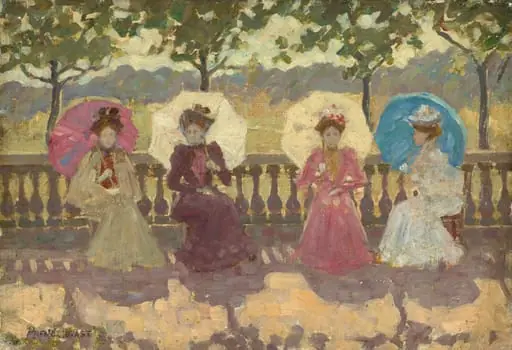
Prendergast, trained in Europe and active in the American art scene, brought a distinctive sensibility to domestic subjects, favoring harmony over narrative.
Painted in 1911, *Flowers in a Vase (Zinnias)* is a still life by American artist Maurice Prendergast, executed in oil on canvas. Though rooted in the traditions of floral composition, the work distinguishes itself through its rhythmic application of color and structured yet fluid brushwork. Prendergast, trained in Europe and active in the American art scene, brought a distinctive sensibility to domestic subjects, favoring harmony over narrative.
Subject & Meaning
The painting presents a modest arrangement of zinnias in a simple vase, their petals rendered in red, pink, and white tones. The flowers are loosely grouped, suggesting natural growth rather than formal arrangement. There is no symbolic or allegorical intent; the focus lies in the quiet beauty of everyday objects. The blurred background and plain surface ground the composition in the ordinary, inviting contemplation of form and color over meaning.
Technique & Style
Prendergast employed small, distinct brushstrokes to build the bouquet, creating a mosaic-like texture that recalls Post-Impressionist approaches. Colors are applied with clarity and separation, avoiding blending, which enhances their luminosity. The background is rendered with soft, horizontal strokes that imply a surface without defining it, allowing the flowers to emerge with vibrancy. The technique balances structure and spontaneity, avoiding the grit of Ashcan realism while retaining a sense of immediacy.
History & Provenance
Created during a period when Prendergast was refining his mature style, the painting reflects his post-European training and engagement with modern European trends. It was made after his association with The Eight, a group that included realist painters, though his work remained stylistically distinct. The painting has remained within private and institutional collections in the United States, consistently noted for its color sensitivity and quiet elegance.
Context
In early 20th-century America, still lifes were often overshadowed by urban scenes or portraiture. Prendergast’s floral works offered an alternative, emphasizing aesthetic experience over social commentary. His approach aligned with broader international movements—particularly Post-Impressionism—while resisting the gritty realism of his American peers. This painting reflects a quiet resistance to dominant trends, valuing sensory pleasure and compositional balance.
Legacy
Though not widely exhibited, *Flowers in a Vase (Zinnias)* exemplifies Prendergast’s unique contribution to American modernism: a synthesis of European color theory and American restraint. His floral studies, though fewer in number than his urban scenes, demonstrate a sustained interest in light, pattern, and the emotional potential of color. The work continues to inform understandings of how American artists adapted European styles to intimate subjects.
Own this work as a print
Artist & collection
Artist
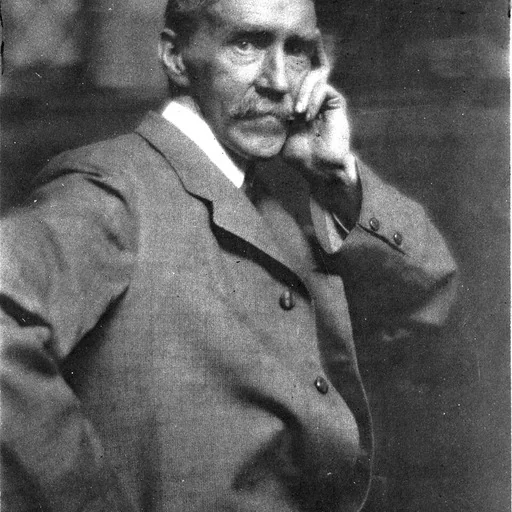
Maurice Brazil Prendergast (October 10, 1858 – February 1, 1924) was a Newfoundlander-American artist who painted in oil and watercolor, and created monotypes.