Artwork
Untitled
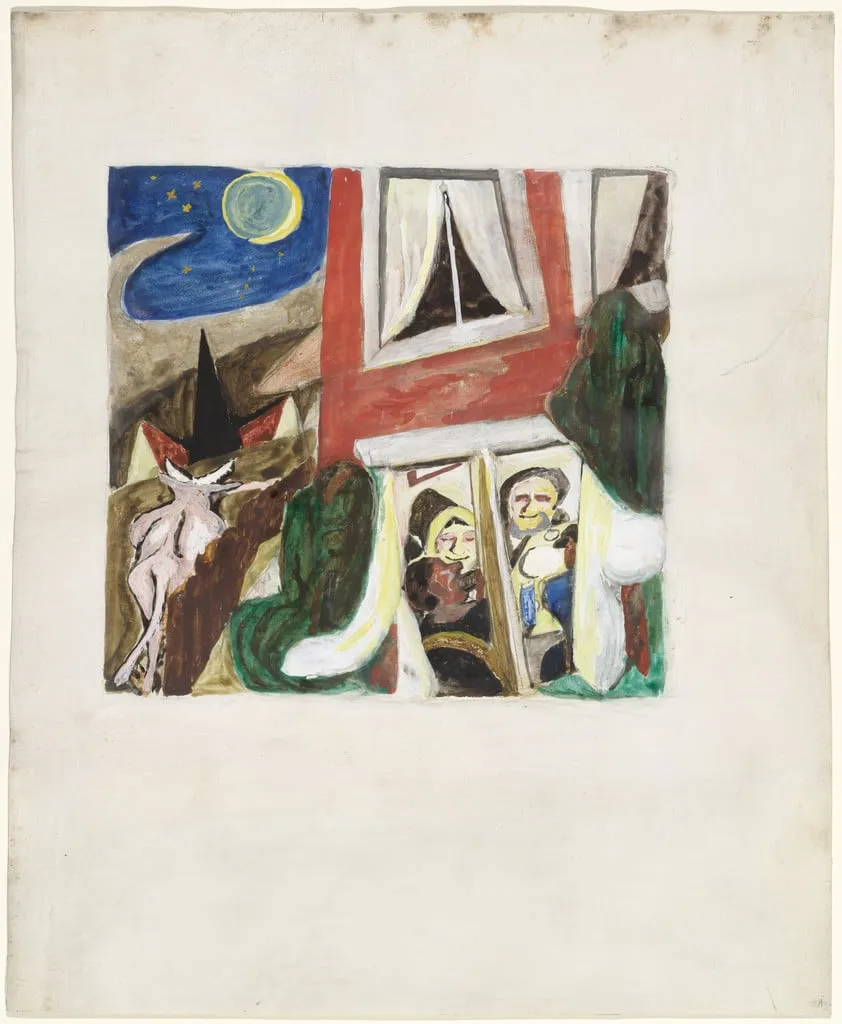
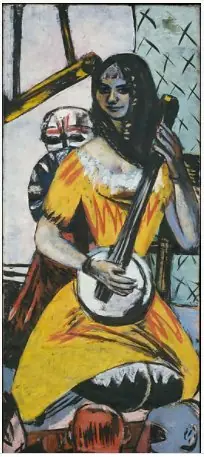
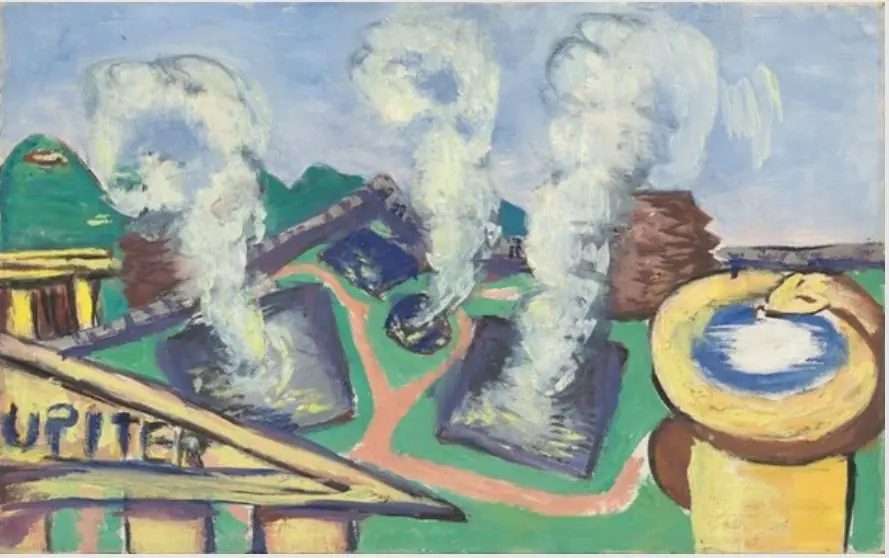
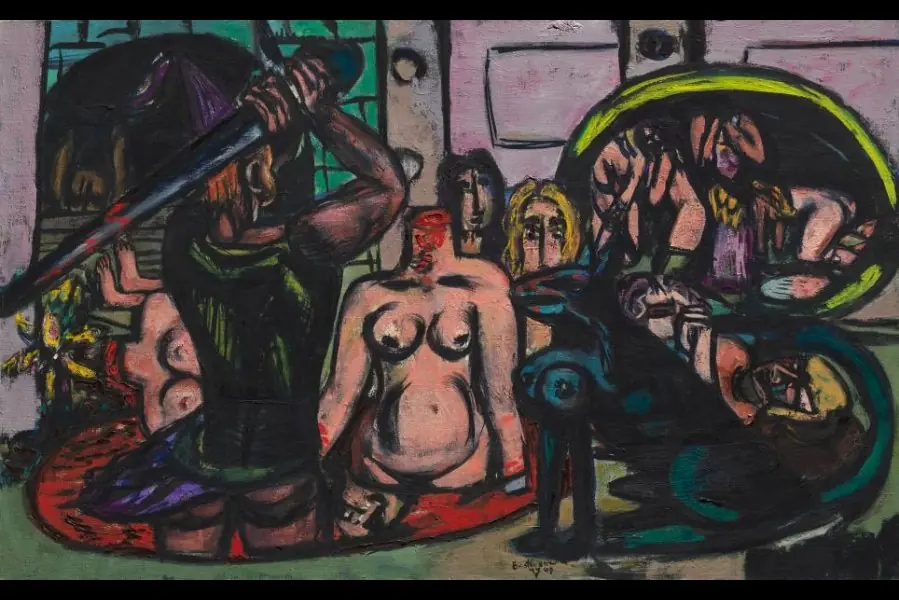
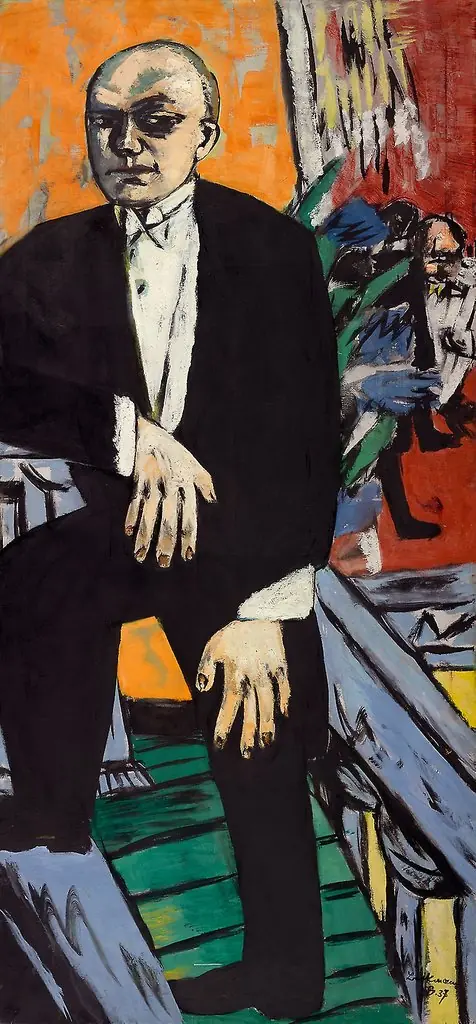
Untitled is a watercolor drawing by Max Beckmann. It dates from 1918 and is held in the collection of the Museum of Modern Art.
About this work
Overview
The work exemplifies his early exploration of psychological tension through layered media, capturing a nocturnal scene that feels both intimate and disquieting.
Created around 1918, this drawing by Max Beckmann combines gouache and watercolor with ink and pencil on parchment. Though often grouped with Expressionist artists, Beckmann resisted such categorization. The work exemplifies his early exploration of psychological tension through layered media, capturing a nocturnal scene that feels both intimate and disquieting. Its fragile support and mixed techniques reflect a period of intense personal and artistic transition in post-war Germany.
Subject & Meaning
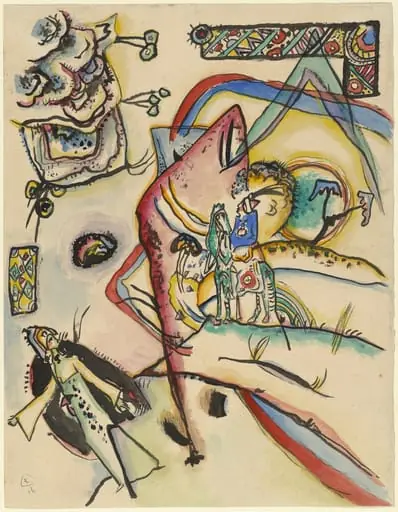
The scene depicts a solitary red house under a dark, starlit sky, its window revealing two figures at a table illuminated by a lamp. Outside, a horse and rider pass silently, while a shadowy form lingers near a tree. These elements suggest a narrative of isolation and quiet observation, with no clear resolution. Beckmann imbues the domestic interior with an undercurrent of unease, transforming a seemingly ordinary moment into something enigmatic and psychologically charged.
Technique & Style
Beckmann applied thick, uneven brushstrokes in gouache and watercolor over a delicate ink and pencil foundation, creating a tactile surface that feels both spontaneous and deliberate. The colors—vivid reds, deep blues, and stark whites—are applied with little blending, enhancing the scene’s dissonance. The rough, almost scribbled texture contrasts with the precision of the architectural forms, reinforcing a sense of instability beneath the surface order.
History & Provenance
This work dates from the immediate aftermath of World War I, a time when Beckmann was redefining his artistic voice after serving as a medical orderly in the war. Though its early ownership is undocumented, it aligns with his pre-1920s output, preceding his formal association with New Objectivity. The piece remained in private hands until entering institutional collections, where it is now studied as a key example of his transitional phase.
Context
In 1918, Germany was reeling from defeat and societal upheaval. Artists like Beckmann grappled with trauma, disillusionment, and shifting identities. While Expressionism emphasized inner emotion, Beckmann’s work here avoids overt sentimentality, instead using surreal juxtapositions and stark lighting to evoke unease. This approach foreshadowed his later alignment with New Objectivity, which sought clarity amid chaos without abandoning psychological depth.
Legacy
Though lesser known than his large-scale paintings, this drawing reveals the foundations of Beckmann’s enduring visual language: compressed space, symbolic figures, and emotional ambiguity. Its experimental use of materials and refusal of easy interpretation influenced later generations of figurative artists. The work stands as a quiet but potent testament to his lifelong interest in the hidden tensions of everyday life.
Artist & collection
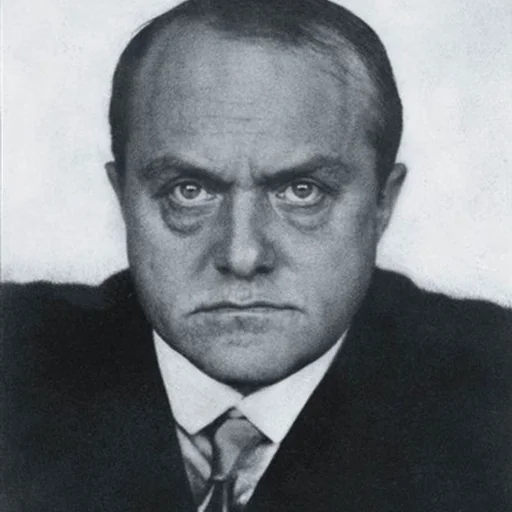
Artist
Max Carl Friedrich Beckmann (February 12, 1884 – December 27, 1950) was a German painter, draftsman, printmaker, sculptor, and writer.