Artwork
Untitled
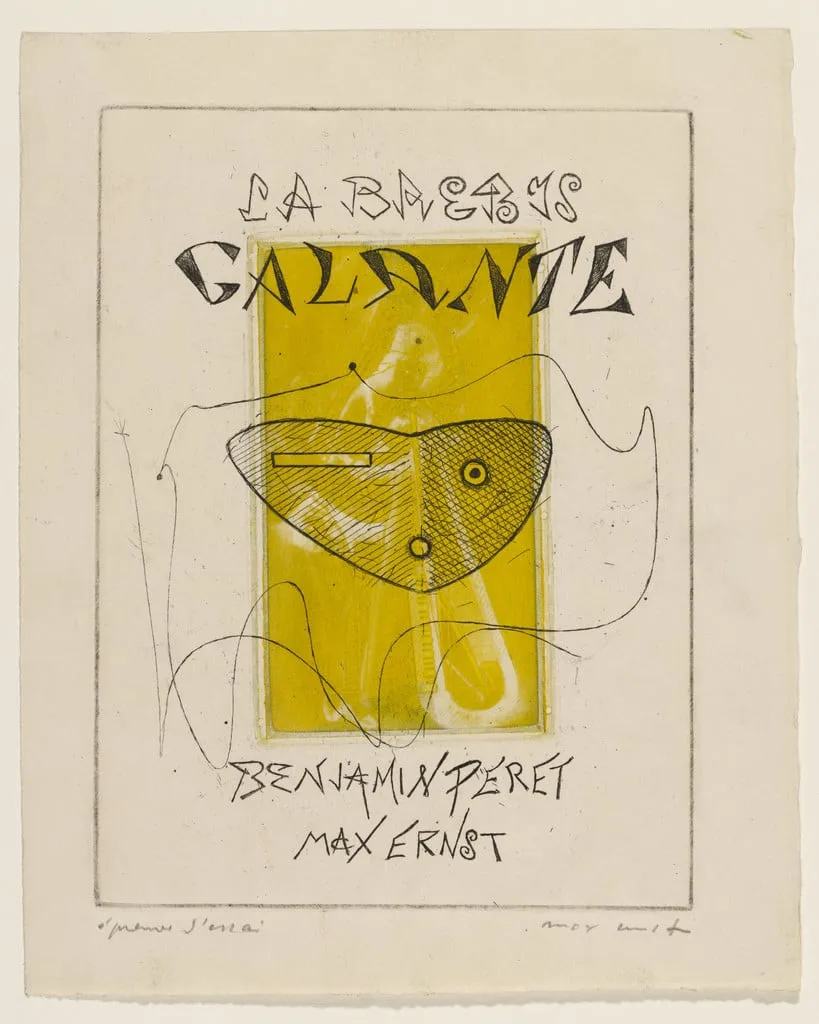
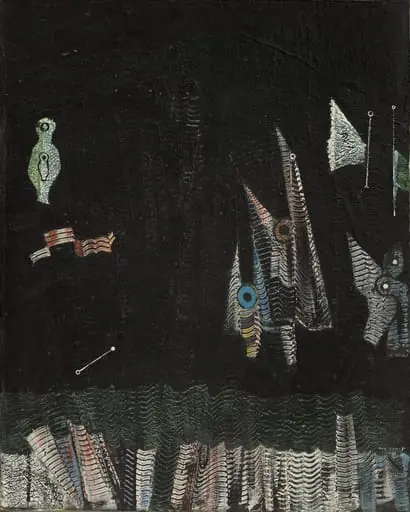
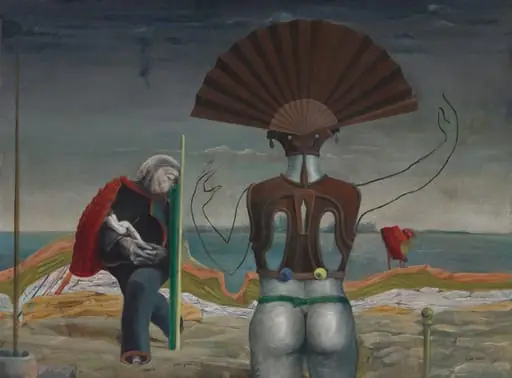
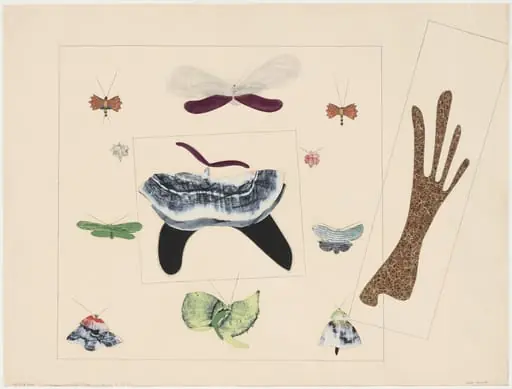
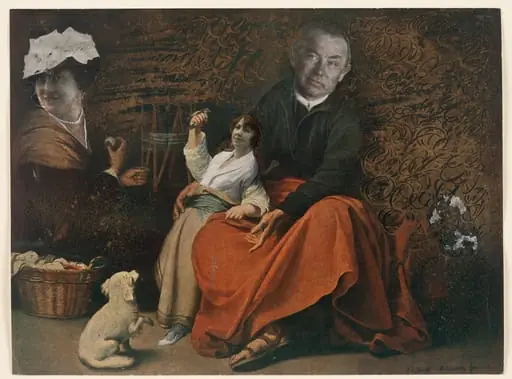
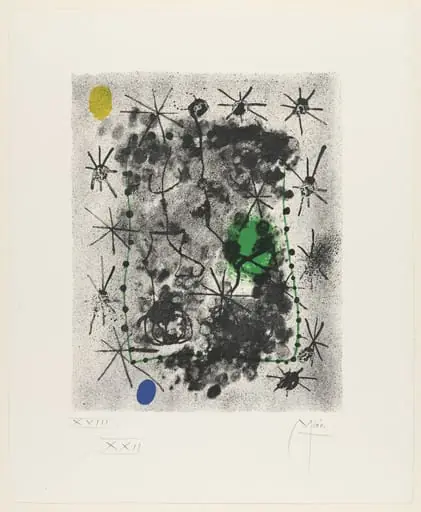
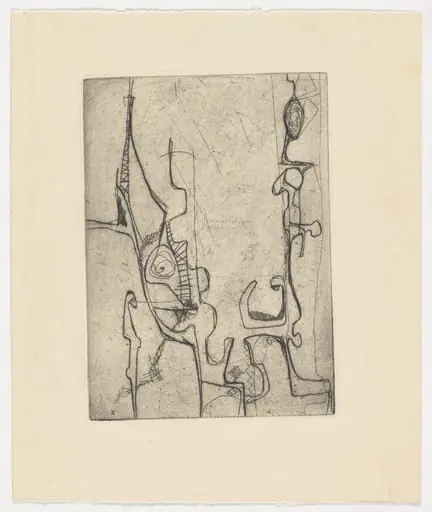
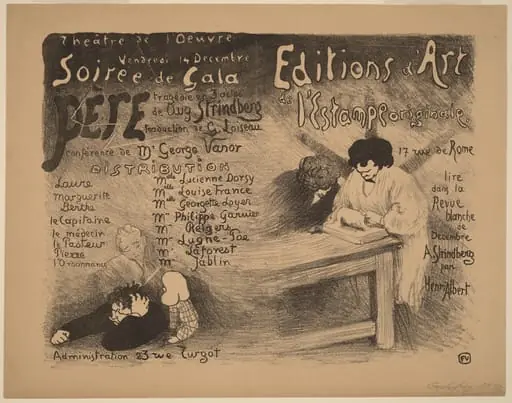
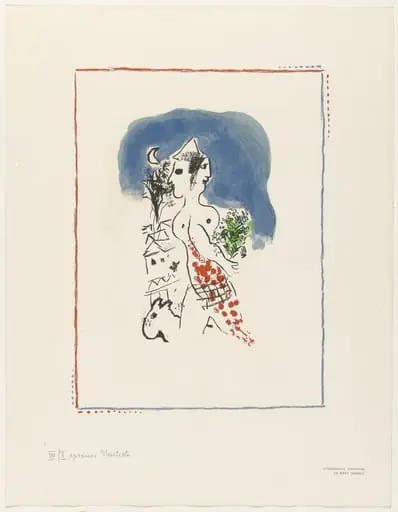
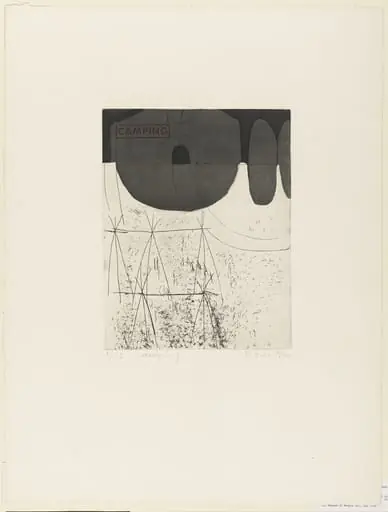
Untitled is an ink print by Max Ernst. It dates from 1949 and is held in the collection of the Museum of Modern Art.
About this work
Overview
Though trained as a painter, he consistently explored graphic techniques, using etching to expand his visual language.
Max Ernst produced this etching in 1949, continuing his engagement with printmaking during his later years. Though trained as a painter, he consistently explored graphic techniques, using etching to expand his visual language. The work is one of many in his print oeuvre that bridges abstraction and symbolic suggestion, reflecting his lifelong interest in subconscious imagery and material experimentation.
Subject & Meaning
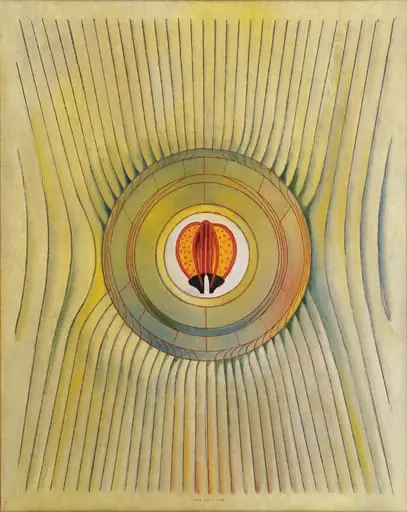
The composition centers on a yellow, wing-like form divided into contrasting zones: a solid field on the left and a grid on the right, with a small central circle. The title 'La Baigneuse'—'The Bather'—invites a reading of the shape as a fragmented figure, though no literal form appears. Ernst often used ambiguous symbols to evoke psychological states, leaving interpretation open to the viewer’s subconscious associations.
Technique & Style
The etching employs precise lines and flat, saturated color fields, contrasting with Ernst’s more textured methods like grattage. The yellow rectangle is bounded by a thin black outline, enhancing its graphic clarity. The grid and solid areas suggest mechanical and organic oppositions, a recurring tension in his work. The inclusion of text—artist name, collaborator, and title—integrates language as a visual element, typical of Surrealist print practices.
History & Provenance
This print was made during Ernst’s time in the United States, following his emigration from Europe. It bears the name of Benjamin Peret, a French Surrealist poet and close associate, indicating possible collaborative intent or dedicatory context. The work remains within the sphere of Ernst’s private print production, not widely circulated, and is recognized for its distinct formal economy compared to his larger-scale paintings.
Context
In the late 1940s, Ernst was refining his graphic work amid shifting Surrealist circles. While the movement’s political momentum had waned, its interest in automatism and symbolic ambiguity persisted in print. This piece aligns with contemporaneous experiments by artists like Matta and Miró, who used limited palettes and geometric abstraction to evoke inner landscapes rather than external reality.
Legacy
Though less discussed than his frottage or collage works, this etching exemplifies Ernst’s sustained commitment to print as a medium for psychological inquiry. Its restrained palette and symbolic ambiguity influenced later generations of printmakers exploring abstraction and textual integration. The work stands as a quiet but deliberate extension of Surrealist principles into the graphic realm.
Artist & collection
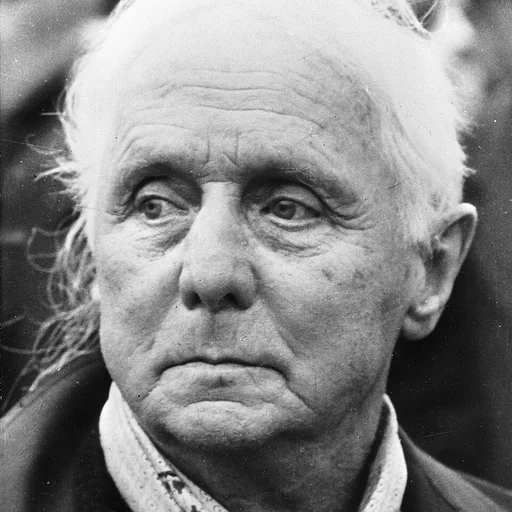
Artist
Max Ernst (; German: 2 April 1891 – 1 April 1976) was a German-born painter, sculptor, printmaker, graphic artist, and poet.