Artwork
Untitled
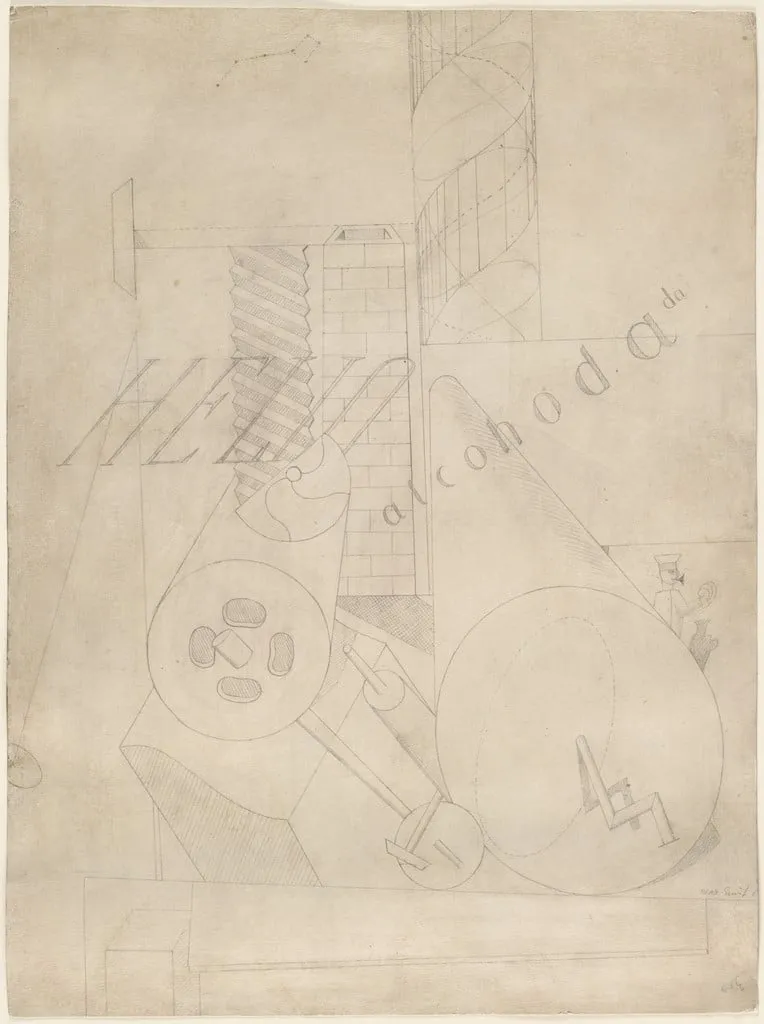
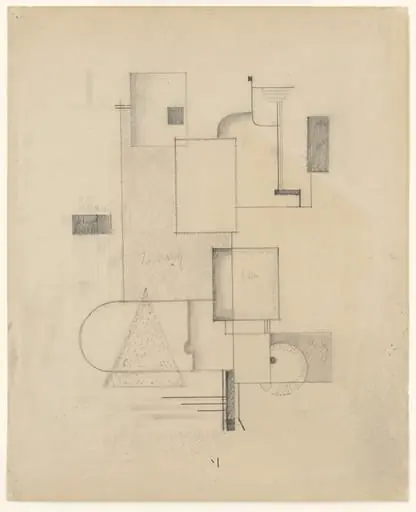
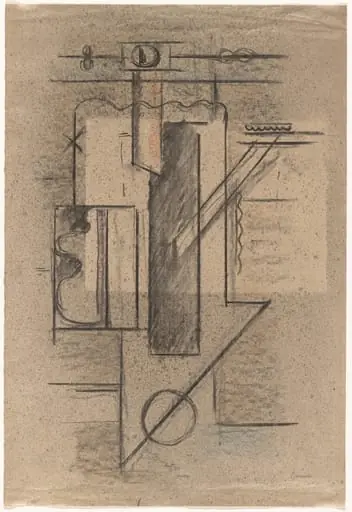
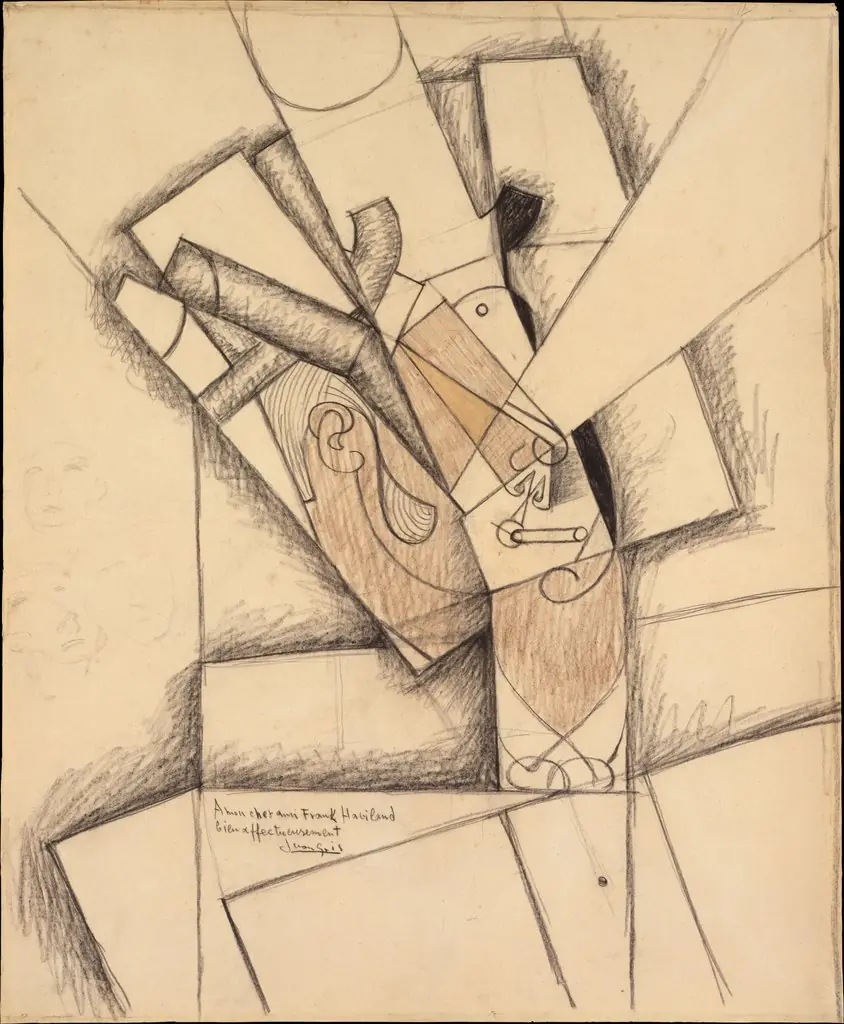
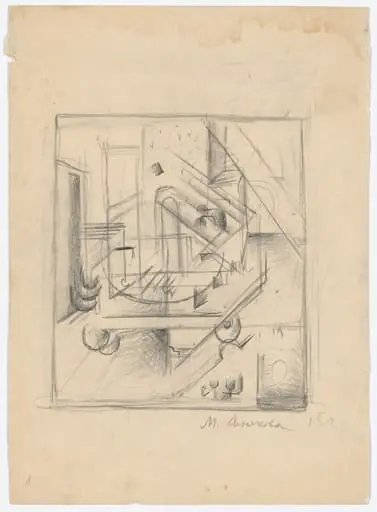
Untitled is a graphite drawing by Max Ernst. It dates from 1919 and is held in the collection of the Museum of Modern Art.
About this work
Overview
The piece predates his later invention of frottage but already reveals his interest in disrupting conventional representation.
This 1919 pencil drawing by Max Ernst is an early work from his time in Cologne, where he was immersed in the Dada movement. Though lacking formal artistic training, Ernst pursued an intuitive, exploratory approach to image-making. The piece predates his later invention of frottage but already reveals his interest in disrupting conventional representation. It is held in the collection of The Museum of Modern Art.
Subject & Meaning
The drawing depicts an ambiguous urban landscape with tilted, irregular structures and nonfunctional architectural elements. A prominent hat-like form at the center contains amorphous masses, suggesting symbolic or subconscious content. Overlapping lines and unresolved shapes resist clear interpretation, evoking a dreamlike disorientation rather than a literal scene. The work reflects Dada’s rejection of rational order through visual chaos.
Technique & Style
Ernst used only pencil to build texture and depth through layered, gestural strokes. There is no shading in the traditional sense; instead, dense clusters of lines create visual weight and ambiguity. Forms are suggested rather than defined, with edges blurred and contours interrupted. The sketchlike quality implies spontaneity, as if the image emerged from rapid, unfiltered mark-making.
History & Provenance
Created in 1919 during Ernst’s involvement with the Cologne Dada group, the drawing emerged from a period of radical artistic experimentation. It remained in private hands before entering The Museum of Modern Art’s collection, where it is preserved as part of the institution’s early modernist holdings. Its survival reflects its significance as a transitional work in Ernst’s evolving practice.
Context
In postwar Germany, Dada artists like Ernst rejected traditional aesthetics in favor of irrationality and chance. This drawing aligns with contemporaneous works that used fragmentation and absurdity to critique societal norms. While not yet employing his later techniques, it shares the movement’s ethos: art as a disruption, not a decoration, and the artist as an investigator of the unconscious.
Legacy
Though not a finished composition, this drawing anticipates Ernst’s later innovations in automatic drawing and texture-based methods. Its raw, unresolved quality became a model for Surrealist explorations of the subconscious. It stands as evidence of how informal, experimental sketches could lay the groundwork for major developments in 20th-century art.
Artist & collection
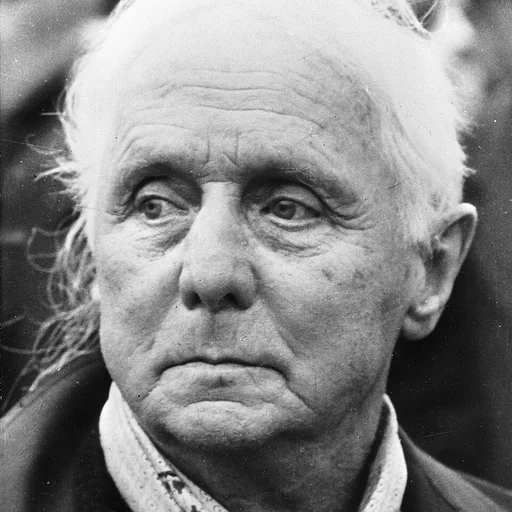
Artist
Max Ernst (; German: 2 April 1891 – 1 April 1976) was a German-born painter, sculptor, printmaker, graphic artist, and poet.