Artwork
Untitled
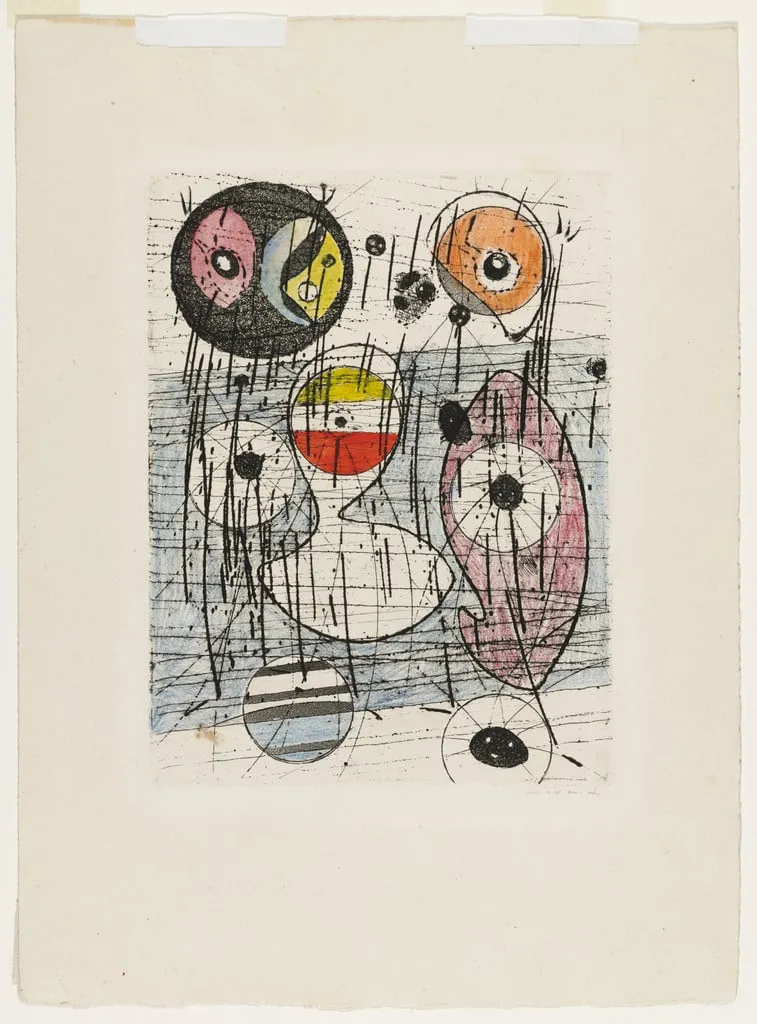
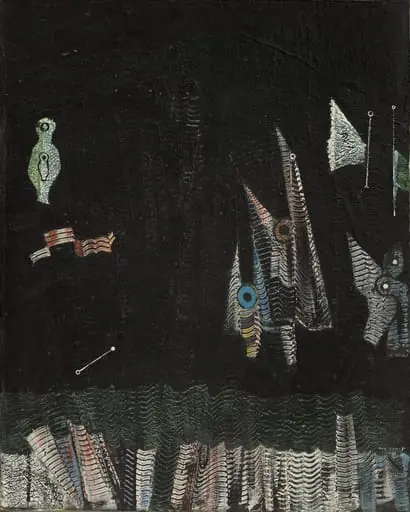
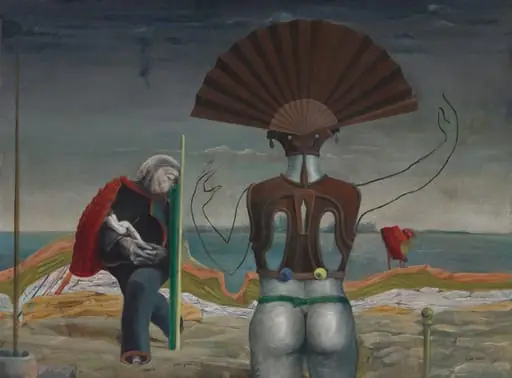
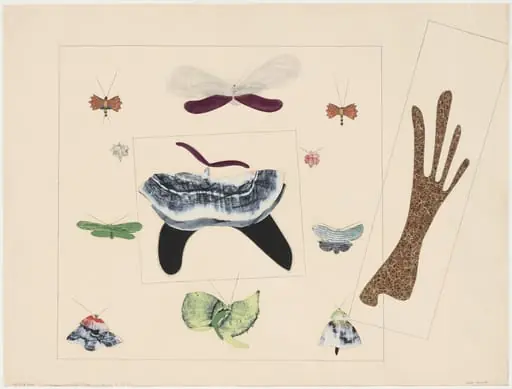
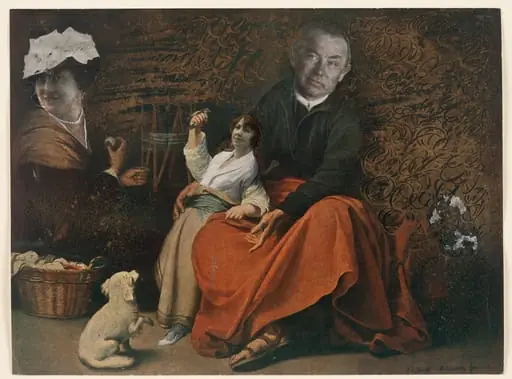
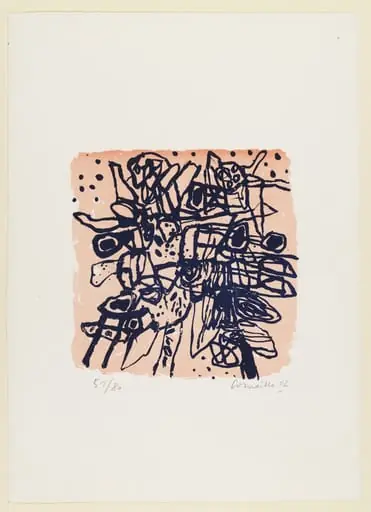
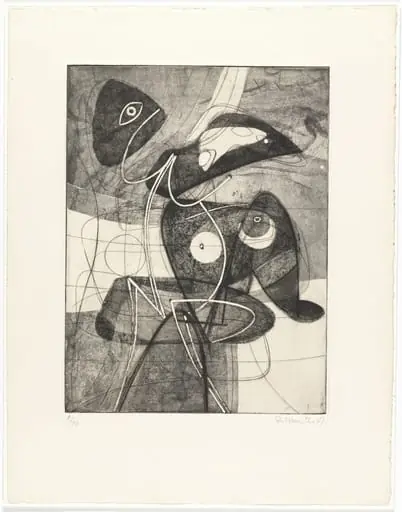
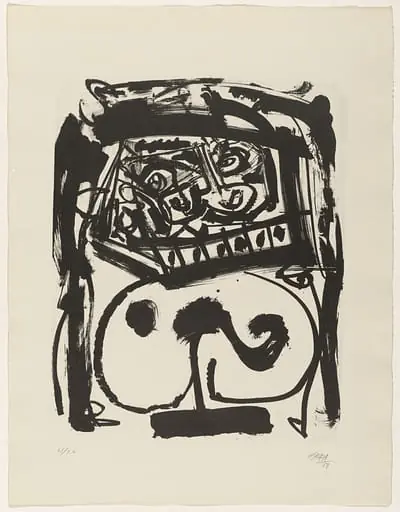
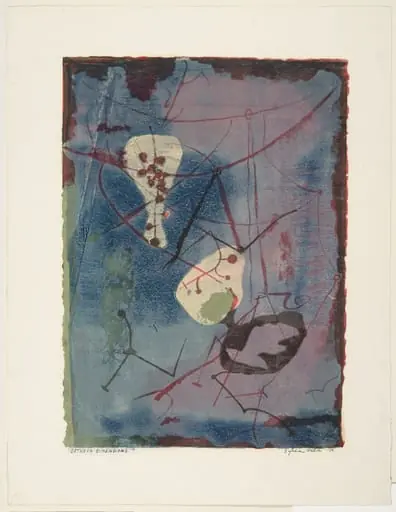
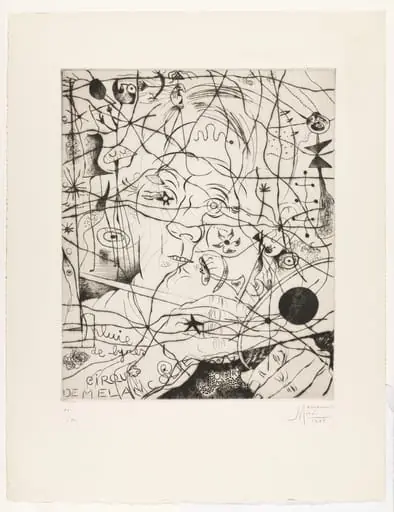
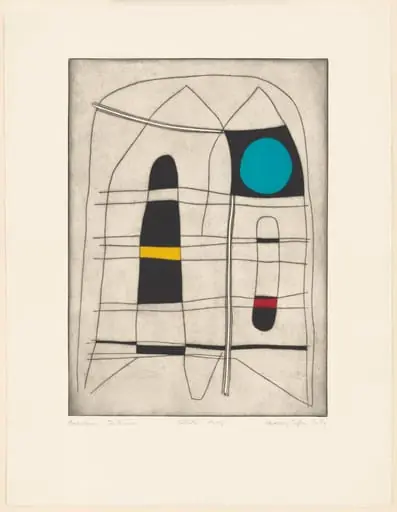
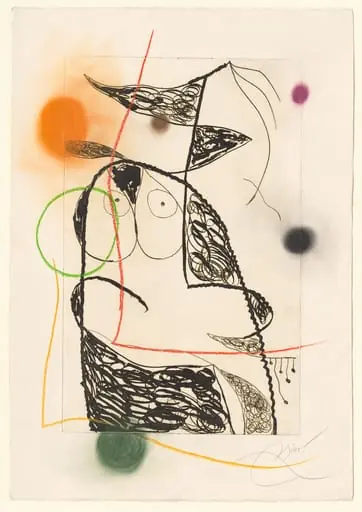
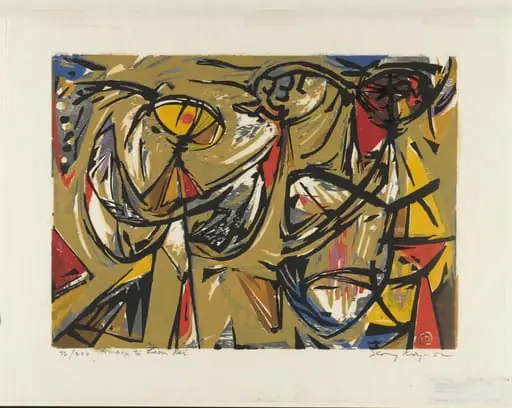
Untitled is a watercolor print by Max Ernst. It dates from 1952 and is held in the collection of the Museum of Modern Art.
About this work
Overview
The layered techniques reflect Ernst’s ongoing interest in merging mechanical reproduction with spontaneous, manual intervention.
Created in 1952, this print by Max Ernst combines etching and aquatint with hand-applied crayon, watercolor, and gouache. The layered techniques reflect Ernst’s ongoing interest in merging mechanical reproduction with spontaneous, manual intervention. Though unsigned and untitled, the work exemplifies his post-war exploration of form and material, moving beyond earlier Surrealist strategies toward more fluid, abstract compositions.
Subject & Meaning
The composition features amorphous, circular forms that suggest faces without literal representation. Their muted pinks, yellows, and orange hues evoke organic or biological entities, while the absence of defined features resists narrative interpretation. The chaotic network of lines and scattered dots implies internal agitation or psychic energy, aligning with Ernst’s interest in subconscious imagery rather than symbolic storytelling.
Technique & Style
Ernst employed etching and aquatint to establish a textured base, then added crayon for bold, gestural lines and watercolor and gouache for translucent color fields. The irregular application of pigment creates a sense of spontaneity, contrasting with the precision of the printed lines. This hybrid approach blurs boundaries between printmaking and painting, emphasizing process over predetermined form.
History & Provenance
This work emerged during Ernst’s later period in France and the United States, following his exile from Nazi Germany and his association with Surrealist circles in Paris. Though not part of a named series, it belongs to a body of prints from the early 1950s where he increasingly favored intuitive mark-making. Its provenance traces to private collections in Europe and North America, with no public exhibition history noted.
Context
In the early 1950s, Ernst distanced himself from overt Surrealist doctrine, turning toward more abstract and material-driven practices. His contemporaries, including Dubuffet and Miró, were also exploring non-representational forms, but Ernst retained a unique fusion of print techniques and painterly gesture. This work reflects a broader post-war shift in European art toward process, texture, and psychological resonance over narrative clarity.
Legacy
Ernst’s integration of printmaking with mixed media influenced later generations of artists interested in the intersection of control and accident. While less widely known than his frottage works, this piece exemplifies his sustained commitment to experimental methods. It stands as a quiet but significant contribution to the evolution of post-war printmaking, emphasizing materiality and emotional suggestion over figuration.
Artist & collection
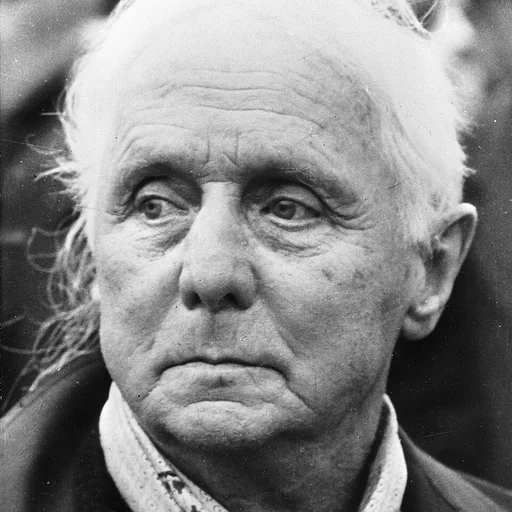
Artist
Max Ernst (; German: 2 April 1891 – 1 April 1976) was a German-born painter, sculptor, printmaker, graphic artist, and poet.