Artwork
Untitled
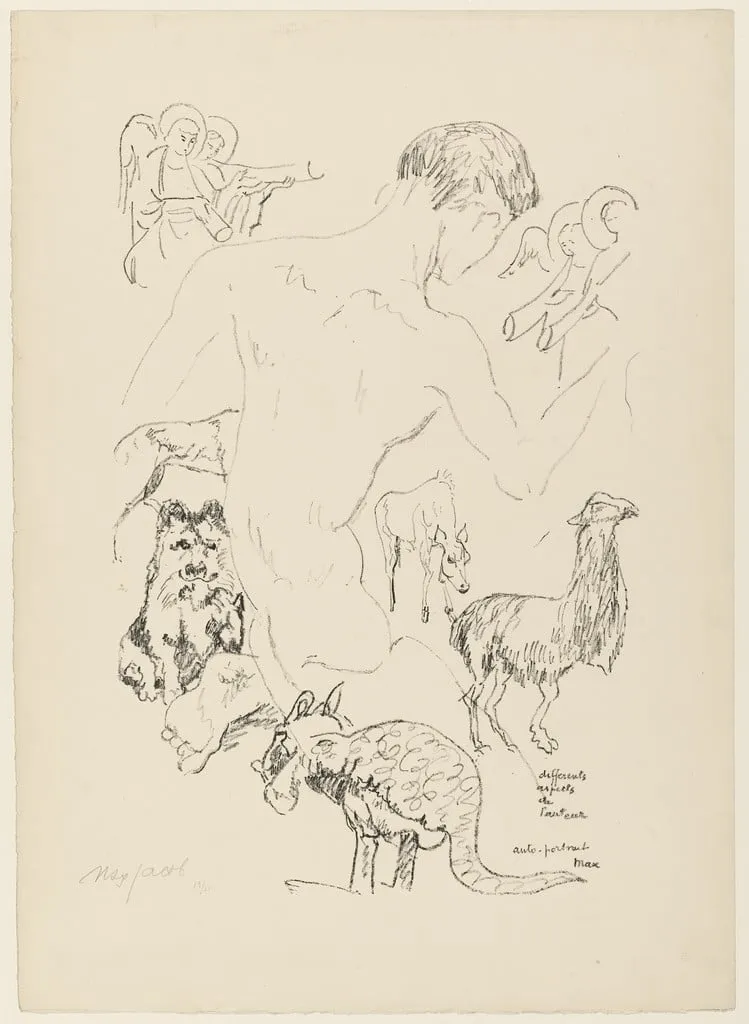
Untitled is an ink print by Max Jacob. It dates from 1920 and is held in the collection of the Museum of Modern Art.
About this work
Overview
The work captures the artist’s face through three distinct angular views—profile, three-quarter, and frontal—rendered with a sense of immediacy.
Created around 1920, this lithograph by Max Jacob is a self-portrait executed in the lithographic technique. It resides in the collection of The Museum of Modern Art. The work captures the artist’s face through three distinct angular views—profile, three-quarter, and frontal—rendered with a sense of immediacy. The medium’s directness aligns with the spontaneous quality of the imagery, suggesting a rapid, introspective act of self-observation.
Subject & Meaning
The fragmented depiction of Jacob’s face suggests an exploration of identity through multiple perspectives. Rather than presenting a unified likeness, the three views imply internal division or shifting self-perception. The absence of narrative context invites interpretation as a psychological study, where the artist confronts his own image not as a fixed entity but as something fluid and multifaceted.
Technique & Style
Lithography allowed Jacob to draw directly onto a stone surface with greasy materials, enabling a tactile, gestural approach. The lines are loose and hurried, resembling quick sketches rather than polished renderings. This technique preserved the spontaneity of his hand, lending the image an unrefined energy. The absence of shading or detail emphasizes form through contour alone, reinforcing the work’s raw, unmediated character.
History & Provenance
The print was made during Jacob’s time in Paris, amid the vibrant exchange between writers and visual artists of the early 20th century. It entered The Museum of Modern Art’s collection in the mid-20th century, following the institution’s early focus on modernist prints. Its preservation reflects an interest in the intersection of literary and visual modernism, particularly in works by poet-artists like Jacob.
Context
Jacob was a central figure in the Parisian avant-garde, closely associated with Picasso and Apollinaire. His engagement with visual art paralleled his poetry, both marked by fragmentation and introspection. This lithograph emerges from a period when artists increasingly turned to printmaking for its immediacy and accessibility, using it to explore personal and psychological themes beyond traditional portraiture.
Legacy
The work exemplifies how early 20th-century artists used lithography to break from academic conventions. Its informal, almost sketchlike quality influenced later generations interested in the expressive potential of printmaking. Jacob’s fusion of literary sensibility with visual experimentation remains a touchstone for artists exploring self-representation through non-traditional means.
Artist & collection


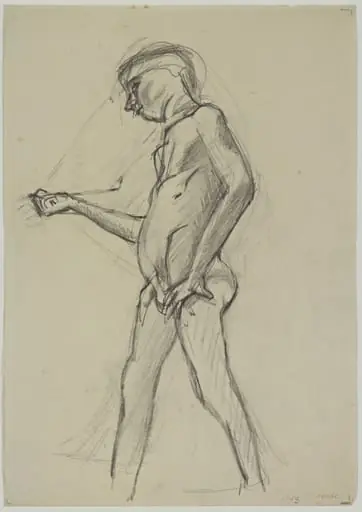 Untitled
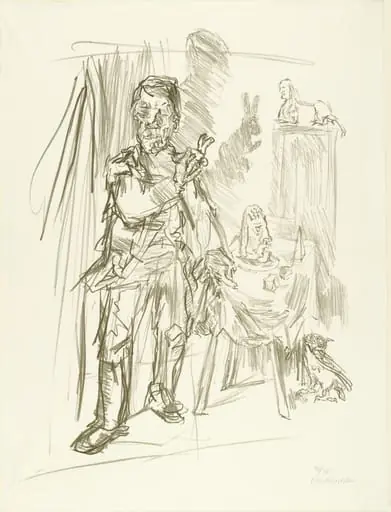 Untitled
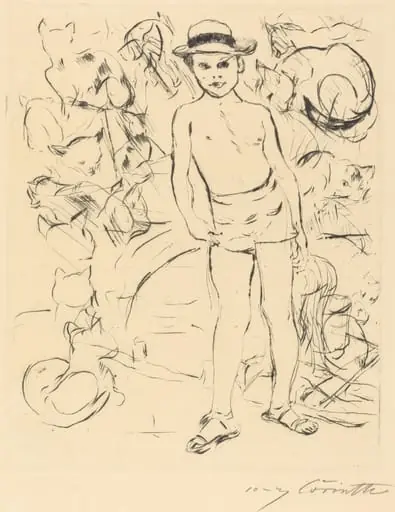 Knabe mit Badehose und Strohhut (Boy Wearing Bathing-Trunks and Straw Hat)
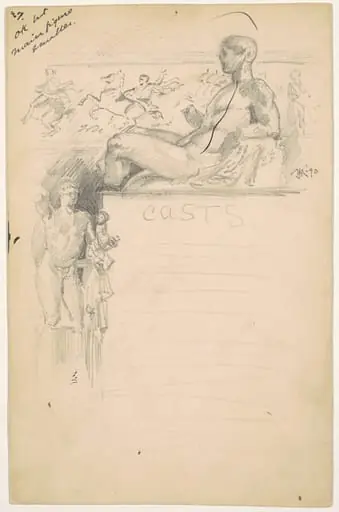 Study for "Casts from Antique Sculpture: The Parthenon"
![Studies of Dogs and a Seated Boy [recto], by James Goodwyn Clonney](https://artifactworldgallery.com/img/james-goodwyn-clonney--studies-of-dogs-and-a-seated-boy-recto--440d550e9055fba3-w320.webp) Studies of Dogs and a Seated Boy [recto]
Studies of Dogs and a Seated Boy [recto]![Studies for "Shoeing Calvary Horses at the Front" [recto], by John Singer Sargent](https://artifactworldgallery.com/img/john-singer-sargent--studies-for-shoeing-calvary-horses-at-the-front-recto--c49cae3ecf667bff-w320.webp) Studies for "Shoeing Calvary Horses at the Front" [recto]
Studies for "Shoeing Calvary Horses at the Front" [recto]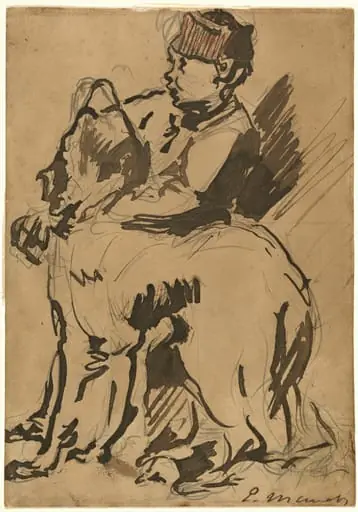 A Boy Holding His Dog
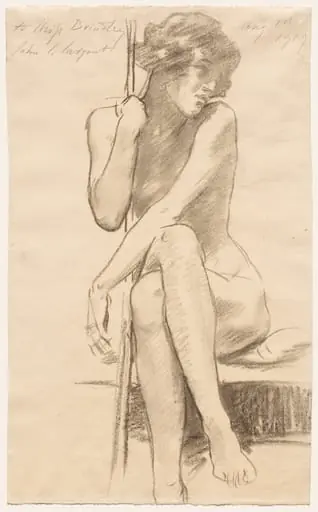 Female Nude Seated on a Low Bench
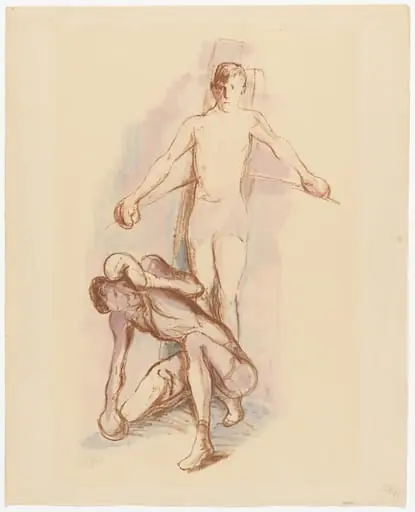 Untitled
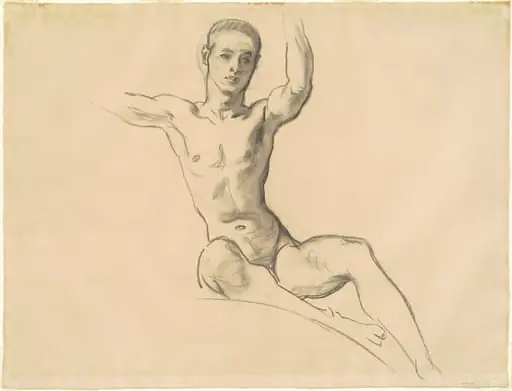 Study for Figure above "Music"
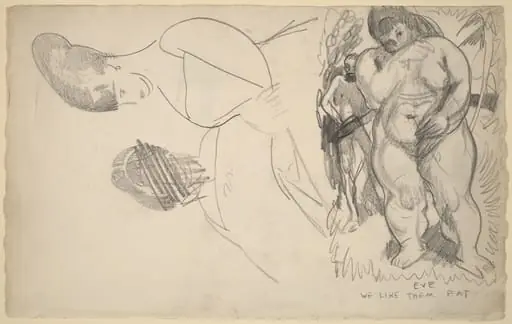 Caricature of Adam and Eve and Two Female Portrait Sketches
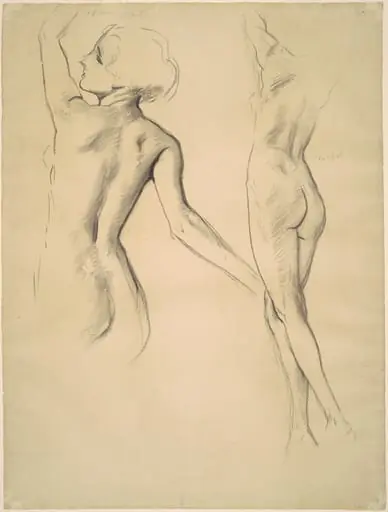 Studies for "Dancing Figures"