Artwork
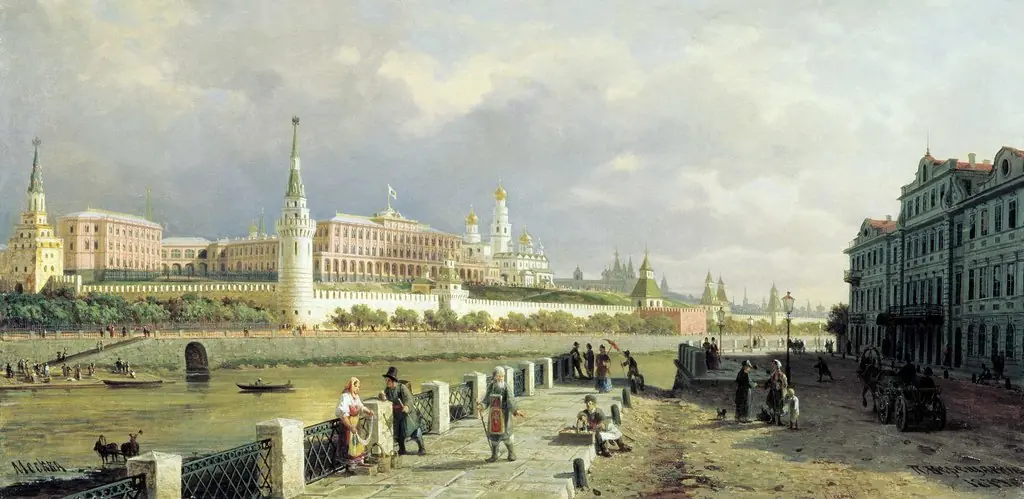
View of the Moscow Kremlin (from the Kamenny Bridge)
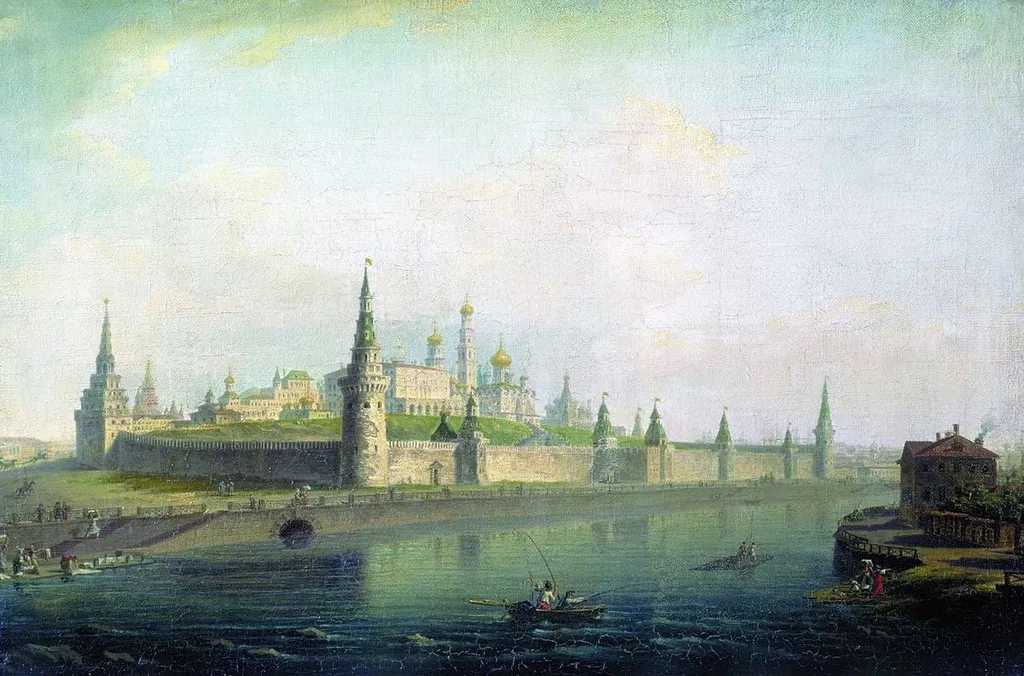
View of the Moscow Kremlin (from the Kamenny Bridge) is an oil painting by Maxim Vorobiev. It dates from 1819 and is held in the collection of the Tretyakov Gallery.
About this work
Overview
It belongs to a series of Russian landscape studies the artist produced during the early 19th century, emphasizing natural and architectural harmony.
Painted in 1819 by Maxim Vorobiev, this oil-on-canvas work captures a view of the Moscow Kremlin as seen from the Kamenny Bridge. It belongs to a series of Russian landscape studies the artist produced during the early 19th century, emphasizing natural and architectural harmony. The painting is part of the Tretyakov Gallery’s permanent collection, where it represents a quiet moment in Moscow’s urban scenery.
Subject & Meaning
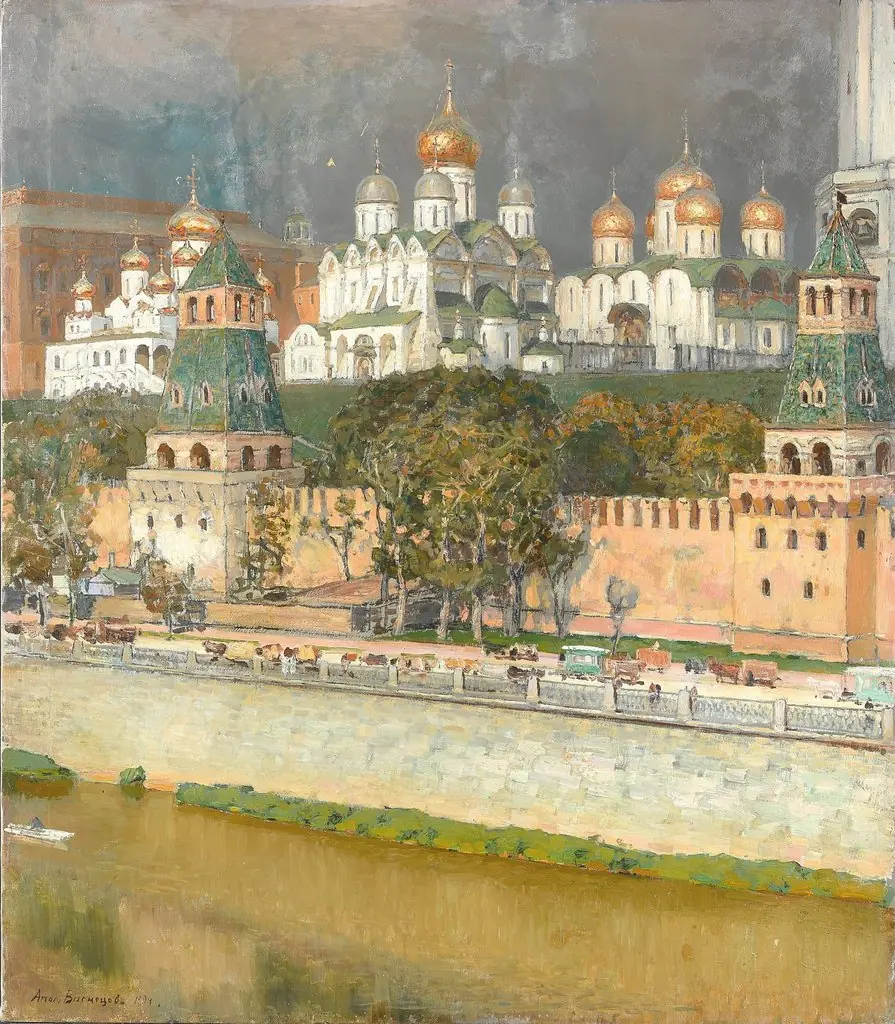
The scene presents the Kremlin’s fortified walls and towers rising above the Moskva River, framed by the arched structure of the Kamenny Bridge. The composition avoids human activity, focusing instead on the quiet dignity of the city’s core. The still water mirrors the architecture, suggesting stability and continuity. This view reflects a growing interest in national identity through recognizable landmarks during the post-Napoleonic era.
Technique & Style
Vorobiev employed subtle gradations of light to model the Kremlin’s stone surfaces and the river’s reflective surface. Soft atmospheric perspective softens distant details, while the bridge’s curve leads the eye inward. The sky, rendered in pale blues and muted whites, adds depth without distraction. Brushwork remains controlled, favoring clarity over dramatic expression, aligning with the era’s preference for orderly, observed nature.
History & Provenance
Created in 1819, the painting entered the Tretyakov Gallery’s collection in the late 19th century as part of its mission to document Russian artistic heritage. It was among the early landscape works acquired to represent the nation’s visual culture beyond religious or historical themes. Its preservation reflects its status as a representative example of early Russian academic landscape painting.
Context
In the early 1800s, Russian artists increasingly turned to native scenery as subjects worthy of serious attention. Vorobiev’s work emerged alongside a cultural shift that valued the country’s own topography and architecture over imported European models. This painting contributes to a broader movement that sought to define a distinctly Russian aesthetic through observation and restraint.
Legacy
Though not widely known outside Russia, the painting remains a key reference in studies of 19th-century Russian landscape art. It influenced later artists who sought to depict Moscow’s historic core with quiet precision. Its presence in the Tretyakov Gallery ensures its role as a documented witness to how Russians visually engaged with their own capital during a formative period.
Artist & collection
Artist
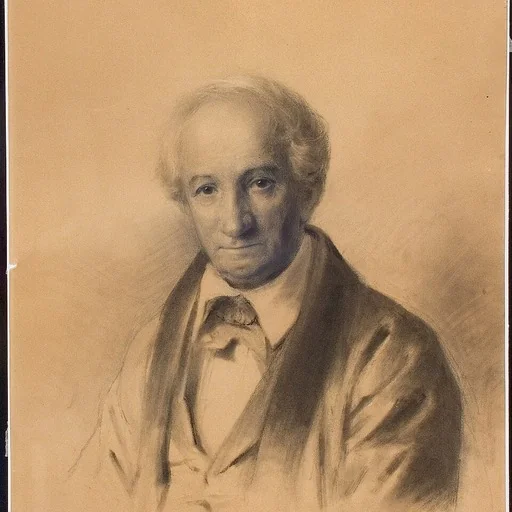
Maksim Nikiforovich Vorobyov (Russian: Макси́м Ники́форович Воробьёв; 17 August 1787, in Pskov – 11 September 1855, in Saint Petersburg) was a Russian landscape painter.