Artwork
Ruins of the Palais Gallien in Bordeaux
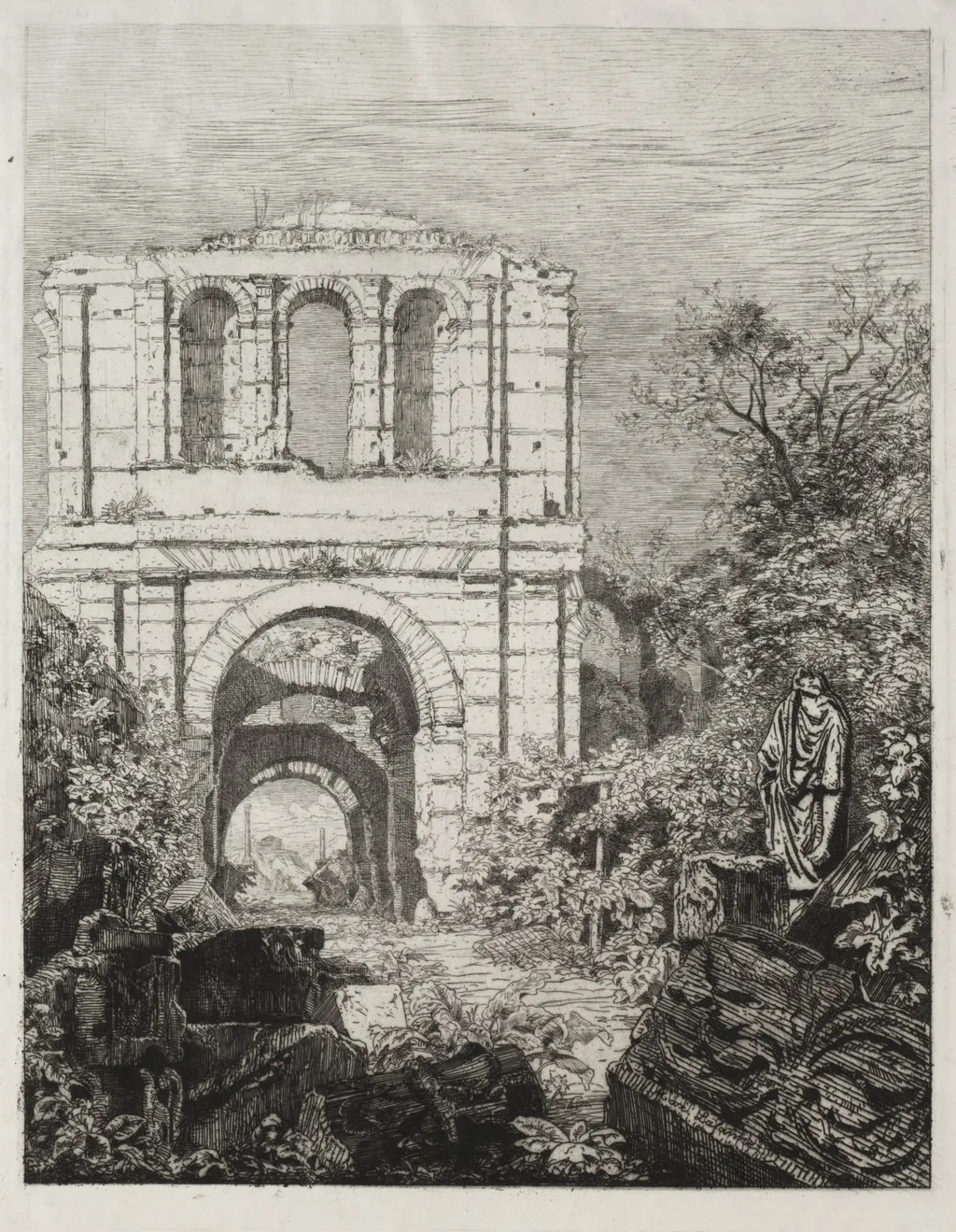
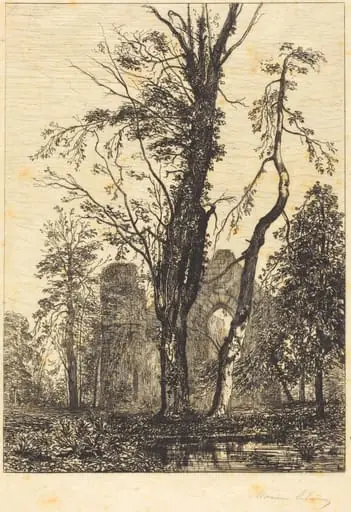
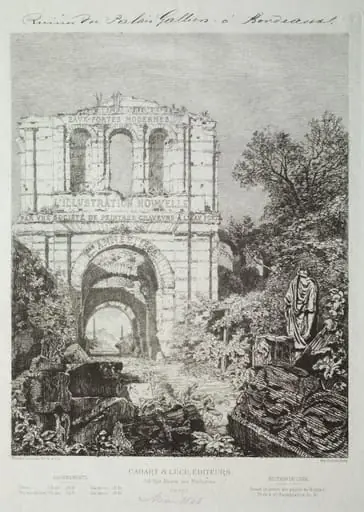
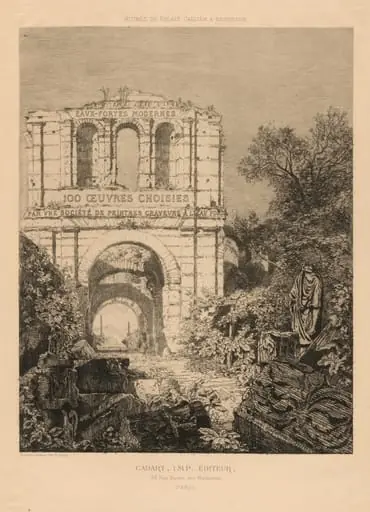
Ruins of the Palais Gallien in Bordeaux is a print by the Impressionist artist Maxime Lalanne. It dates from 1870 and is held in the collection of the Cleveland Museum of Art.
About this work
Overview
Created in 1870 by French artist Maxime Lalanne, this etching captures the remnants of the Palais Gallien, a Roman amphitheater in Bordeaux. Lalanne, known for his precision in printmaking, rendered the site with careful attention to texture and atmosphere. The work belongs to a broader tradition of 19th-century topographical prints that valued direct observation over idealized reconstruction.
Subject & Meaning
The scene portrays the crumbling stone structure overtaken by nature—vines creep over arches, and trees grow from crevices. Rather than emphasizing grandeur, the image conveys quiet decay and the passage of time. Lalanne’s focus on the ruin’s quiet persistence suggests a contemplative engagement with history, where architecture becomes a silent witness to centuries of change.
Technique & Style
Lalanne employed fine-line etching to render intricate details of weathered stone, foliage, and shadow. His use of cross-hatching and delicate tonal gradations creates depth without heavy contrast. The composition avoids dramatic angles, favoring a level, almost documentary perspective that underscores the scene’s authenticity and the artist’s commitment to observed reality.
History & Provenance
The Palais Gallien, built in the 1st or 2nd century CE, was largely buried and forgotten until 19th-century excavations revived interest in its remains.
The Palais Gallien, built in the 1st or 2nd century CE, was largely buried and forgotten until 19th-century excavations revived interest in its remains. Lalanne’s etching emerged during this period of archaeological rediscovery in France. While its early ownership is undocumented, the print circulated among collectors of French graphic art and is now held in institutional collections, including the Cleveland Museum of Art.
Context
In the late 1860s and 1870s, French artists increasingly turned to historical ruins as subjects, reflecting broader cultural interest in national heritage. Lalanne’s work aligns with the revival of etching as a serious medium, distinct from mass-produced illustrations. His approach—grounded in on-site sketching—echoed the practices of the Barbizon painters, who valued direct engagement with the landscape.
Legacy
Lalanne’s etching contributed to the preservation of visual records of France’s Roman heritage at a time when such sites were vulnerable to neglect or urban expansion. His technique influenced later printmakers interested in architectural detail and atmospheric nuance. The work remains a reference for scholars studying 19th-century print culture and the evolving perception of antiquity in modern France.
Artist & collection
Artist
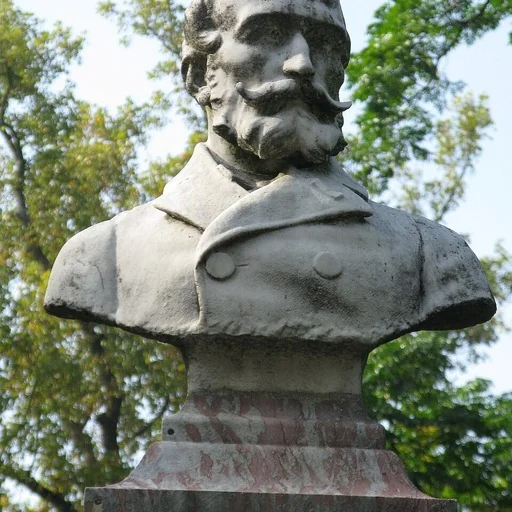
François Antoine Maxime Lalanne (November 27, 1827 – July 29, 1886) was a French artist known for his etchings and charcoal drawings (fusain).