Artwork
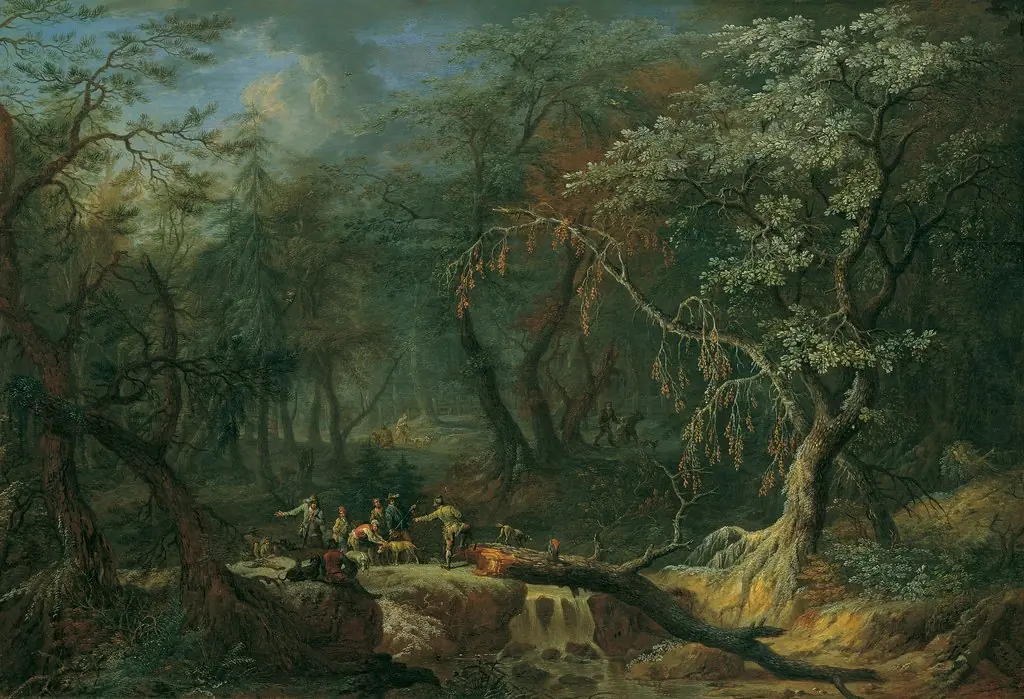
Forest Landscape "Morning"
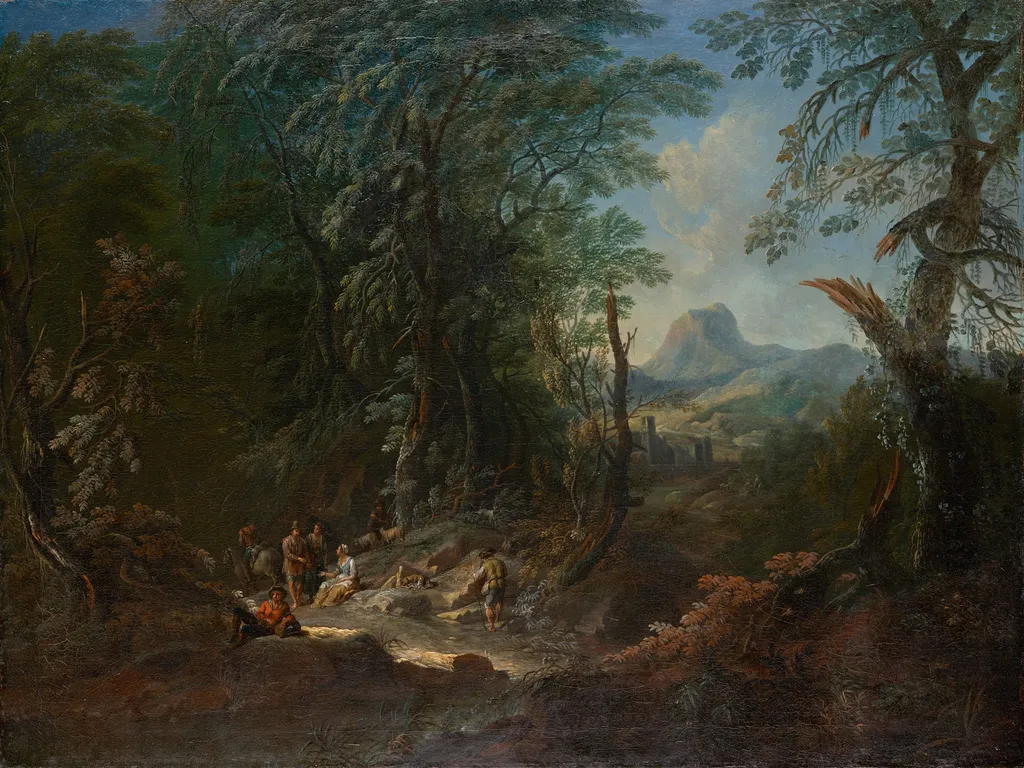
Forest Landscape "Morning" is an oil painting by Maximilian Joseph Schinnagl. It is held in the collection of the Kunsthistorisches Museum.
About this work
Overview
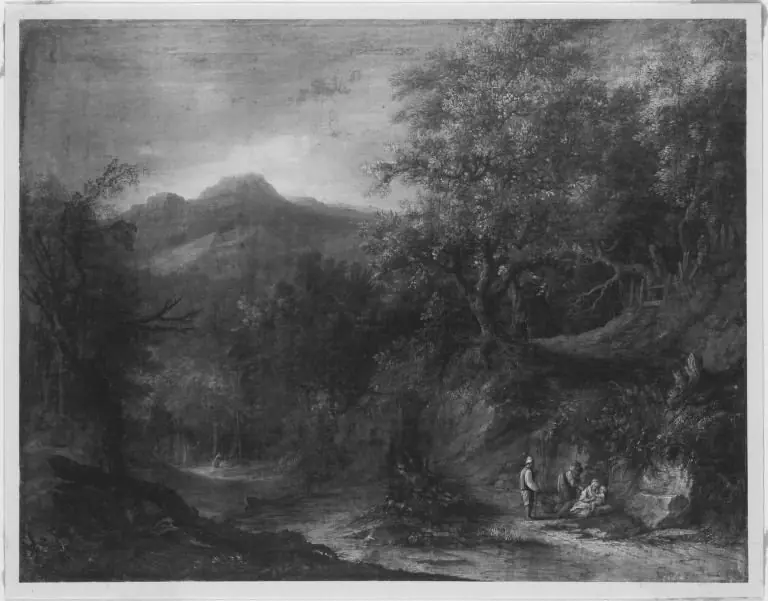
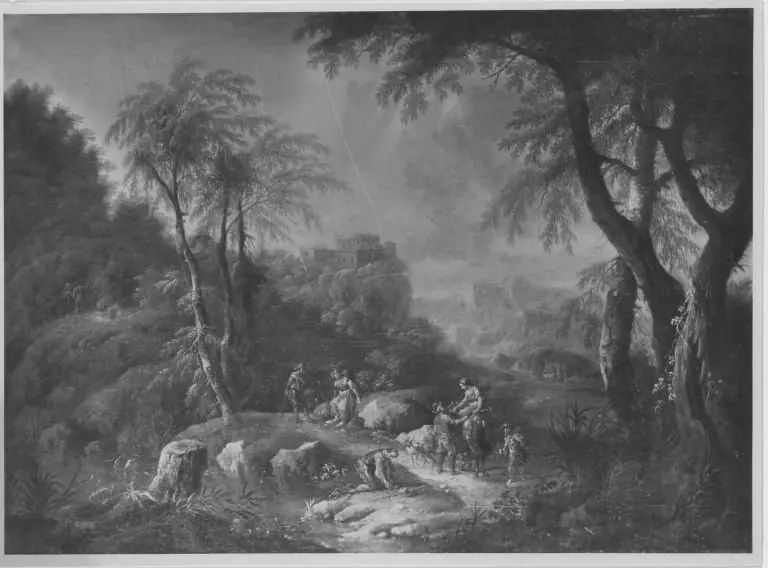
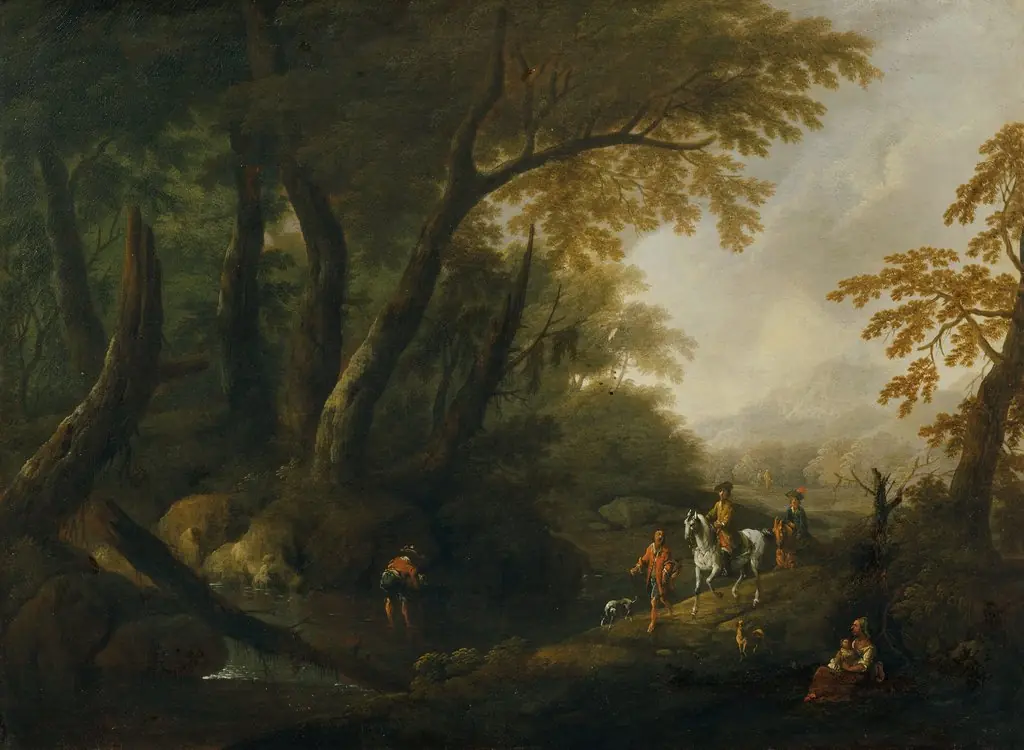
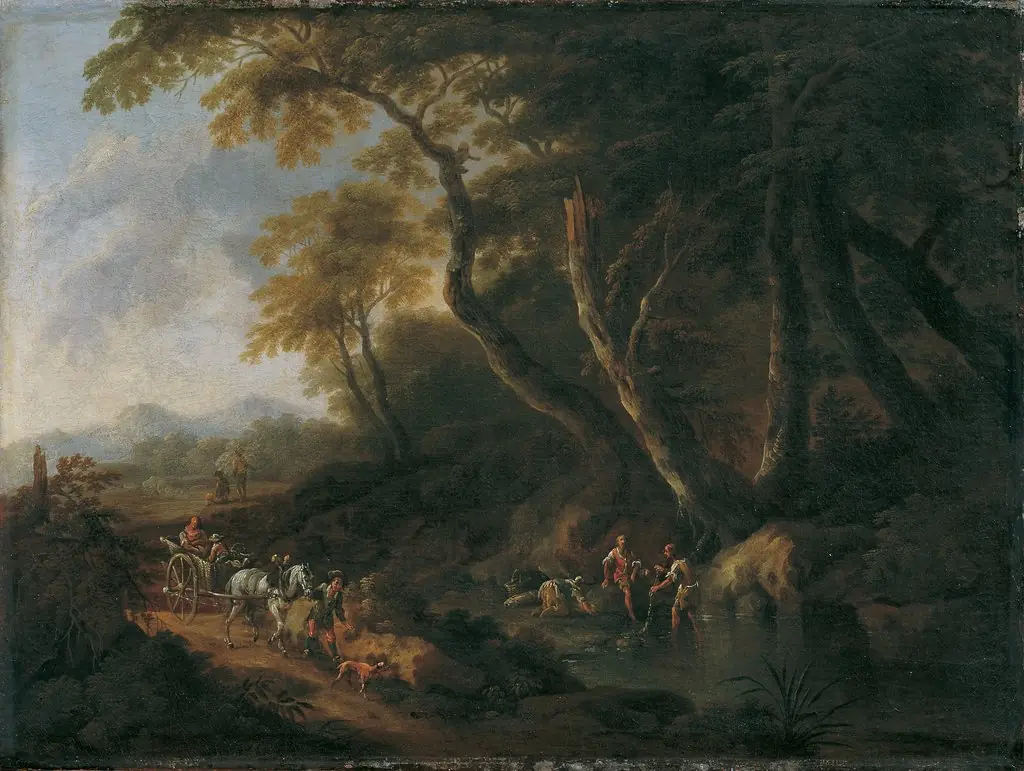
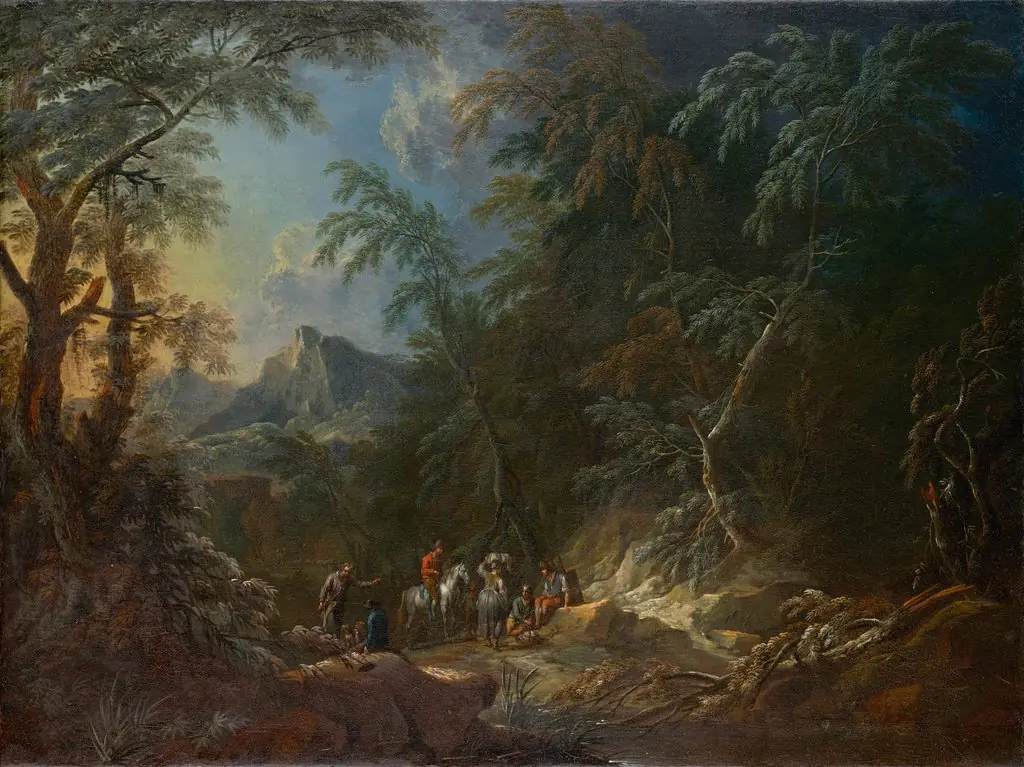
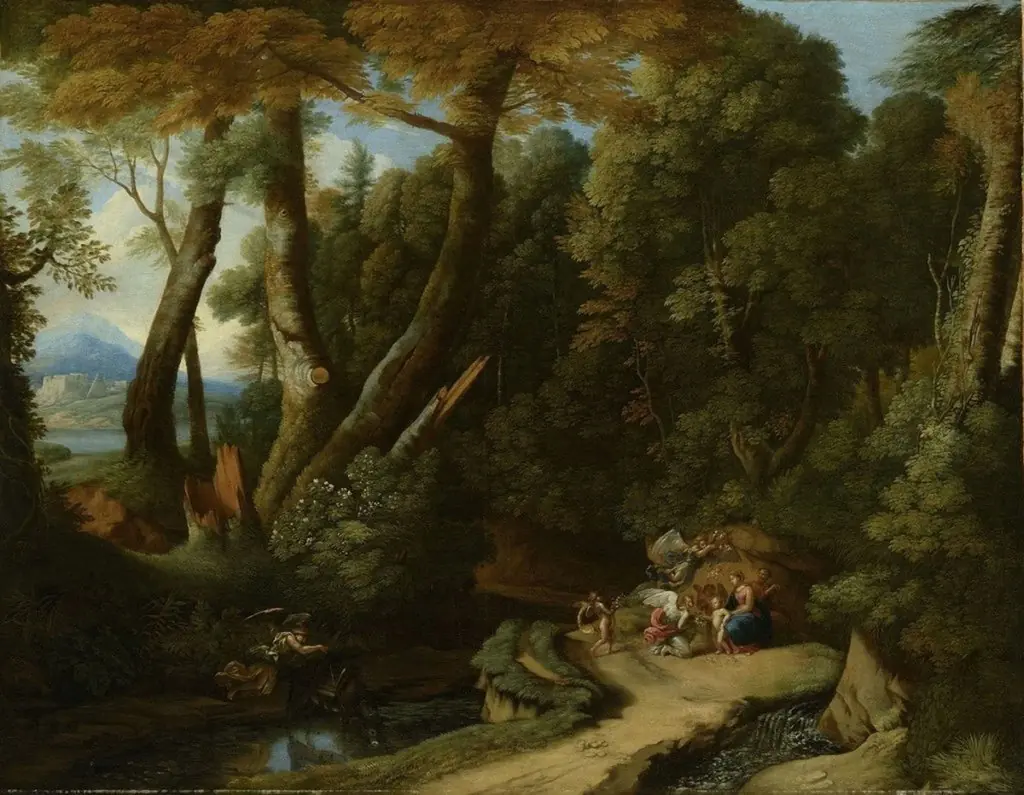
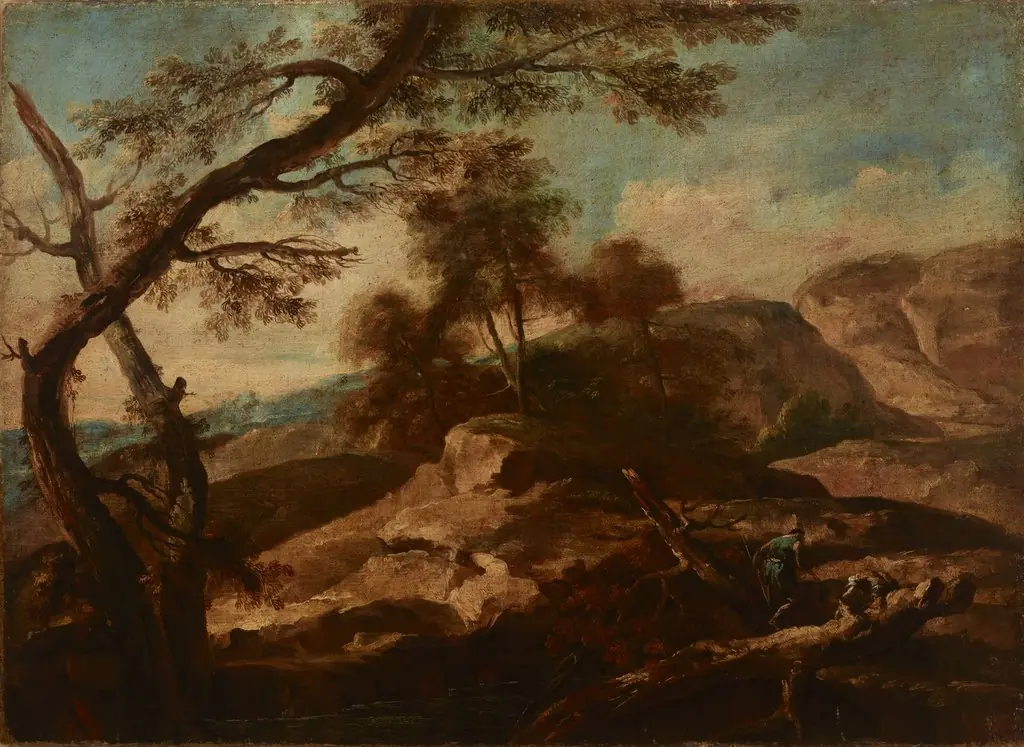
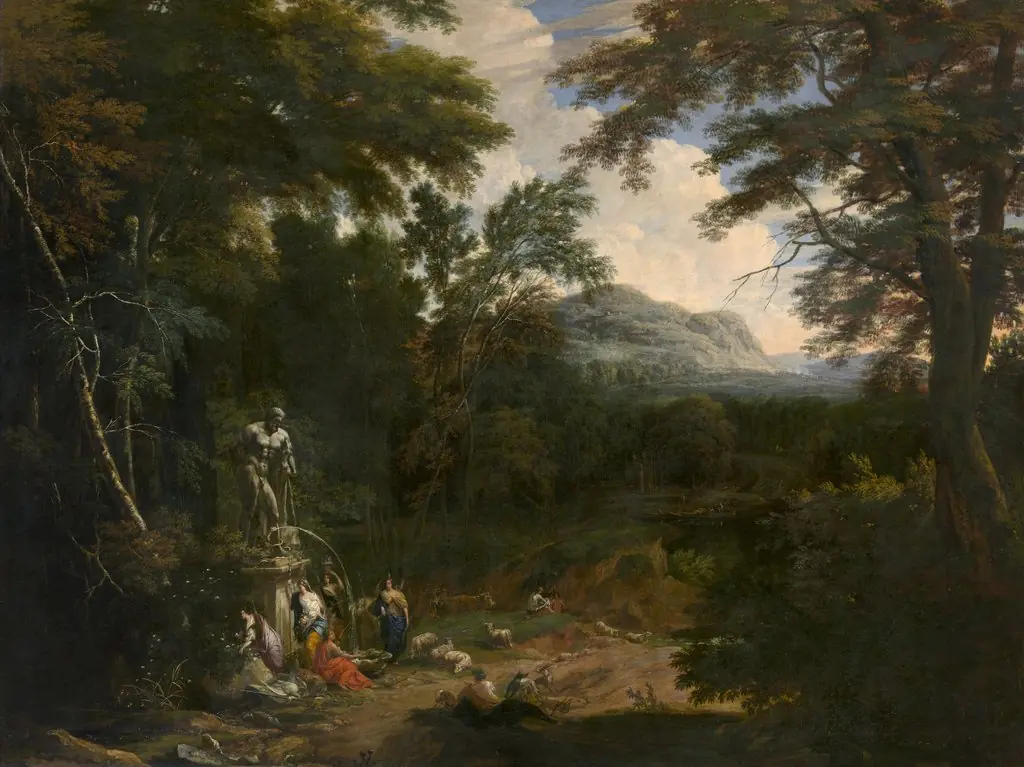
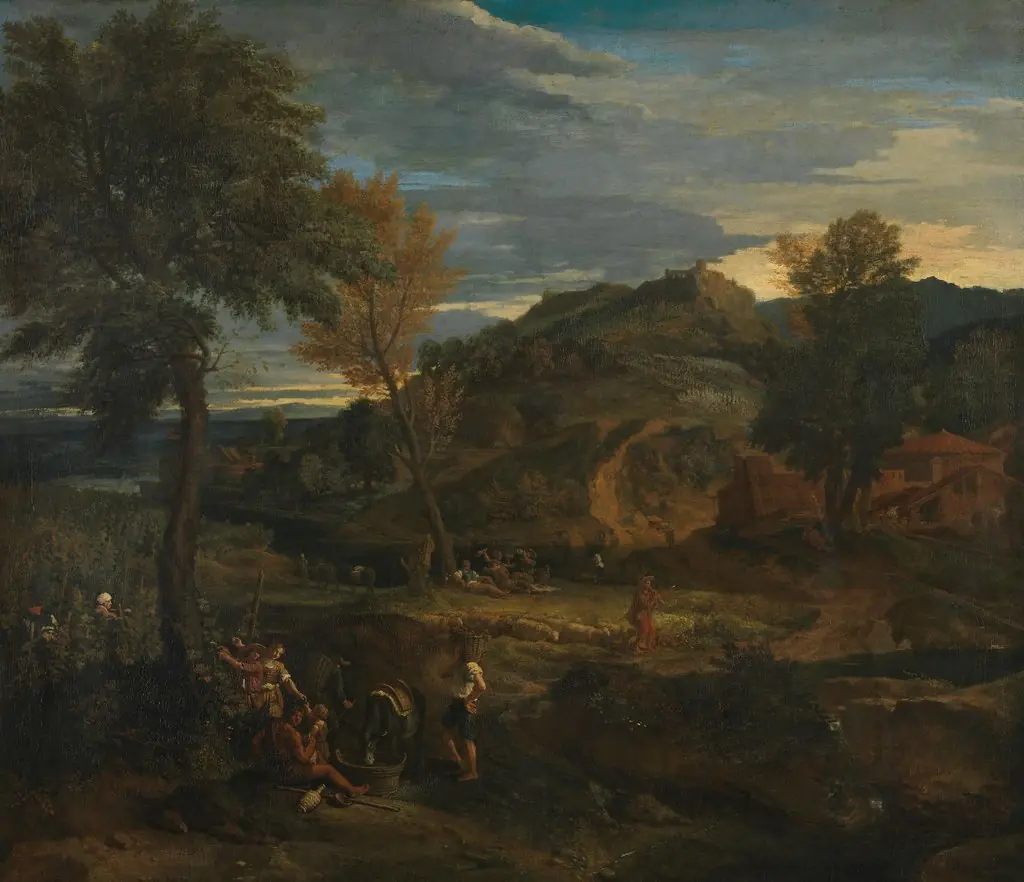
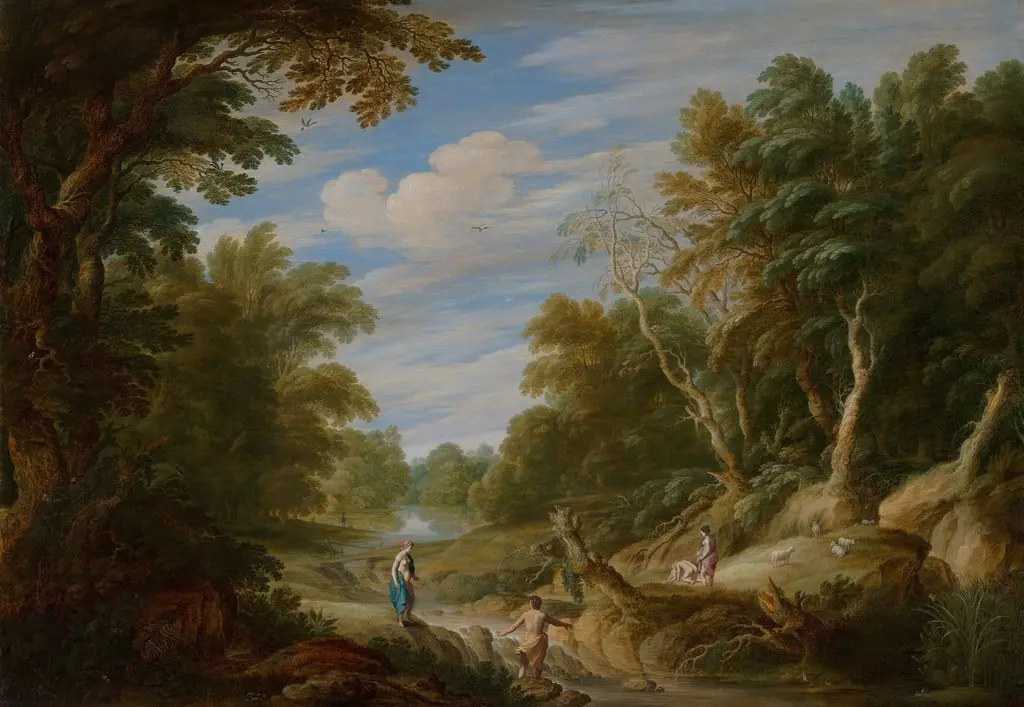
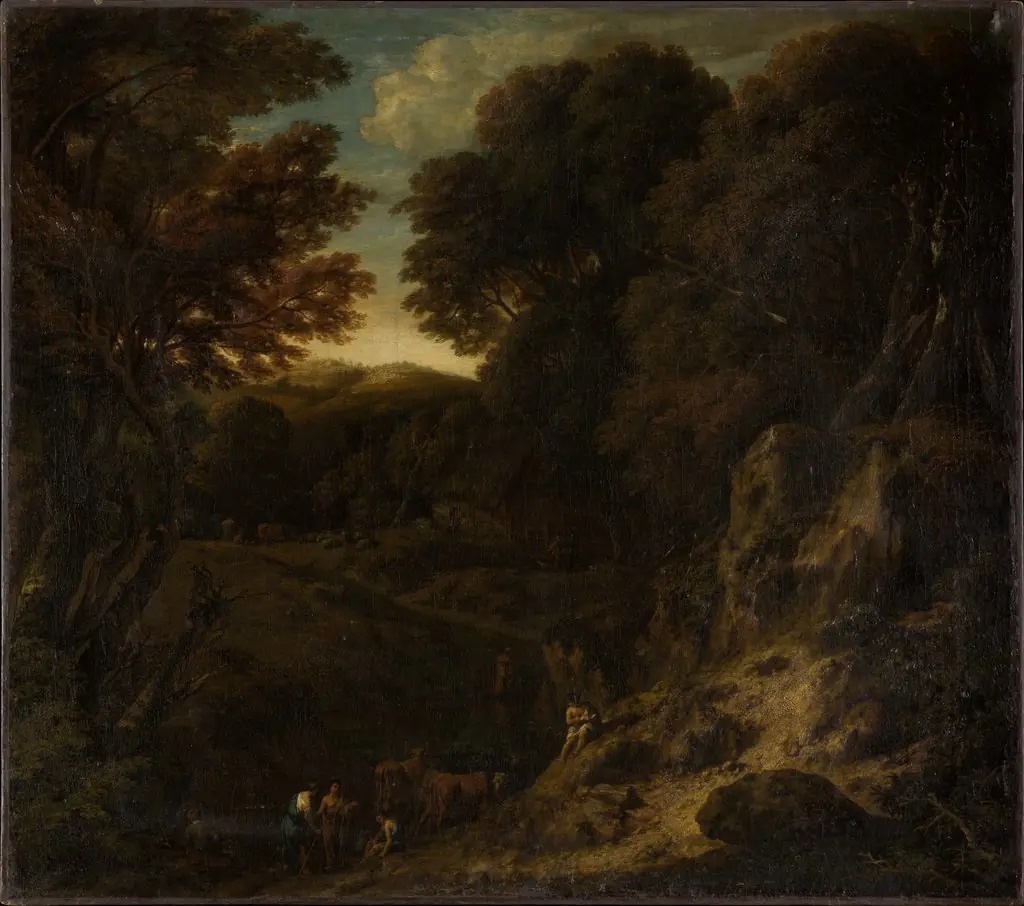
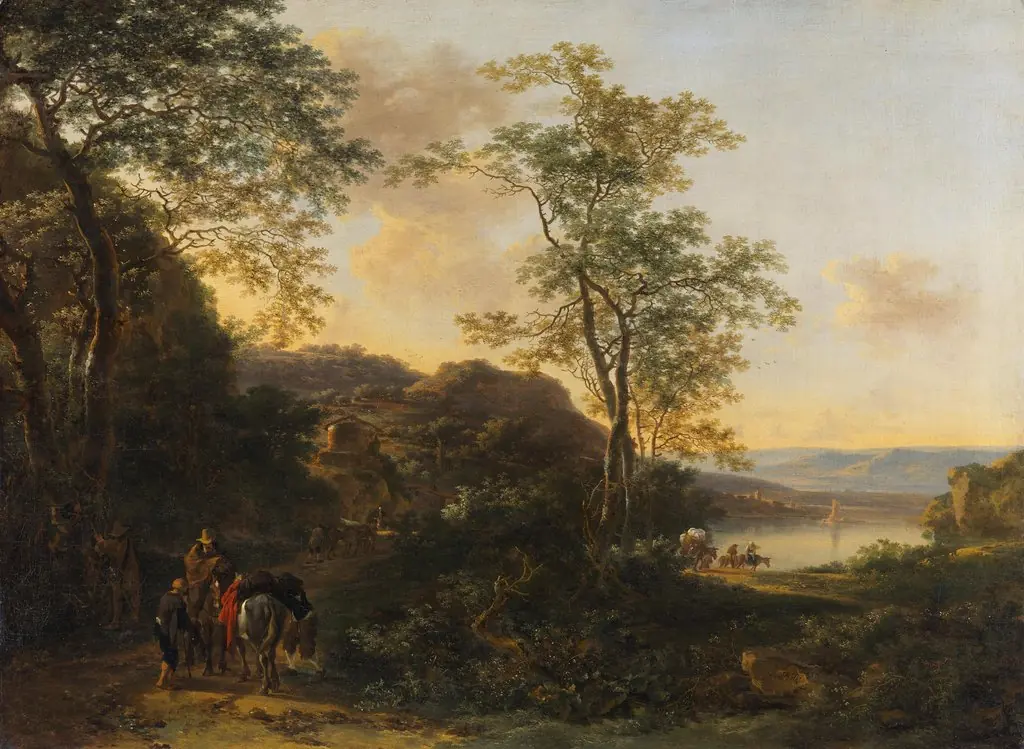
Forest Landscape 'Morning' is an oil painting by Maximilian Joseph Schinnagl, depicting a quiet woodland scene at daybreak. The work resides in the collection of the Kunsthistorisches Museum in Vienna. It presents a naturalistic view of a forest, where human figures are subtly integrated into the environment, suggesting quiet daily activity rather than dramatic narrative.
Subject & Meaning
The painting shows a group of figures near a smoldering fire, with others dispersed among the trees, engaged in undramatic, everyday tasks. Their presence is unobtrusive, emphasizing harmony between humans and nature. The title suggests a moment of calm transition—morning light awakening the forest—without overt symbolism or moralizing tone.
Technique & Style
Schinnagl employs bold, textured brushwork to render the dense foliage and dappled sunlight. The palette favors muted greens and earth tones, warmed by soft golden hues from the rising sun. Light is used not for dramatic contrast but to evoke a gentle, diffuse atmosphere, enhancing the painting’s quiet, contemplative mood.
History & Provenance
The painting entered the Kunsthistorisches Museum’s collection in the late 19th or early 20th century, likely through acquisition or donation. While Schinnagl’s broader oeuvre remains less documented, this work is among the few attributed to him held in a major public institution, suggesting it was recognized for its quiet craftsmanship during his time.
Context
Created during a period when European artists increasingly turned to nature for emotional resonance, Schinnagl’s work aligns with regional traditions of landscape painting that valued atmosphere over grandeur. Unlike Romanticized wilderness scenes, this painting reflects a more intimate, local vision of forest life, rooted in everyday observation.
Legacy
Though not widely known today, the painting endures as a quiet example of 19th-century Austrian landscape art. Its preservation in a major museum underscores its historical value as a representative work of its time—unassuming, carefully observed, and reflective of a broader cultural interest in nature’s subtle rhythms.
Artist & collection
Artist
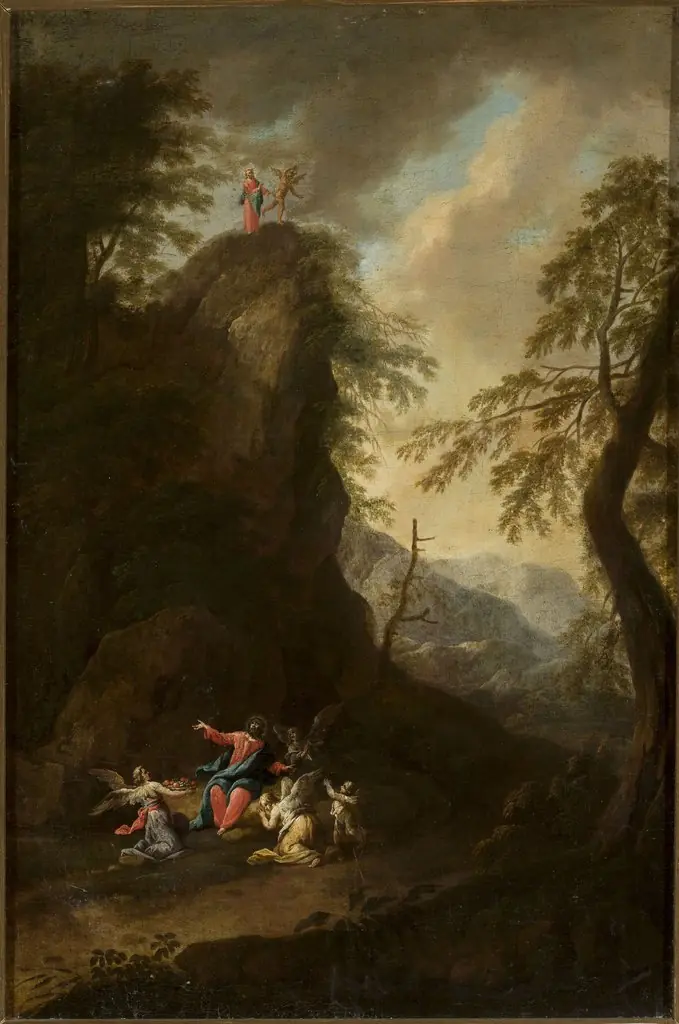
This German artist painted religious scenes in oil. Two works in the bundle are “Temptation of Christ and attending angels” and the 1729 painting Q28002375. The rest of the pieces in this small set—Q28009630, Q29940157,…