Artwork
Obst- und Gemüsestillleben
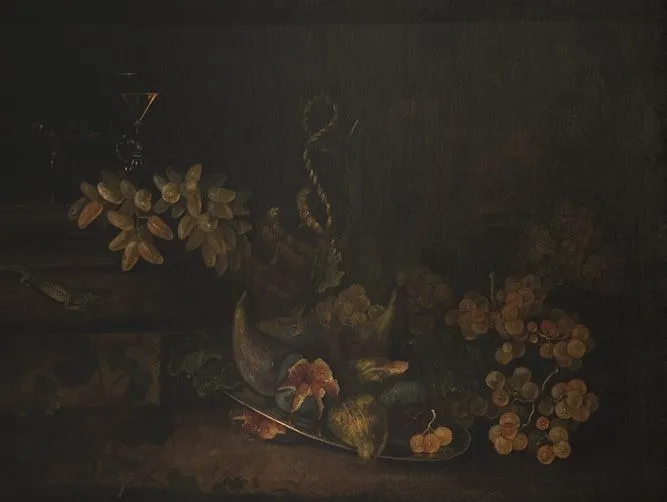
Obst- und Gemüsestillleben is an unspecified painting by the Rococo painting artist Maximilian Pfeiler. It dates from 1701 and is held in the collection of the Bavarian State Painting Collections.
About this work
Overview
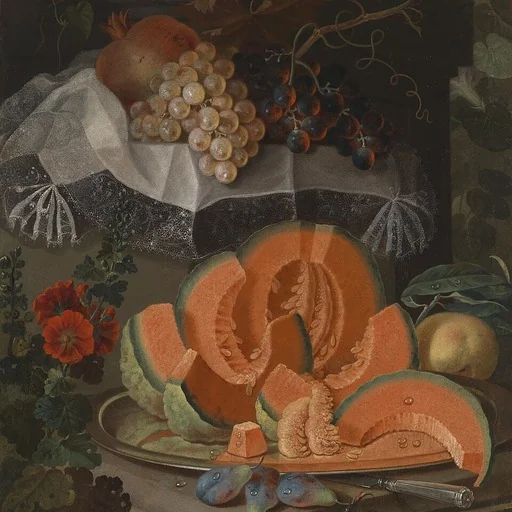
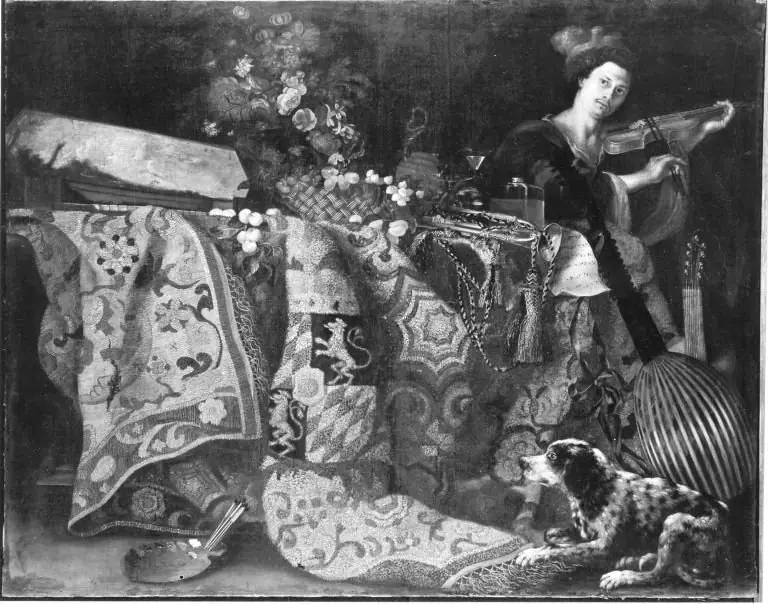
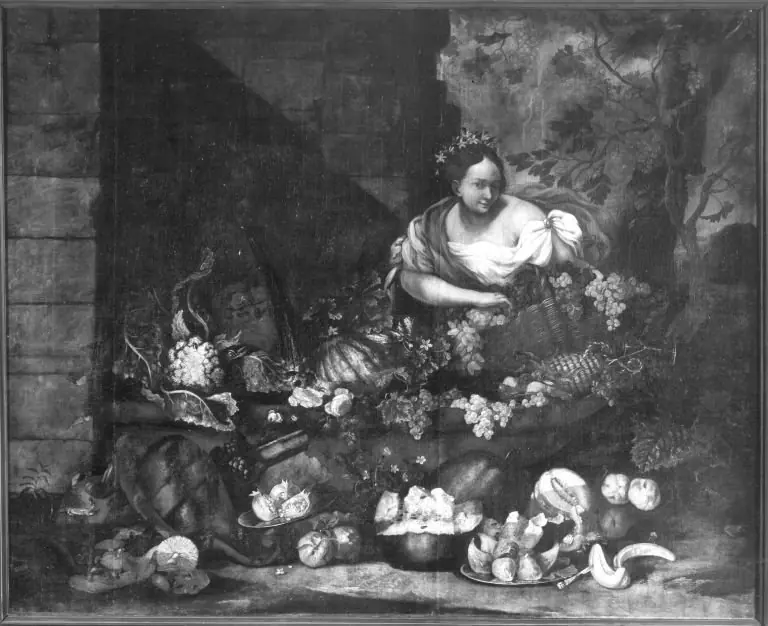
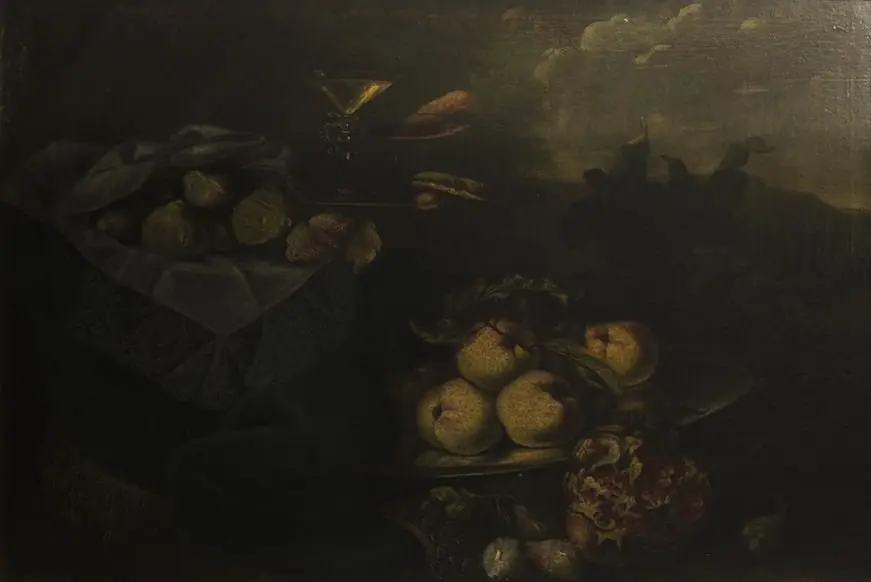
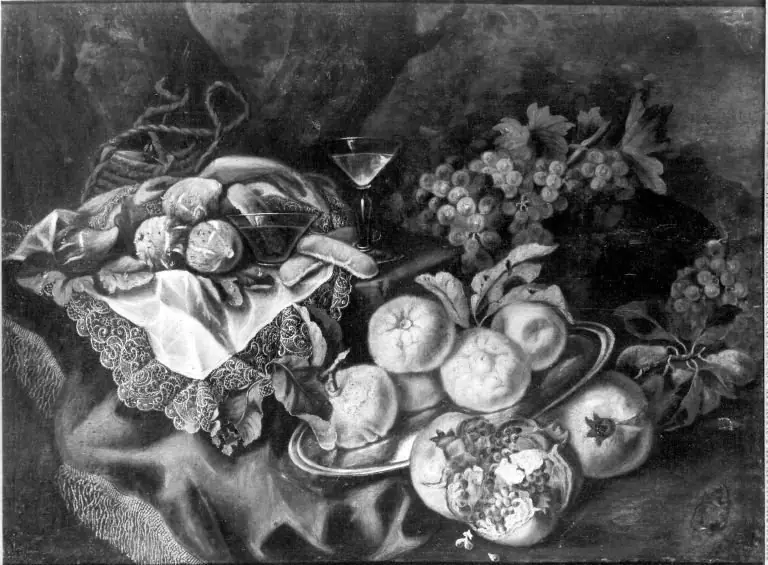
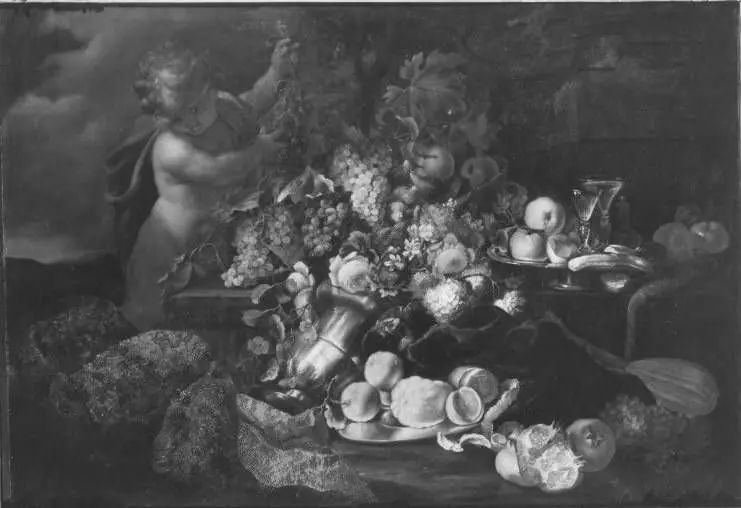
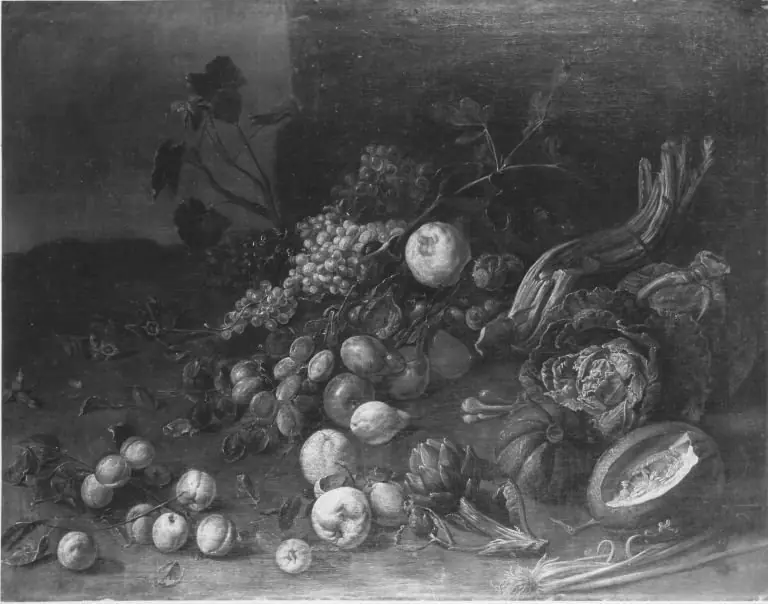
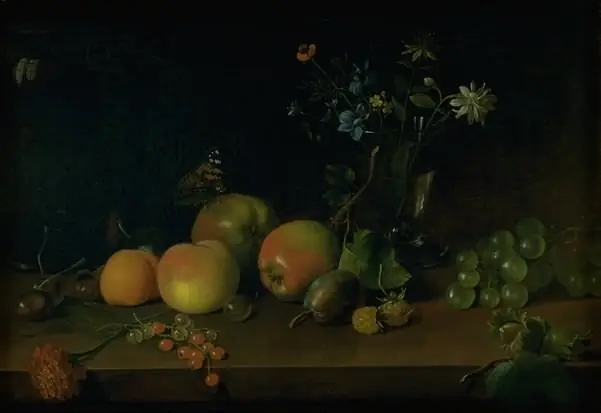
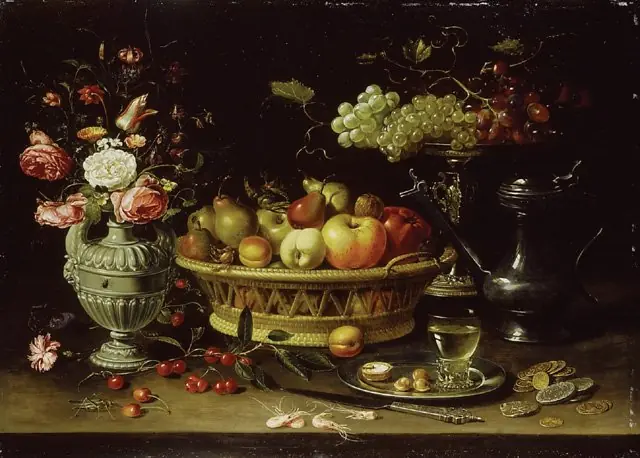
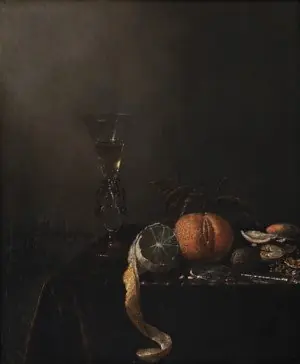
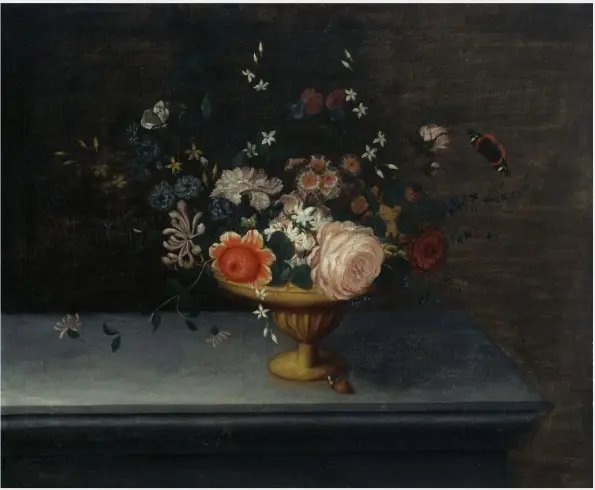
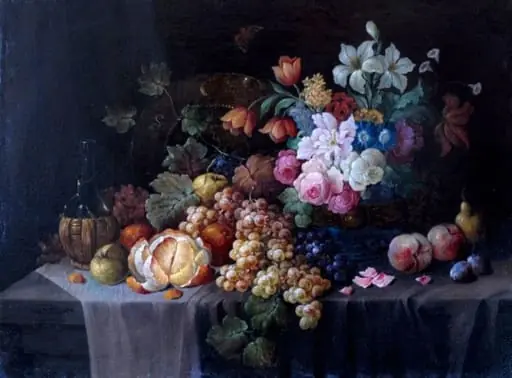
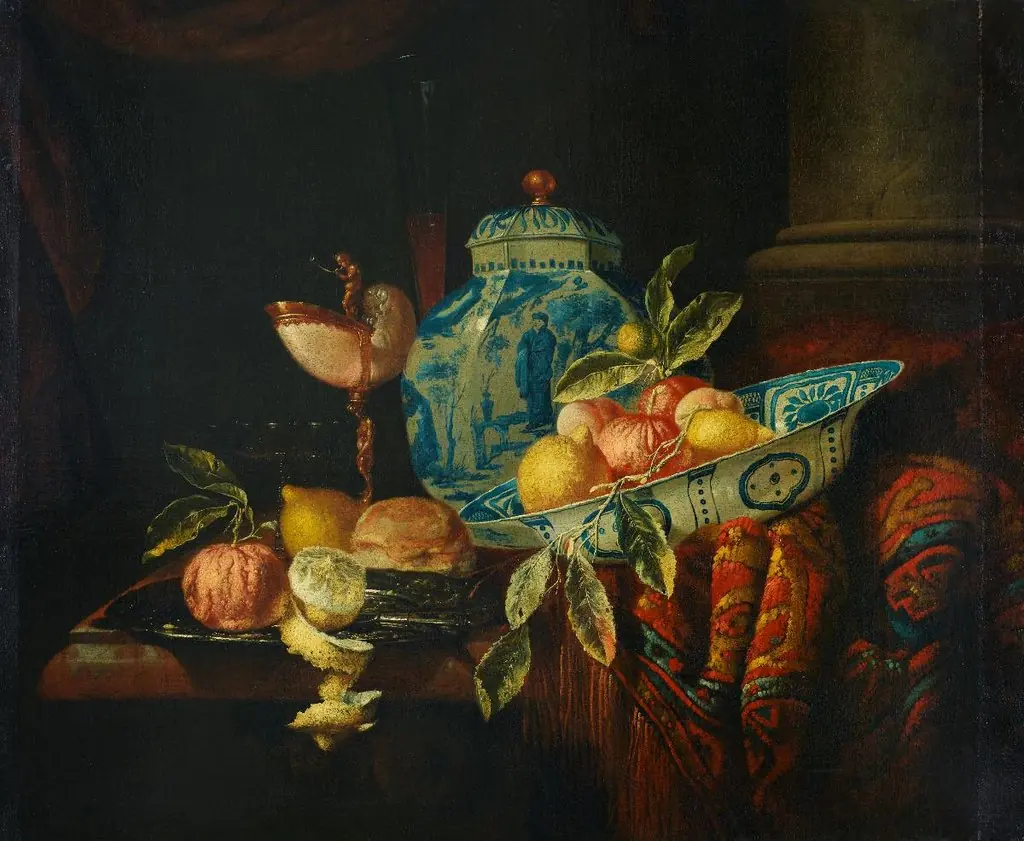
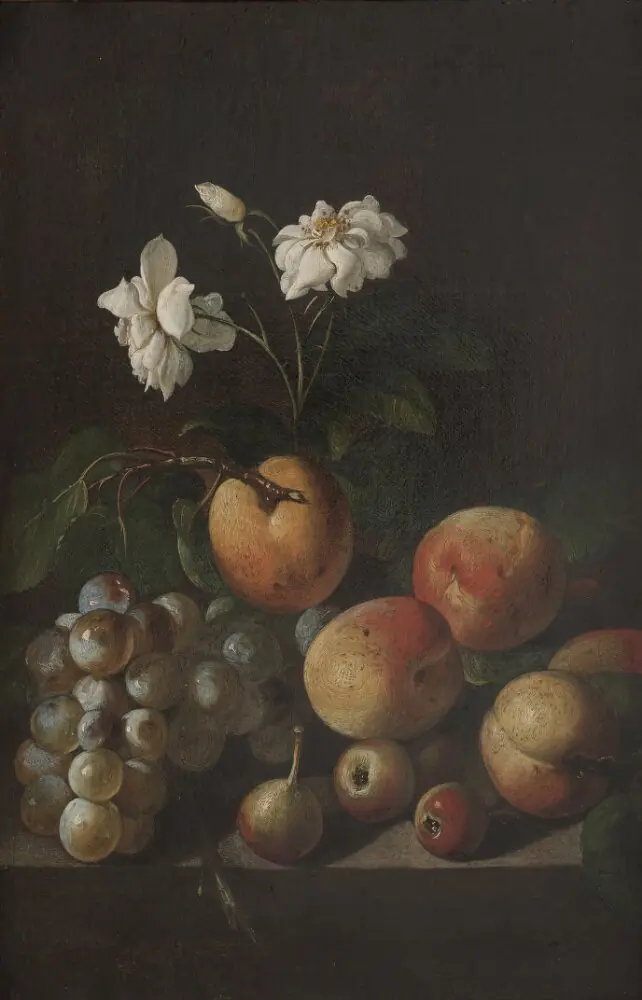
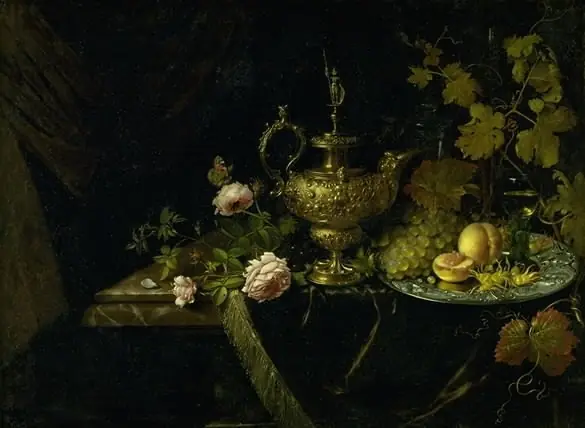
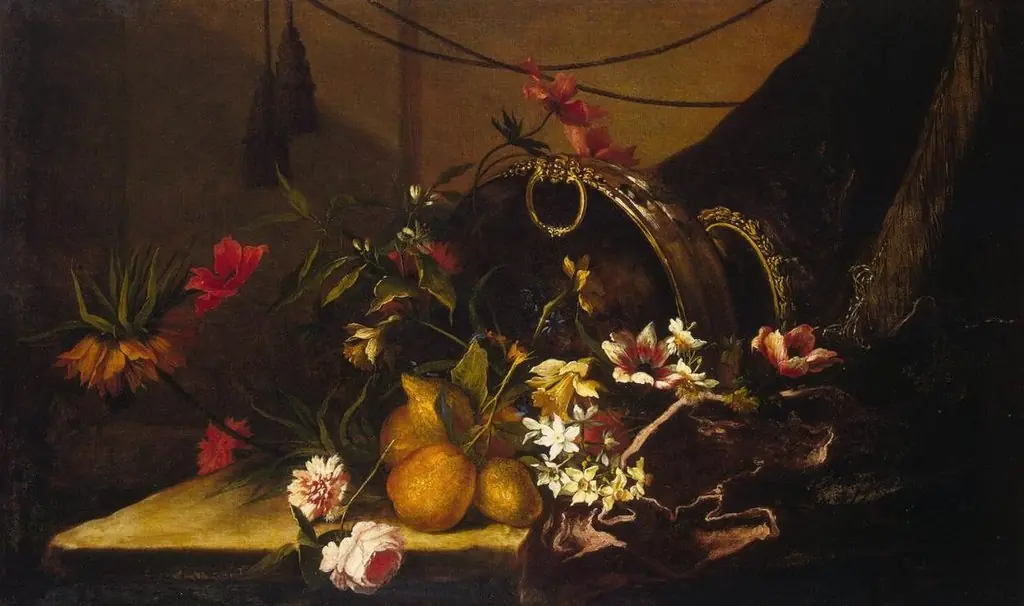
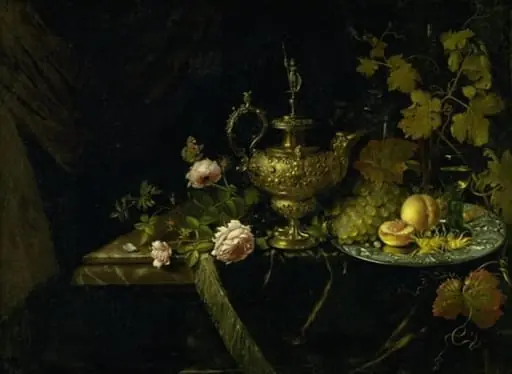
Created in 1701 by Maximilian Pfeiler, this oil painting presents a nocturnal still life that is part of the collection of the Alte Pinakothek. A darkened tabletop supports a varied assortment of fruit, vegetables and a suspended silver pitcher, while the surrounding space recedes into an almost black background, emphasizing the illuminated objects.
Subject & Meaning
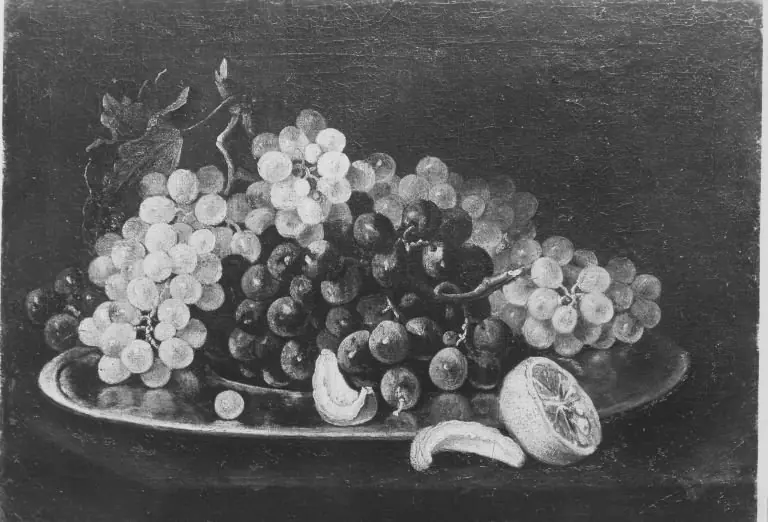
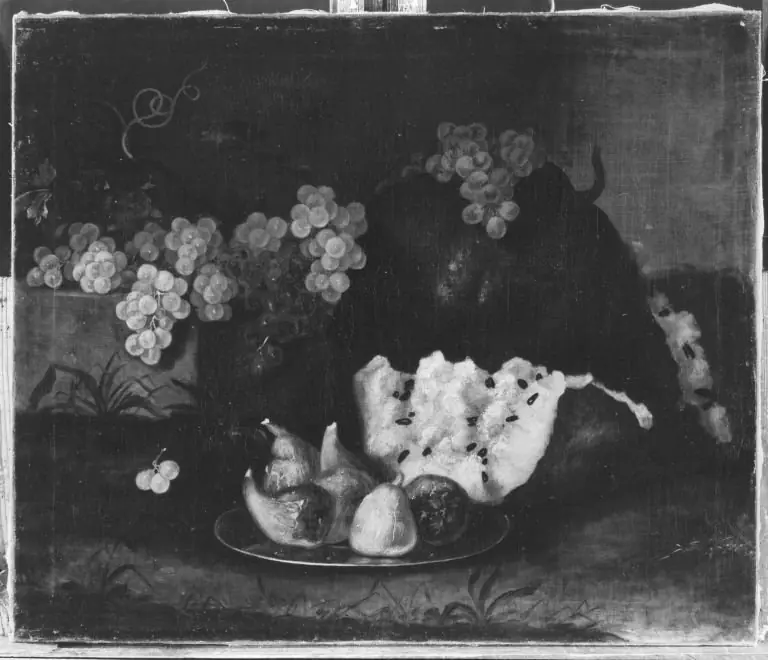
The work assembles everyday foodstuffs—a basket of grapes, plums and a pear, alongside an onion, peaches and a small fish—under a dripping pitcher. By juxtaposing perishable produce with a metallic vessel, the composition invites contemplation of abundance, the transience of nourishment, and the tactile qualities of material culture in the early eighteenth century.
Technique & Style
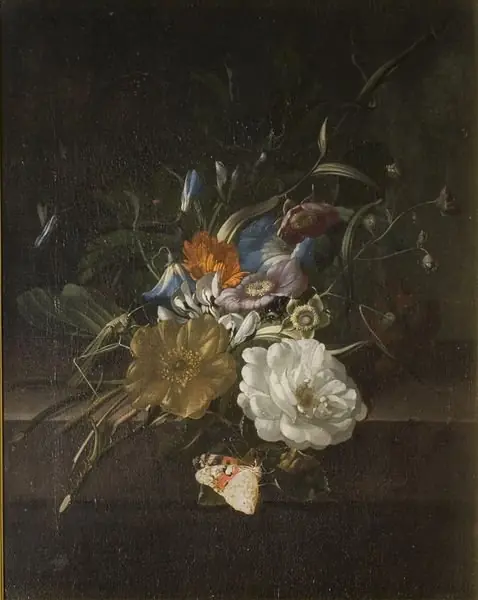
Pfeiler employs a pronounced chiaroscuro, using a single, strong light source to cast deep shadows and create dramatic contrast. The luminous surfaces of the fruit and the reflective sheen of the silver pitcher stand out against the near‑black backdrop, rendering the textures of skin, flesh and metal with convincing realism.
History & Provenance
The painting entered the holdings of the Alte Pinakothek, Munich, where it remains on display. Its provenance prior to acquisition by the museum is not extensively documented, but the work is recognized as a representative example of German still‑life painting from the early 1700s.
Context
In the early eighteenth century, German artists increasingly adopted the dramatic lighting techniques popularized by Caravaggio and his followers. Pfeiler’s still life reflects this trend, integrating Northern European attention to detail with the theatrical illumination that characterized the Baroque period.
Artist & collection