Artwork
Stillleben
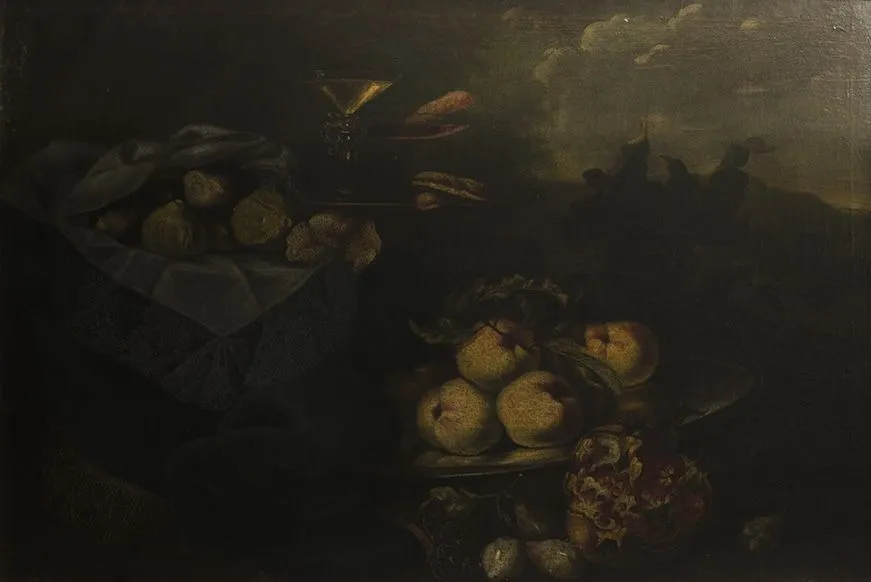
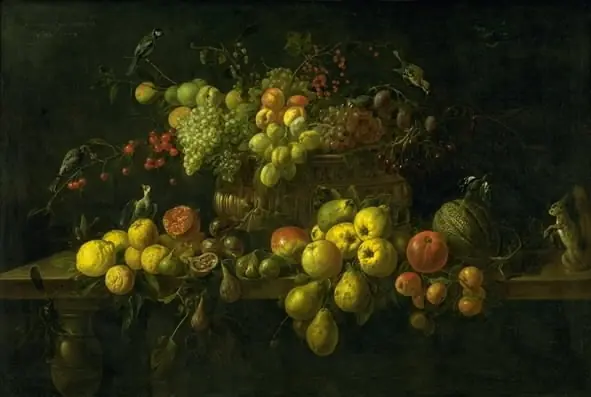
Stillleben is an unspecified painting by the Rococo painting artist Maximilian Pfeiler. It dates from 1701 and is held in the collection of the Bavarian State Painting Collections.
About this work
Overview
Created in 1701, this still‑life painting by Maximilian Pfeier—catalogued as Q29913956—is part of the collection of Munich’s Alte Pinakothek.
Created in 1701, this still‑life painting by Maximilian Pfeier—catalogued as Q29913956—is part of the collection of Munich’s Alte Pinakothek. The work presents a modest banquet arranged on a darkened tabletop, illuminated by a single, subdued light source that isolates the objects from an almost black background. The composition balances simple foodstuffs with a sense of quiet interiority, inviting close observation of texture and form.
Subject & Meaning
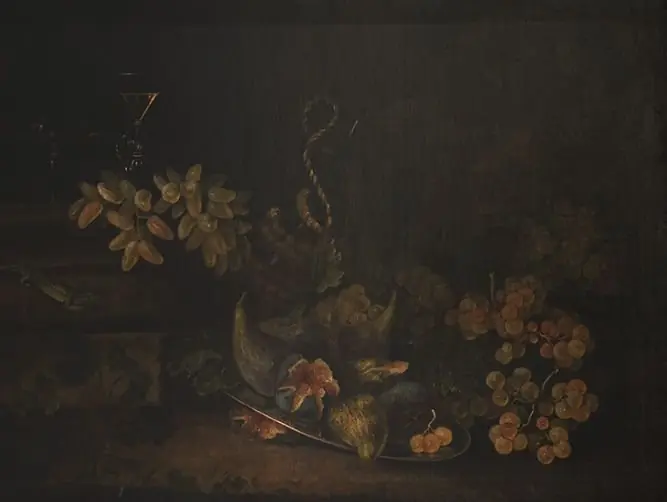
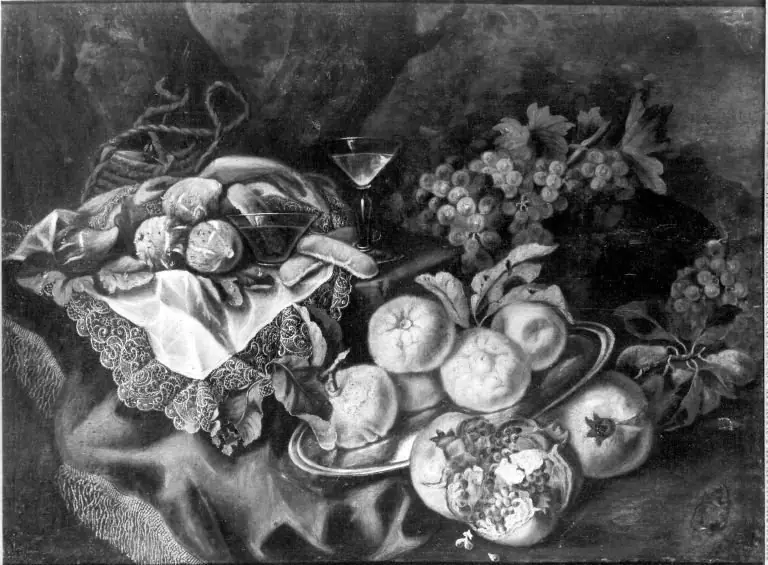
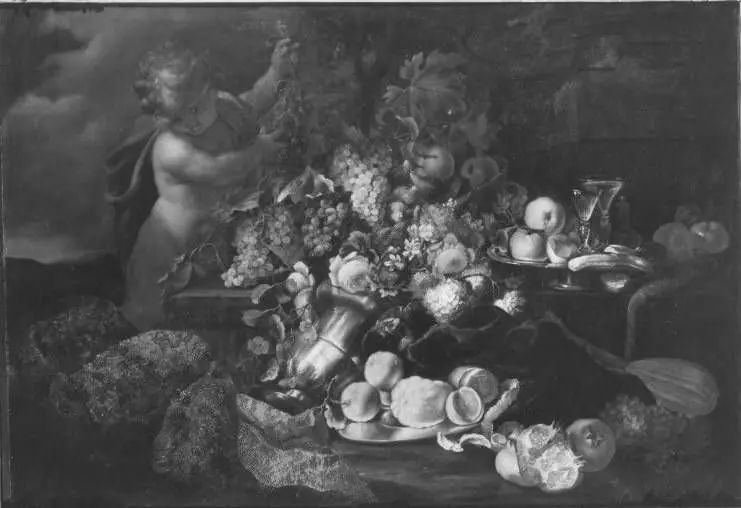
The canvas depicts two metal trays laden with modest fare: one holds pale, rounded dumplings or rolls, while the other contains green apples, a handful of grapes, and a small cluster of plums. A glass pitcher rests near the dumplings, completing the arrangement. By juxtaposing everyday nourishment with a restrained setting, the painting reflects the period’s interest in the transience of material goods and the quiet dignity of domestic consumption.
Technique & Style
Pfeier employs a pronounced chiaroscuro effect, using deep shadows to carve the forms of the fruit, pastries, and vessel from the surrounding darkness. The limited palette of muted tones and the soft gradation of light give the objects a tactile, three‑dimensional quality. Fine brushwork renders the glossy surface of the glass pitcher and the delicate skins of the fruit, while the dark ground amplifies the contrast, enhancing the visual drama.
History & Provenance
Since its execution in the early eighteenth century, the still life has remained within the Germanic artistic sphere, eventually entering the holdings of the Alte Pinakothek in Munich. The museum’s acquisition records place the work among its Baroque and early Rococo holdings, where it contributes to the broader narrative of Northern European still‑life painting and the evolution of domestic genre scenes.
Artist & collection

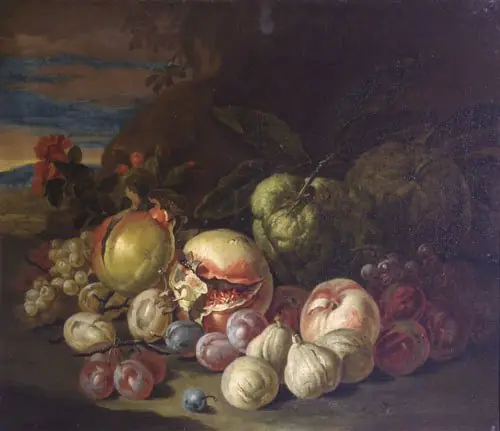 Still life of fruits with pomegranates and figs
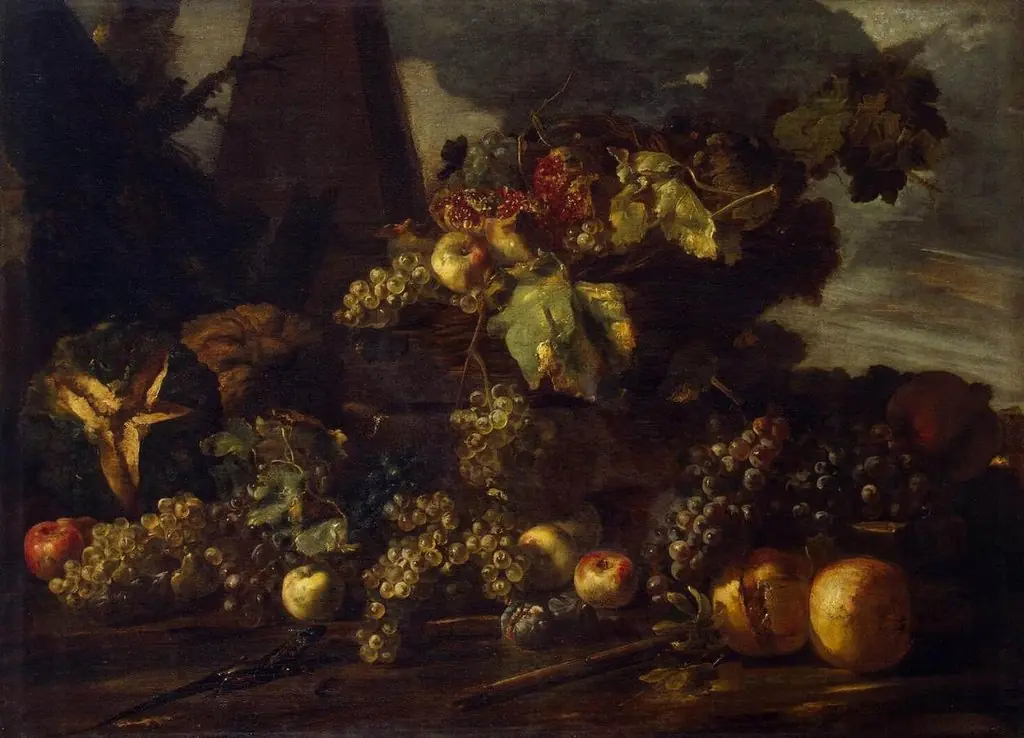 Still Life with Grapes
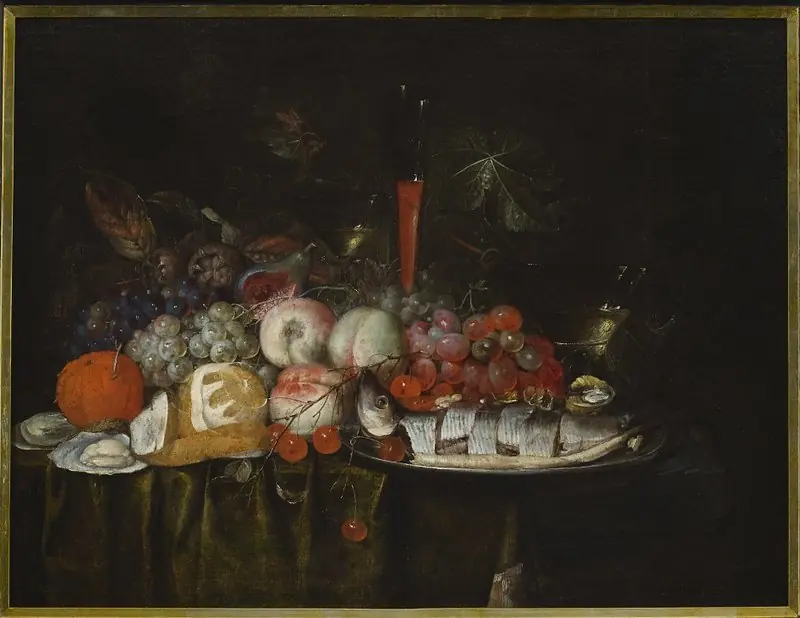 Still Life with Fruit and a Herring
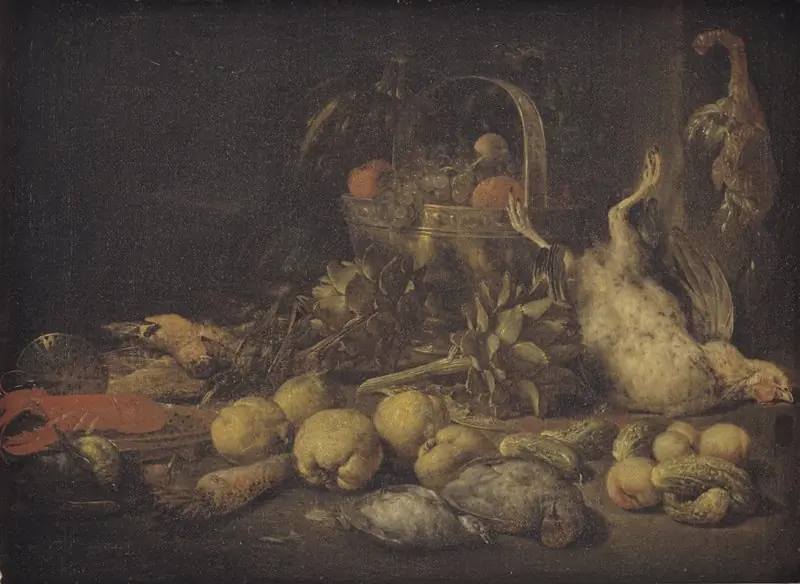 Still Life with Fruit and Birds
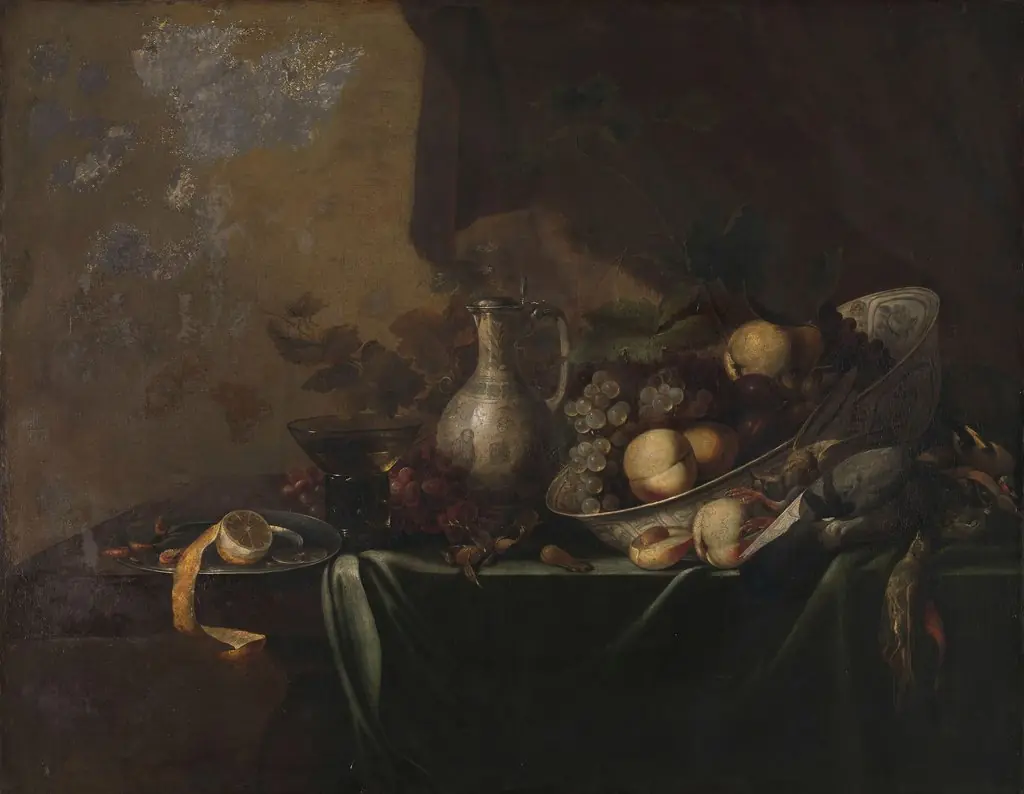 Still Life with Fruit
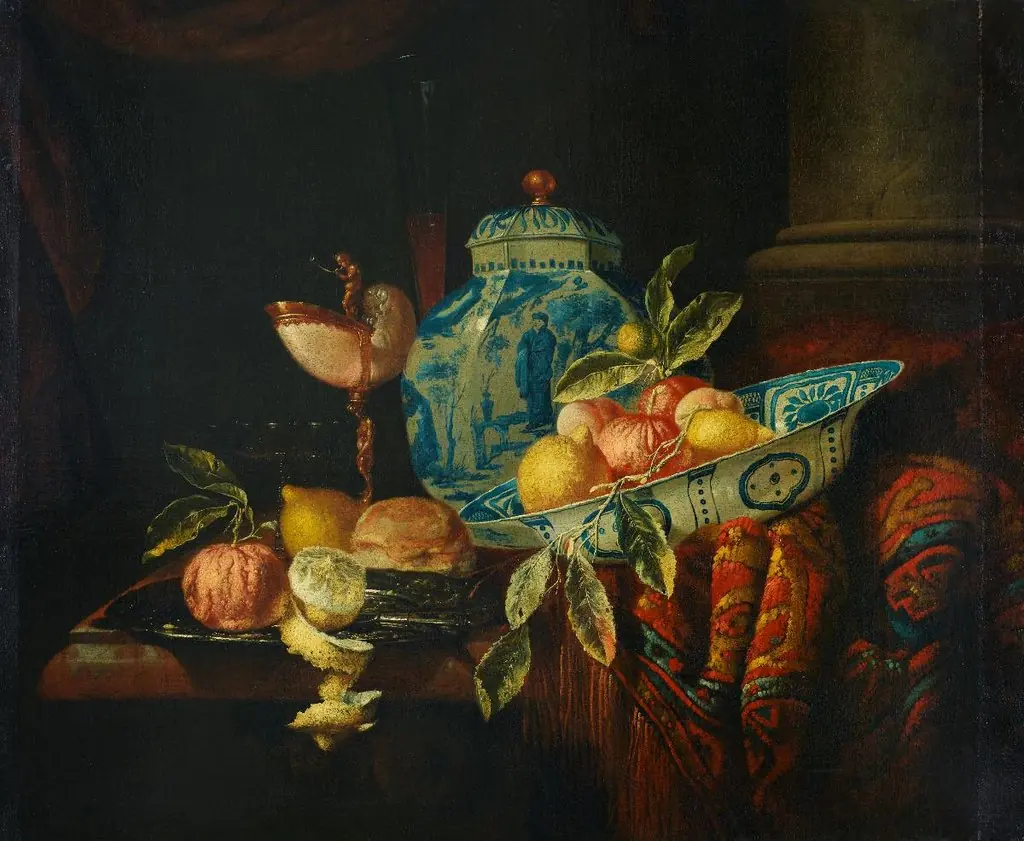 Stilleben mit chinesischem Porzellan und Perserteppich
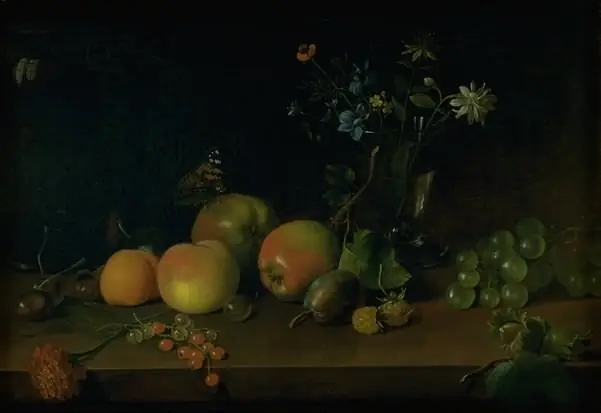 Flowers and Fruit on a Table
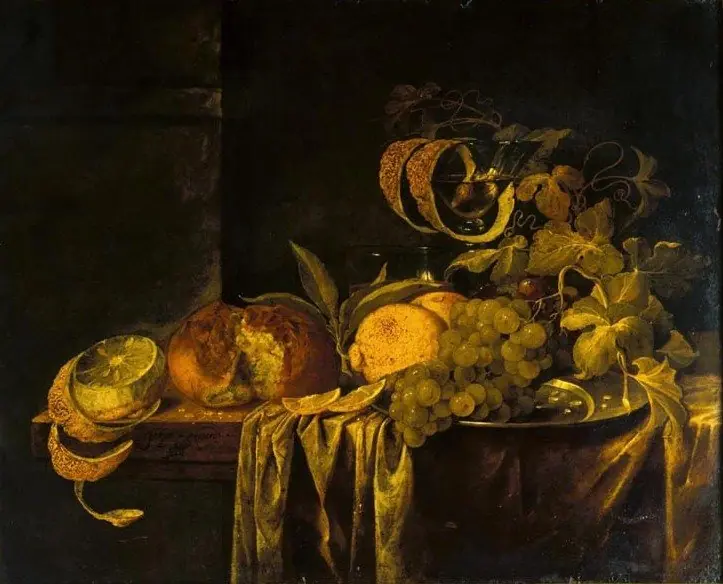 Still life with fruit, bread, and glassware
 Still life with fruit and wine glass
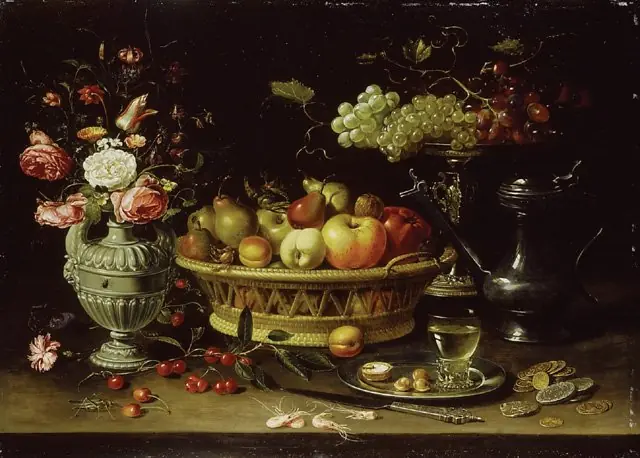 Still life of fruit and flowers
 Still Life with Fruit on a Table