Artwork
Stilleben mit chinesischem Porzellan und Perserteppich
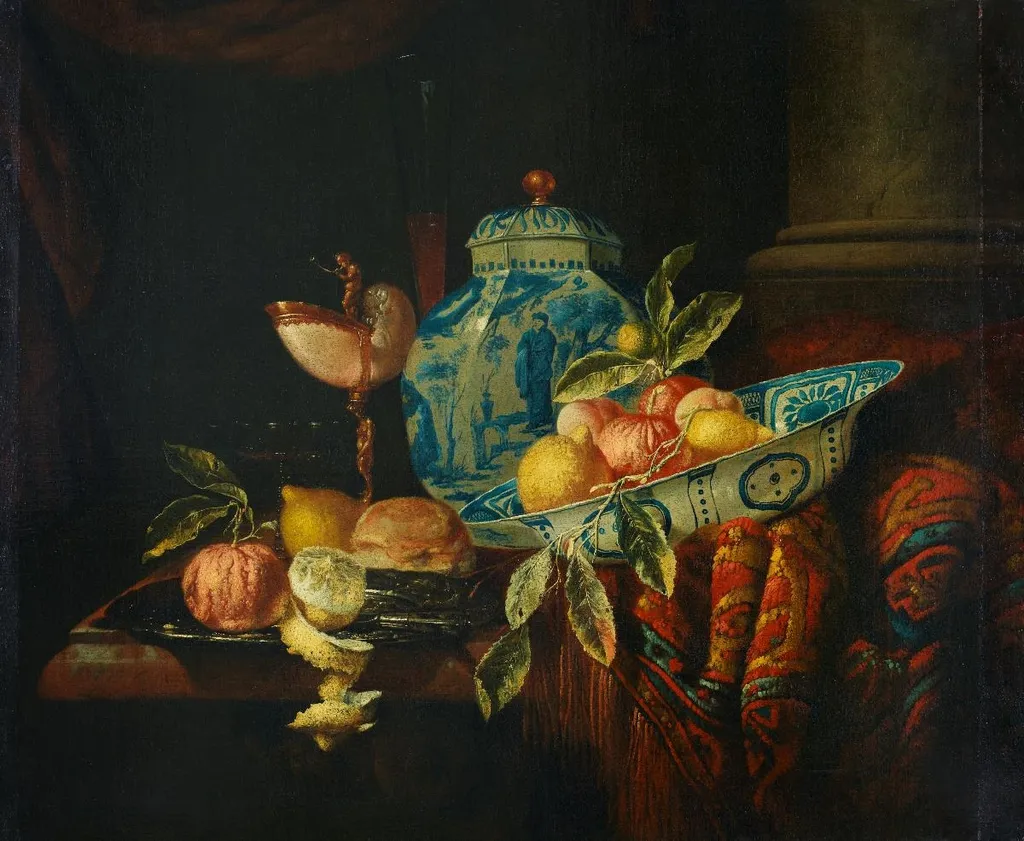
Stilleben mit chinesischem Porzellan und Perserteppich is an oil painting by the Dutch Golden Age artist Juriaen van Streeck. It dates from 1672 and is held in the collection of the Kunsthaus Zürich.
About this work
Overview
Juriaen van Streeck, an Amsterdam‑born painter of the Dutch Golden Age, completed the oil work *Stilleben mit chinesischem Porzellan und Perserteppich* in 1672. The piece is presently held by the Kunsthaus Zürich and exemplifies the artist’s focus on meticulously rendered domestic objects.
Subject & Meaning
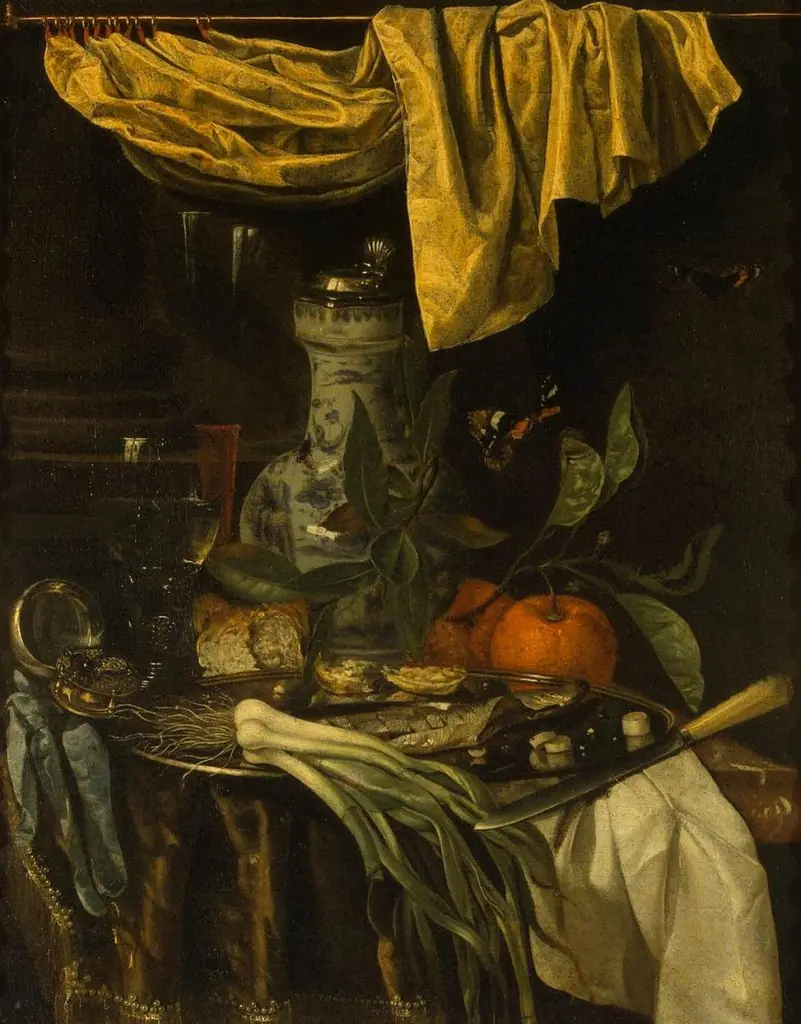
The composition presents a tabletop still life: a blue‑and‑white porcelain vase with ornamental motifs, a bowl brimming with apples and lemons, and a modest dish bearing additional, partially obscured items. The objects, drawn from everyday material culture, invite contemplation of abundance and the tactile qualities of imported goods.
Technique & Style
Van Streeck employs a pronounced chiaroscuro, setting the objects against a deep, muted background that heightens three‑dimensionality. His handling of oil paint renders the glossy surface of the porcelain and the textured skins of the fruit with precise, layered brushwork, characteristic of Dutch still‑life realism.
History & Provenance
After a career centered on still‑life painting, van Streeck later managed an inn in Amsterdam, where he remained until his death in 1687. The painting entered the Kunsthaus Zürich collection at an unspecified date, becoming part of the museum’s representation of 17th‑century Dutch art.
Context
The inclusion of Chinese porcelain and a Persian‑style carpet reflects the 17th‑century Dutch fascination with exotic imports, a theme frequently explored by contemporary still‑life artists to signal wealth and global trade connections.
Artist & collection
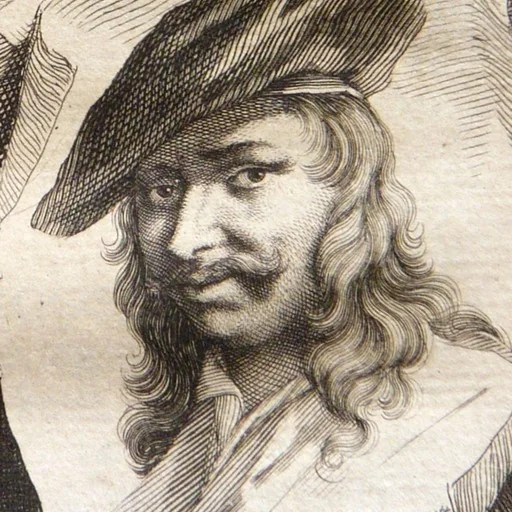
Artist
Juriaen van Streeck or Juriaan van Streek (29 February 1632, in Amsterdam – buried 12 June 1687, in Amsterdam) was a Dutch Golden Age painter of still lifes.

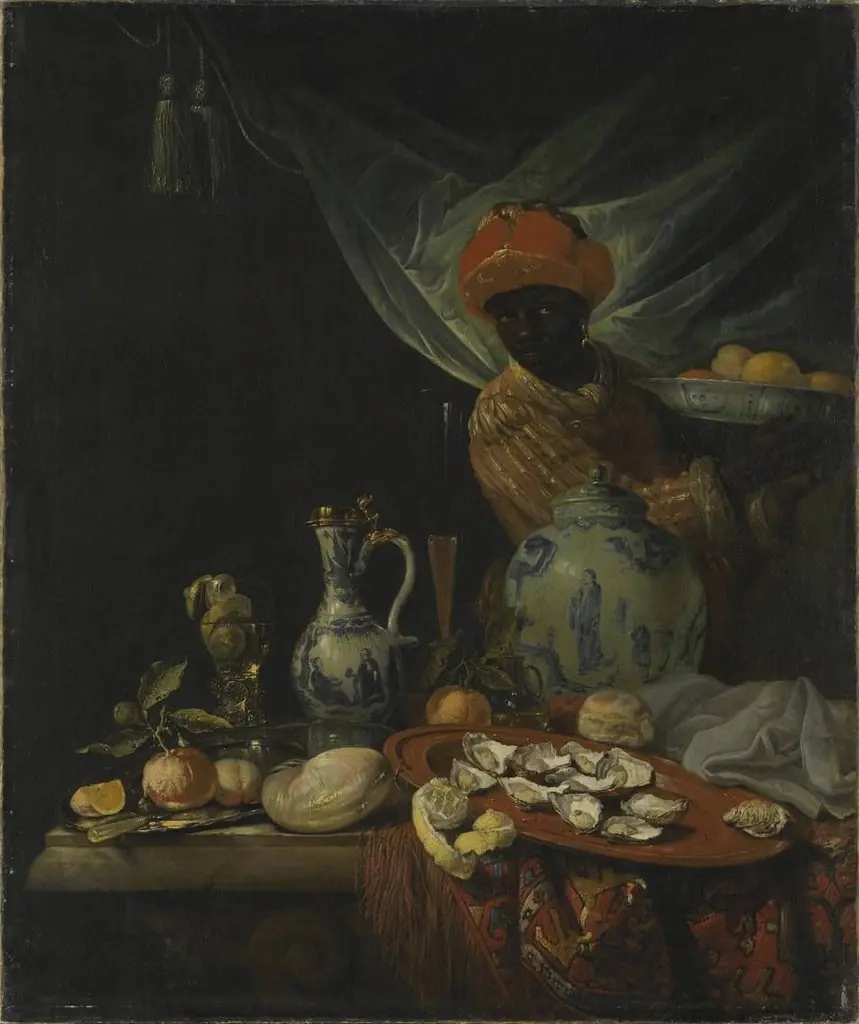
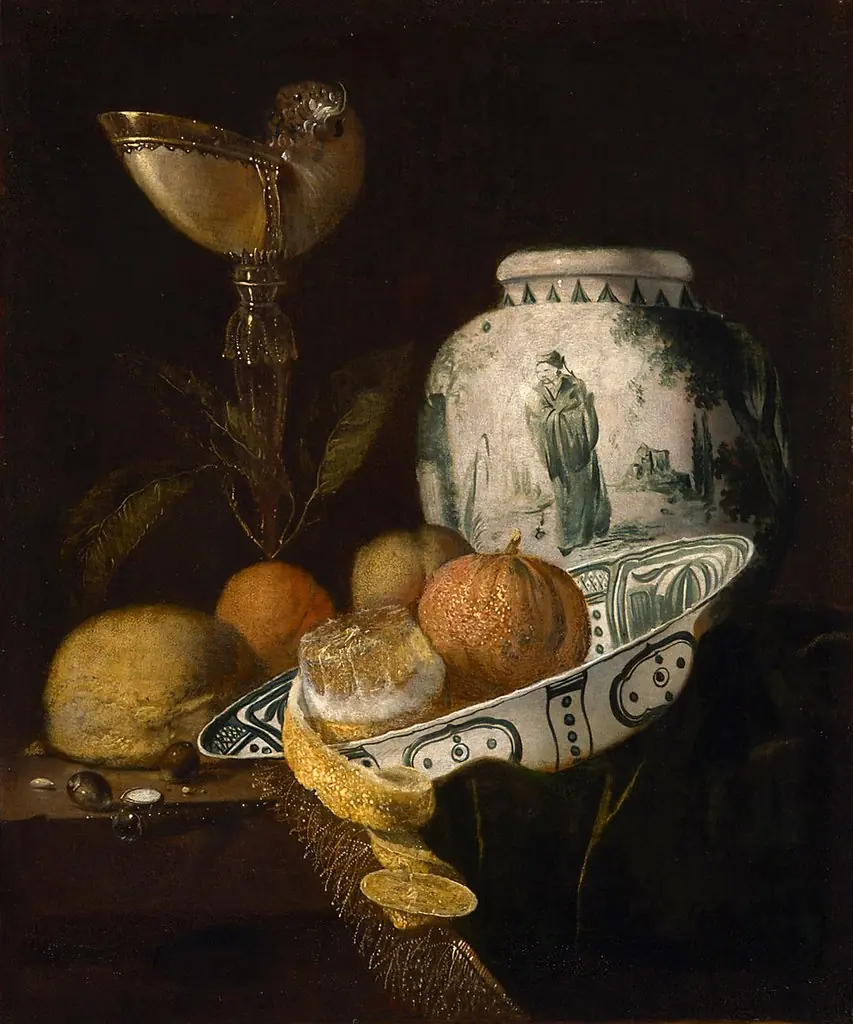
 Still Life with a Roemer
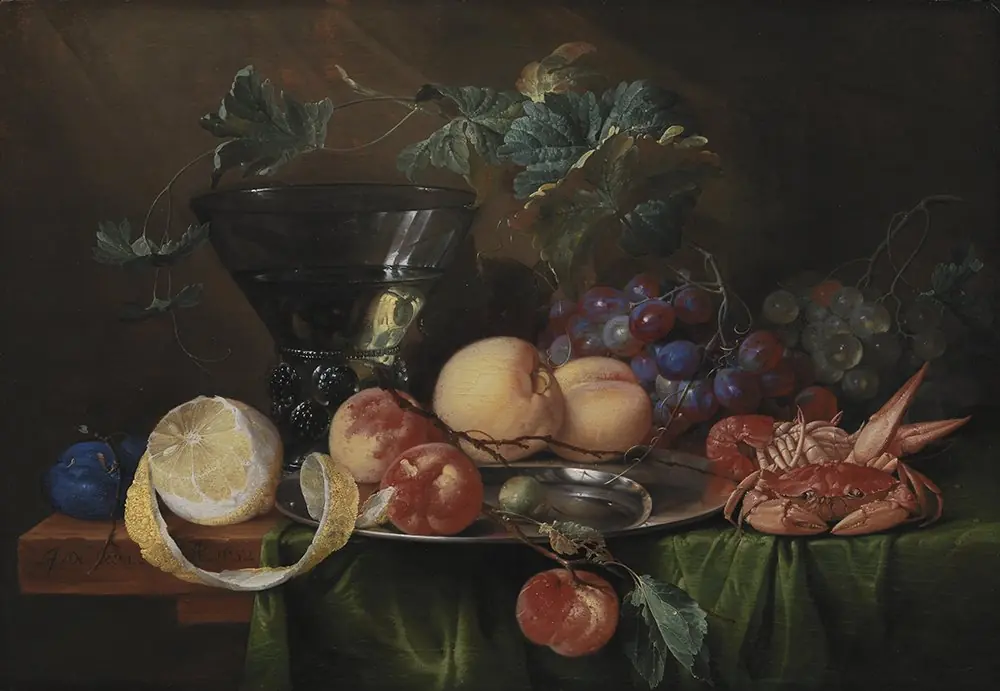 Still Life with a Roemer
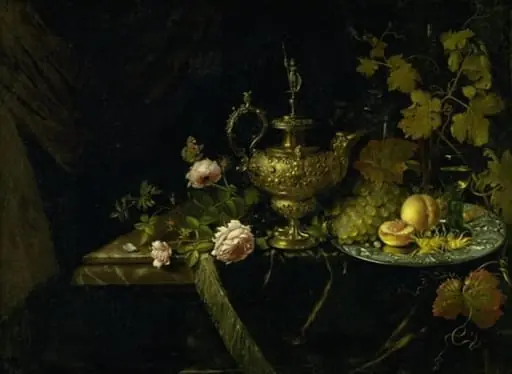 Still Life
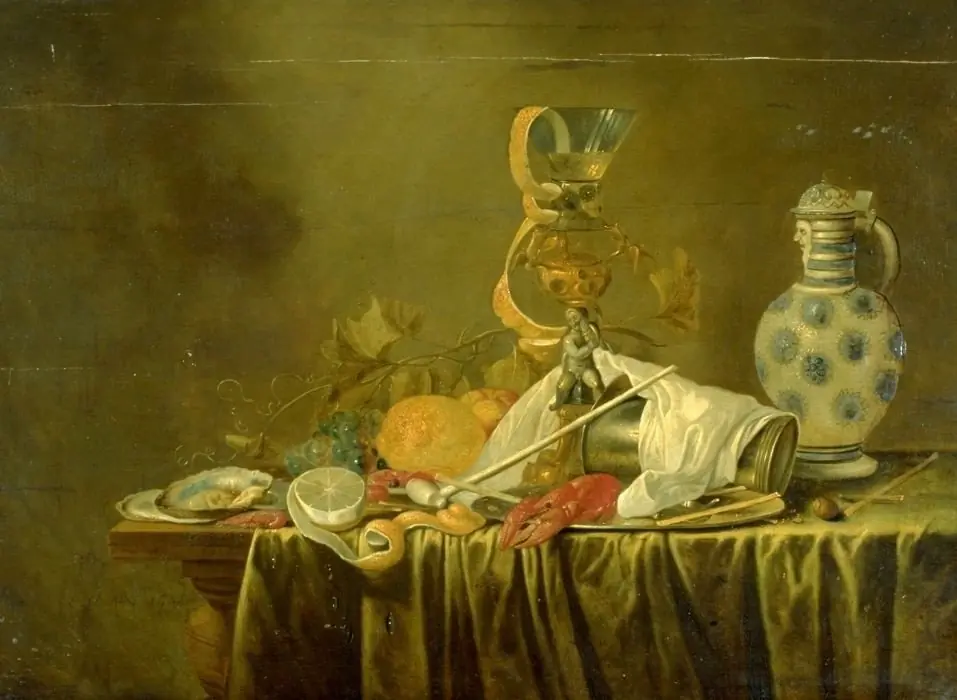 Still life with wine glass and stoneware jug
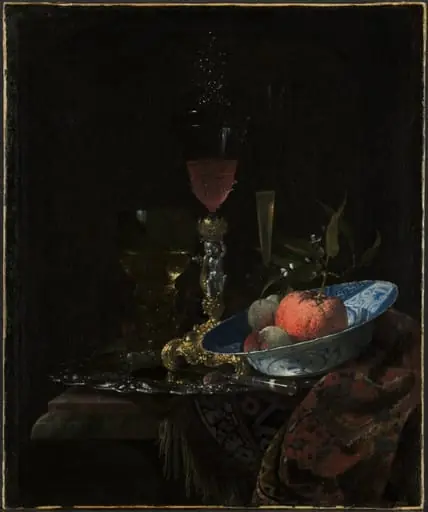 Wineglass and a Bowl of Fruit
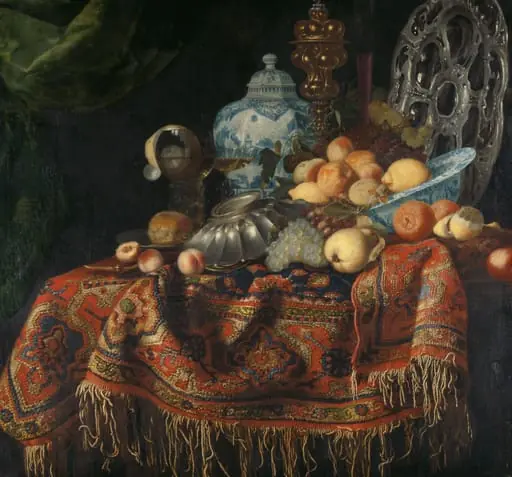 Still Life with Fruit, Plates and Dishes on a Turkey Carpet
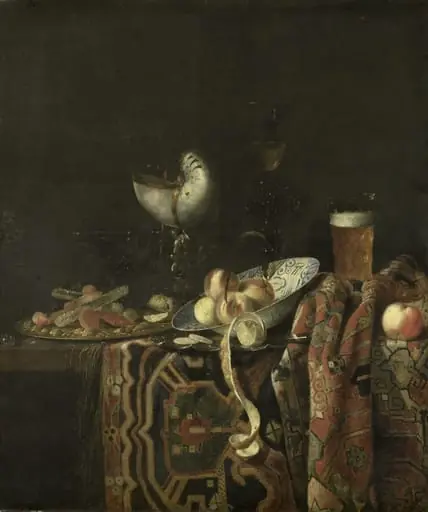 Still Life
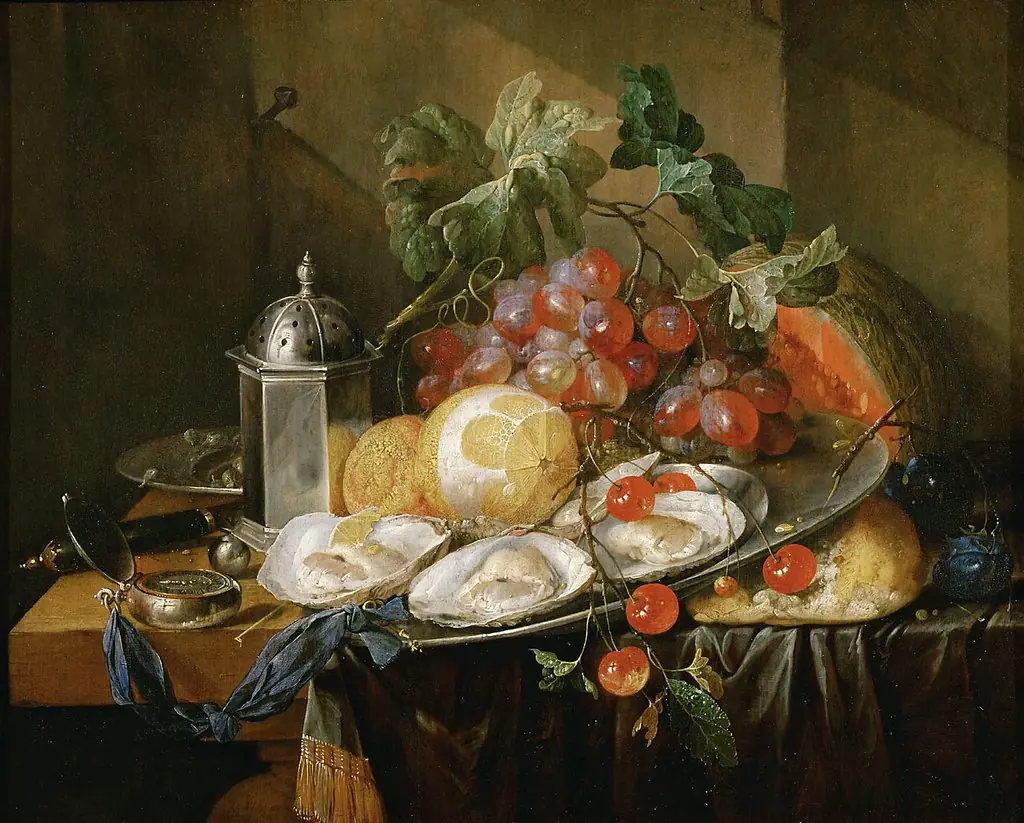 Fruit Still Life with Oysters
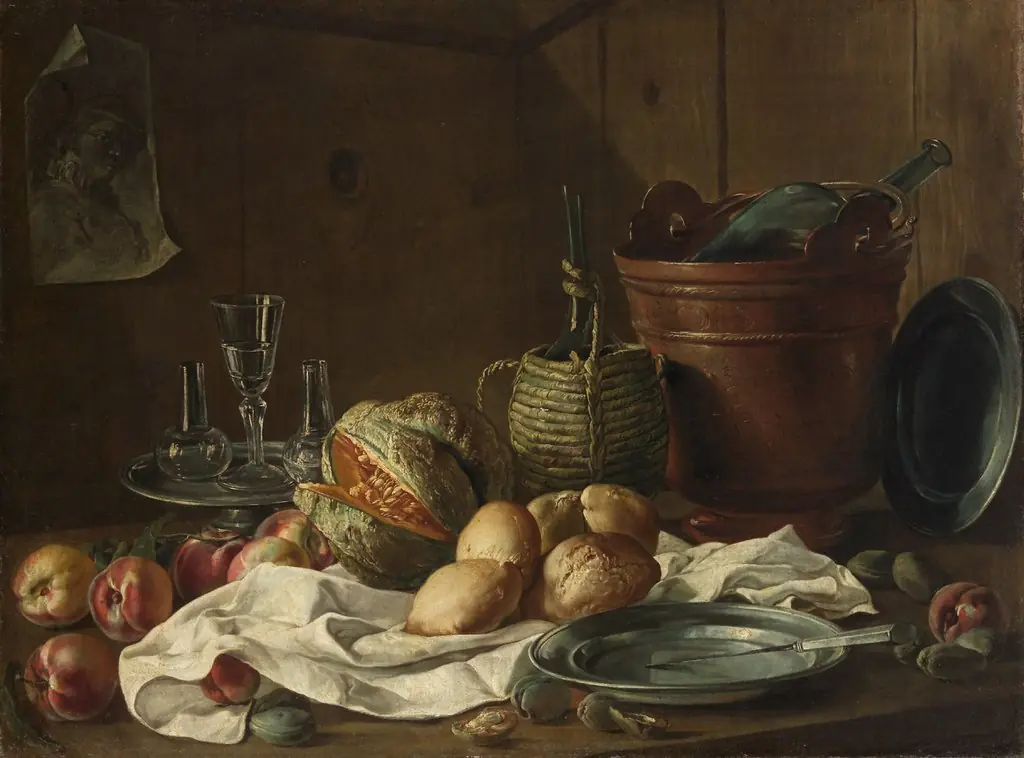 Früchtestilleben
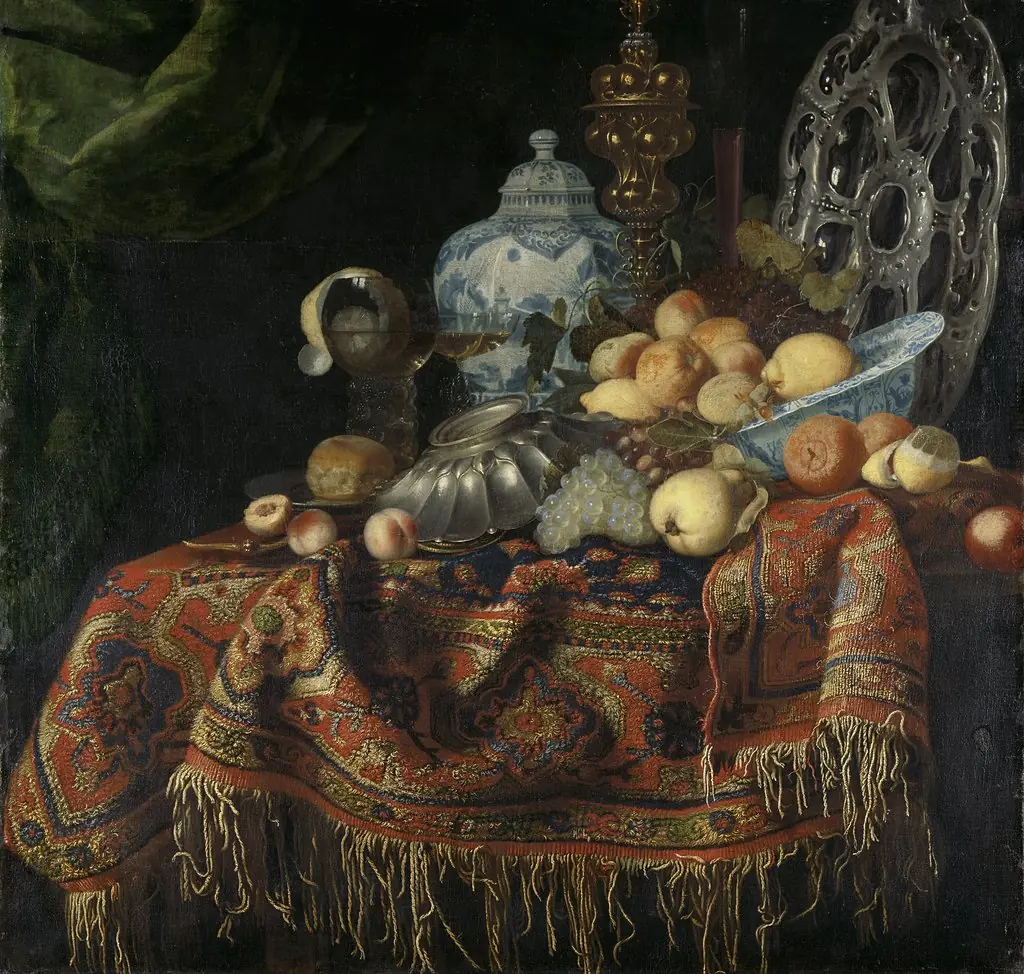 Still Life with Fruit, Plates and Dishes on a Turkey Carpet
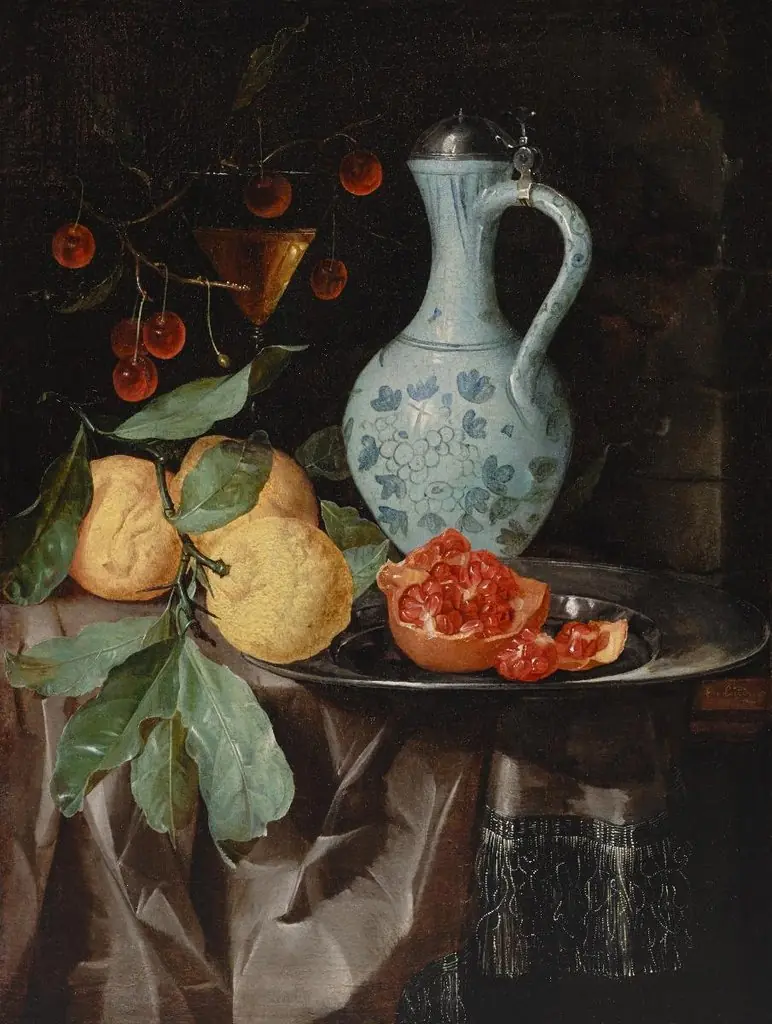 Stillleben mit Porzellankanne und Früchten
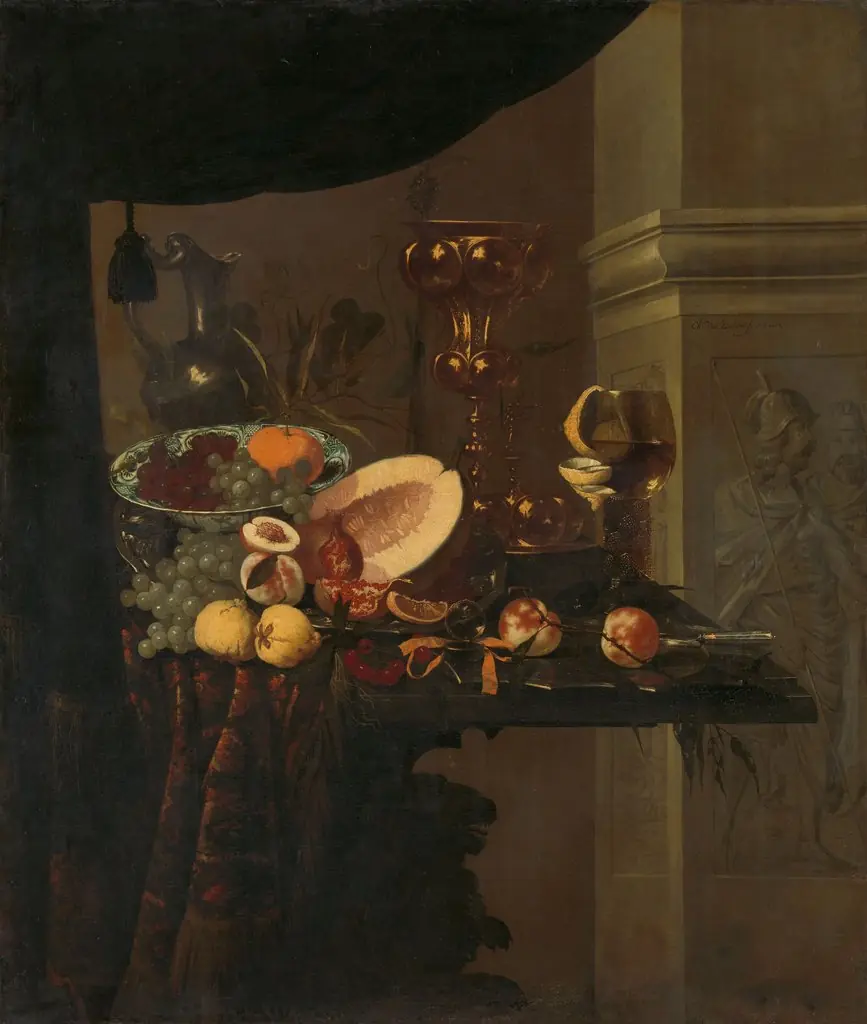 Still Life