Artwork
V.I. Lenin
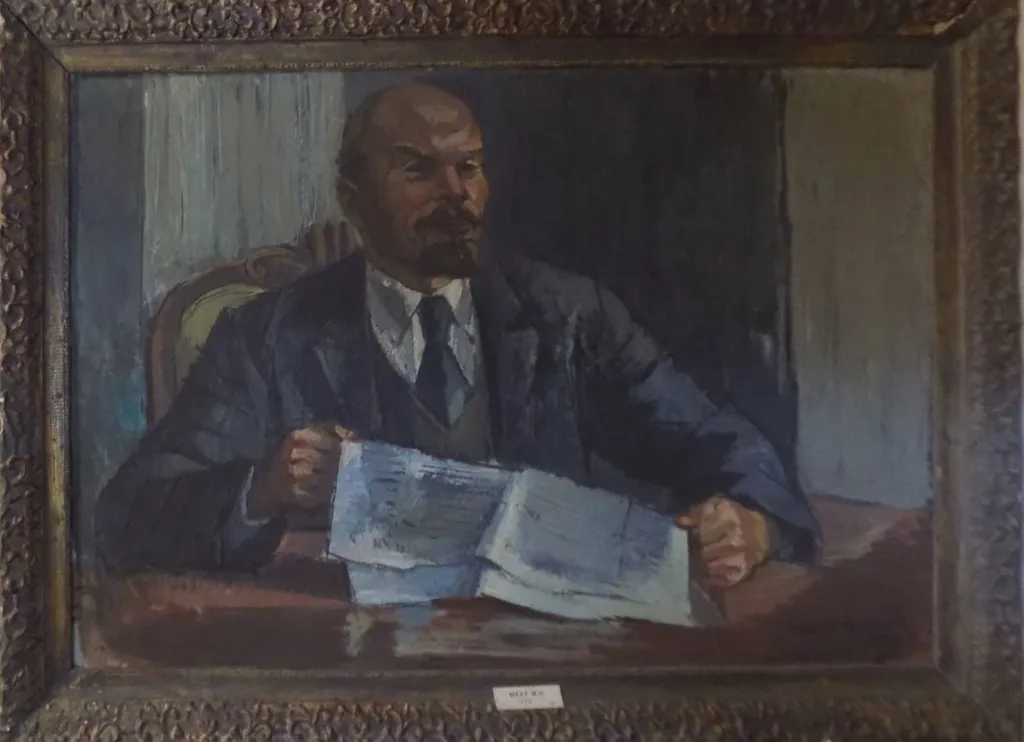
V.I. Lenin is an unspecified painting by Max Hermann Maxy. It dates from 1960 and is held in the collection of the Bucharest Municipality Museum.
About this work
Overview
Painted in 1960 by Romanian artist Max Hermann Maxy, this portrait portrays Vladimir Ilyich Lenin seated in a chair, engrossed in a newspaper.
Painted in 1960 by Romanian artist Max Hermann Maxy, this portrait portrays Vladimir Ilyich Lenin seated in a chair, engrossed in a newspaper. Executed in oil, the work is part of the Museum of Ethnography’s collection. Its restrained palette and focused composition emphasize introspection rather than political symbolism, distinguishing it from more propagandistic depictions of the revolutionary leader.
Subject & Meaning
The subject is Vladimir Lenin, rendered not as a public icon but as a private figure in quiet concentration. His downward gaze and still posture suggest deep engagement with the text, transforming the image into a meditation on intellectual labor. The absence of overt revolutionary symbols shifts attention from ideology to the human act of reading, framing Lenin as a thinker rather than a leader.
Technique & Style
Maxy employs chiaroscuro to model the face and hands with subtle gradations of light, enhancing three-dimensionality. The muted background, textured with soft brushwork, recedes without distraction, directing focus to the figure. Fine detail in the facial features—nose, chin, and furrowed brow—conveys psychological presence, while the dark suit and white shirt create a quiet contrast that grounds the composition.
History & Provenance
Created in 1960 during Maxy’s later period, the painting entered the Museum of Ethnography’s holdings shortly after its completion. Unlike earlier Soviet-era portraits, this work emerged in a post-Stalin cultural climate where more introspective representations of historical figures became permissible. Its acquisition reflects institutional interest in nuanced portrayals of 20th-century political figures.
Context
In the early 1960s, Eastern European artists began moving away from rigid socialist realism toward more personal, psychologically inflected styles. Maxy’s portrait aligns with this shift, offering a contemplative image of Lenin that avoids heroism or agitation. The work resonates with broader European trends in mid-century portraiture that prioritized inner life over ideological messaging.
Legacy
The painting remains a quiet example of how post-Stalin artists reimagined revolutionary figures through psychological realism. It contributes to a broader reassessment of Lenin’s image beyond state-sanctioned iconography. While not widely exhibited, it holds significance within Romanian modernist circles as a deliberate departure from political spectacle.
Artist & collection

Artist
Max Hermann Maxy was a Romanian painter, art professor, scenographer, and professor of German-Jewish descent.
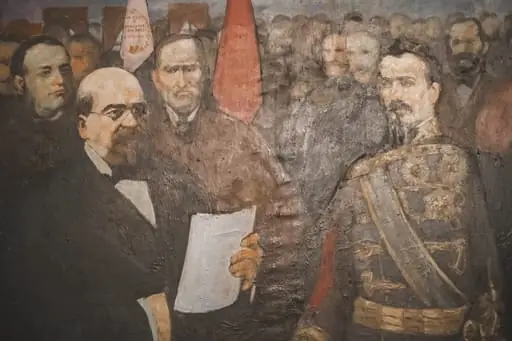 Lucrare având în planul apropiat pe domnitorul Al. I.Cuza și M. Kogălniceanu aflați într-o încăpere. Prințul este în uniformă militară și ține în una din mâini un document rulat. Are în față o masă îmbrăcată în catifea verde. Kogălniceanu este îmbrăcat în costum negru, cămașă albă și legătură neagră la gât. Are în una din mâini, foile albe probabil ale Actului de inaugurare. În spate lor se află o mulțime de chipuri (din care se face remarcată figura Mitropolitului ) și două steaguri (roșu și alb - cel al Universității). Nu este semnat și nici datat.
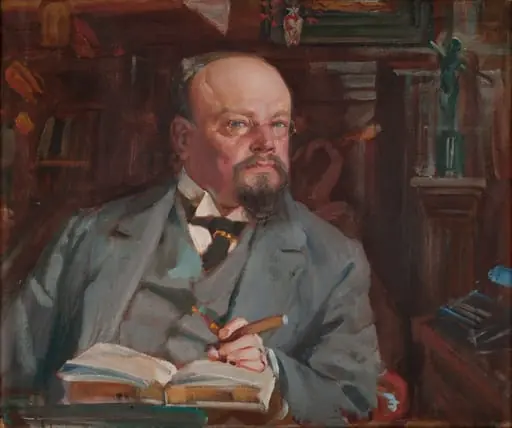 Georg Sidorowin muotokuva
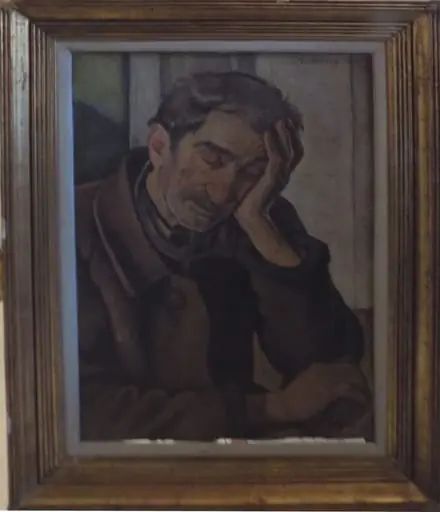 Muncitor
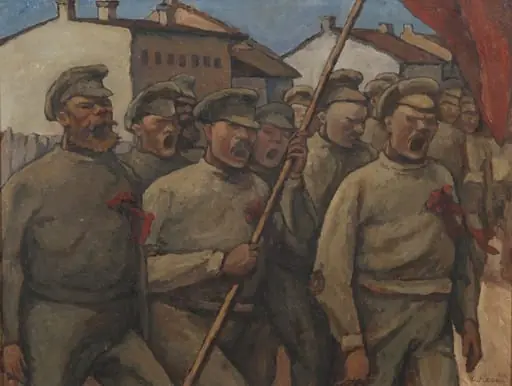 Începuturile revoluției ruse la Iași, 1917
 Untitled
 Untitled
 Untitled