Artwork
Madama Ghitas
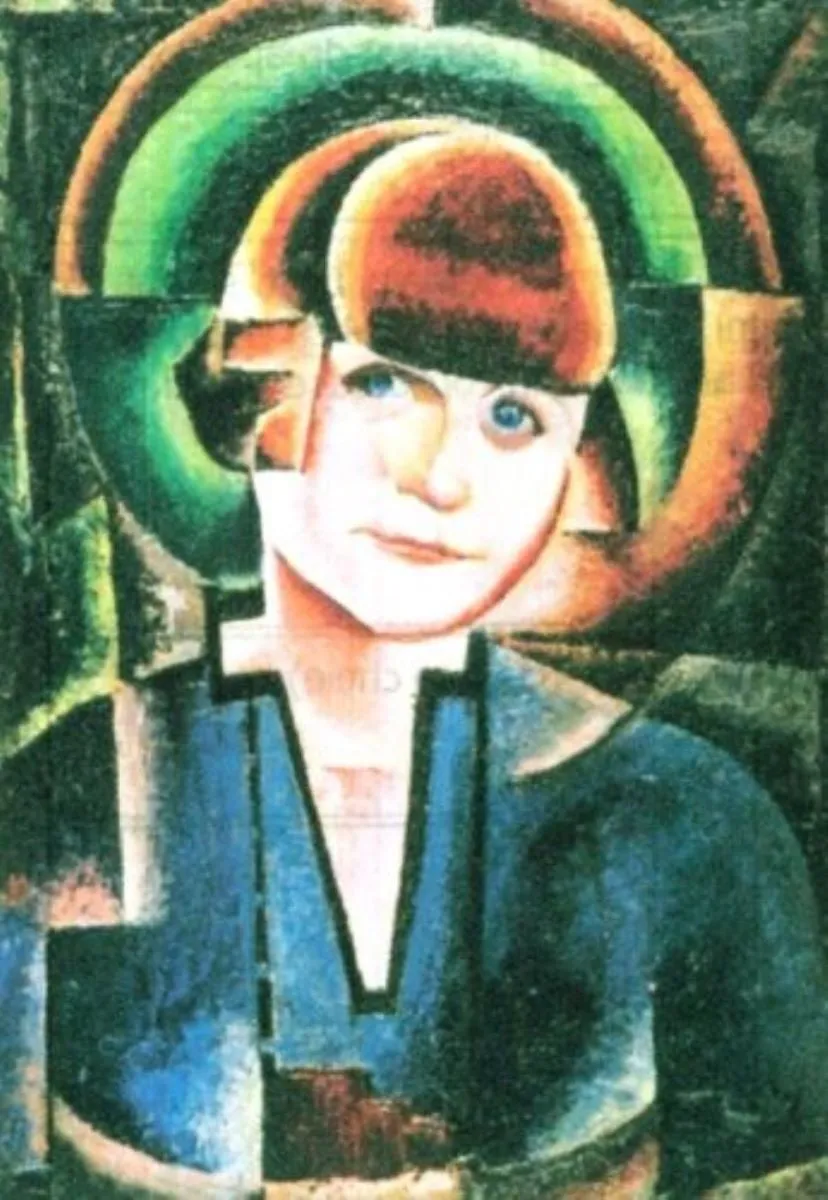
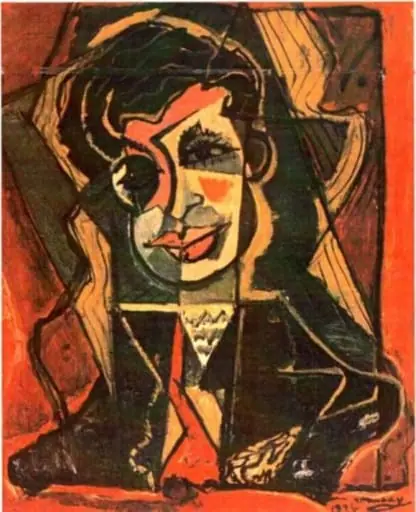
Madama Ghitas is an unspecified painting by Max Hermann Maxy. It dates from 1943 and is held in the collection of the Gavrila Simion Eco-Museum Research Institute Tulcea.
About this work
Overview
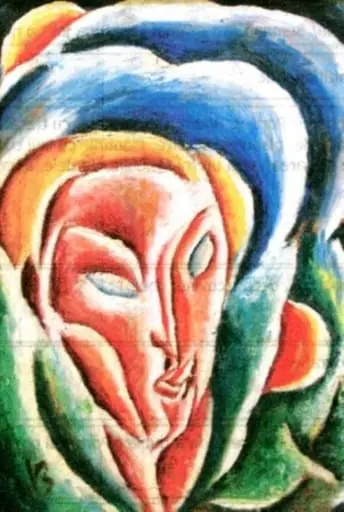
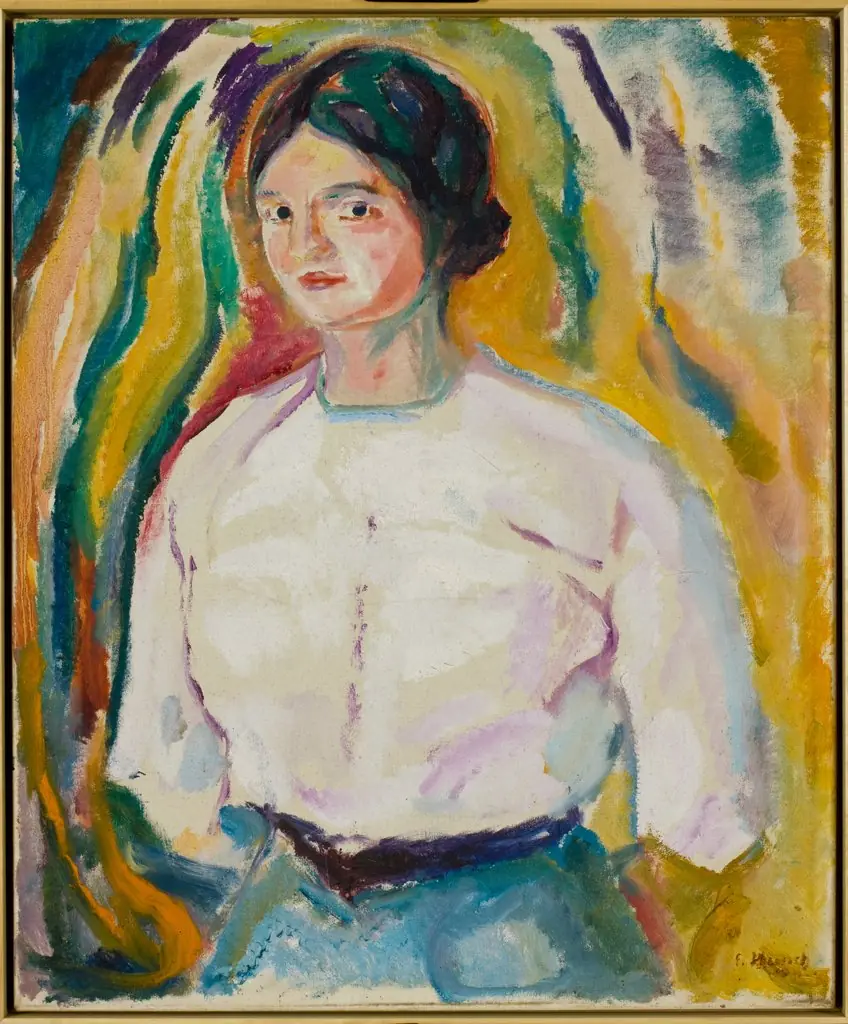
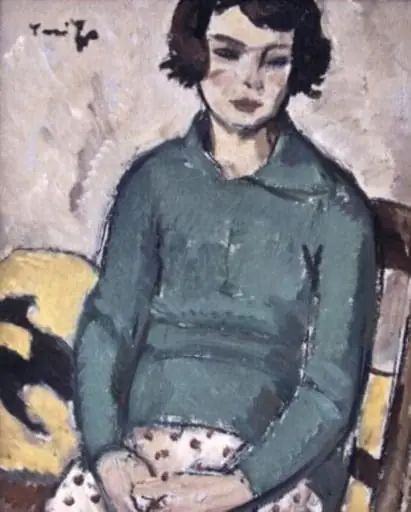
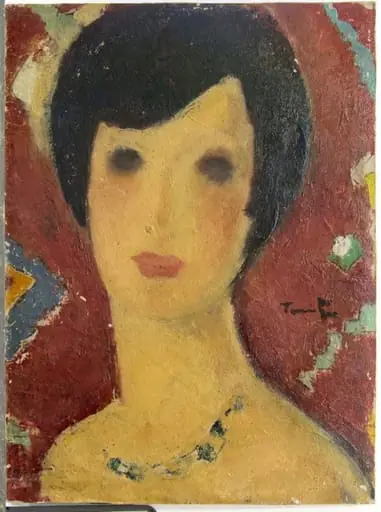
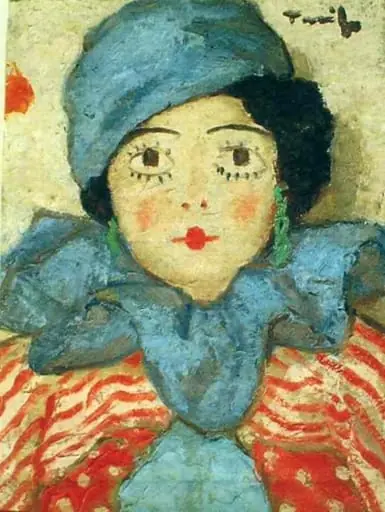
Madama Ghitas, painted around 1943 by Max Hermann Maxy, is a portrait that departs from naturalistic representation. Executed in oil or tempera, it presents a seated figure against an abstract, turbulent backdrop. The work resides in the collection of the Museum of Ethnography, where it is contextualized within modernist experimentation rather than traditional portraiture.
Subject & Meaning
The subject is a woman, identified by the title, depicted with minimal facial detail and wearing a dark jacket and white collar. Her glasses suggest intellectual presence, yet the face lacks individualizing features. The emphasis shifts from identity to atmosphere, as the figure becomes a focal point within a non-representational environment, hinting at inner states rather than external reality.
Technique & Style
Maxy employs bold, non-naturalistic color—swirling bands of green, orange, and blue—that seem to vibrate around the figure. Forms are fractured and dynamic, rejecting perspective and stable light sources. The halo-like background does not mimic optical effects but instead constructs emotional resonance through chromatic tension, aligning with expressive abstraction over realism.
History & Provenance
Created during World War II, the painting emerged from a period of intense artistic reorientation in Eastern Europe.
Created during World War II, the painting emerged from a period of intense artistic reorientation in Eastern Europe. Maxy, a Romanian modernist, produced this work while navigating political upheaval and shifting cultural priorities. It entered the Museum of Ethnography’s collection in the postwar years, likely through institutional acquisition or donation, reflecting its status as a significant regional modernist work.
Context
The painting reflects influences from Cubism and Expressionism, particularly in its fragmentation of form and emotional use of color. While not strictly analytical Cubist, it shares that movement’s interest in deconstructing visual perception. Maxy’s approach diverges from Western avant-garde trends by integrating local sensibilities, making the work a bridge between European modernism and regional artistic identity.
Legacy
Madama Ghitas remains a key example of interwar Romanian modernism, illustrating how artists adapted international styles to express personal and cultural dislocation. It is studied for its departure from academic norms and its use of color as psychological carrier. The work contributes to broader narratives of Eastern European modern art, often underrepresented in mainstream art histories.
Artist & collection

Artist
Max Hermann Maxy was a Romanian painter, art professor, scenographer, and professor of German-Jewish descent.
Museum
Gavrila Simion Eco-Museum Research Institute Tulcea
Continue through works from the same source collection.