Artwork
Studies for Christ Before Caiaphas
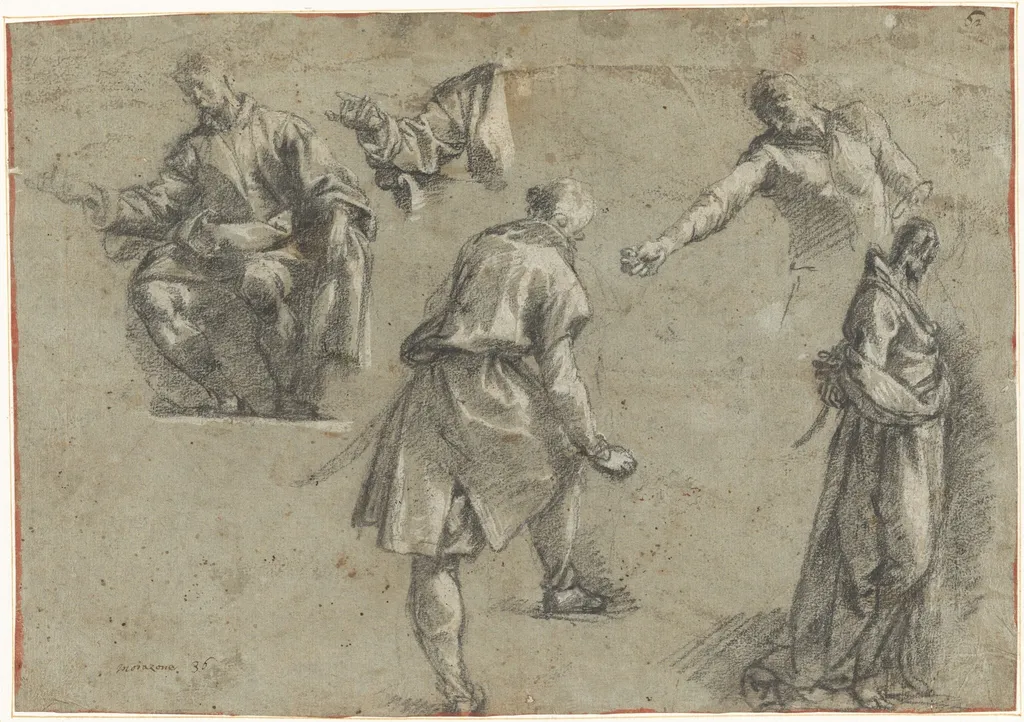
Studies for Christ Before Caiaphas is a gouache drawing by the Baroque artist Mazzucchelli, called Morazzone, Pier Francesco. It dates from 1608 and is held in the collection of the National Gallery of Art.
About this work
Overview
This drawing by Pier Francesco Mazzucchelli, known as Morazzone, dates to around 1608 and serves as a preparatory study for a larger religious composition.
This drawing by Pier Francesco Mazzucchelli, known as Morazzone, dates to around 1608 and serves as a preparatory study for a larger religious composition. Executed in black chalk with white gouache highlights on gray-green laid paper, it was later mounted onto a support. The work reflects the artist’s process of refining figures and gestures before committing to a final painted scene, typical of Counter-Reformation artistic practice.
Subject & Meaning
The drawing depicts figures from the biblical trial of Christ before Caiaphas, the high priest. One central figure sits in judgment, while others stand in varied postures of accusation, witness, or reaction. The emotional tension is conveyed through subtle facial expressions and body language, emphasizing the drama of the moment without overt narrative detail, aligning with the period’s focus on psychological realism in sacred subjects.
Technique & Style
Morazzone employed black chalk for fluid, expressive contours and layered white gouache to accentuate highlights, enhancing volume and texture. The gray-green paper provided a mid-tone ground, allowing both dark and light elements to emerge with clarity. Delicate shading and varied line weight capture the folds of fabric and the softness of skin, demonstrating a refined command of chiaroscuro and anatomical observation.
History & Provenance
The drawing entered the collection of the National Gallery of Art in Washington, D.C., as part of the Samuel H. Kress Foundation bequest in the mid-20th century. Its earlier provenance is not fully documented, but its condition and technique suggest it was preserved as a significant study rather than a finished work, likely retained by the artist’s studio or a later collector interested in preparatory drawings.
Context
Created during the early 17th century in Lombardy, the drawing reflects the influence of Caravaggio’s naturalism and the Counter-Reformation’s demand for emotionally compelling religious imagery. Morazzone, active in Milan, was part of a regional school that prioritized expressive realism over idealized forms, making such detailed studies essential for conveying spiritual gravity in altarpieces and devotional scenes.
Legacy
As a well-preserved example of a preparatory drawing from a Lombard artist of the period, this work offers insight into the studio practices of early Baroque painters. It illustrates how artists refined composition and expression through incremental studies, preserving a tangible link between conceptual thought and final execution. Such drawings are now valued as independent records of artistic process.
Artist & collection

Artist
Mazzucchelli, called Morazzone, Pier Francesco
Mazzucchelli, called Morazzone, Pier Francesco (1600–1600) was an artist.

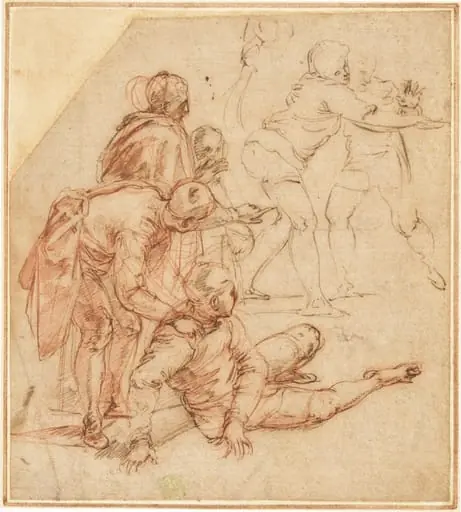 Spectators Amazed
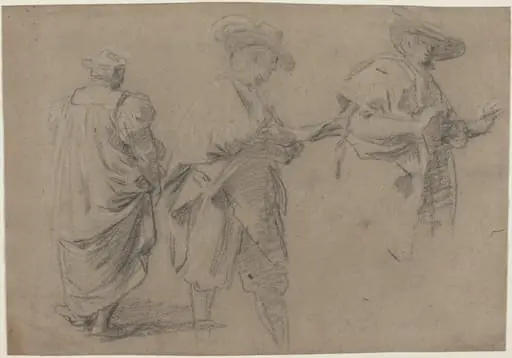 A Judge and Two Gentlemen Lawyers
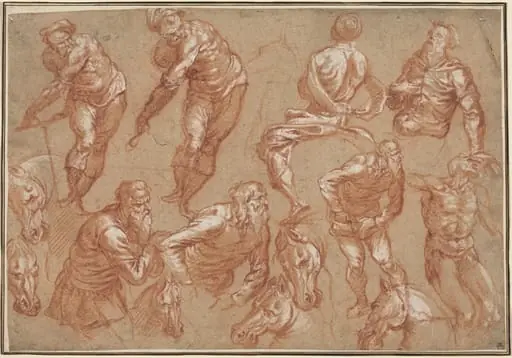 Figure Studies
![Figures Deciphering an Inscription, with Two Women Seated [Study for Oeuvres de Bossuet, IV], by Giovanni Battista Piazzetta](https://artifactworldgallery.com/img/giovanni-battista-piazzetta--figures-deciphering-an-inscription-with-two-women-seated-stu--24638de2183fad9c-w320.webp) Figures Deciphering an Inscription, with Two Women Seated [Study for Oeuvres de Bossuet, IV]
Figures Deciphering an Inscription, with Two Women Seated [Study for Oeuvres de Bossuet, IV]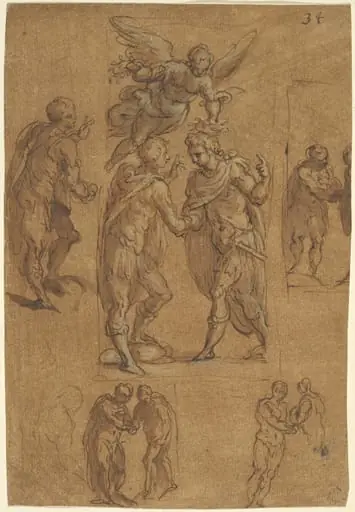 Two Soldiers Crowned by Victory
![A Monk Seated with Arms Outstretched [Study for the Virgin in the _Vision of Blessed Felice da Cantalice_], by Fra Semplice da Verona](https://artifactworldgallery.com/img/fra-semplice-da-verona--a-monk-seated-with-arms-outstretched-study-for-the-virgin-in--3bbc95a27c9363e9-w320.webp) A Monk Seated with Arms Outstretched [Study for the Virgin in the _Vision of Blessed Felice da Cantalice_]
A Monk Seated with Arms Outstretched [Study for the Virgin in the _Vision of Blessed Felice da Cantalice_]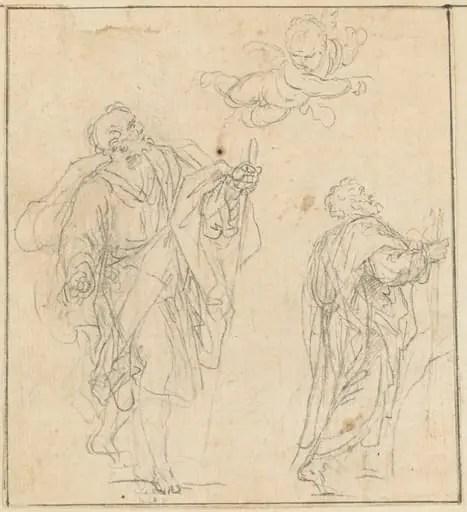 An Apostle Guided by an Angel
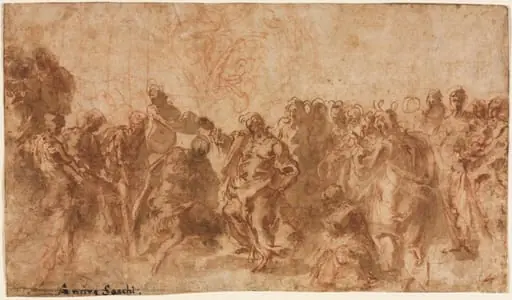 The Baptism of Christ
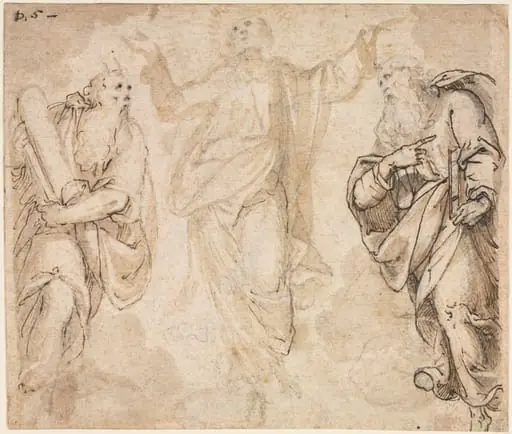 The Transfiguration (recto)
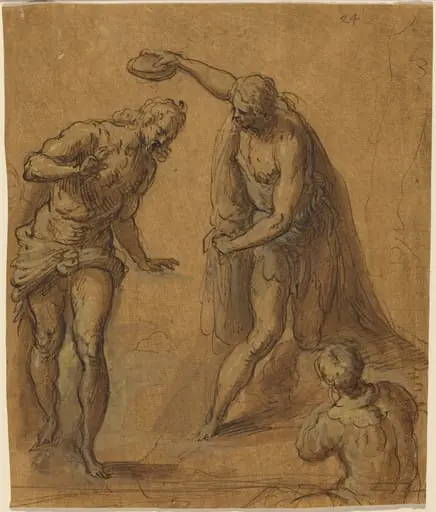 Sketch for a Baptism of Christ
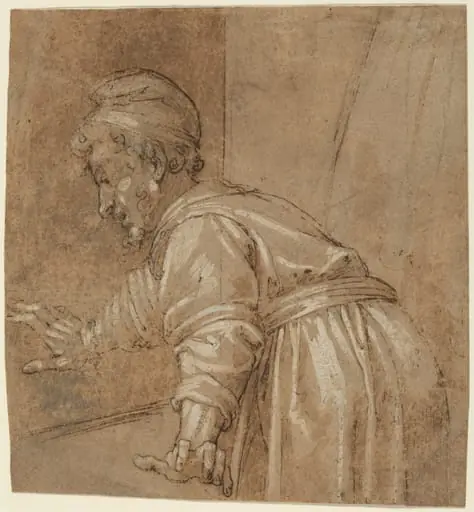 A Man Looking Out a Window
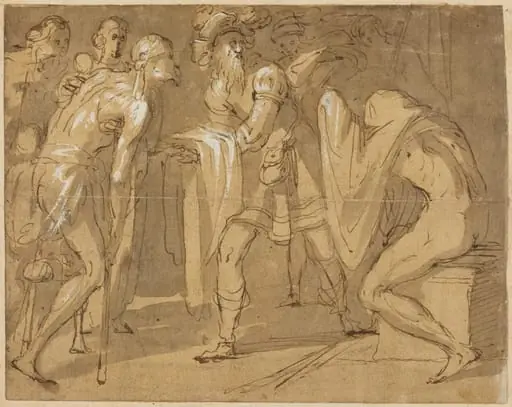 Saint Homobono