Artwork
A Man Looking Out a Window
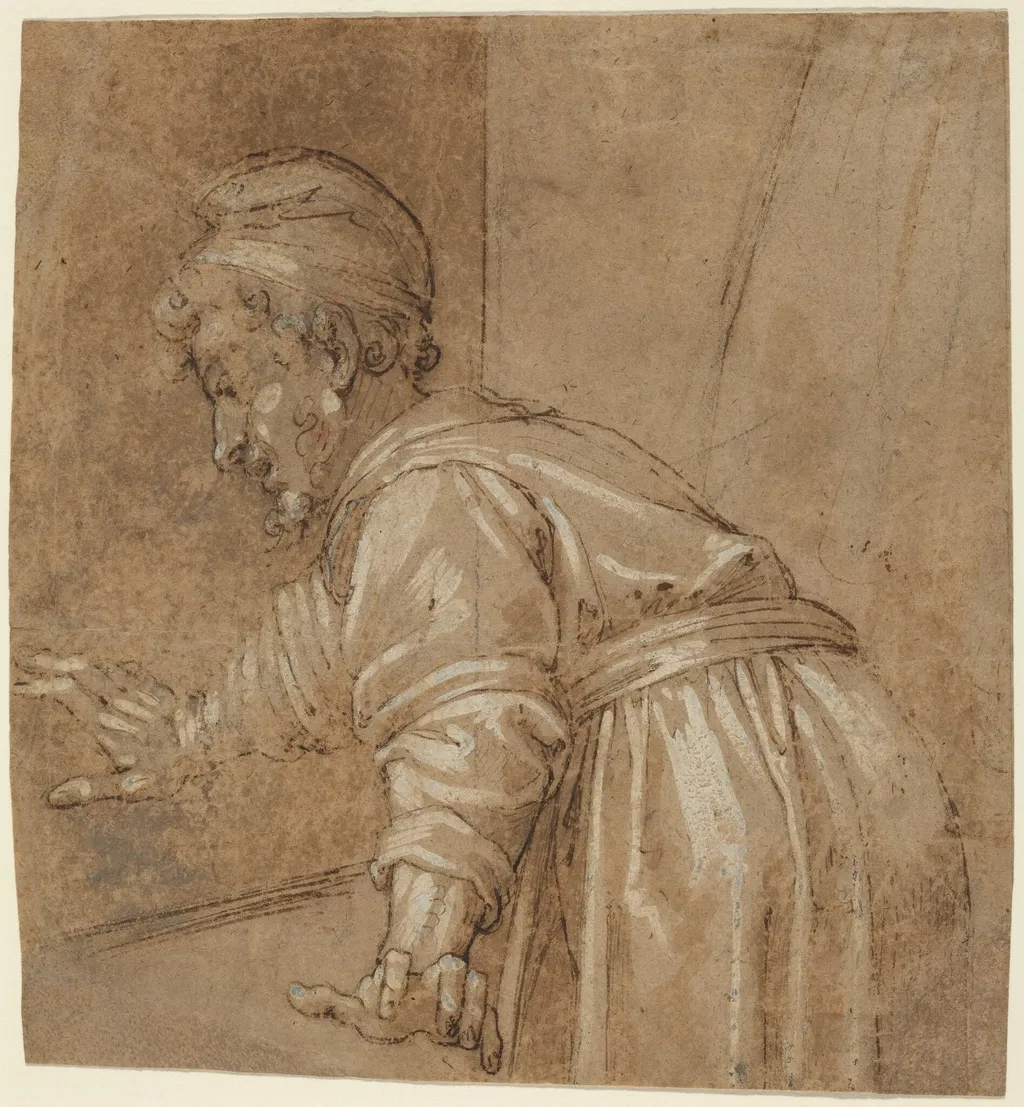
A Man Looking Out a Window is a chalk drawing by the Renaissance artist Bonifacio de' Pitati. It dates from 1520 and is held in the collection of the National Gallery of Art.
About this work
Overview
Created around 1520 by Bonifacio de' Pitati, this drawing captures a solitary figure observed from behind, gazing through a window.
Created around 1520 by Bonifacio de' Pitati, this drawing captures a solitary figure observed from behind, gazing through a window. Executed in pen and brown ink with wash over black chalk, and enhanced with white highlights, it is rendered on laid paper. The work’s intimate scale and restrained palette suggest it was made as a study rather than a finished composition, emphasizing observation over formal presentation.
Subject & Meaning
The figure, a man with short curly hair and a loosely draped robe, is depicted mid-gaze, his posture suggesting quiet contemplation. The window frames his view without revealing what lies beyond, inviting speculation about his thoughts. The absence of narrative context shifts focus to the act of looking itself — a moment of stillness and inward attention, common in Renaissance studies of human presence.
Technique & Style
Bonifacio employed swift, fluid lines to suggest the folds of fabric and the curve of the shoulders, while brown washes soften the forms and unify the tonal range. Black chalk underdrawing anchors the composition, and white heightening catches the light on the window’s glass and the figure’s shoulder. The cross-hatching is minimal, used sparingly to define shadow rather than model volume, reinforcing the sketch’s immediacy.
History & Provenance
The drawing’s early history is undocumented, but its materials and style align with Venetian workshop practices of the 1520s. It likely originated as a preparatory study, possibly for a larger composition or as an exercise in figure and light. Its survival suggests it was valued for its expressive economy, though no record of its early collectors is known.
Context
In early 16th-century Venice, artists increasingly turned to intimate drawings to explore light, posture, and human expression. This work reflects a shift from grand narrative to quiet observation, influenced by the region’s emphasis on color and atmosphere. Similar studies by Titian and Giorgione reveal a shared interest in capturing transient moments of daily life with minimal means.
Legacy
Though not widely exhibited, the drawing exemplifies the Renaissance practice of using drawing as a tool for visual inquiry. Its restrained technique and focus on ordinary presence influenced later artists interested in psychological subtlety over dramatic gesture. It remains a quiet testament to the value placed on observation in Venetian artistic culture.
Artist & collection


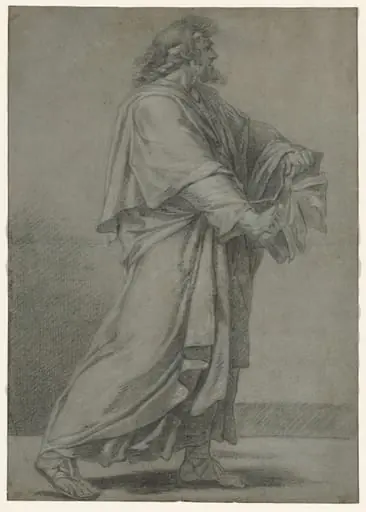 Man Destroying Book
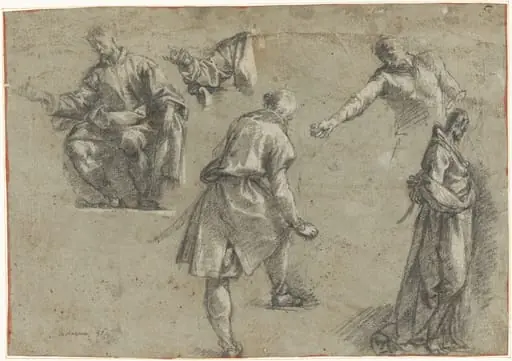 Studies for Christ Before Caiaphas
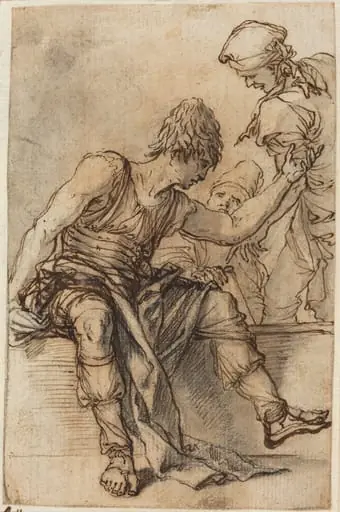 Youth Sitting on a Wall in Conversation with Two Men
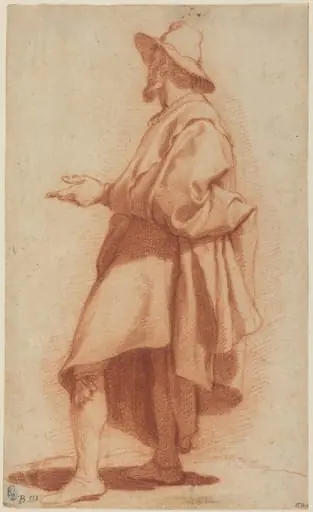 Standing Man Wearing a Cloak and Hat
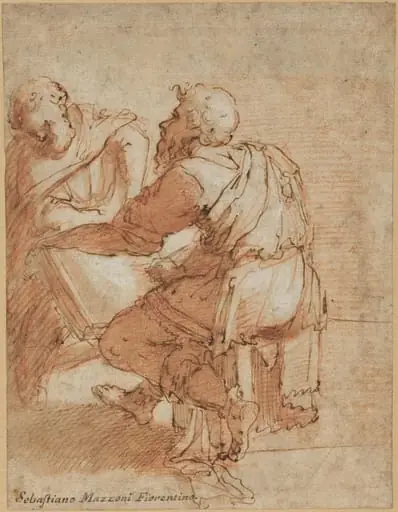 Study for "The Four Doctors of the Church"
![Young Peasant Seated on the Ground [recto], by Giuseppe Maria Crespi](https://artifactworldgallery.com/img/giuseppe-maria-crespi--young-peasant-seated-on-the-ground-recto--4f17490e41fbab4c-w320.webp) Young Peasant Seated on the Ground [recto]
Young Peasant Seated on the Ground [recto]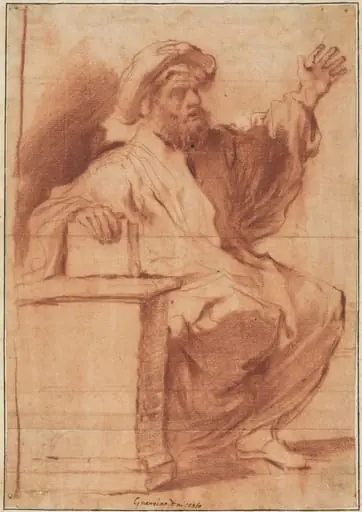 Seated Prophet
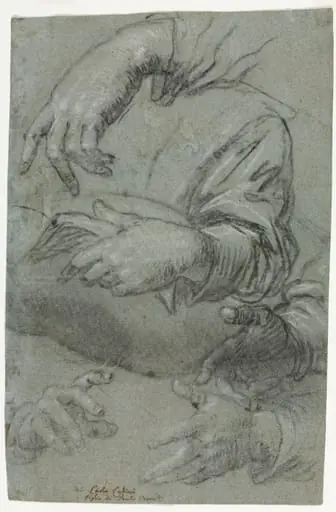 Studies of Hands (recto)
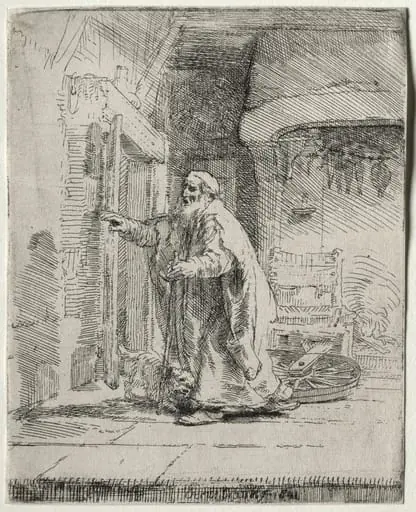 The Blindness of Tobit: The Larger Plate
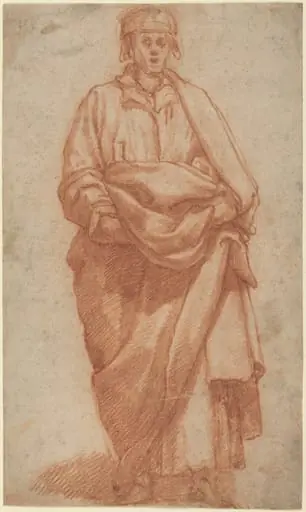 Standing Man
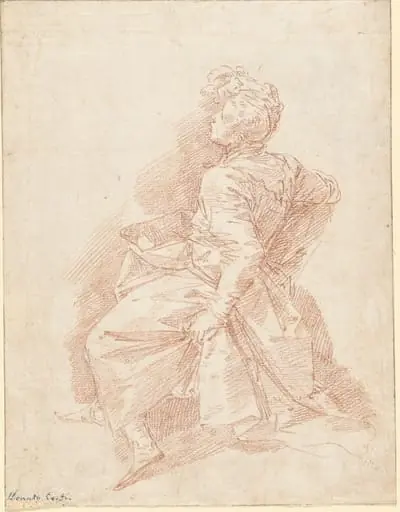 A Seated Man
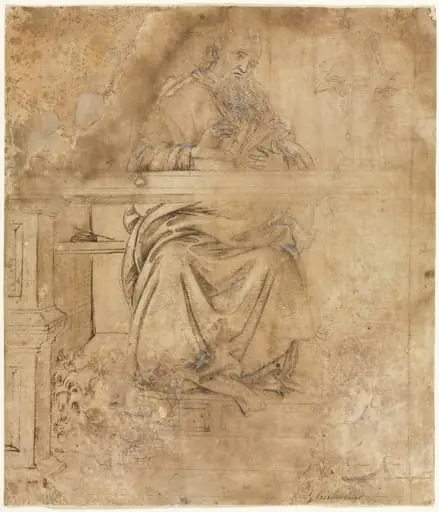 St. Jerome in His Study