Artwork
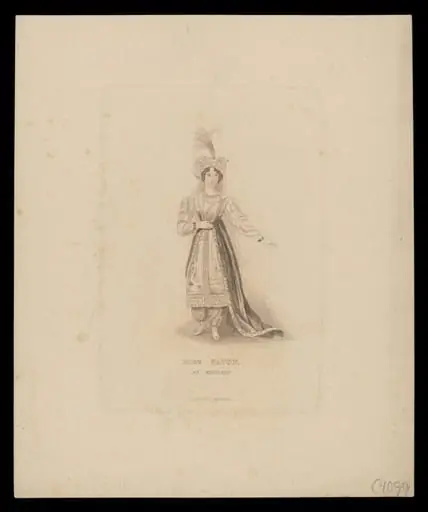
Mrs. Vining in the Character of Peter Wilkins. The Castanet Dance.
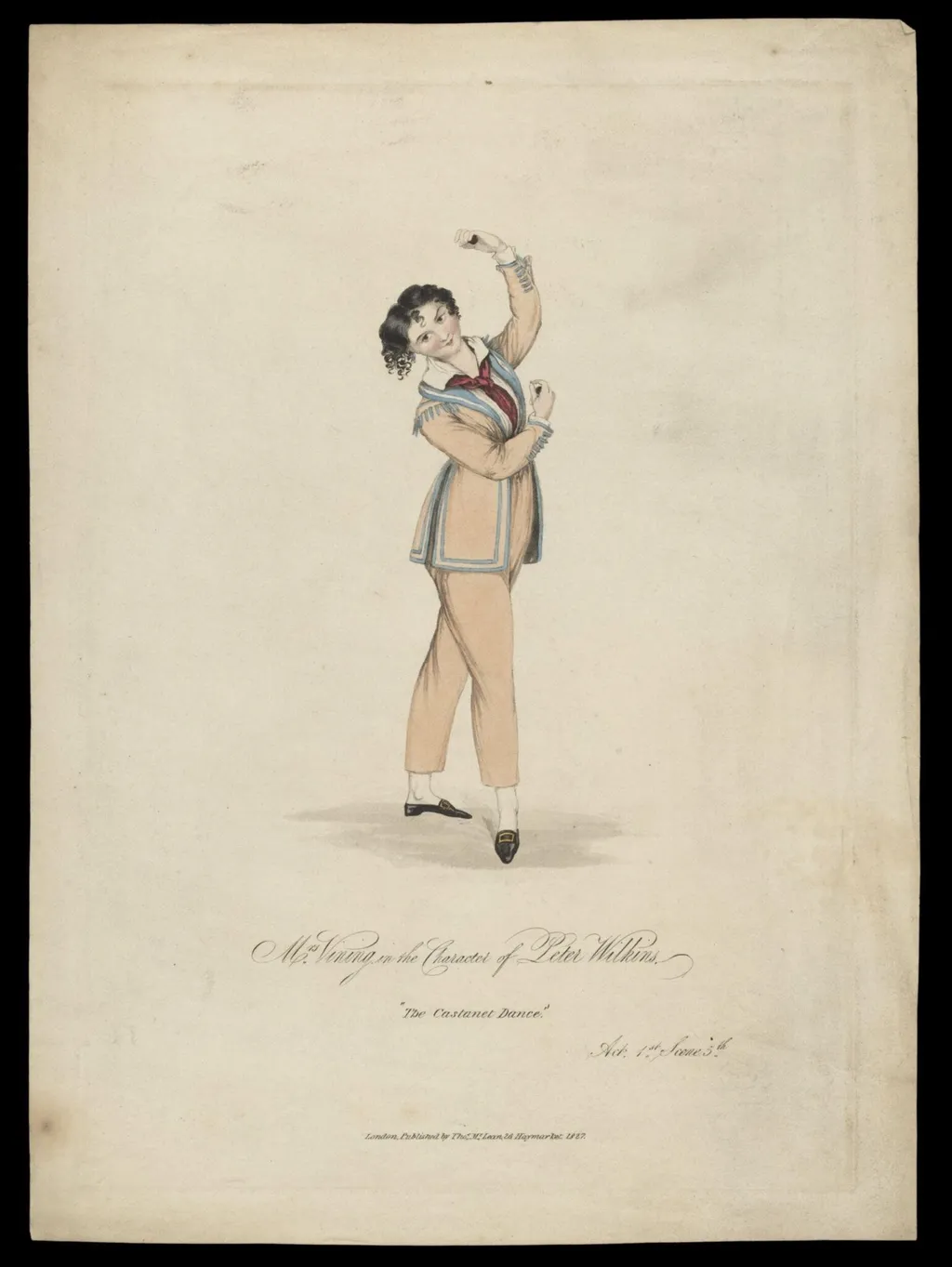
Mrs. Vining in the Character of Peter Wilkins. The Castanet Dance. is a print by the Romanticist artist Thomas McLean. It dates from 1827 and is held in the collection of the Victoria and Albert Museum.
About this work
This print shows a stage scene from a play staged in London in 1827. The play told the story of an Englishman who washes up on an island and meets flying people. The print was made to share the show with people who couldn’t attend.
The play mixed comedy, adventure, and fantasy at Covent Garden. It ran one night only and vanished from the stage after that.
Look up the Victoria and Albert Museum.
Overview
The production, though short-lived, combined mechanical spectacle with theatrical fantasy, reflecting early 19th-century tastes for visual wonder in drama.
This 1827 print captures a moment from a single-night performance of Peter Wilkins, or The Flying Islanders at London’s Theatre Royal Covent Garden. Created as a souvenir for those unable to attend, it depicts Mrs. Vining in the title role, performing the Castanet Dance amid fantastical stage effects. The production, though short-lived, combined mechanical spectacle with theatrical fantasy, reflecting early 19th-century tastes for visual wonder in drama.
Subject & Meaning
The play adapts Robert Paltock’s 1750 novel about an Englishman stranded on an island inhabited by winged beings known as the Gawries. The narrative blends adventure with allegory, possibly alluding to contemporary debates about human flight, inspired by Bishop John Wilkins’s speculative writings. Mrs. Vining’s portrayal of Peter Wilkins—traditionally a male role—subverts gender norms, while the flying figures symbolize escape, otherness, and the limits of human aspiration.
Technique & Style
The print employs fine line engraving to render the theatrical scene with clarity and detail, emphasizing costume, gesture, and stage machinery. The dancers’ poses suggest motion, and the background hints at painted backdrops of rocky cliffs and caverns. Though not a photograph, the image functions as a documentary record, preserving the ephemeral choreography and design of a performance that vanished after one night.
History & Provenance
Staged on April 16, 1827, the play was a one-night benefit for Mrs. Vining, with elaborate effects designed by William and Thomas Grieve and aerial choreography by Bradwell. Despite lavish production, it closed immediately after its debut. The print likely circulated as a keepsake or promotional item, possibly commissioned by the theatre or publisher. Copies survive in collections such as the Victoria and Albert Museum, preserving its visual legacy.
Context
The play emerged during a period when British theatre increasingly relied on spectacle to attract audiences. Melodramas featuring flying figures, storm scenes, and exotic locales were popular, echoing fascination with exploration and the supernatural. Peter Wilkins drew from earlier literary fantasies and the growing public appetite for visual marvels, aligning with the era’s scientific curiosity about flight and distant lands.
Legacy
Though forgotten as a play, the print endures as evidence of early Victorian theatrical innovation and the commercialization of performance. It reflects how stage illusions were translated into print culture, democratizing access to ephemeral spectacles. The work also illustrates the fluidity of gender roles in 19th-century theatre, where female performers occasionally took on male characters for dramatic or comedic effect.
Artist & collection
Artist
Thomas McLean made crisp prints of early-19th-century London’s lively stage scene.

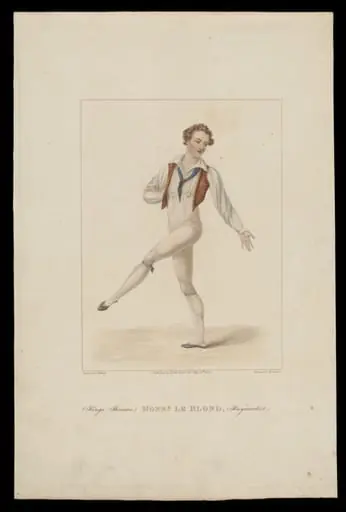 H Beard Print Collection
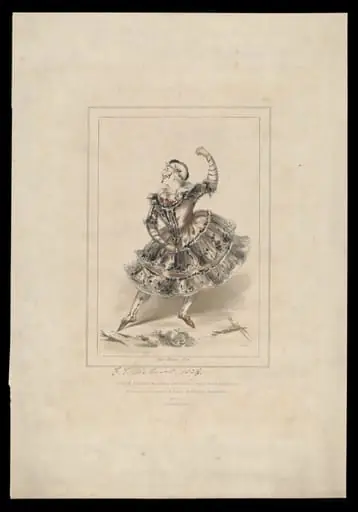 H Beard Print Collection
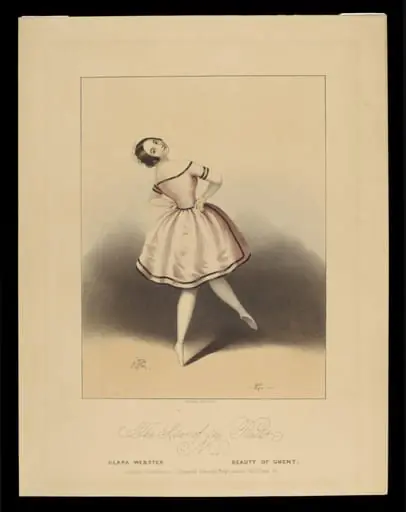 Print Collection
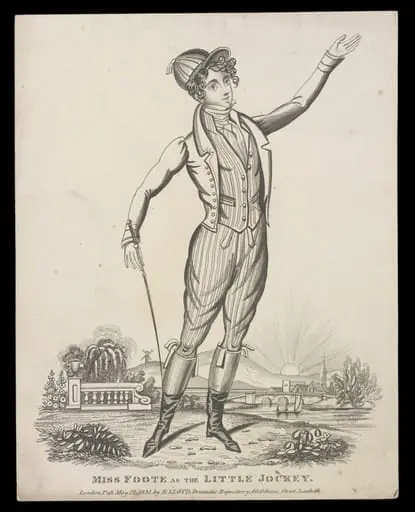 H Beard Print Collection
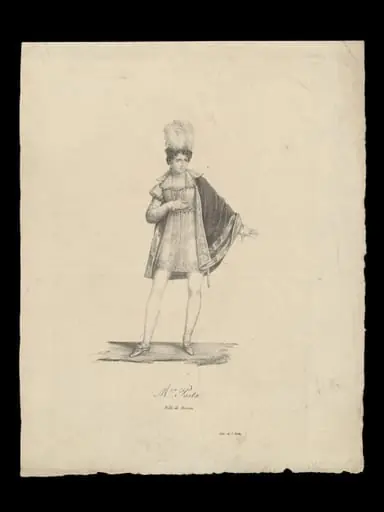 H Beard Print Collection
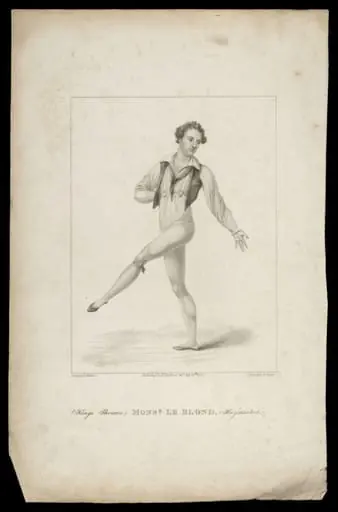 H Beard Print Collection
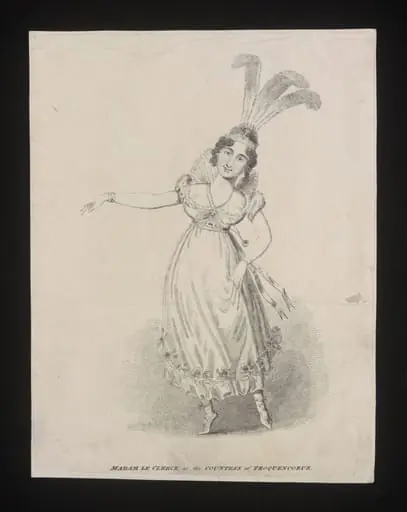 Madam Le Clerck as the Countess of Troquencoeur
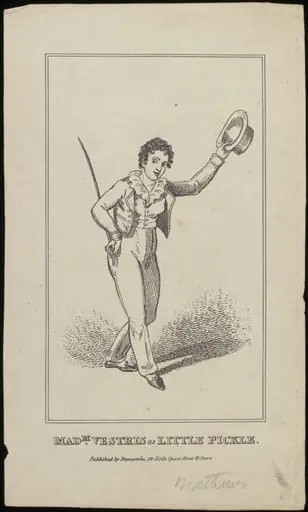 H Beard Print Collection
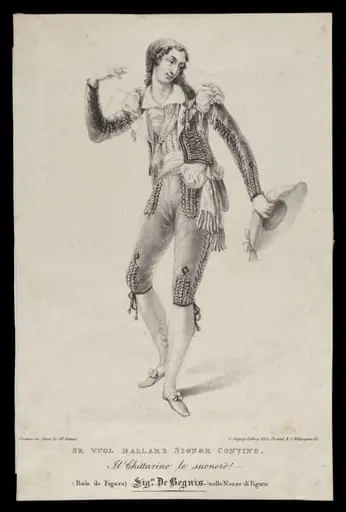 Harry Beard Print Collection
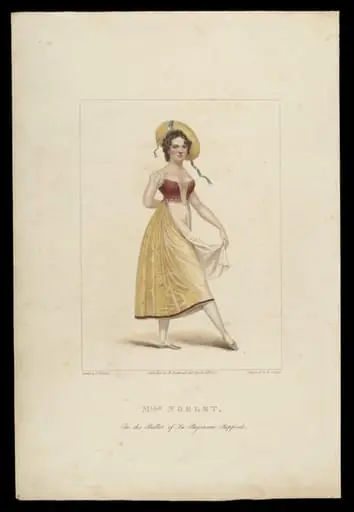 H Beard Print Collection
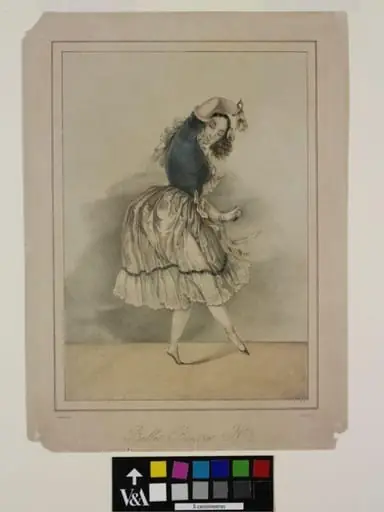 Ballet Beauties No 2.
 H Beard Print Collection