Artwork
Drawing for Metal Sculpture
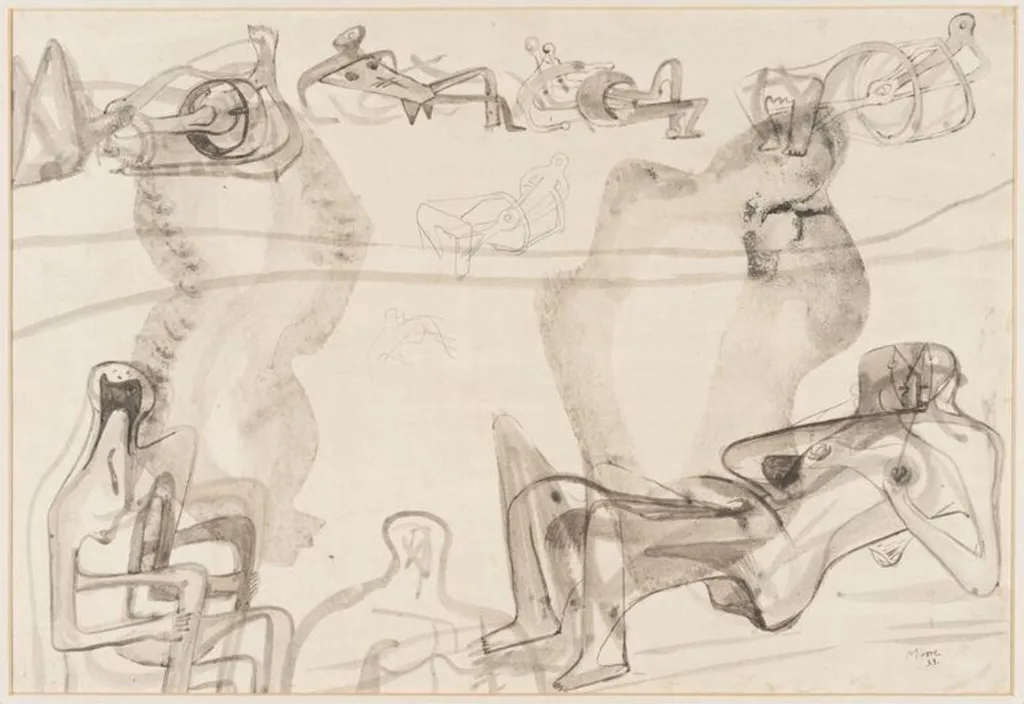
Drawing for Metal Sculpture is a drawing by Henry Moore. It dates from 1933 and is held in the collection of the Victoria and Albert Museum.
About this work
Overview
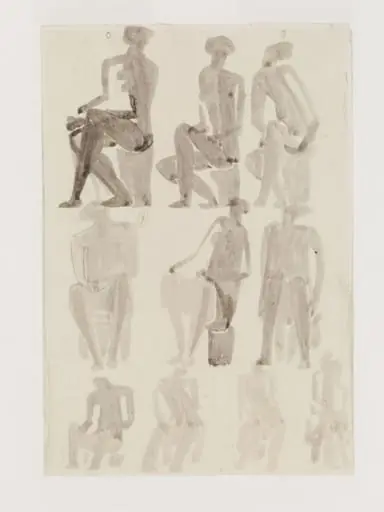
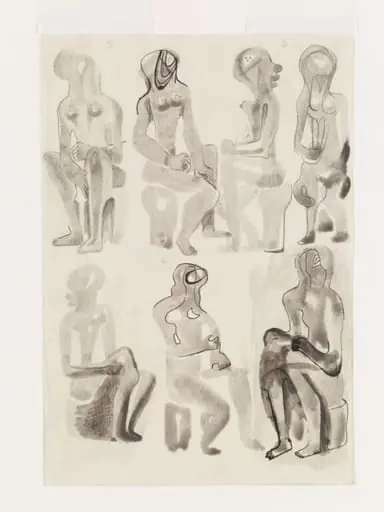
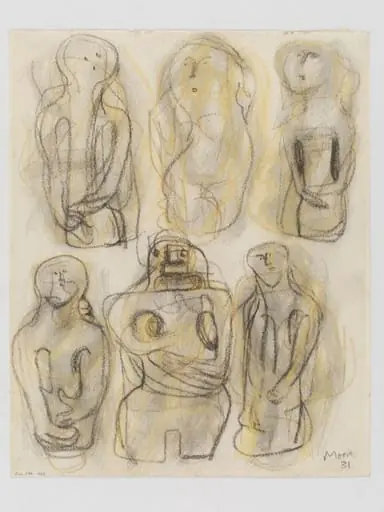
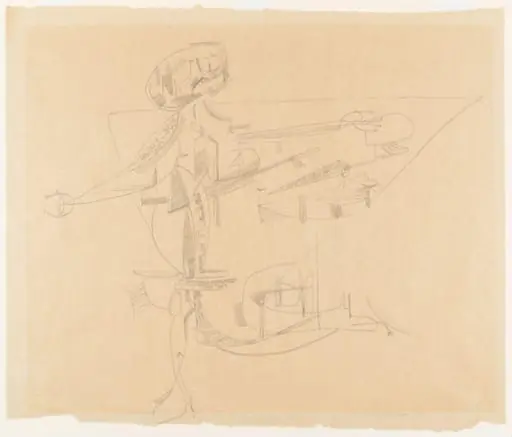
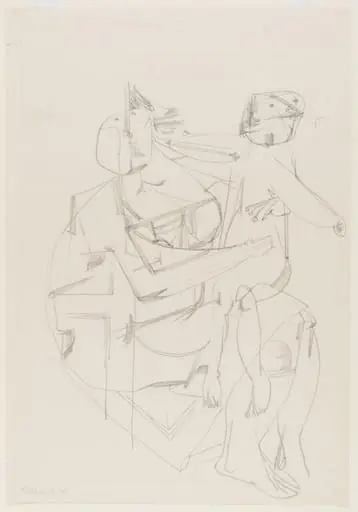
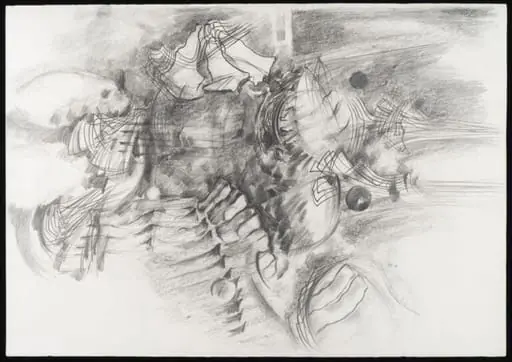
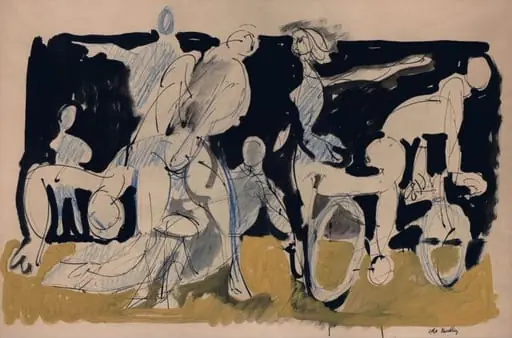
Eleven figure studies in pencil, executed by Henry Moore in 1933, serve as preparatory sketches for planned metal sculptures.
Eleven figure studies in pencil, executed by Henry Moore in 1933, serve as preparatory sketches for planned metal sculptures. The sheet presents a range of seated, reclining, and standing forms, rendered with rapid, unrefined lines and light shading. Its purpose is functional—exploring posture and volume rather than presenting a finished composition. The drawing is catalogued by the Henry Moore Foundation as HMF 993 and was exhibited in Antwerp in 1953.
Subject & Meaning
The figures are abstracted human forms, neither fully naturalistic nor entirely geometric. Their poses suggest introspection or physical strain, with elongated limbs and twisted torsos hinting at emotional or bodily tension. Moore was investigating the relationship between the human body and spatial volume, using simplified shapes to convey presence rather than detail. These studies reflect his interest in primal, archetypal forms rather than individual portraiture.
Technique & Style
Moore employed loose, overlapping pencil strokes to build volume and suggest mass. Lines vary in pressure, creating areas of density and openness. Shading is minimal and gestural, used to imply shadow rather than define form precisely. The absence of clean outlines and the layering of contours emphasize process over polish, revealing his method of working through ideas directly on paper.
History & Provenance
Created in 1933, the drawing remained in Moore’s personal archive until acquired by the Henry Moore Foundation. It was included in a 1953 exhibition in Antwerp, indicating early recognition of its significance within his oeuvre. The original exhibition label remains affixed to the mount, preserving its exhibition history. No other known copies or related finished sculptures from this specific group exist.
Context
In the early 1930s, Moore was moving away from direct carving toward more abstract, biomorphic forms influenced by non-Western art and Surrealism. This drawing aligns with his broader exploration of organic shapes and the human figure as a vessel for spatial experimentation. Contemporary artists like Barbara Hepworth were pursuing similar inquiries, situating Moore within a wider modernist dialogue on form and abstraction.
Legacy
The drawing exemplifies Moore’s working method: ideas developed through iterative sketching before translation into sculpture. Its raw quality has since become valued as a window into his creative process. While no direct sculptural outcome from these studies is documented, the compositional principles here informed later large-scale works, reinforcing the importance of drawing in his artistic practice.
Artist & collection
Artist
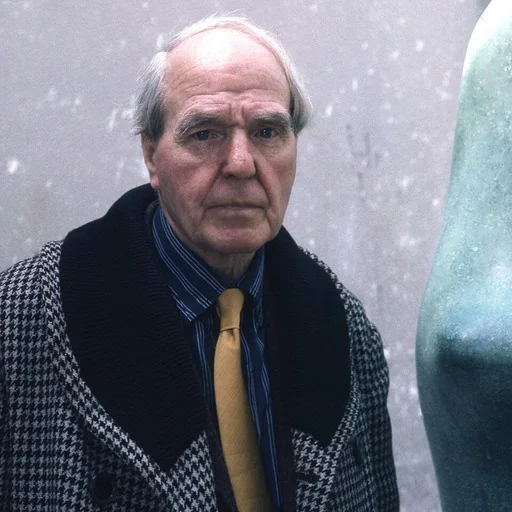
Henry Spencer Moore (30 July 1898 – 31 August 1986) was an English visual artist.