Artwork
Untitled
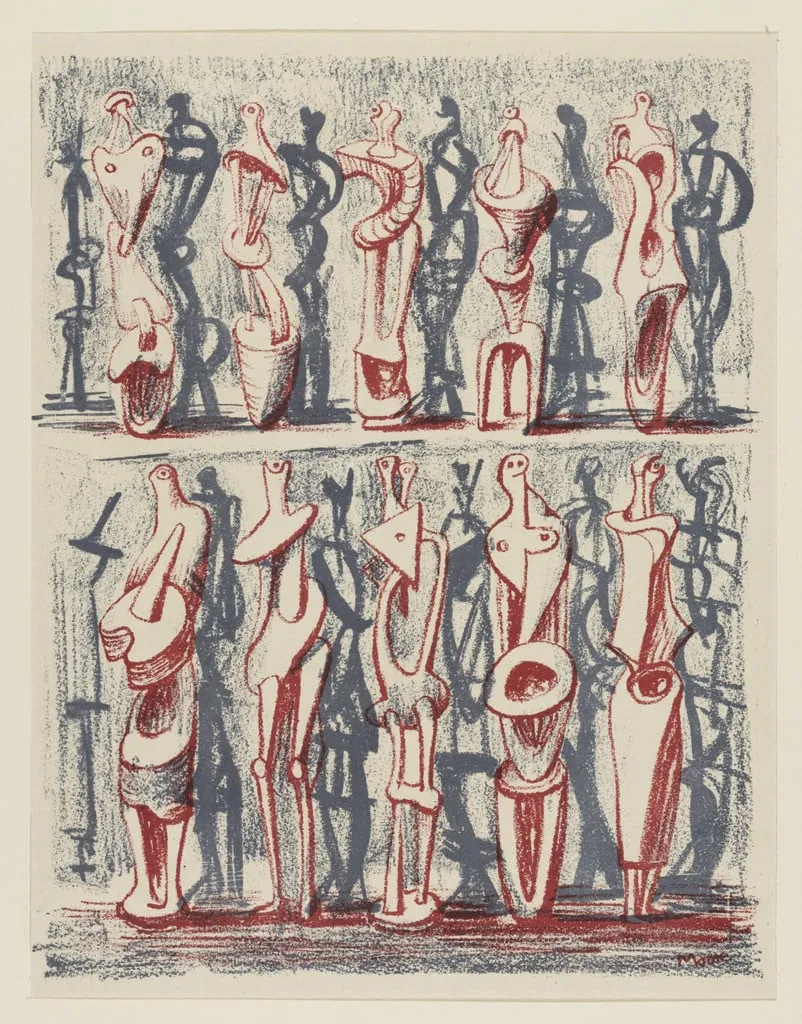
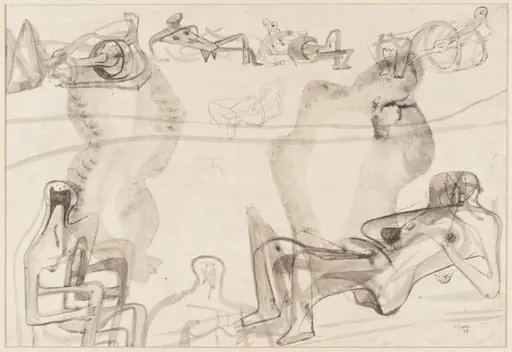
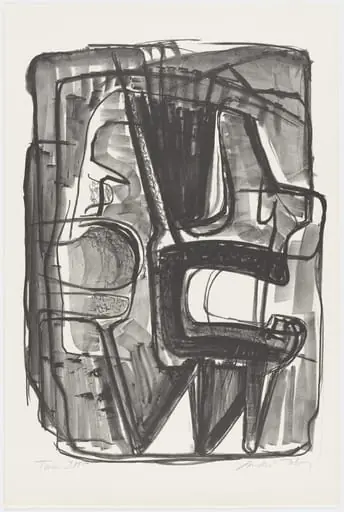
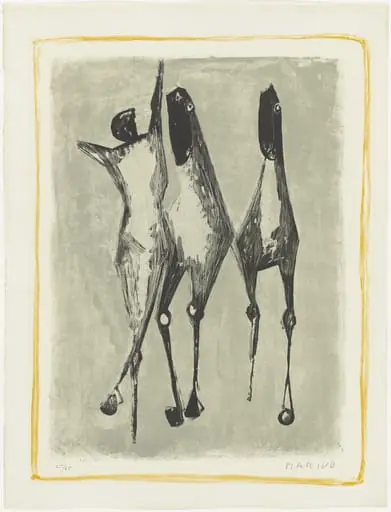
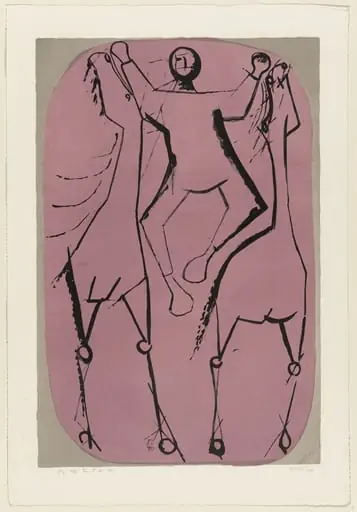
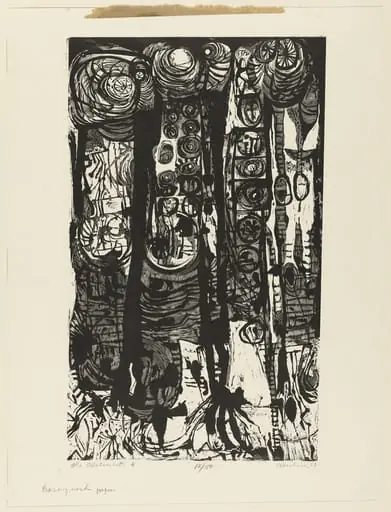
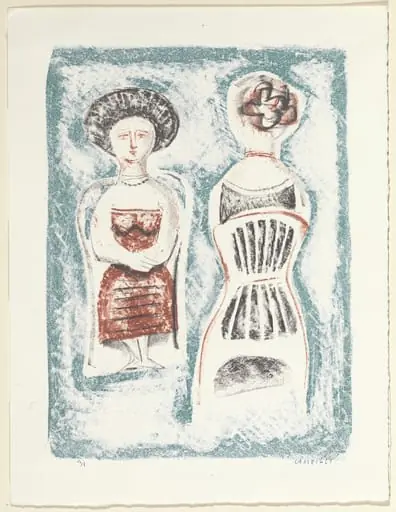
Untitled is an ink print by Henry Moore. It dates from 1951 and is held in the collection of the Museum of Modern Art.
About this work
Overview
Created in 1951, this lithograph is part of Henry Moore’s extensive graphic output, developed in parallel with his sculptural practice.
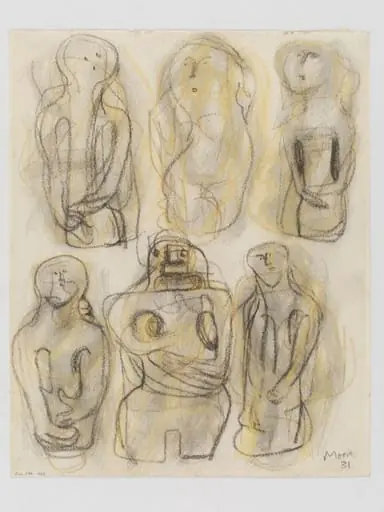
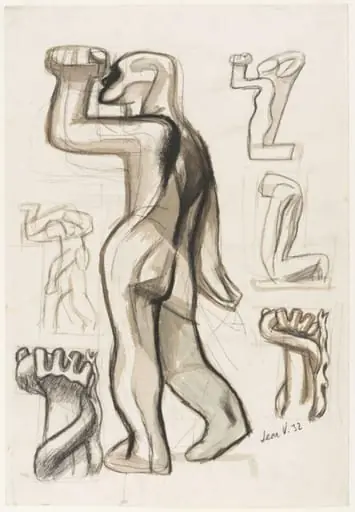
Created in 1951, this lithograph is part of Henry Moore’s extensive graphic output, developed in parallel with his sculptural practice. Though best known for large-scale bronze figures, Moore consistently explored the human form through printmaking. This work reflects his interest in translating three-dimensional volume and mass into the flat plane, using minimal marks to suggest presence rather than detail.
Subject & Meaning
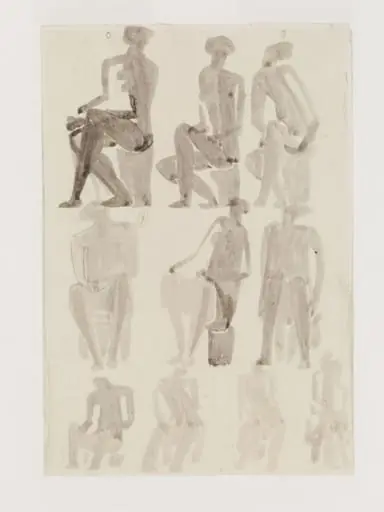
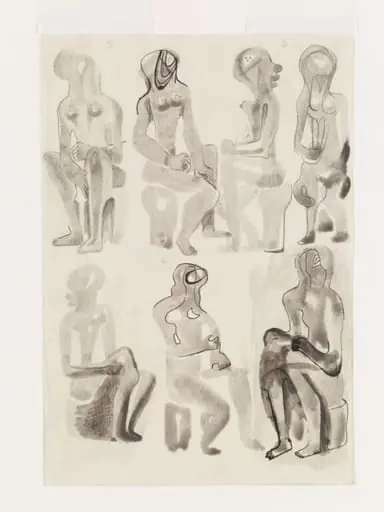
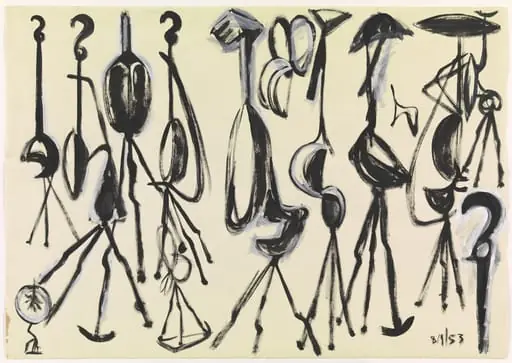
The print depicts a group of elongated, simplified figures standing in close proximity, their forms reduced to basic geometric elements: circular heads, linear limbs. Some hold ambiguous objects, suggesting ritual or symbolic function. The figures lack individuality, functioning instead as archetypes—evoking collective human presence rather than specific identities. Their abstraction invites interpretation as metaphors for solitude, community, or existential weight.
Technique & Style
Executed in lithography, the image relies on a loose, gestural line that mimics spontaneous drawing. The limited palette of gray and red, combined with textured shading, gives the figures a sculptural quality, as if carved from weathered stone. The rough, uneven ink application enhances the sense of immediacy, emphasizing process over polish and reinforcing the work’s connection to Moore’s sketchbooks.
History & Provenance
This print was made during a period when Moore was actively experimenting with print media, producing lithographs and etchings to explore variations on his sculptural themes. It was likely issued in a small edition, typical of his graphic work at the time. While no specific early ownership is documented, it entered public collections through institutional acquisitions in the decades following its creation.
Context
In the early 1950s, Moore was gaining international recognition for his sculptures, and his prints served as intimate extensions of his visual language. Post-war Europe saw a renewed interest in humanist themes, and Moore’s abstracted figures resonated with broader cultural inquiries into identity and survival. His graphic work offered a quieter, more personal counterpoint to his monumental public commissions.
Legacy
This lithograph exemplifies Moore’s enduring commitment to distilling the human form into essential shapes. It influenced later generations of printmakers who sought to merge abstraction with emotional resonance. Though less visible than his sculptures, his graphic works remain vital to understanding his artistic philosophy—prioritizing essence over realism, and presence over narrative.
Artist & collection
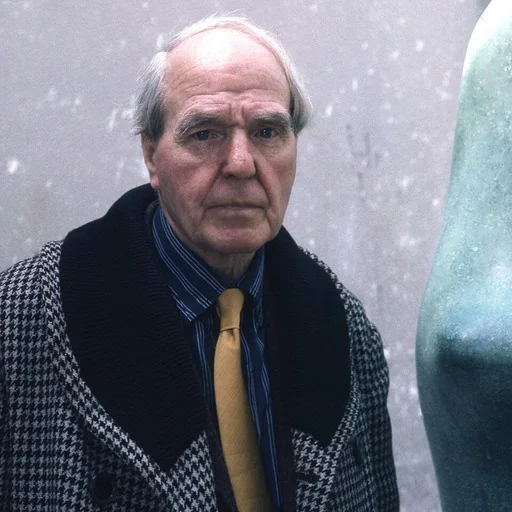
Artist
Henry Spencer Moore (30 July 1898 – 31 August 1986) was an English visual artist.