Artwork
Wooded Landscape
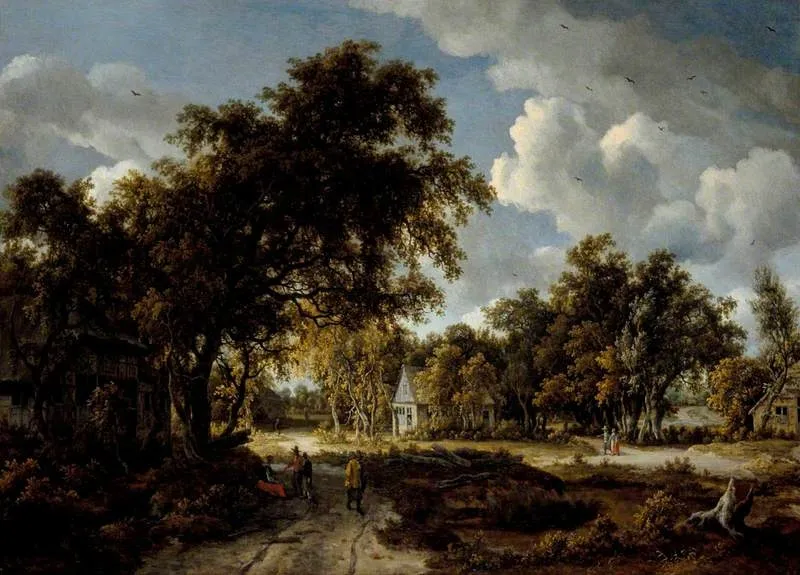
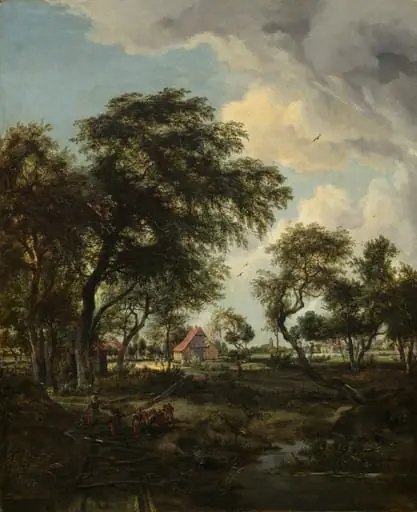
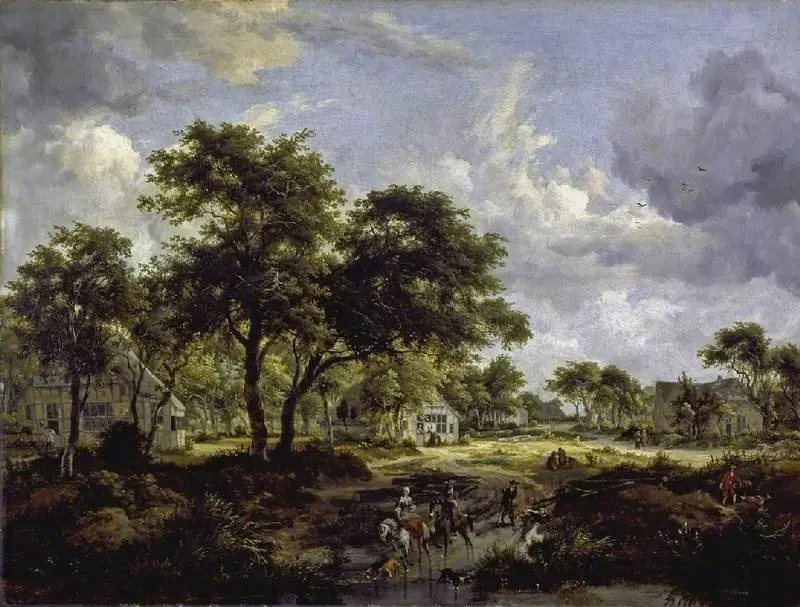
Wooded Landscape is an oil painting by the Dutch Golden Age artist Meindert Hobbema. It dates from 1663 and is held in the collection of the National Galleries Scotland.
About this work
If you're interested in learning more about the artist's use of light and shadow, you might want to look up the technique of chiaroscuro.
The painting "Wooded Landscape" by Meindert Hobbema, created in 1663, is an oil painting held at the Scottish National Gallery.
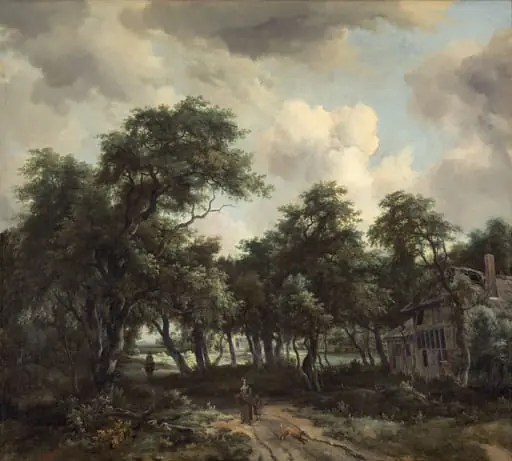
The painting features a serene landscape with trees, a house, and people in the distance. The sky is filled with clouds, and birds are flying overhead. The colors are muted, with shades of brown, green, and blue dominating the palette.
The painting's use of chiaroscuro creates a sense of depth and dimensionality, drawing the viewer's eye into the scene. If you're interested in learning more about the artist's use of light and shadow, you might want to look up the technique of chiaroscuro.
Overview
Painted in 1663, *Wooded Landscape* is an oil on canvas work by Meindert Hobbema, a Dutch artist known for his quiet, detailed depictions of rural woodlands. The painting reflects the broader tradition of Dutch Golden Age landscape painting, emphasizing naturalism and atmospheric observation. It is currently held in the collection of the Scottish National Gallery, where it remains a representative example of Hobbema’s mature style.
Subject & Meaning
The scene portrays a tranquil woodland path, flanked by tall trees and punctuated by a modest farmhouse in the distance. Figures, barely discernible, move along a dirt road, suggesting quiet rural life. No dramatic narrative is present; instead, the painting conveys a sense of peaceful coexistence between humans and nature, characteristic of Dutch landscape ideals that valued harmony and everyday observation over grandeur.
Technique & Style
Hobbema employs subtle chiaroscuro to model forms and create spatial depth, guiding the viewer’s eye along the winding path into the receding forest. His brushwork is precise yet unobtrusive, with muted tones of olive green, ochre, and slate blue dominating the palette. The sky, lightly textured with drifting clouds, balances the composition and enhances the painting’s sense of quiet stillness without theatricality.
History & Provenance
Created during Hobbema’s most productive period, the painting reflects his training under Jacob van Ruisdael, whose influence is evident in the composition and treatment of light. It entered the Scottish National Gallery’s collection in the 19th century, likely through private acquisition, and has remained there since. Its provenance is well-documented, with no evidence of significant alteration or reworking after its completion.
Context
In mid-17th century Holland, landscape painting flourished as a distinct genre, reflecting the nation’s pride in its cultivated countryside and emerging middle-class tastes. Hobbema’s focus on modest, unidealized woodland scenes aligned with this trend, offering viewers a familiar, contemplative vision of rural life rather than exotic or mythological subjects common elsewhere in Europe.
Legacy
Though Hobbema’s reputation waned after his death, *Wooded Landscape* and similar works were later recognized for their quiet precision and atmospheric coherence. The painting contributes to the understanding of Dutch landscape conventions and continues to be studied for its nuanced handling of light, space, and natural detail, influencing later generations of landscape artists seeking authenticity over ornament.
Artist & collection
Artist
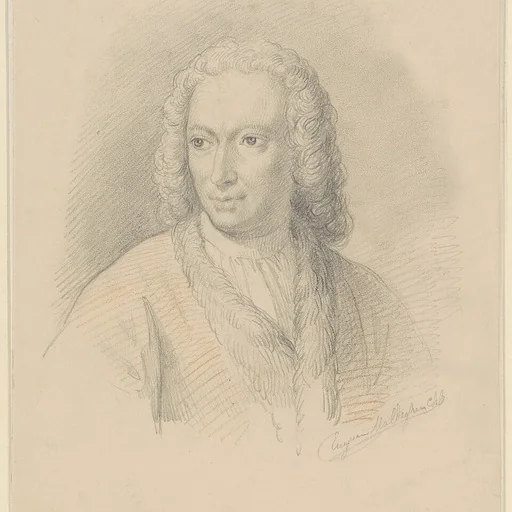
Meindert Lubbertszoon Hobbema (bapt. 31 October 1638 – 7 December 1709) was a Dutch Golden Age painter of landscapes, specializing in views of woodland, although his most famous painting, The Avenue at Middelharnis…

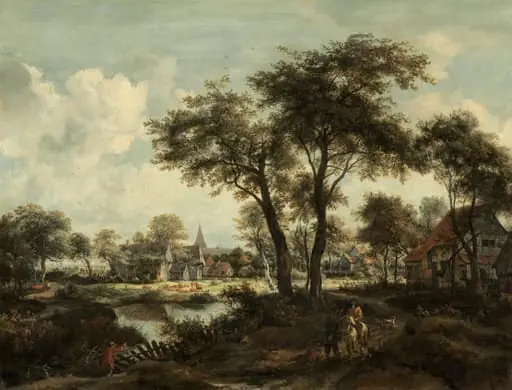
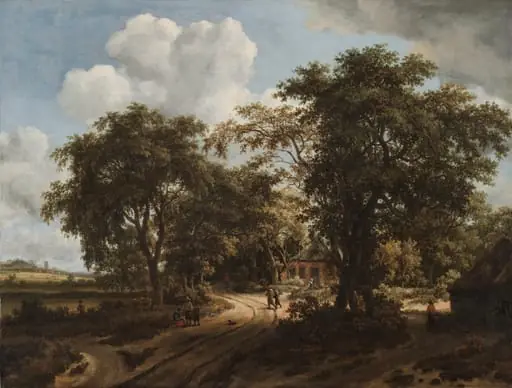 A Cottage in the Woods
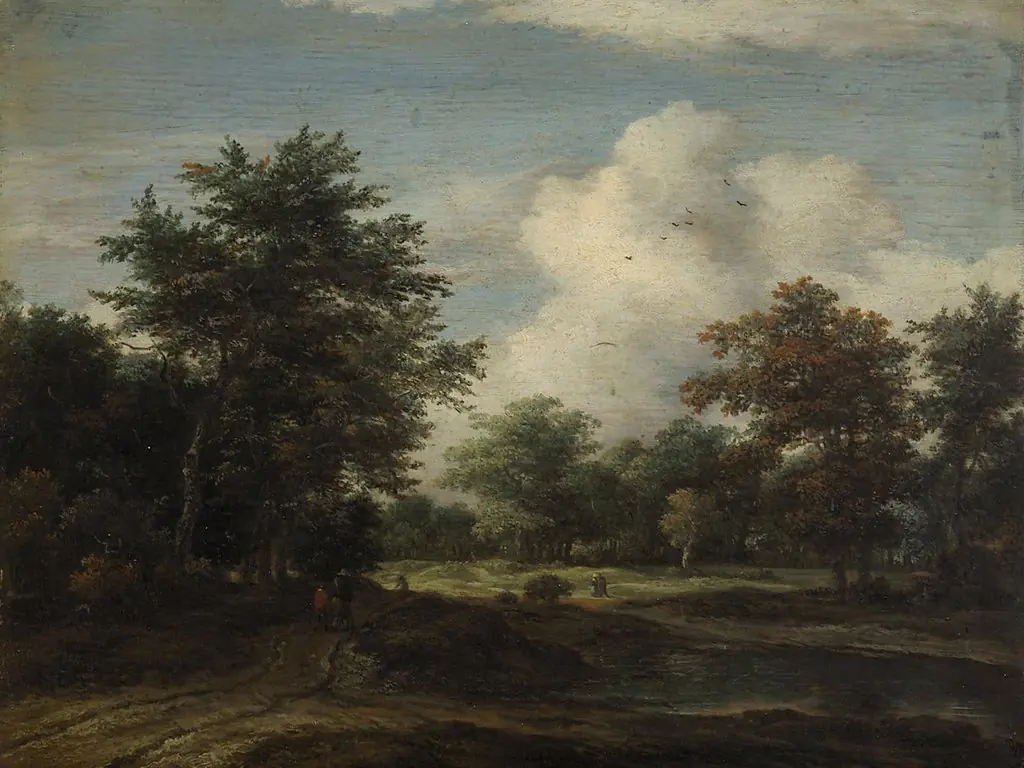 Small Woodland Landscape
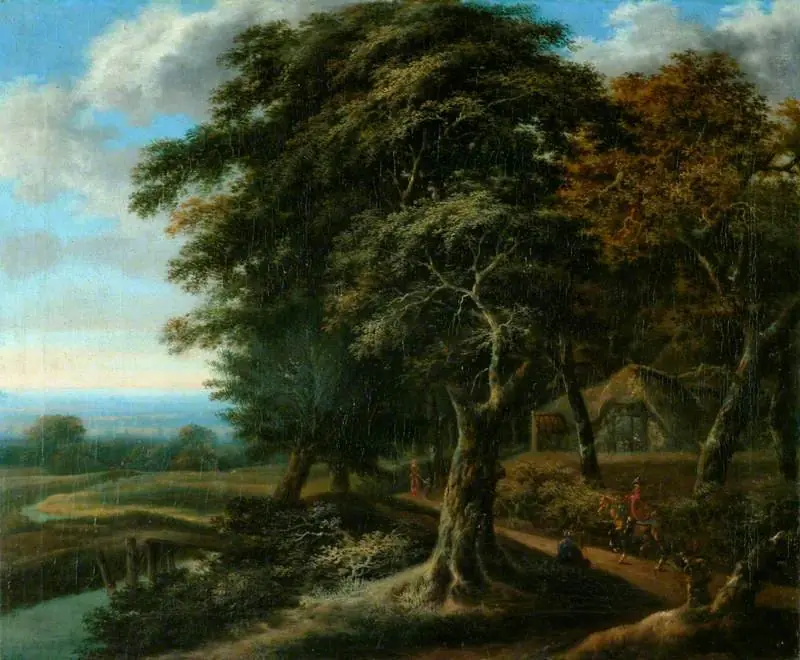 Landscape with a Figure on Horseback
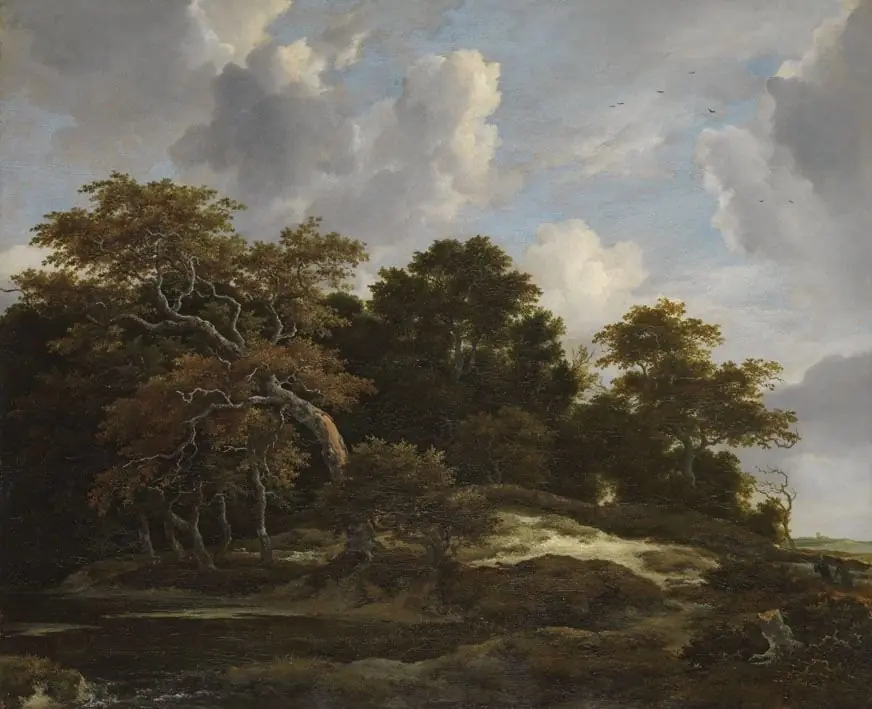 Waldlandschaft mit Hasenjagd
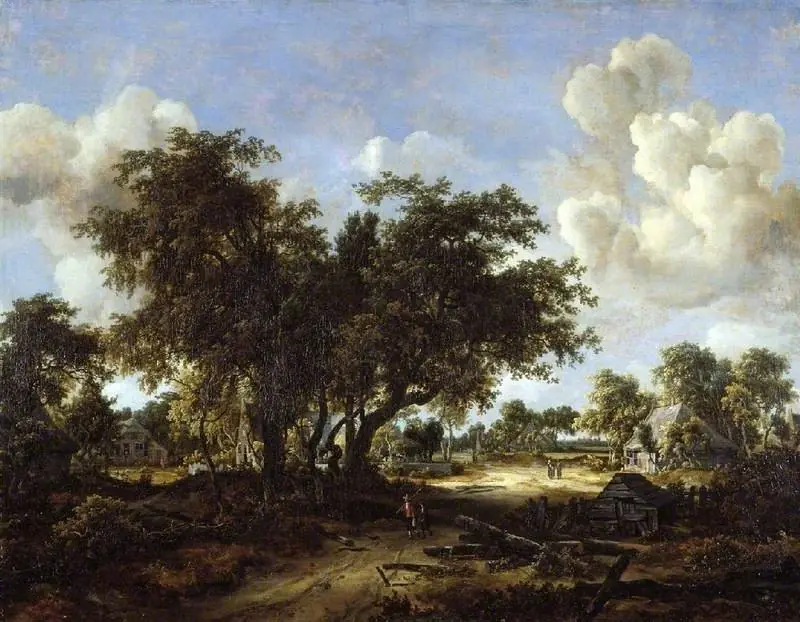 A wooded landscape with cottages
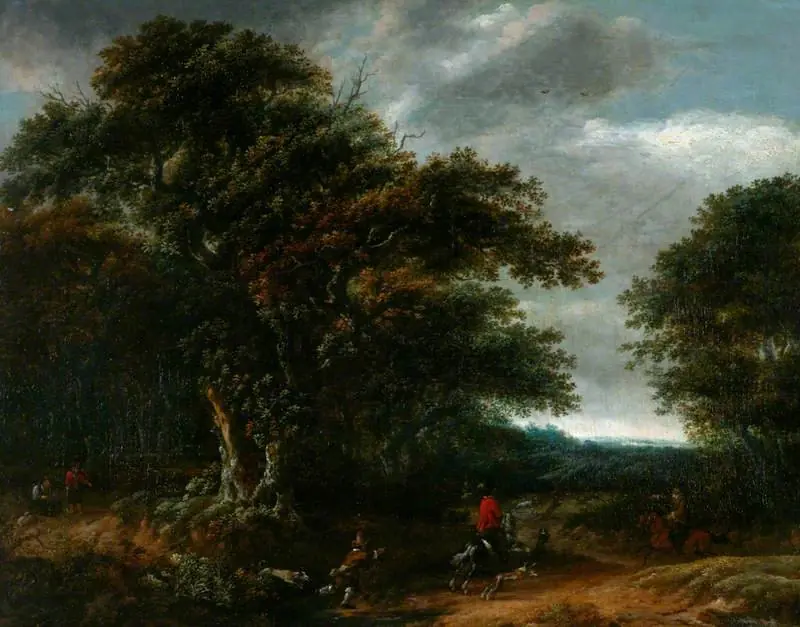 Landscape with a Stag Hunt
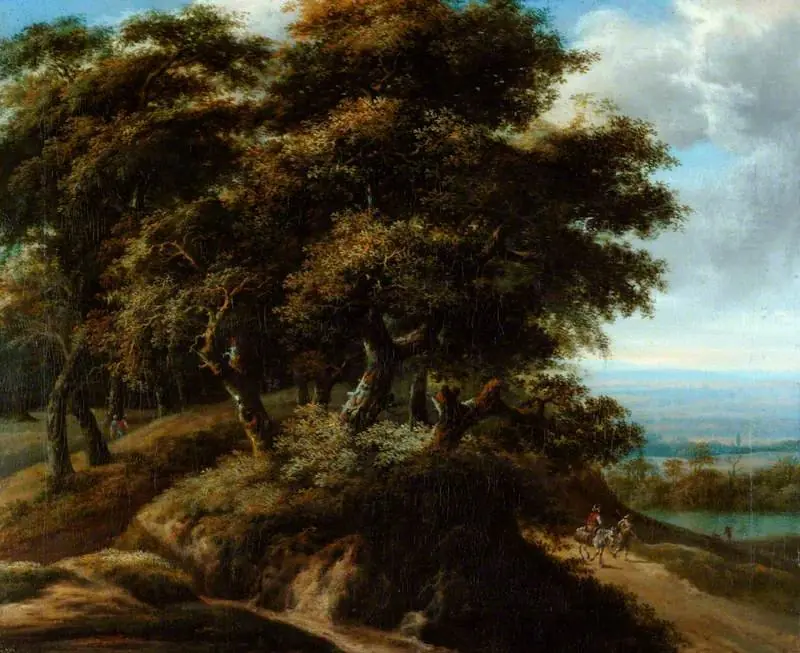 Landscape with a Peasant on a Donkey
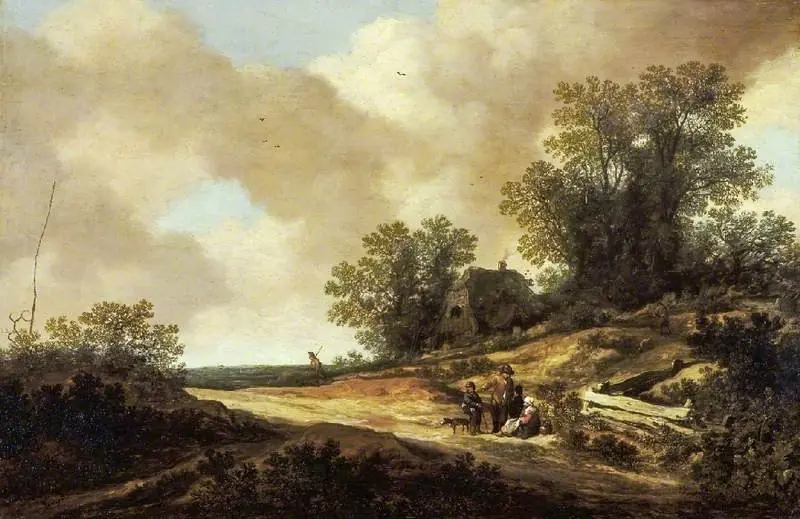 Landscape with figures
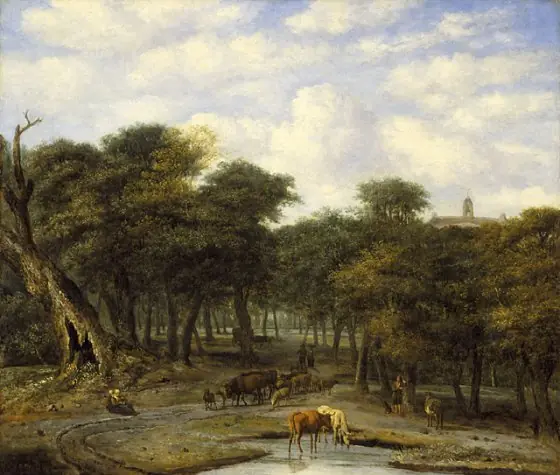 Forest Clearing with Cattle
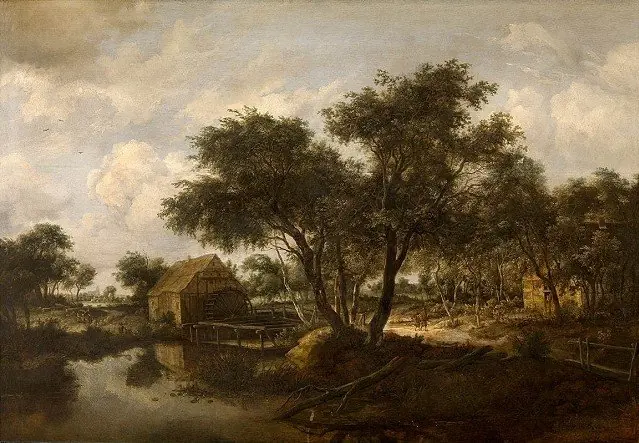 The Watermill
 Landscape with a Traveller
 Wooded landscape