Artwork
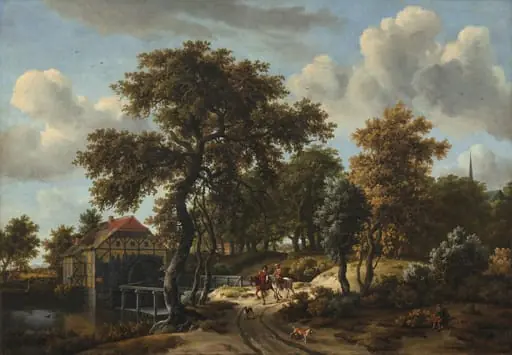
The Watermill
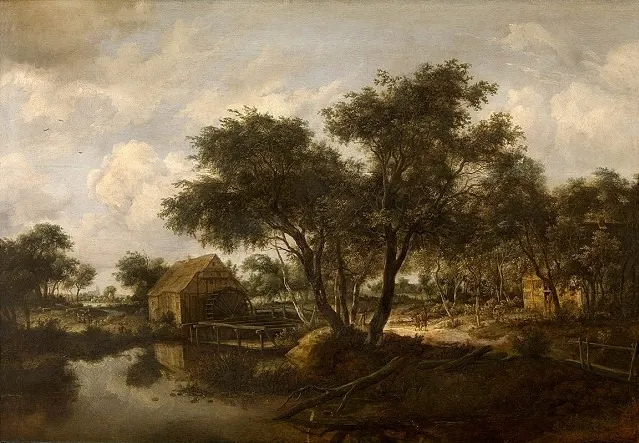
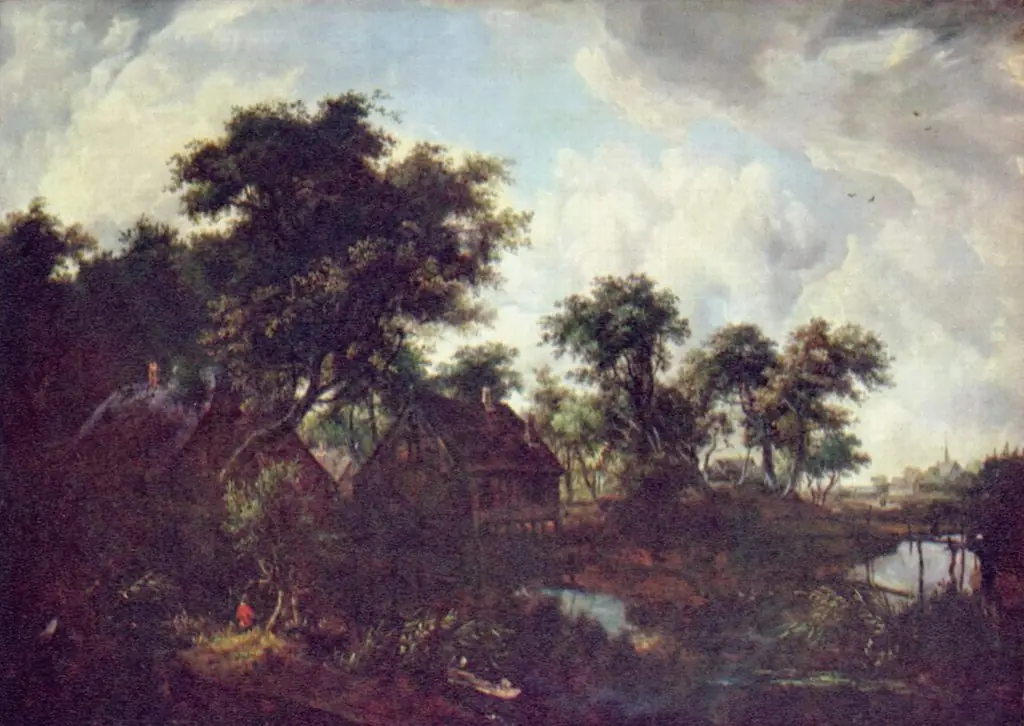
The Watermill is an oil painting by the Dutch Golden Age artist Meindert Hobbema. It dates from 1693 and is held in the collection of the Royal Museum of Fine Arts Antwerp.
About this work
Overview
Created in 1693, *The Watermill* is an oil painting by Dutch landscape artist Meindert Hobbema. Executed during the later phase of the Dutch Golden Age, the work exemplifies Hobbema’s focus on tranquil rural settings and is part of the collection of the Royal Museum of Fine Arts in Antwerp.
Subject & Meaning
The composition centers on a modest wooden structure that functions as a watermill, set beside a still pond. A solitary, spreading tree stands nearby, its branches framing the scene, while a low bridge provides access to the building. The absence of human figures emphasizes a serene, timeless atmosphere.
Technique & Style
Hobbema employs a restrained palette of earth tones and muted greens, rendering the foliage and architecture with delicate brushwork. The sky is rendered in soft, diffused light, and the calm water reflects the surrounding forms, showcasing the artist’s skill in creating depth through subtle tonal variations.
History & Provenance
Trained under the eminent Jacob van Ruisdael, Hobbema developed his own signature approach to woodland landscapes. After its creation, the painting entered the holdings of the Royal Museum of Fine Arts Antwerp, where it remains on display as part of the museum’s Dutch Golden Age collection.
Artist & collection
Artist
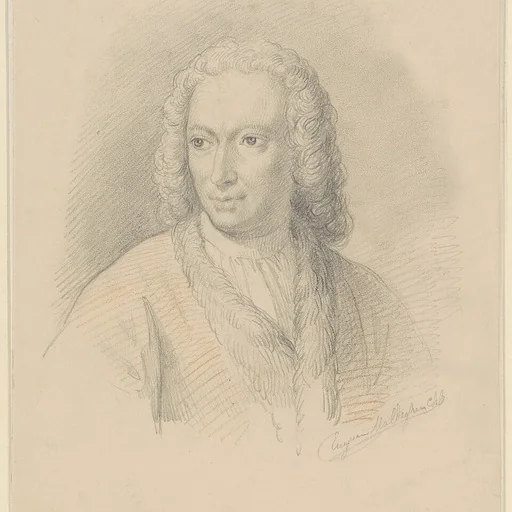
Meindert Lubbertszoon Hobbema (bapt. 31 October 1638 – 7 December 1709) was a Dutch Golden Age painter of landscapes, specializing in views of woodland, although his most famous painting, The Avenue at Middelharnis…


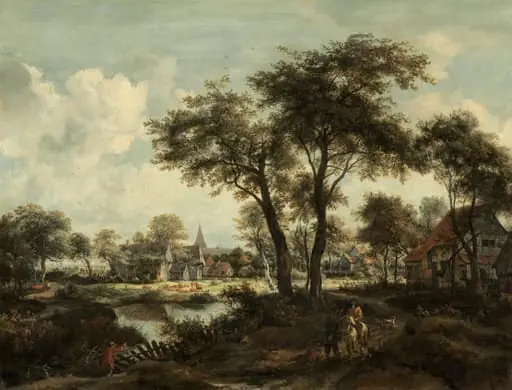
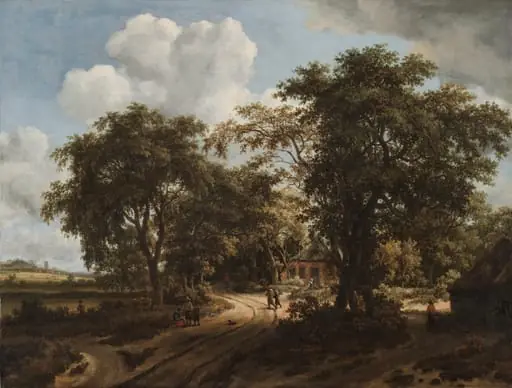 A Cottage in the Woods
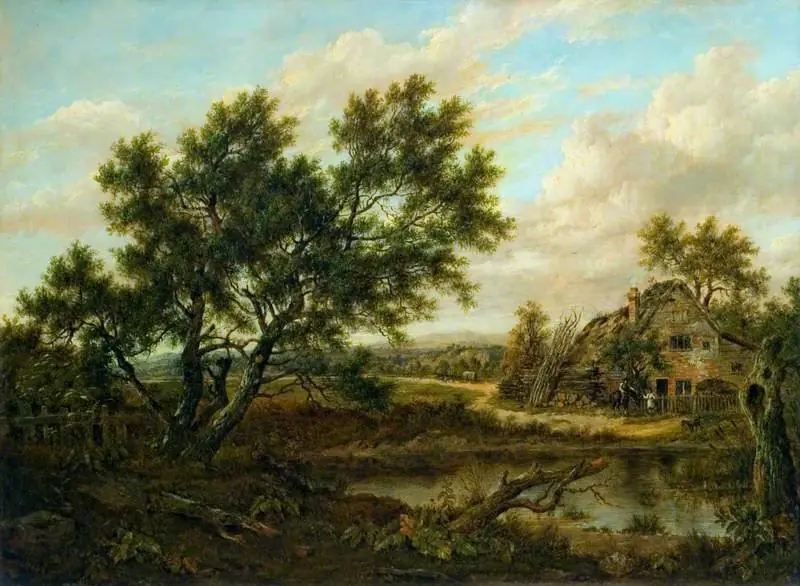 Landscape with a Cottage and Figures
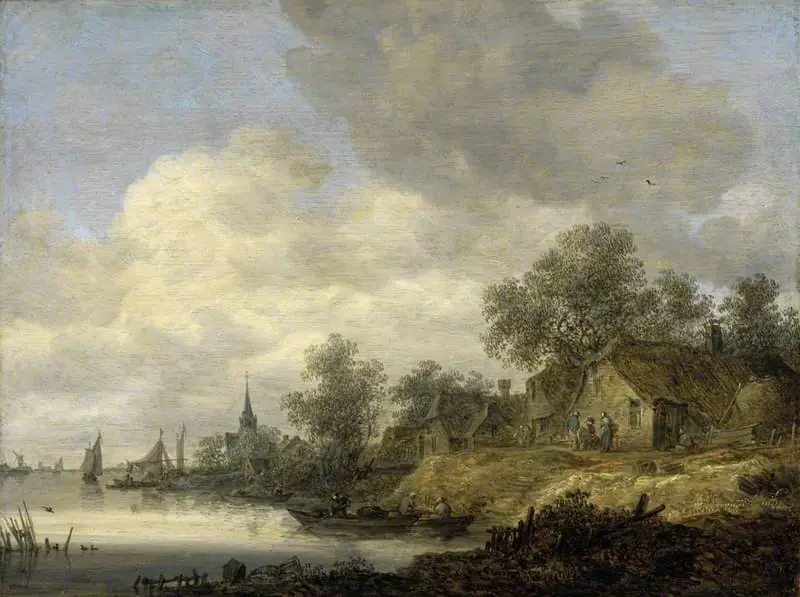 A River Scene
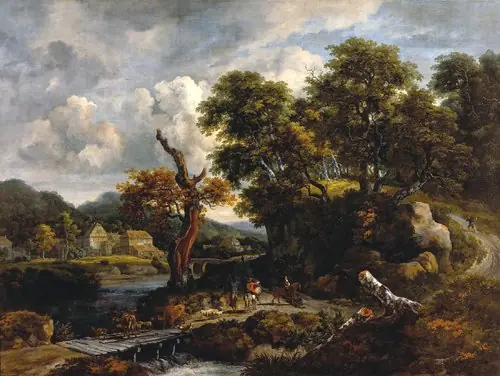 Travellers and shepherds at a crossroads near a dead tree
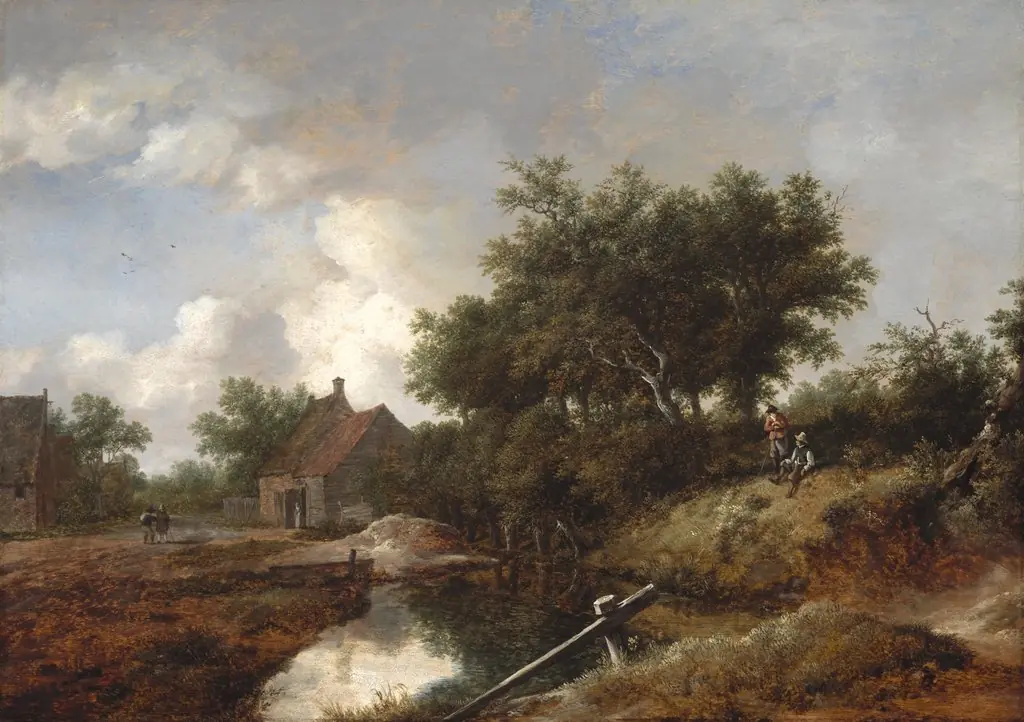 Path Leading to Farms by a Wooded Brook, ca. 1645
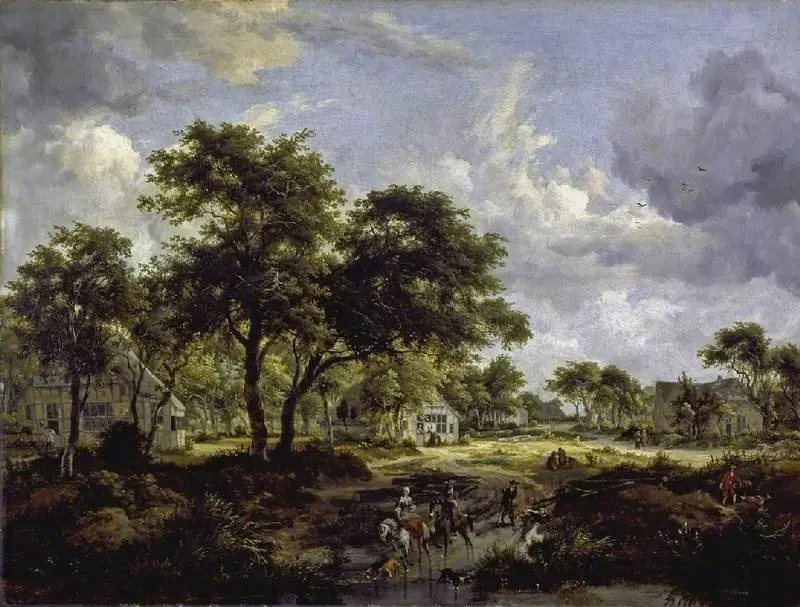 Wooded landscape
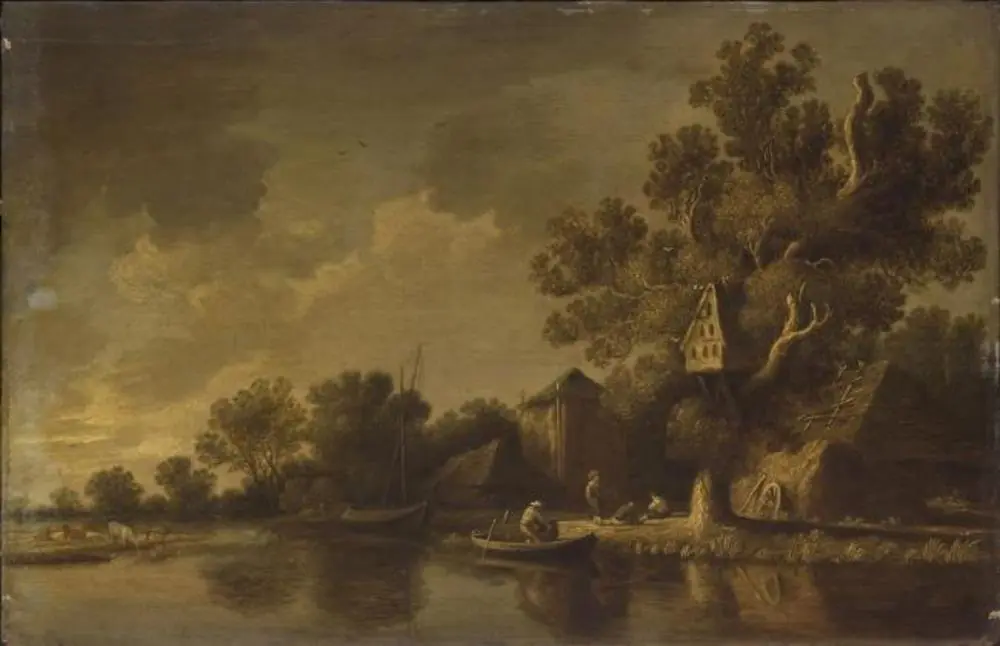 Landscape with a Canal
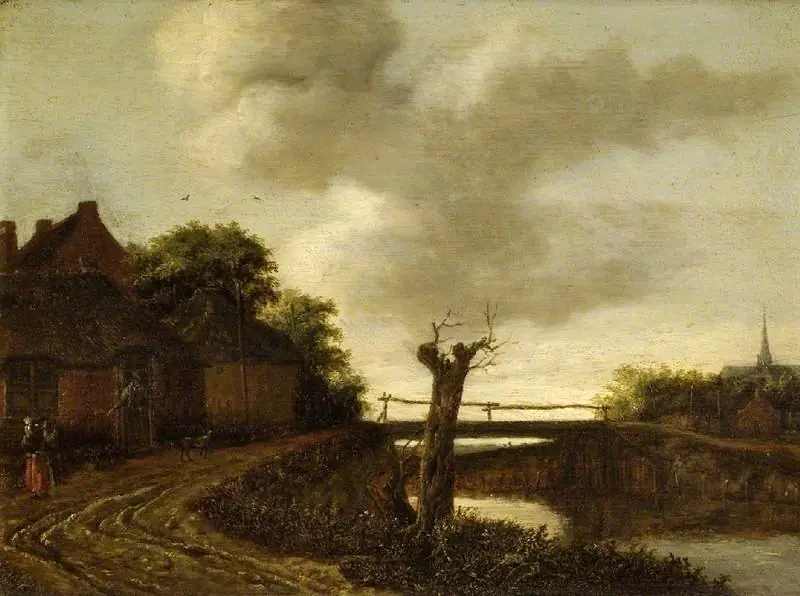 Landscape with a bridge
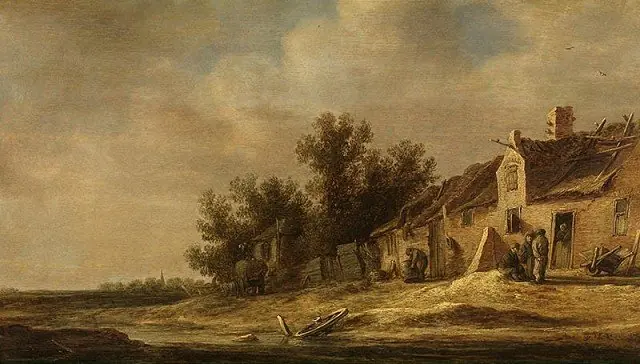 Landscape with Farmhouse
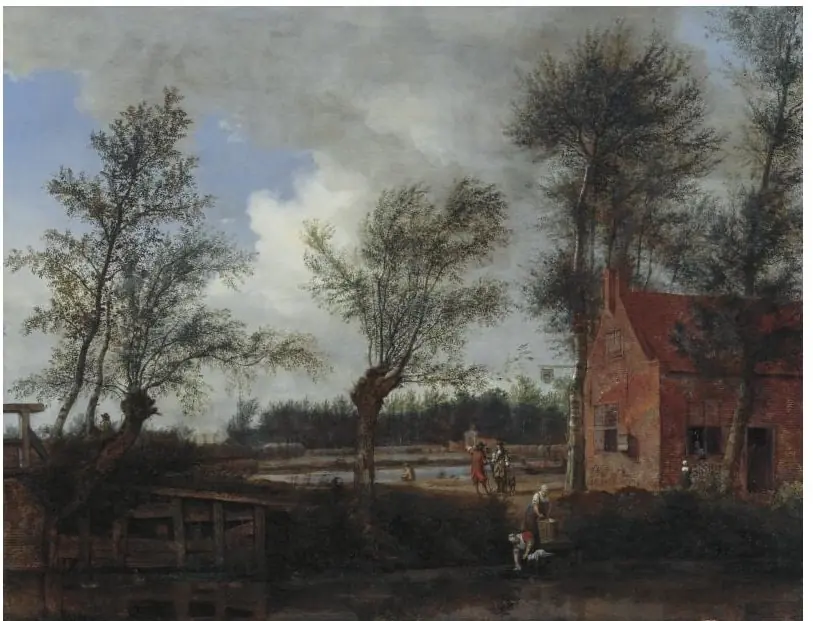 The Black Pig Inn at Maarssen
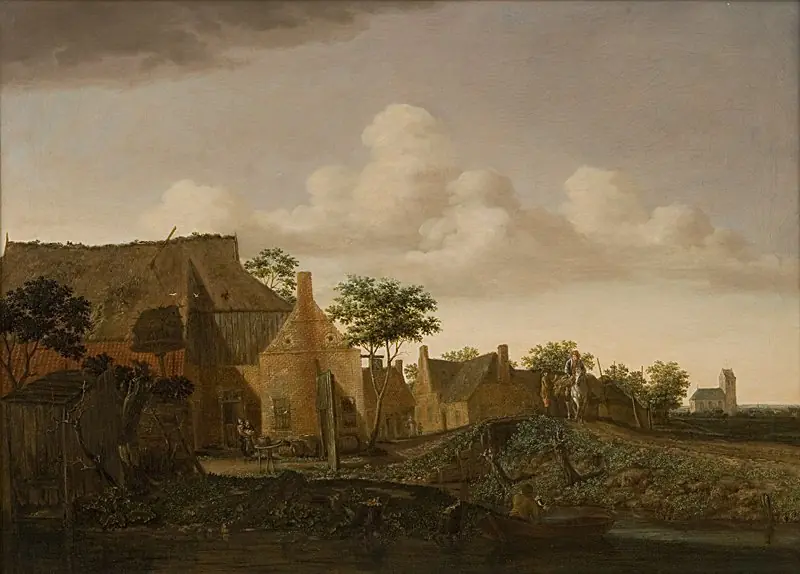 Dutch Village
 The Watermill