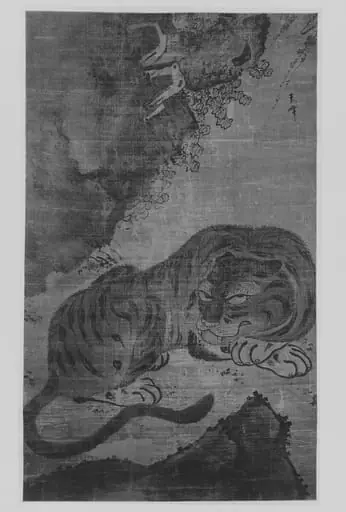
Artwork
明窓筆 虎図|Tiger
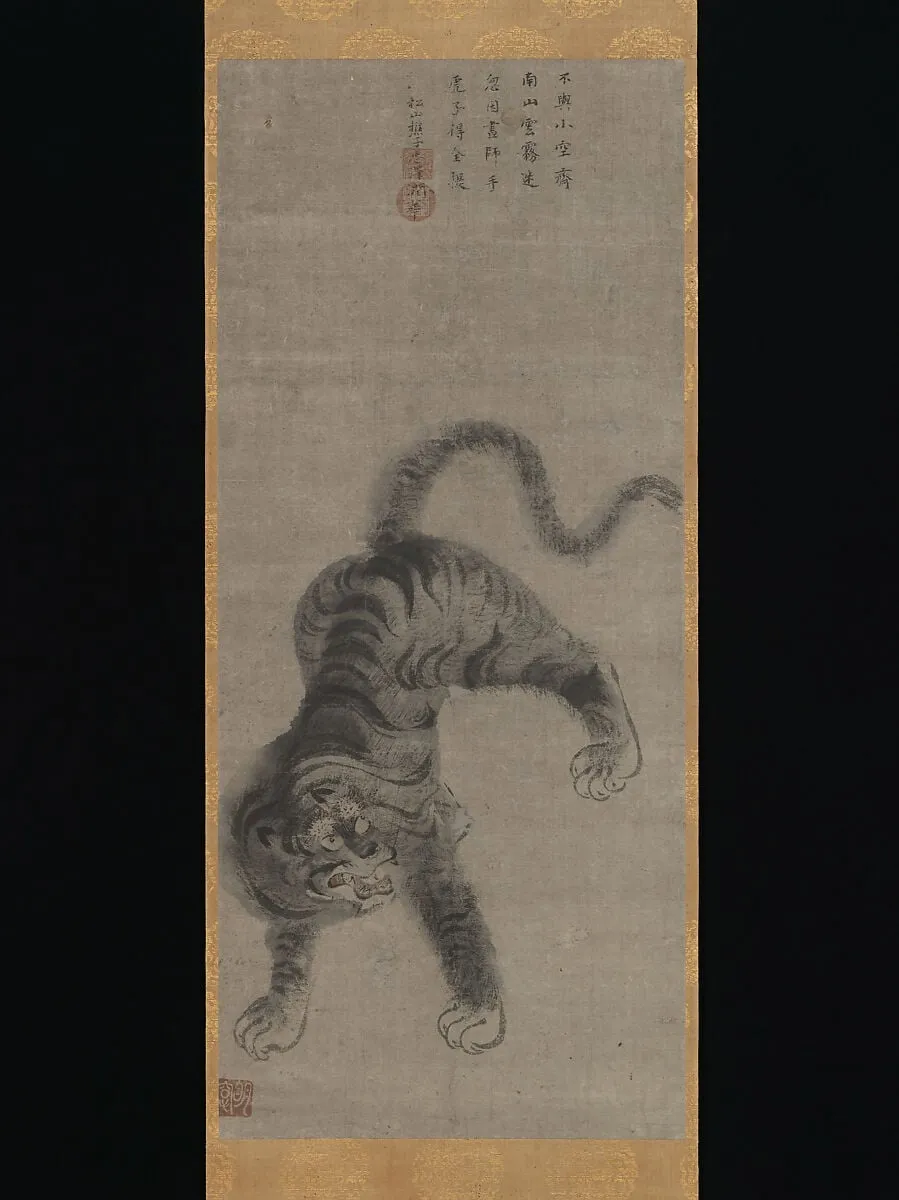
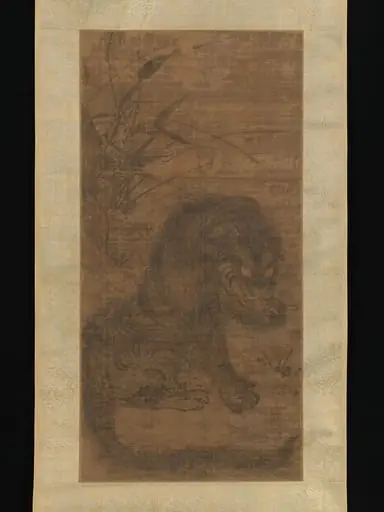
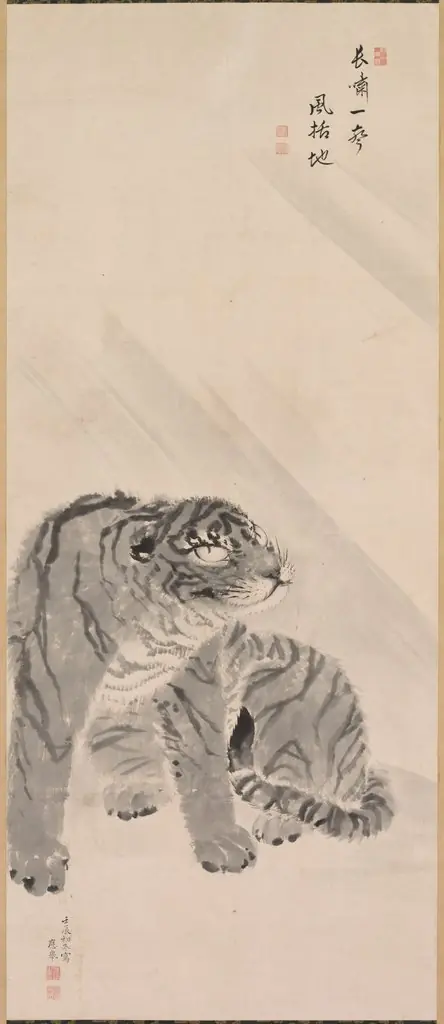
明窓筆 虎図|Tiger is an ink painting by the Baroque artist Meisō. It dates from 1716 and is held in the collection of the Metropolitan Museum of Art. Created in 1716, this hanging scroll presents a solitary tiger perched upon a rock.
About this work
Overview
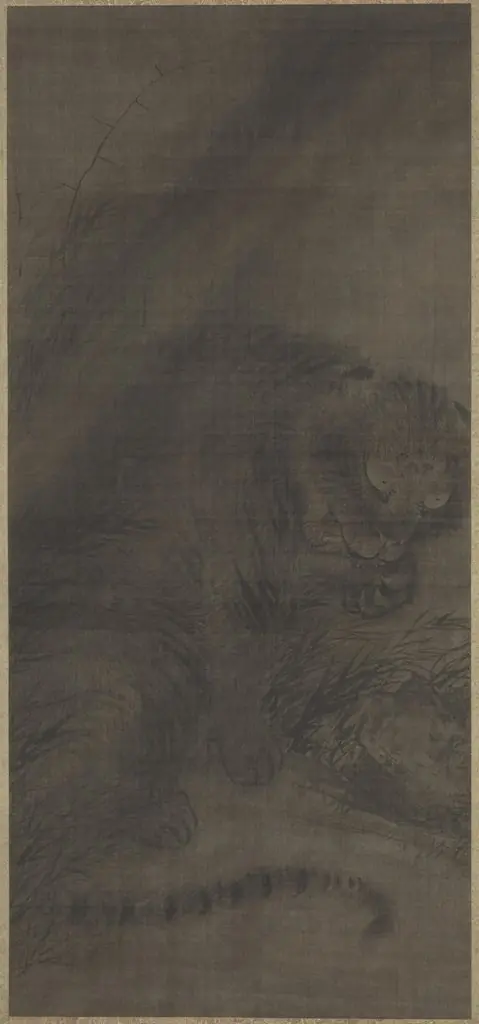
Created in 1716, this hanging scroll presents a solitary tiger perched upon a rock. The animal’s posture is tense, its tail poised and its gaze directed forward, suggesting alertness. The composition is rendered primarily in black ink, with a subtle application of orange limited to the face and paws, providing a restrained hint of colour.
Subject & Meaning
The work portrays a tiger, an exotic beast absent from Japan’s native fauna. By depicting the creature in a crouched, watchful stance, the artist conveys both the animal’s latent power and an element of mystery, inviting viewers to contemplate a formidable predator known only through distant accounts and imagination.
Technique & Style
Executed with ink on paper, the artist employs fluid brushwork to suggest the tiger’s fur, allowing the black pigment to swirl and merge, while delicate cross‑hatching creates texture and depth. A restrained use of orange pigment highlights the facial features and paws, balancing the monochrome palette without overwhelming the composition.
History & Provenance
Attributed to the painter Meisō, the scroll originates from the early Edo period, a time when Japan’s policy of sakoku limited foreign contact. The piece has remained in private collections before entering a museum context, where it is now displayed as an example of early 18th‑century Japanese ink painting.
Context
During the early 1700s Japanese artists often relied on imported skins, printed illustrations, and literary descriptions to represent animals unfamiliar to the archipelago. This reliance on second‑hand sources resulted in stylised depictions that blend observation with imaginative interpretation, a characteristic evident in the tiger’s slightly unreal appearance.
Artist & collection