Artwork
Heimsuchung Mariens
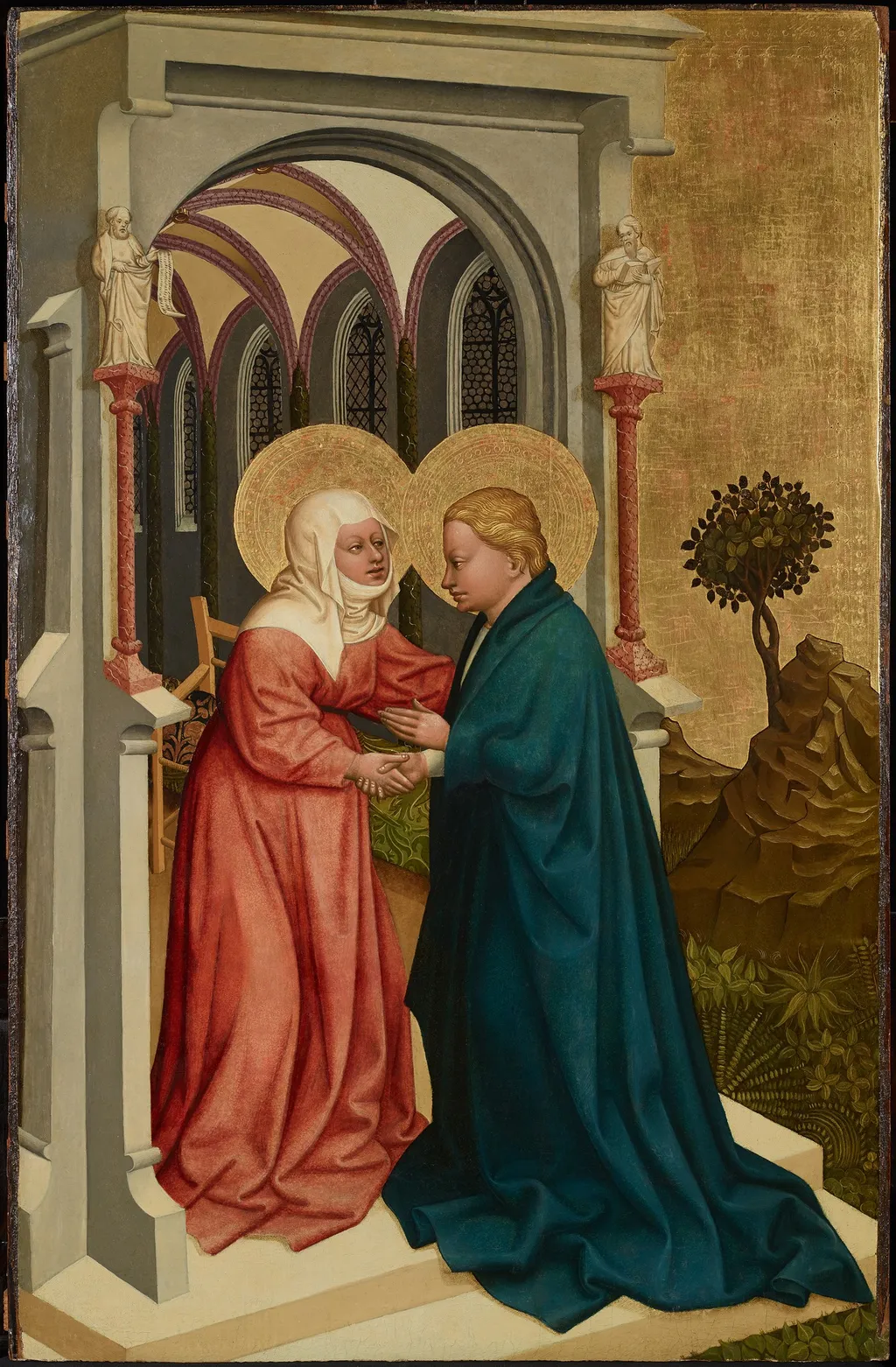
Heimsuchung Mariens is an unspecified painting by the Northern Renaissance artist Meister des Albrechtsaltares zu Klosterneuburg. It dates from 1437 and is held in the collection of the Kunsthistorisches Museum.
About this work
Overview
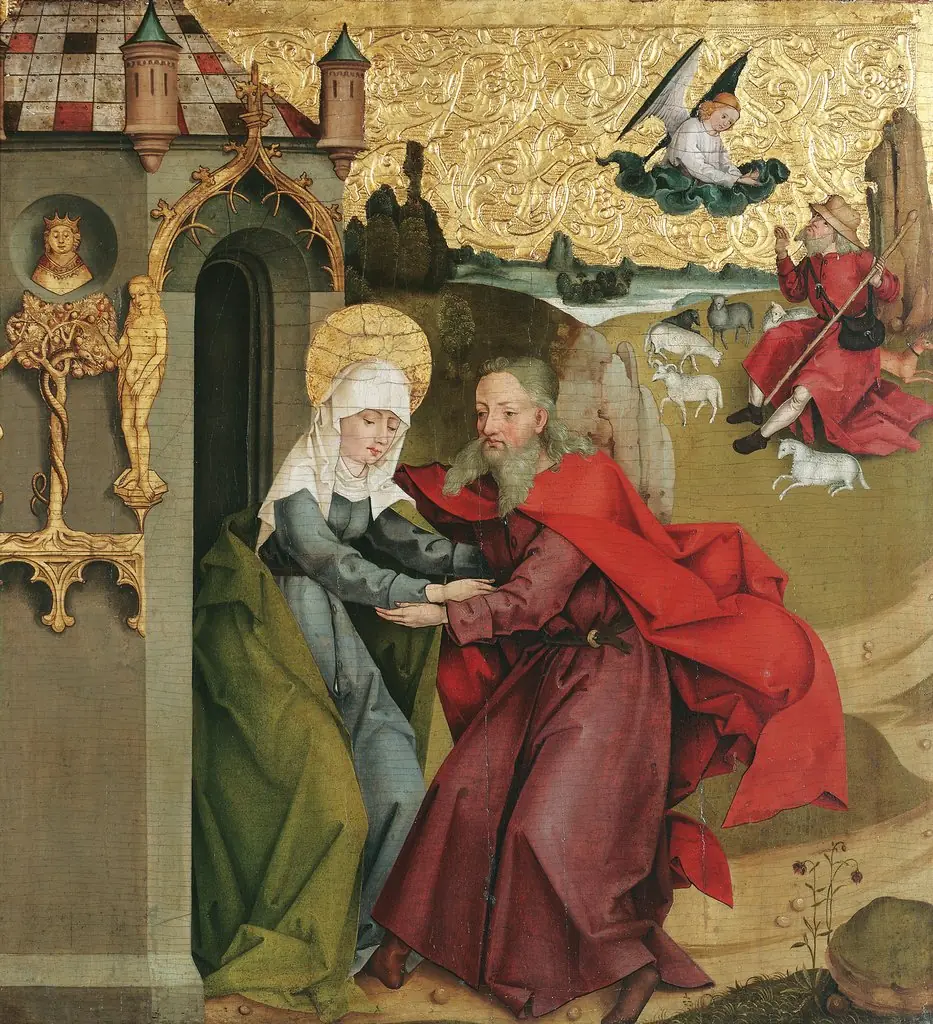
Painted in 1437, Heimsuchung Mariens is a devotional panel attributed to the anonymous artist known as the Master of the Albrecht Altar at Klosterneuburg.
Painted in 1437, Heimsuchung Mariens is a devotional panel attributed to the anonymous artist known as the Master of the Albrecht Altar at Klosterneuburg. It depicts the biblical meeting between the Virgin Mary and her cousin Elizabeth, a moment celebrated in Christian tradition. The work resides in the Kunsthistorisches Museum in Vienna, where it remains one of the few surviving panels from a larger altarpiece commissioned for a monastic setting.
Subject & Meaning
The scene illustrates the Visitation, when Mary, pregnant with Jesus, visits Elizabeth, who is carrying John the Baptist. Their clasped hands signify mutual recognition and spiritual joy. The composition emphasizes quiet reverence rather than dramatic action, reflecting the contemplative nature of late medieval piety. The inclusion of statues in the background may represent saints or prophets, reinforcing the sacredness of the moment.
Technique & Style
The artist employs flat, simplified forms and bold, unmodulated colors—red and blue garments stand out against a muted stone interior. Spatial depth is suggested through architectural elements like the archway and windows, but perspective remains stylized. Details such as the plants outside the window and the carved statues are rendered with careful precision, indicating attention to symbolic elements rather than naturalistic realism.
History & Provenance
Created for the Augustinian monastery at Klosterneuburg, the painting originally formed part of a multi-panel altarpiece dedicated to the Virgin Mary. It was later transferred to the Kunsthistorisches Museum, where it has been preserved since the 19th century. Its survival is notable, as many such devotional panels were lost or dismantled during the Reformation and subsequent secularizations.
Context
This work emerged during a period when private devotion and Marian cults were growing in Central Europe. Monastic communities commissioned altarpieces to support liturgical practice and personal meditation. The Visitation was a favored subject, symbolizing divine favor and female spiritual solidarity. The painting’s intimate scale and restrained composition align with the contemplative needs of monastic life.
Legacy
Though the artist remains anonymous, the panel exemplifies the regional style of early 15th-century Austrian painting, bridging late Gothic traditions with emerging narrative clarity. It contributes to the understanding of how religious imagery functioned in monastic contexts, offering insight into the visual language of devotion before the full impact of Renaissance naturalism.
Own this work as a print
Artist & collection
Artist
Meister des Albrechtsaltares zu Klosterneuburg
Meister des Albrechtsaltares zu Klosterneuburg (1420–1460) was an artist.