Artwork
Zurückweisung des Opfers Joachims und Annas
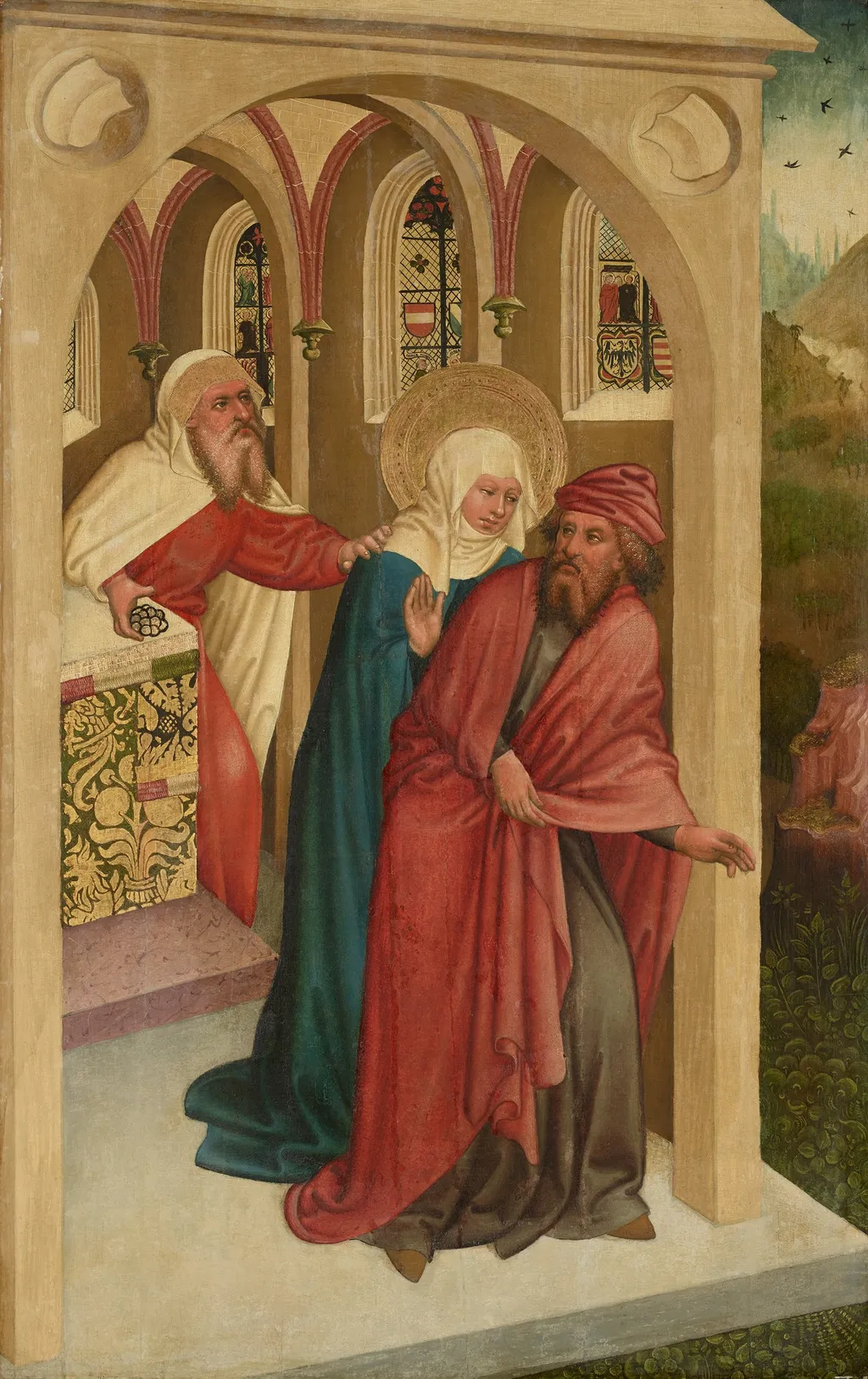
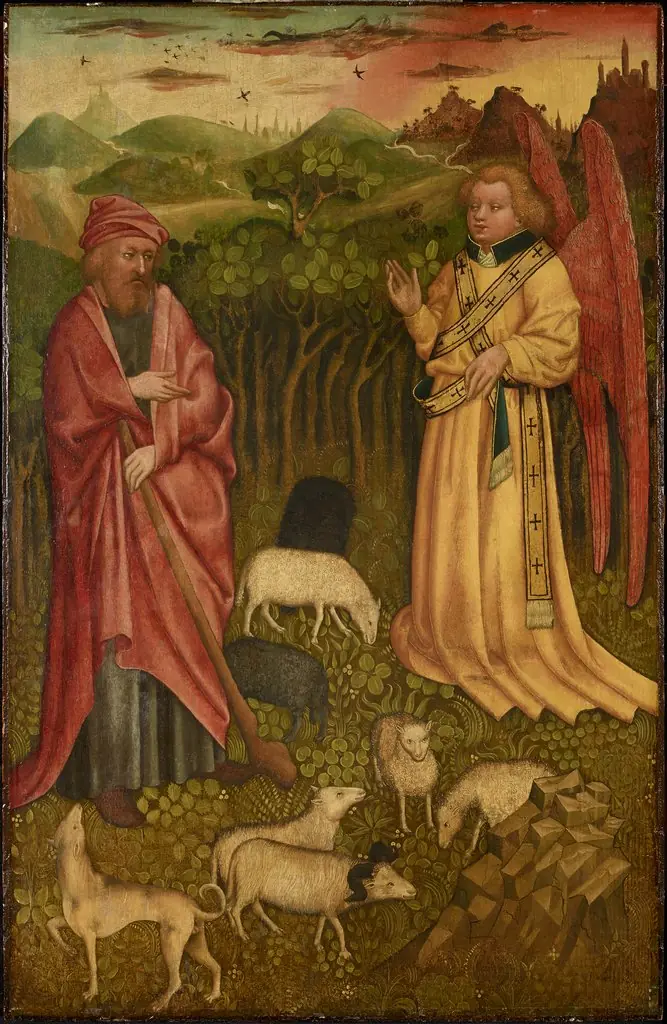
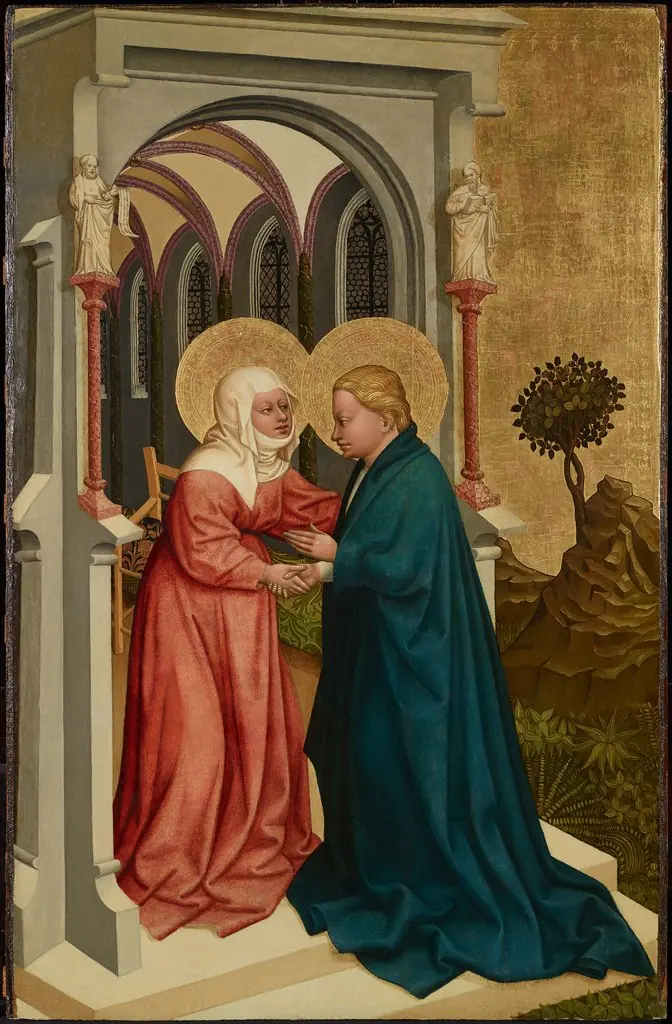
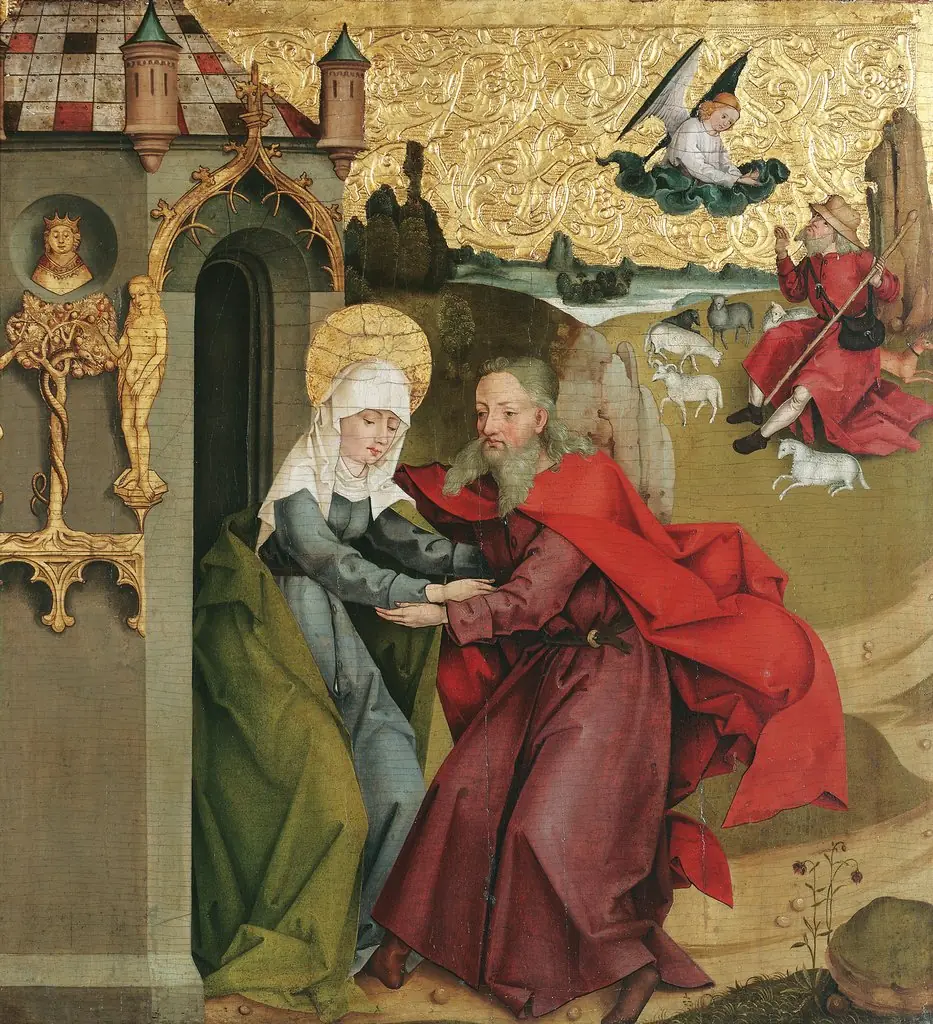
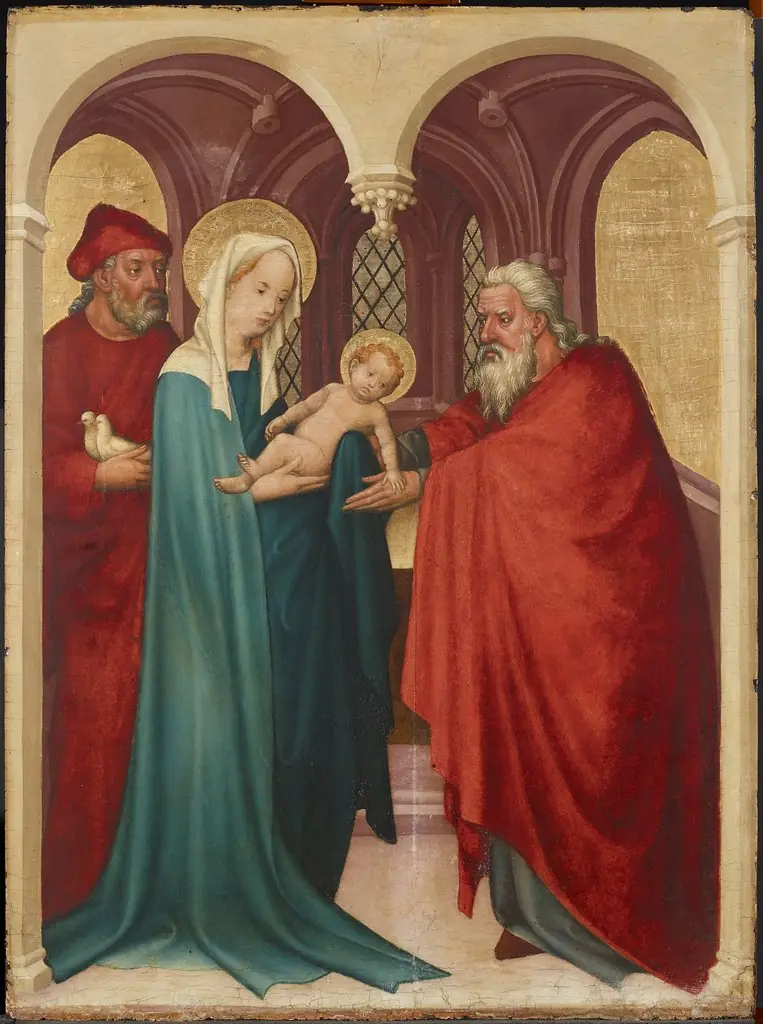
Zurückweisung des Opfers Joachims und Annas is an unspecified painting by the Northern Renaissance artist Meister des Albrechtsaltares zu Klosterneuburg. It dates from 1437 and is held in the collection of the Kunsthistorisches Museum.
About this work
Overview
It is part of a larger devotional cycle and resides in the Kunsthistorisches Museum in Vienna.
Painted in 1437 by the anonymous artist known as the Master of the Albrecht Altar from Klosterneuburg, this work depicts a moment from the apocryphal story of Joachim and Anna. It is part of a larger devotional cycle and resides in the Kunsthistorisches Museum in Vienna. The composition centers on a stone portal, framed by architectural details and stained-glass windows, suggesting a sacred threshold between the earthly and the divine.
Subject & Meaning
The scene illustrates the rejection of Joachim and Anna’s offering at the Temple in Jerusalem, as recounted in non-canonical texts. Anna, centrally positioned with clasped hands, embodies quiet dignity amid the tension. Joachim, seated with a book, and the priest, standing with a gesture of refusal, convey the moment of divine disapproval. The narrative underscores themes of humility and divine grace, common in late medieval piety.
Technique & Style
The painting employs tempera on wood with fine brushwork and rich, symbolic coloration. Gold leaf highlights the architectural elements and garments, while the figures are rendered with delicate facial expressions and folded drapery. The background’s stained-glass motifs and patterned wall reflect a Northern European attention to detail, blending devotional clarity with decorative precision typical of early 15th-century Austrian workshop practices.
History & Provenance
Created for a monastic context, likely the Klosterneuburg Abbey, the painting was part of a multi-panel altarpiece dedicated to the lives of Joachim and Anna. It entered the Kunsthistorisches Museum’s collection in the 19th century, following the secularization of religious institutions in the Habsburg territories. Its survival is attributed to its integration into a larger, well-documented ecclesiastical ensemble.
Context
This work emerged during a period of heightened devotion to the Virgin’s parents in Central Europe, especially in monastic communities. The emphasis on their purity and suffering resonated with contemporary spiritual ideals. Similar narratives appeared in stained glass and manuscript illumination, reflecting a broader cultural interest in the pre-life of Mary as a model of divine preparation.
Legacy
Though the artist remains anonymous, the painting exemplifies the regional style of Austrian panel painting in the early 1400s. It contributes to the understanding of how apocryphal stories were visually codified for devotional use. The work continues to inform scholarly studies on medieval iconography and the transmission of religious narratives through visual art in the Habsburg lands.
Own this work as a print
Artist & collection
Artist
Meister des Albrechtsaltares zu Klosterneuburg
Meister des Albrechtsaltares zu Klosterneuburg (1420–1460) was an artist.