Artwork
Peisaj
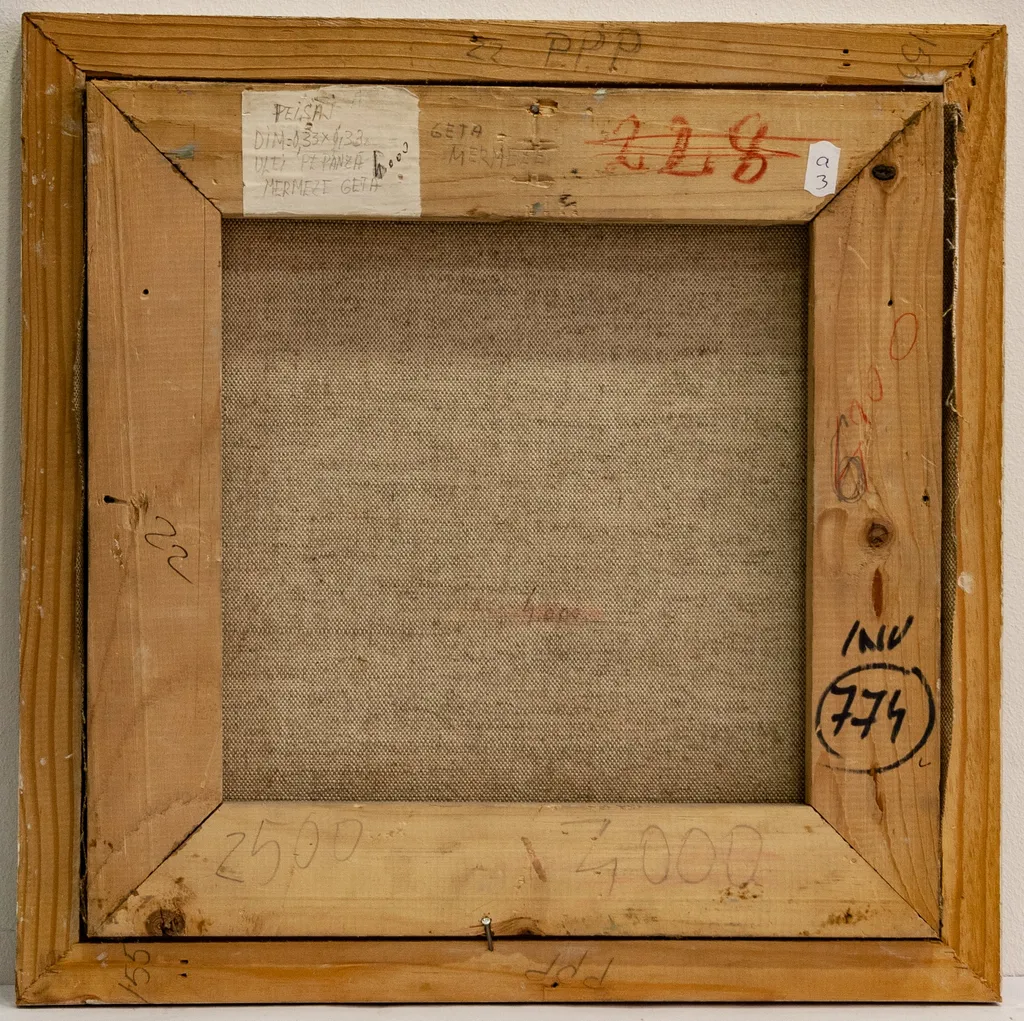
Peisaj is a print by Geta Mermeze. It is held in the collection of the Gavrila Simion Eco-Museum Research Institute Tulcea.
About this work
Overview
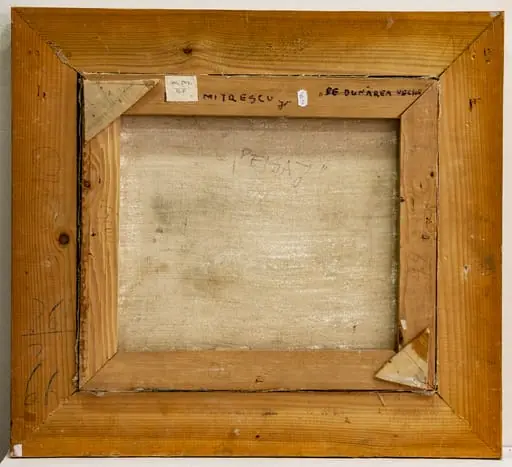
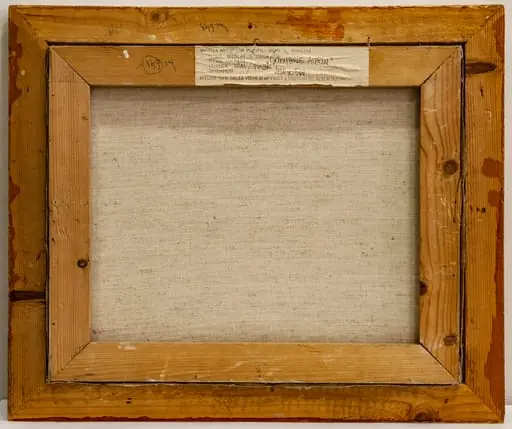
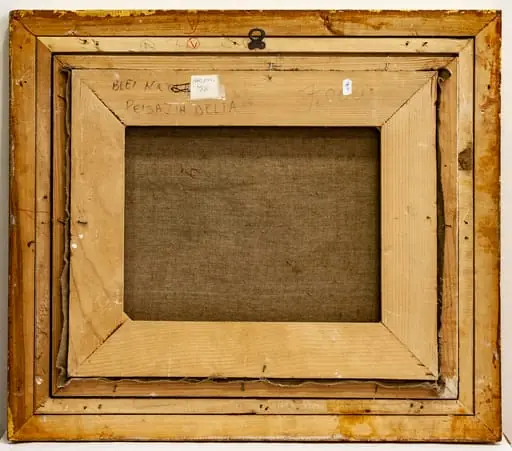
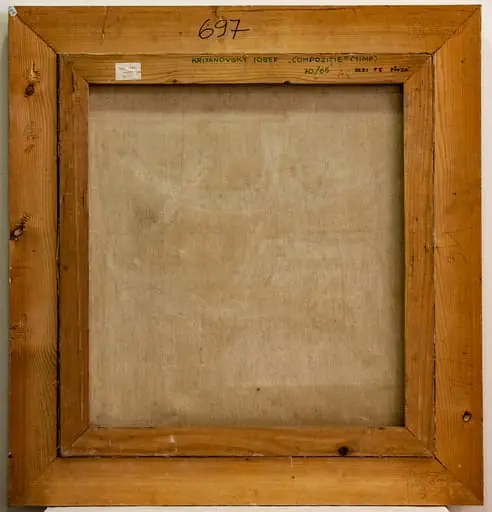
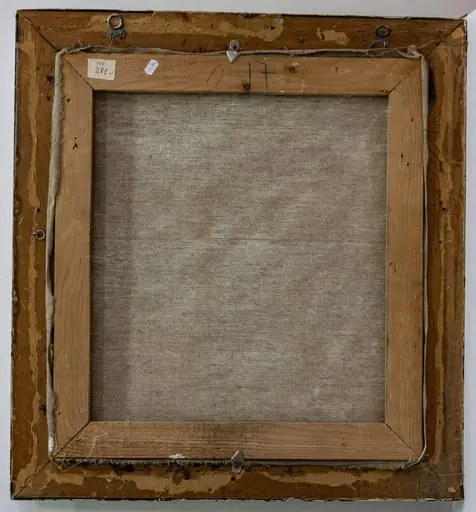
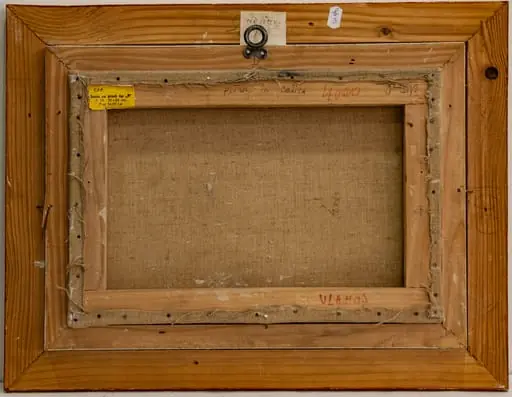
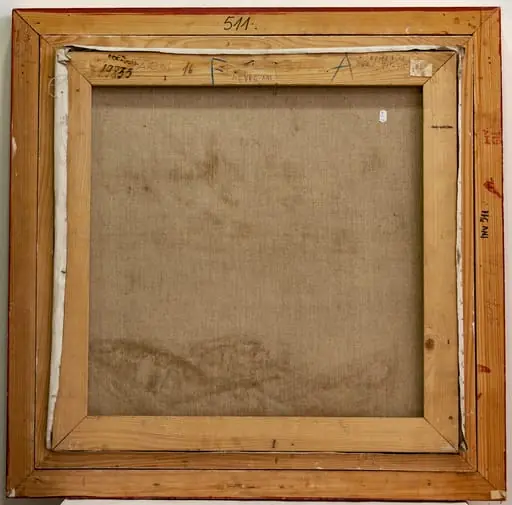
Peeling paint and handwritten annotations in pencil and red ink mark the frame’s sides, suggesting years of handling, repair, or archival use.
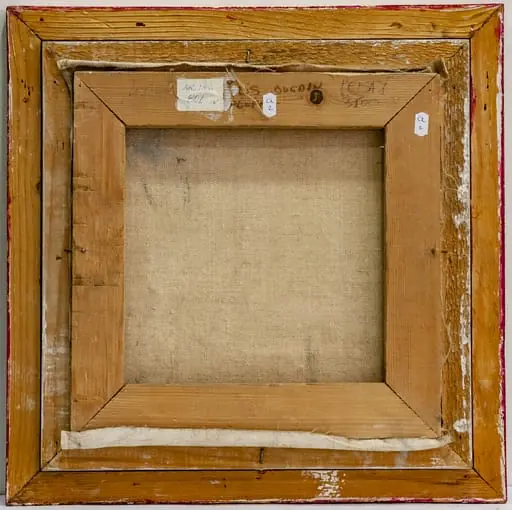
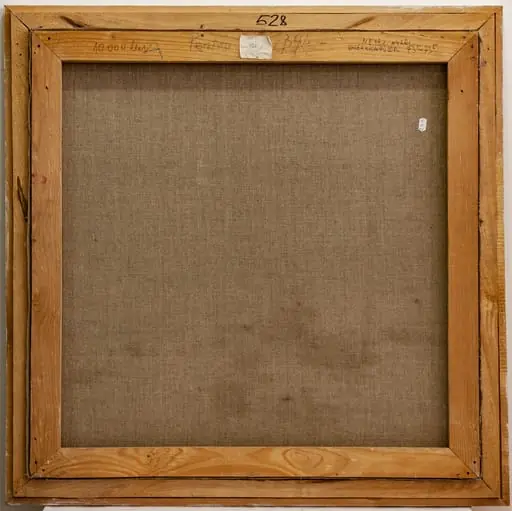
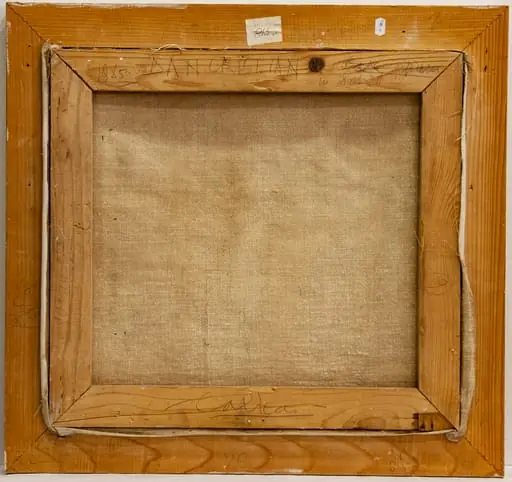
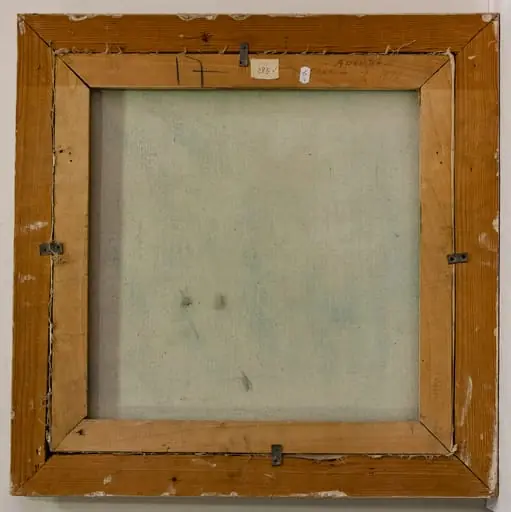
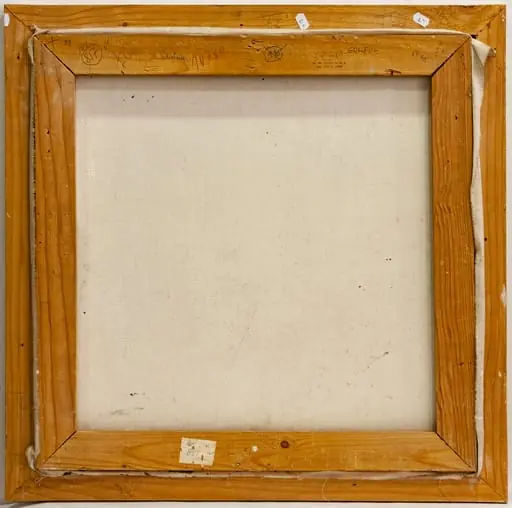
An empty wooden frame, aged and deteriorated, bears the title 'Peisaj'—Romanian for 'landscape'—on a small, taped label inside its top edge. The original image is absent, replaced by a faded, woven textile backing. Peeling paint and handwritten annotations in pencil and red ink mark the frame’s sides, suggesting years of handling, repair, or archival use. Its physical state implies it once contained a small artwork, now lost or removed.
Subject & Meaning
Though labeled as a landscape, no visual content remains to confirm its original subject. The title may reflect the artist’s intent or a later cataloging choice. The absence of imagery transforms the frame into a relic of omission, inviting speculation about what was once displayed and why it disappeared. The work becomes a placeholder for memory rather than representation.
Technique & Style
The frame’s construction is utilitarian, typical of late 19th- or early 20th-century domestic or institutional framing. Its worn finish and handwritten notations indicate practical use rather than aesthetic refinement. The woven backing, likely a salvaged textile, replaces traditional paper or canvas, hinting at resourcefulness or post-war scarcity. No artistic technique is visible beyond the frame’s material decay.
History & Provenance
The handwritten markings and taped label suggest institutional or personal archival activity. The presence of numbers and letters may correspond to a collection inventory or storage system. Its current state implies it was preserved not for its visual content but as an artifact of its own history—possibly discarded by a collector, donated by a family, or repurposed by a museum.
Context
In the context of Romanian cultural history, such frames often held folk prints, postcards, or amateur watercolors. The absence of imagery here may reflect wartime loss, neglect, or deliberate erasure. Its presence in a museum of ethnography signals an interest in everyday objects and the traces of ordinary life, rather than celebrated art.
Legacy
The frame endures not as a vessel for art, but as evidence of absence. It speaks to the fragility of cultural records and the ways objects outlive their original purpose. Its preservation invites reflection on what gets saved, what is lost, and how meaning shifts when context dissolves.
Artist & collection
Artist
This printmaker left two small landscapes behind: Peisaj and Pesaj, both from an unnamed tradition.
Museum
Gavrila Simion Eco-Museum Research Institute Tulcea
Continue through works from the same source collection.