Artwork
Maria Rebecca Davison (1783–1858), as Juliana in 'The Honeymoon' by John Tobin
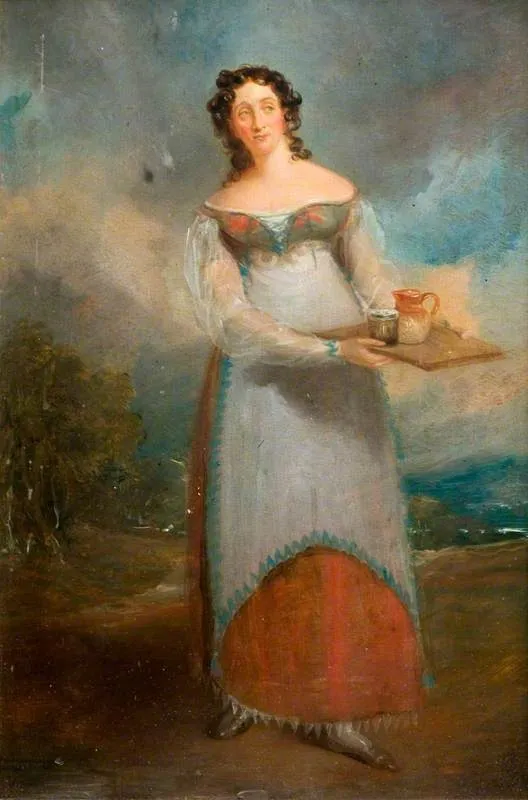
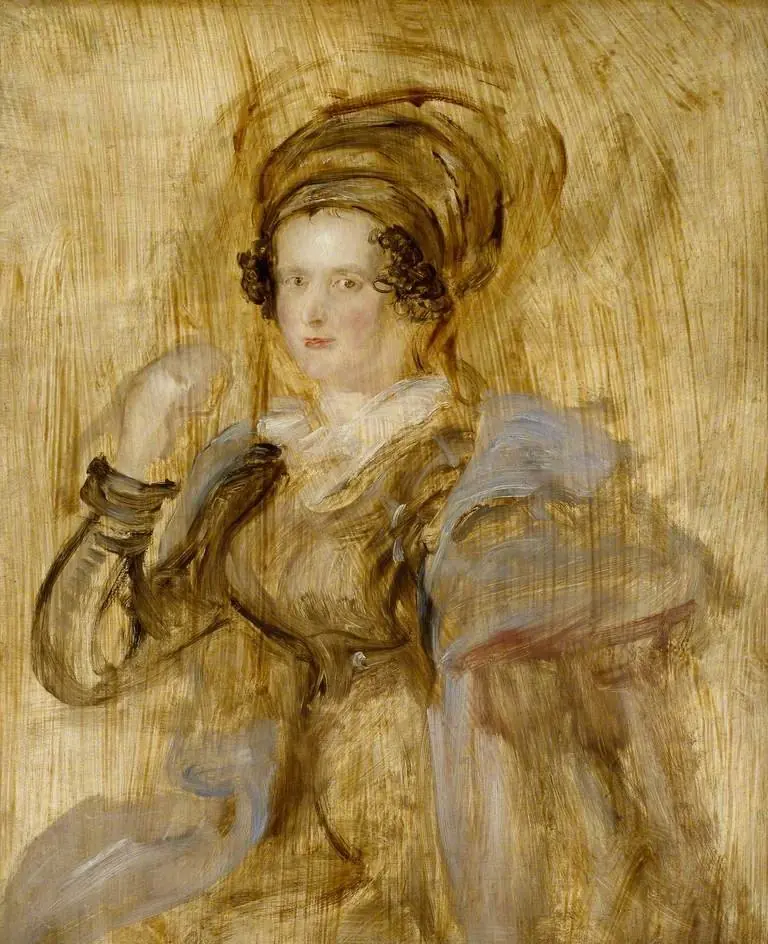
Maria Rebecca Davison (1783–1858), as Juliana in 'The Honeymoon' by John Tobin is an oil painting by Michael William Sharp. It dates from 1827 and is held in the collection of the Victoria and Albert Museum.
About this work
Overview
This 1827 oil painting by Michael William Sharp portrays the actress Maria Rebecca Davison in character as Juliana from John Tobin’s comedy 'The Honeymoon.
This 1827 oil painting by Michael William Sharp portrays the actress Maria Rebecca Davison in character as Juliana from John Tobin’s comedy 'The Honeymoon.' Executed with careful attention to costume and expression, the work captures a moment of quiet poise. It resides in the Victoria and Albert Museum’s collection, where it serves as a record of early 19th-century theatrical portraiture and the cultural prominence of stage performers.
Subject & Meaning
Davison is depicted as Juliana, a character known for her gentle wit and romantic resolve in Tobin’s play. The tray with jug and cup suggests a domestic setting, reinforcing Juliana’s role as a poised, nurturing figure. Her subtle smile and composed stance convey calm confidence, aligning with the character’s emotional maturity. The portrait functions not merely as likeness but as a theatrical vignette, bridging performance and still image.
Technique & Style
Sharp employs chiaroscuro to model the figure against a soft, atmospheric background of sky and water, lending volume and spatial depth. The dress’s layered fabrics—white over red with blue trim—are rendered with delicate brushwork, emphasizing texture without excess detail. The puffed sleeves and floral embroidery on the bodice are suggested rather than meticulously rendered, reflecting a balance between realism and theatrical idealization typical of portrait studies from this period.
History & Provenance
Commissioned during Davison’s active stage career, the painting was likely intended to commemorate her popular portrayal of Juliana. It entered the Victoria and Albert Museum’s collection in the 19th century, among holdings focused on performing arts. Its preservation reflects institutional interest in documenting theatrical history through visual media, rather than as a standalone artistic achievement.
Context
In the 1820s, British theatre enjoyed widespread popularity, and actors like Davison became cultural figures. Portraits of performers in character were common, serving both as promotional tools and as memorabilia for audiences. This work aligns with a broader trend of blending portraiture with theatrical narrative, where identity was as much about role as it was about the individual.
Legacy
The painting endures as a document of early Victorian theatre culture, preserving the visual language of stage performance and the public’s fascination with actors. While Sharp’s name is not widely remembered today, this work contributes to the historical record of how performance was archived and celebrated in visual form, offering insight into the intersection of art and entertainment in its time.
Artist & collection

 A Lady
 Spinner at Her Work
 Portrait of a Lady
 The Milkmaid of Bordeaux
 Auguste Amalia von Bayern, Vizekönigin von Italien
 Ophelia Weaving Her Garlands (from William Shakespeare's 'Hamlet')
 Portrait of Lady Elizabeth Foster, later Duchess of Devonshire (1759-1824)
 Young Chilean or Portrait of a Chilean Lady
 Caroline of Brunswick (1768–1821), Queen of George IV
 Portrait of Harriott West (Later Mrs. William Woodgate)
 Mrs. Robert Blencowe
 Maria, Lady Callcott