Artwork
Auguste Amalia von Bayern, Vizekönigin von Italien
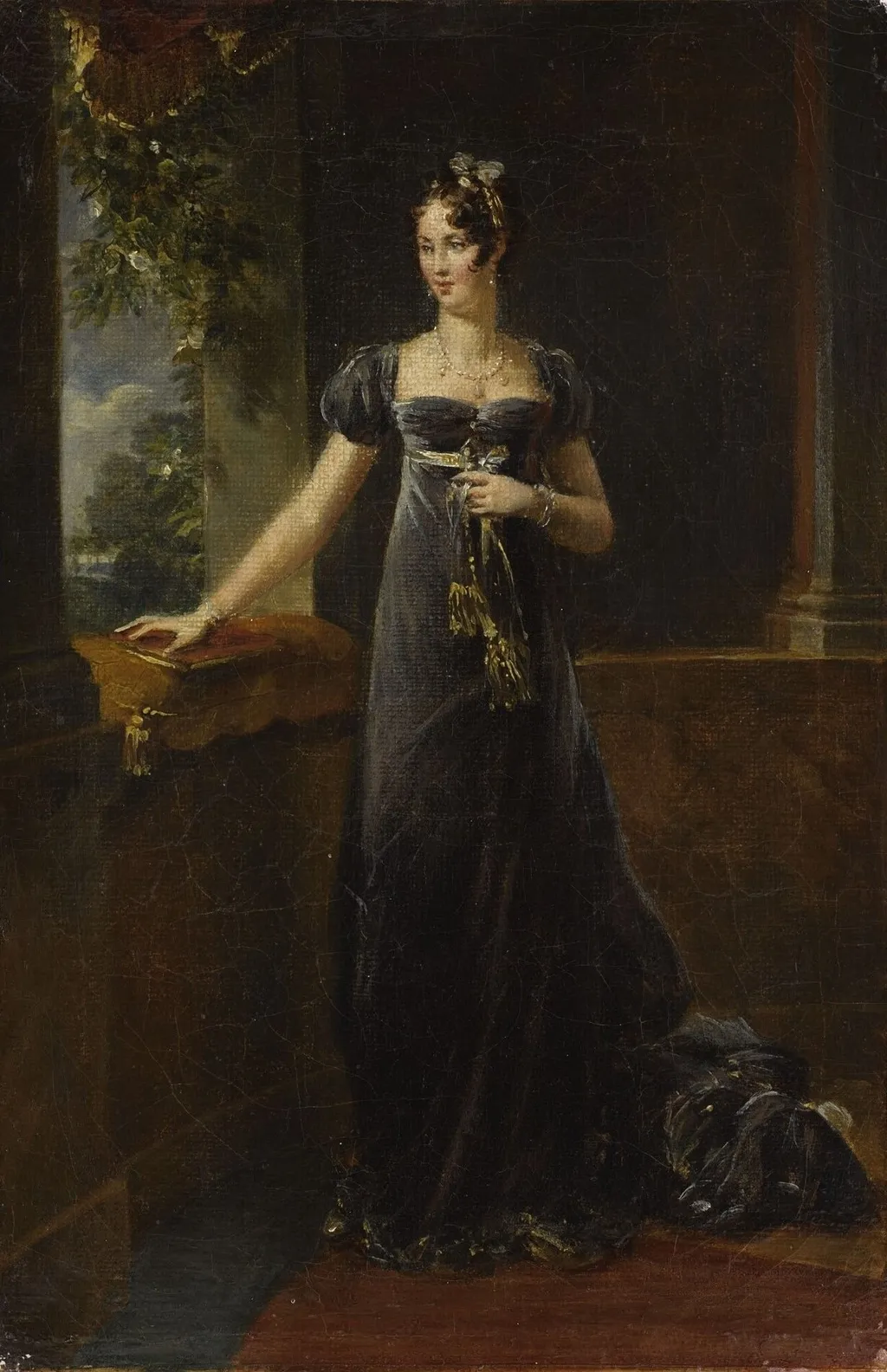
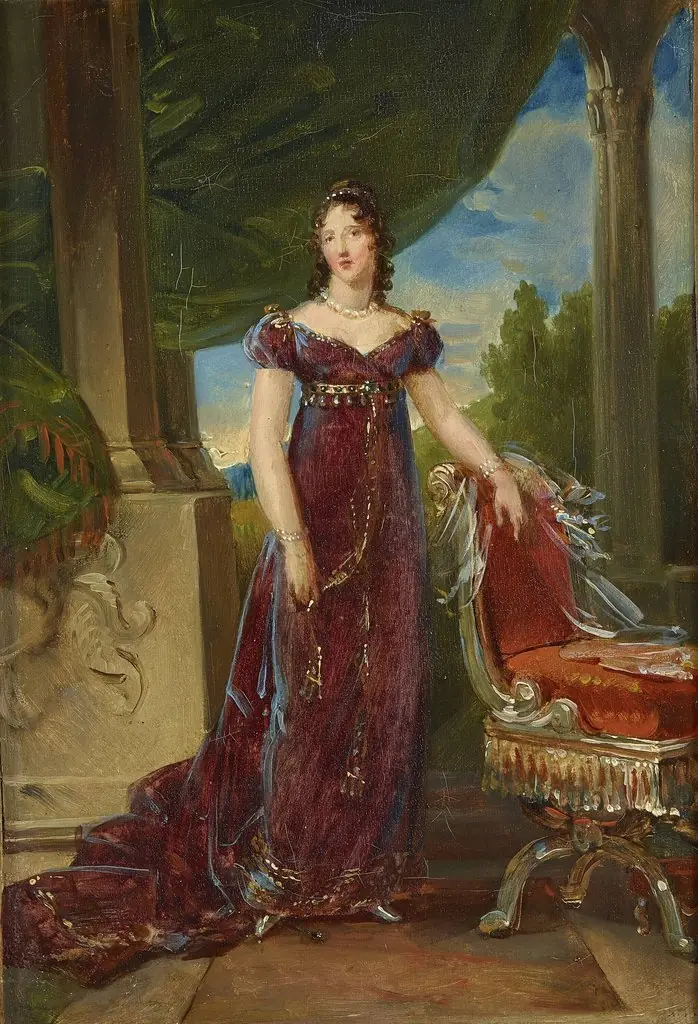
Auguste Amalia von Bayern, Vizekönigin von Italien is an oil painting by François Gérard. It is held in the collection of the Museum of the History of France.
About this work
Overview
Painted around 1850 by François Gérard, this oil portrait depicts Augusta Amalia of Bavaria, who held the title of Vicereine of Italy. Gérard, a French artist with deep ties to imperial and royal courts, was known for his refined approach to portraiture. The work is part of the Palace of Versailles collection, reflecting its historical significance within European aristocratic circles.
Subject & Meaning
Augusta Amalia of Bavaria, wife of King Maximilian I Joseph of Bavaria’s son and vicereine of the Kingdom of Italy under Austrian rule, is portrayed with quiet authority. Her formal attire, jewelry, and poised stance convey her status as a noblewoman in a politically sensitive role. The fan and hairbow suggest grace, while the restrained setting emphasizes dignity over ostentation.
Technique & Style
Light falls gently from the left, illuminating her face and hands, while the column and window hint at architectural depth without distracting from the sitter.
Gérard employs smooth brushwork and subtle tonal transitions to render the texture of silk and the sheen of jewelry. The dark background isolates the figure, drawing attention to her silhouette and the gold belt that anchors the composition. Light falls gently from the left, illuminating her face and hands, while the column and window hint at architectural depth without distracting from the sitter.
History & Provenance
Commissioned during Augusta Amalia’s tenure as vicereine, the painting entered the French royal collection after her return to Bavaria. It was later transferred to the Palace of Versailles, where it remains as part of a broader effort to document the networks of European royalty in the early 19th century. Its preservation reflects its role as a record of dynastic alliances.
Context
The painting emerges from a period when European courts used portraiture to reinforce political legitimacy. As a former court painter to Napoleon and later Bourbon monarchs, Gérard was uniquely positioned to capture the transitional identity of aristocrats navigating post-revolutionary Europe. Augusta Amalia’s image aligns with the era’s preference for restrained elegance over Baroque grandeur.
Legacy
Though not widely exhibited outside institutional collections, the portrait exemplifies Gérard’s mature style and the continuity of French academic portraiture into the mid-19th century. It serves as a visual document of Bavarian-Italian aristocratic ties under Austrian hegemony, preserving the visual language of noble identity during a time of shifting sovereignties.
Own this work as a print
Artist & collection
Artist
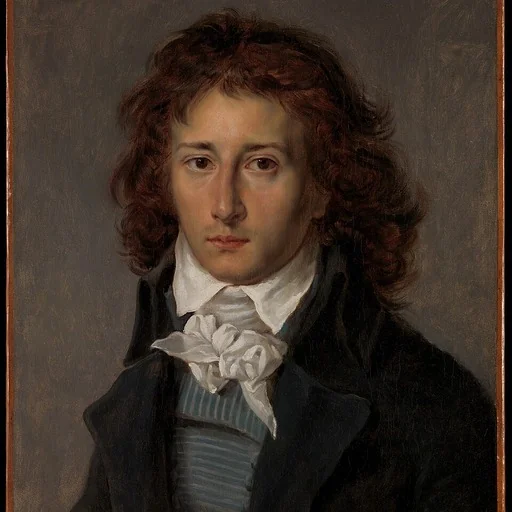
François Pascal Simon Gérard (French pronunciation: , 4 May 1770 – 11 January 1837), titled as Baron Gérard in 1809, was a French painter.

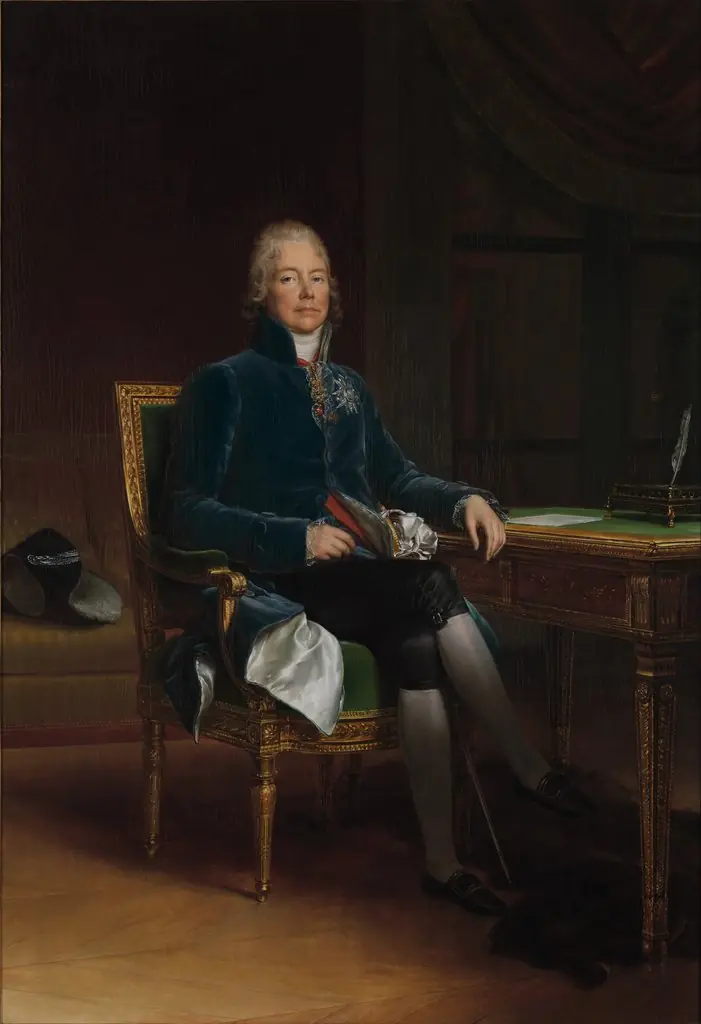 Charles Maurice de Talleyrand Périgord (1754–1838), Prince de Bénévent
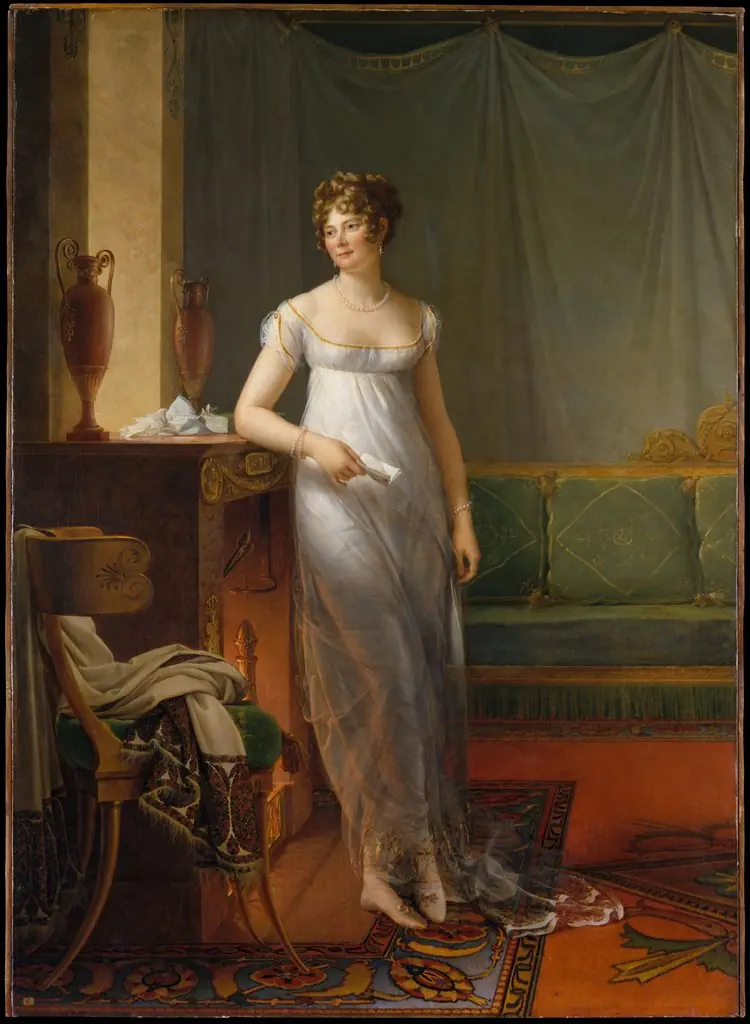 Madame Charles Maurice de Talleyrand Périgord (1761–1835)
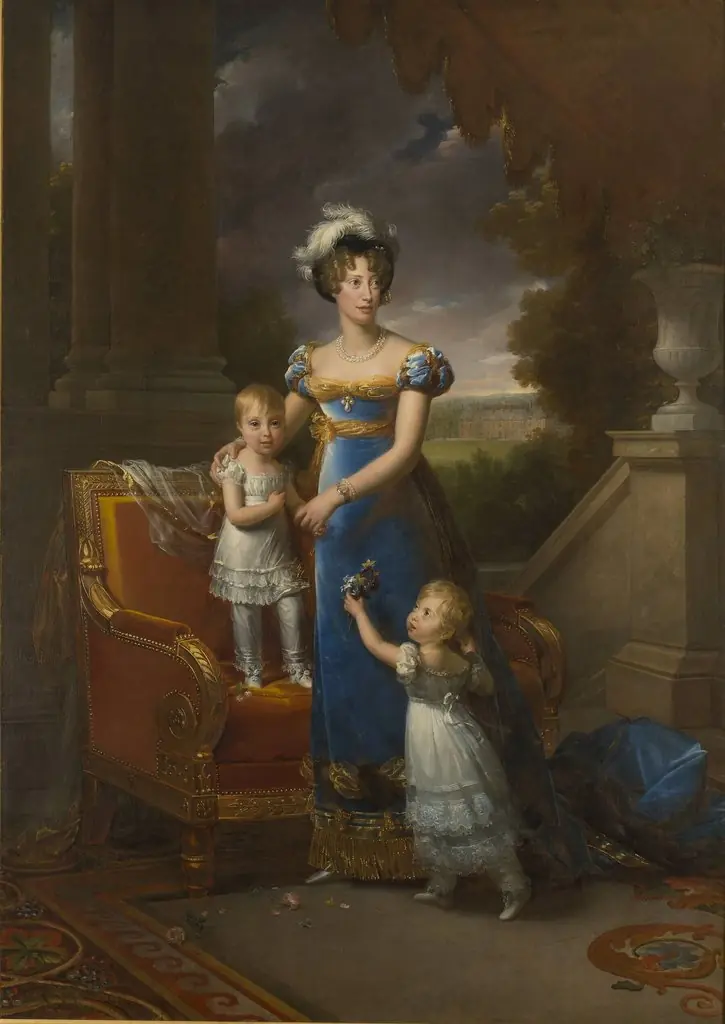 The Duchess of Berry and her Children
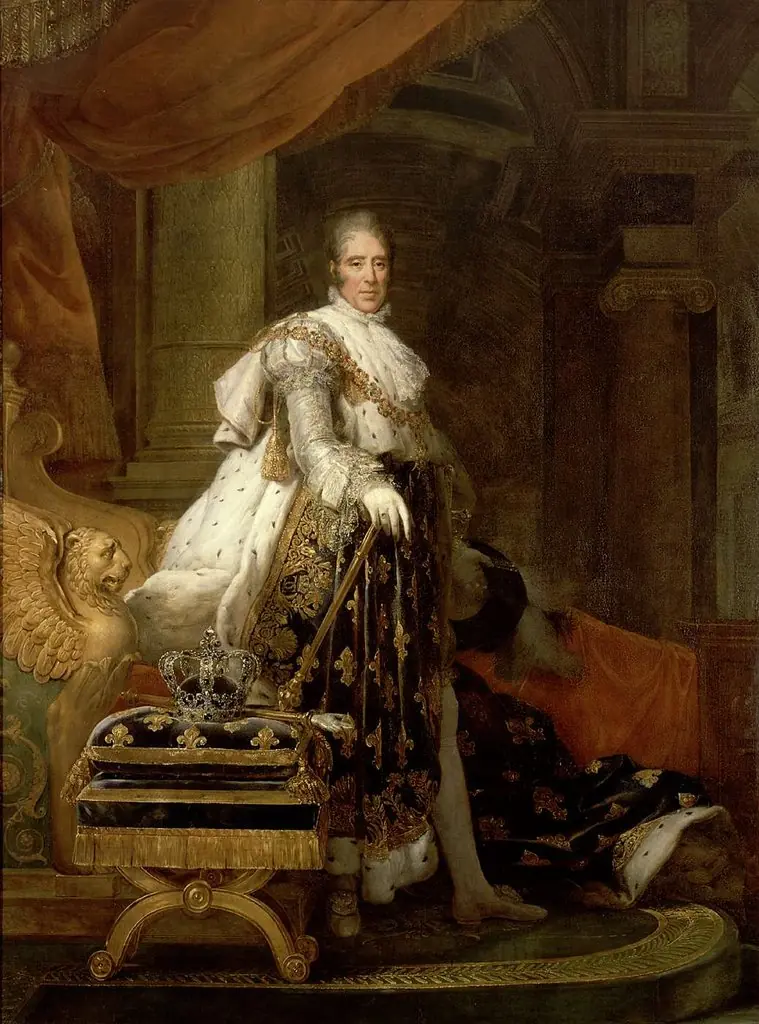 Charles X of France
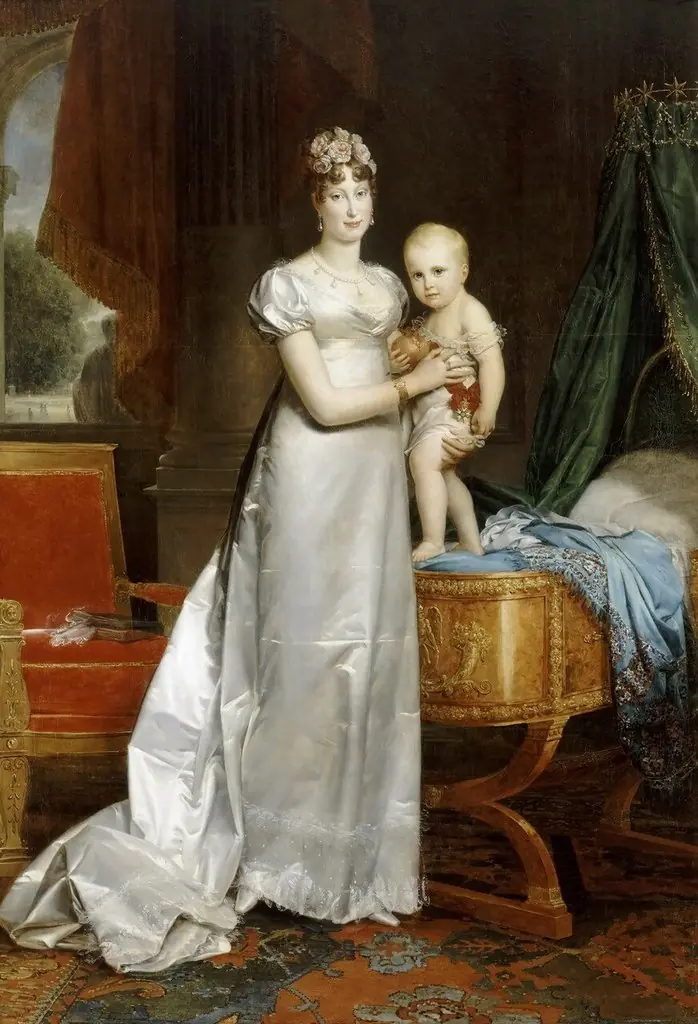 Marie-Louise, Empress of the French, and the Roi de Rome
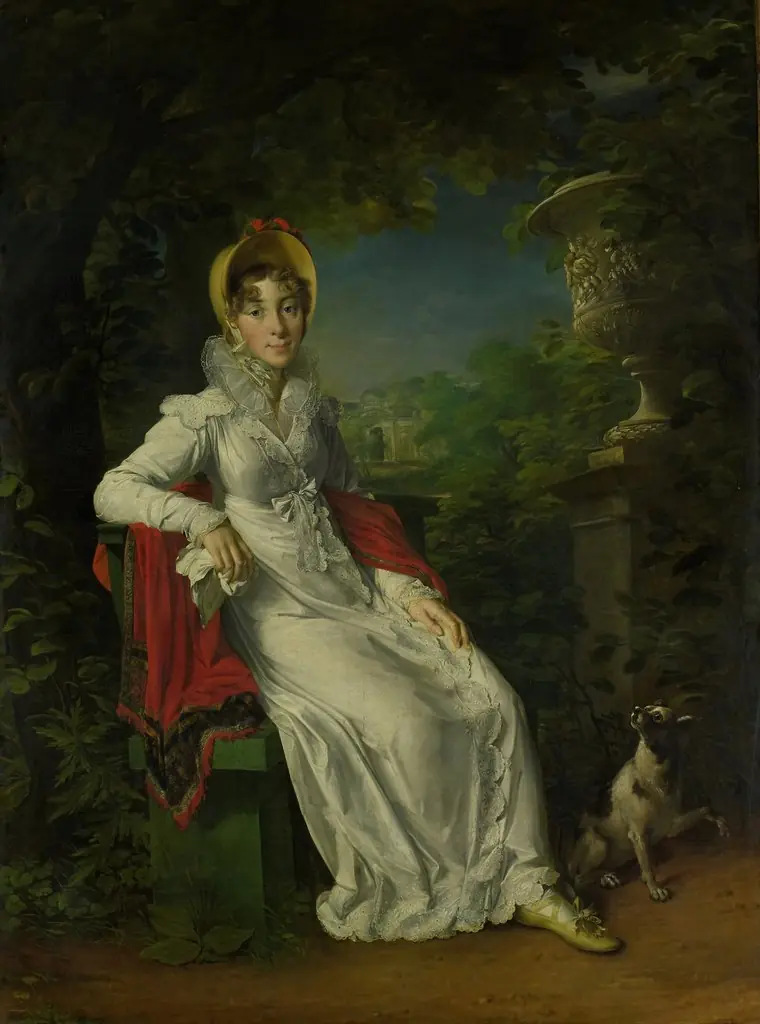 Portrait of Marie Caroline Ferdinande Louise de Naples, Wife of Charles Ferdinand, Duke de Berry, in the Park de Bagatelle in the Bois de Boulogne, Paris
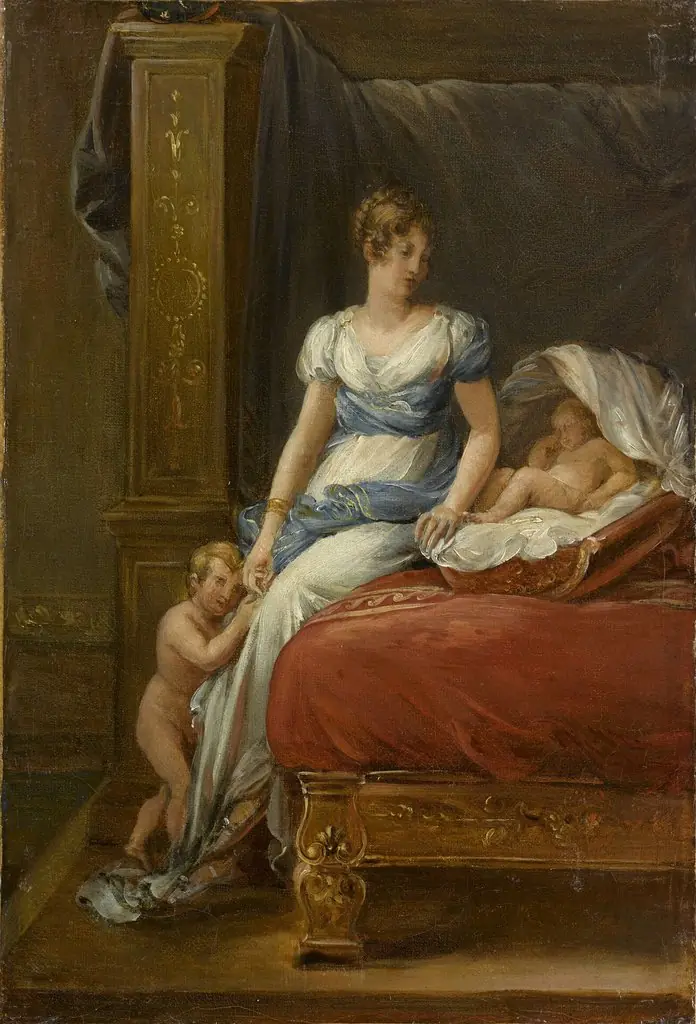 Marie-Annunciade-Caroline Bonaparte, Queen of Naples and her children
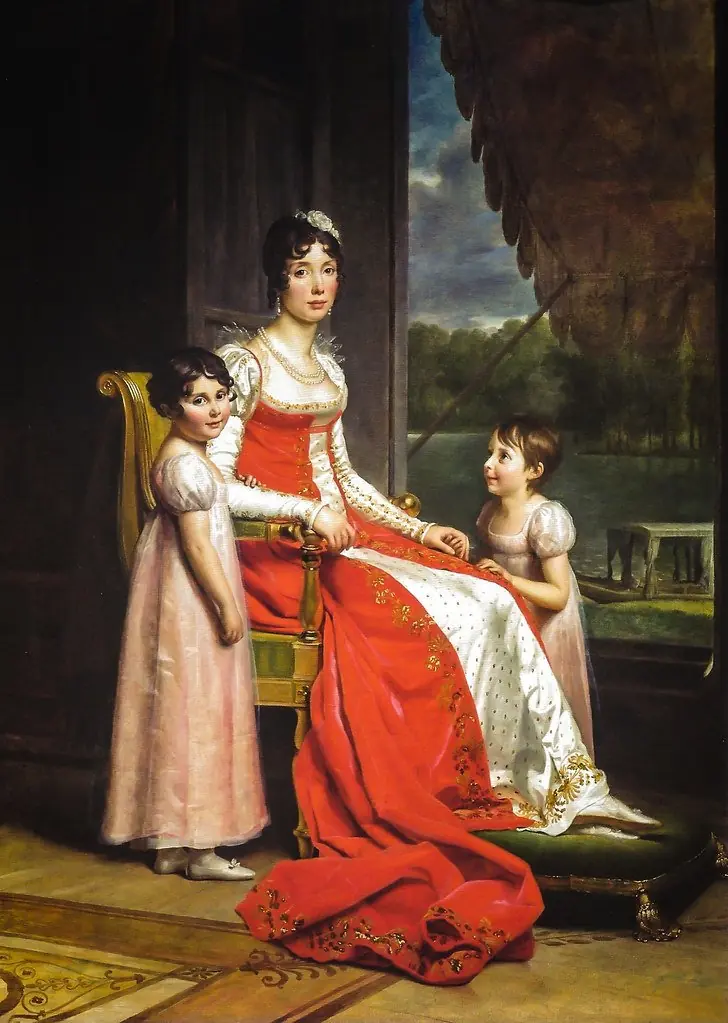 Julie Bonaparte as Queen of Spain with her Daughters, Zénaïde and Charlotte
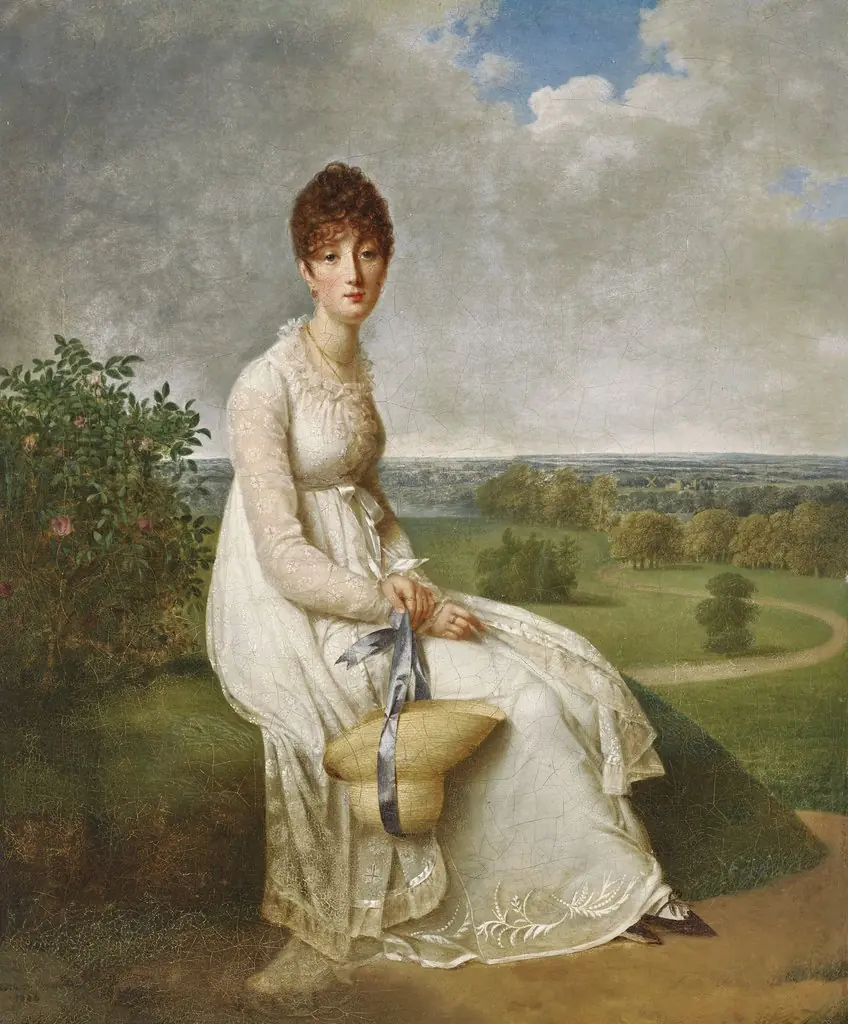 Portrait of a lady, full-length, seated on a rock in a landscape
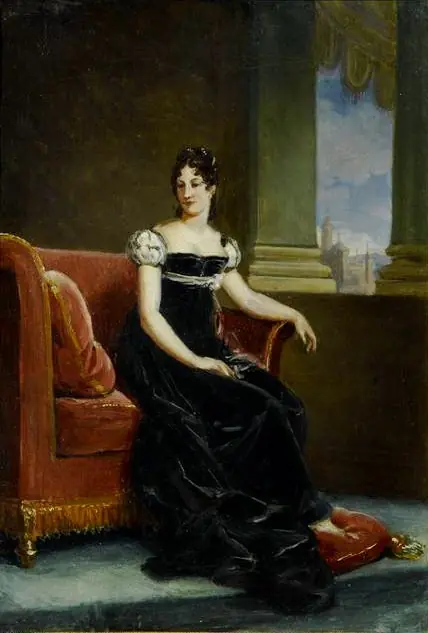 Eugénie-Bernardine-Désirée Clary, reine de Suède (1781-1860)
 Portrait of Mrs. Andrew Reid
 Portrait of Lady Elizabeth Foster, later Duchess of Devonshire (1759-1824)
 Portrait of Grand Duchess Maria Pavlovna
 Mary Lodge, Bride of Baron Charles-Louis de Keverberg de Kessel
 Lady Maitland (Catherine Connor, died 1865)
 Tadea Arias de Enríquez
 Dorothee, Duchess of Sagan
 Portrait of Josephine de Beauharnais
 Mrs. Anne Hart
 Portrait of Empress Alexandra Fyodorovna