Artwork
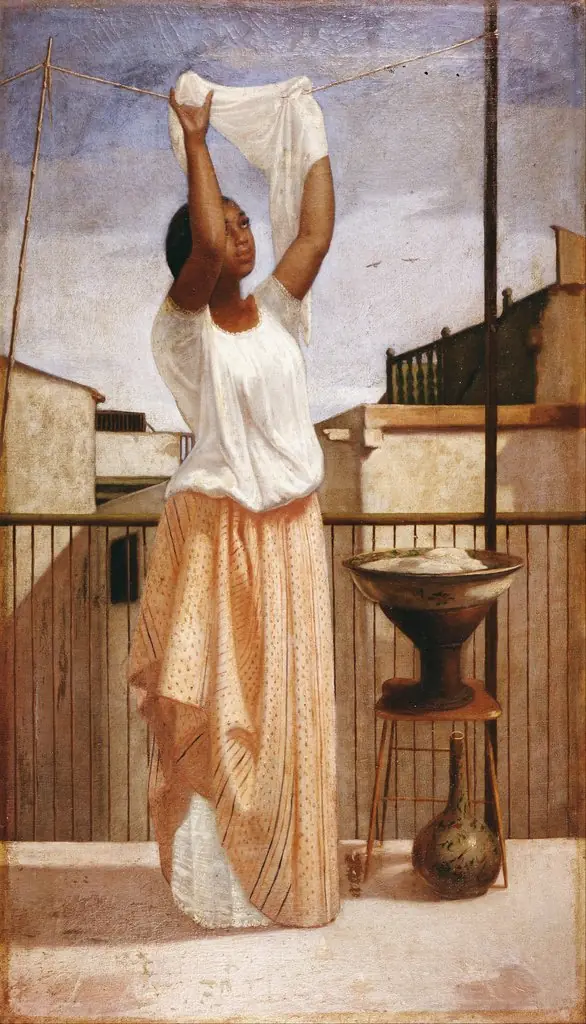
La lavandera
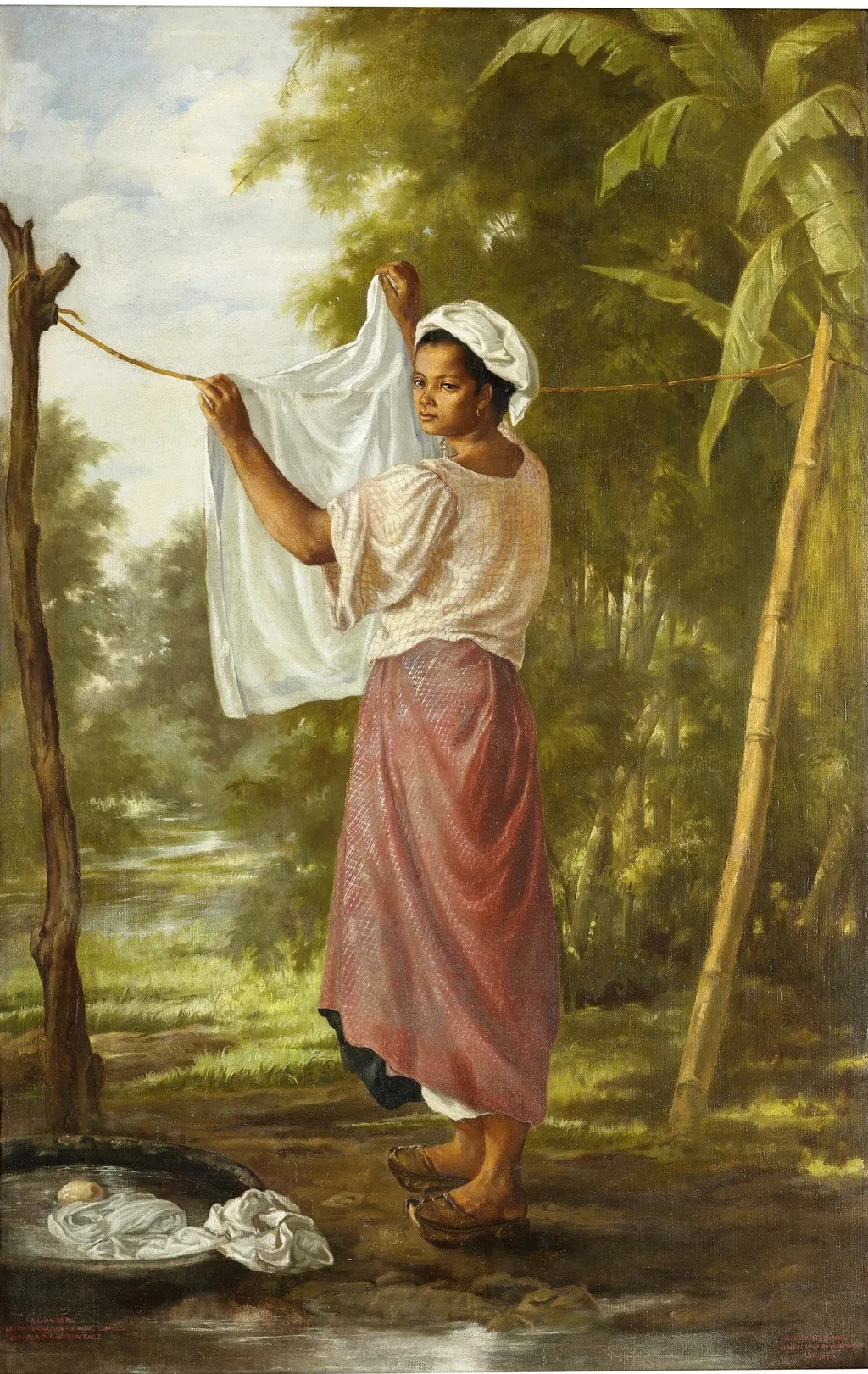
La lavandera is an oil painting by the Post-Impressionist artist Miguel Zaragoza. It dates from 1875 and is held in the collection of the Museo del Prado.
About this work
She is standing in a muddy area, wearing a white headscarf, a loose white top, and a red skirt.
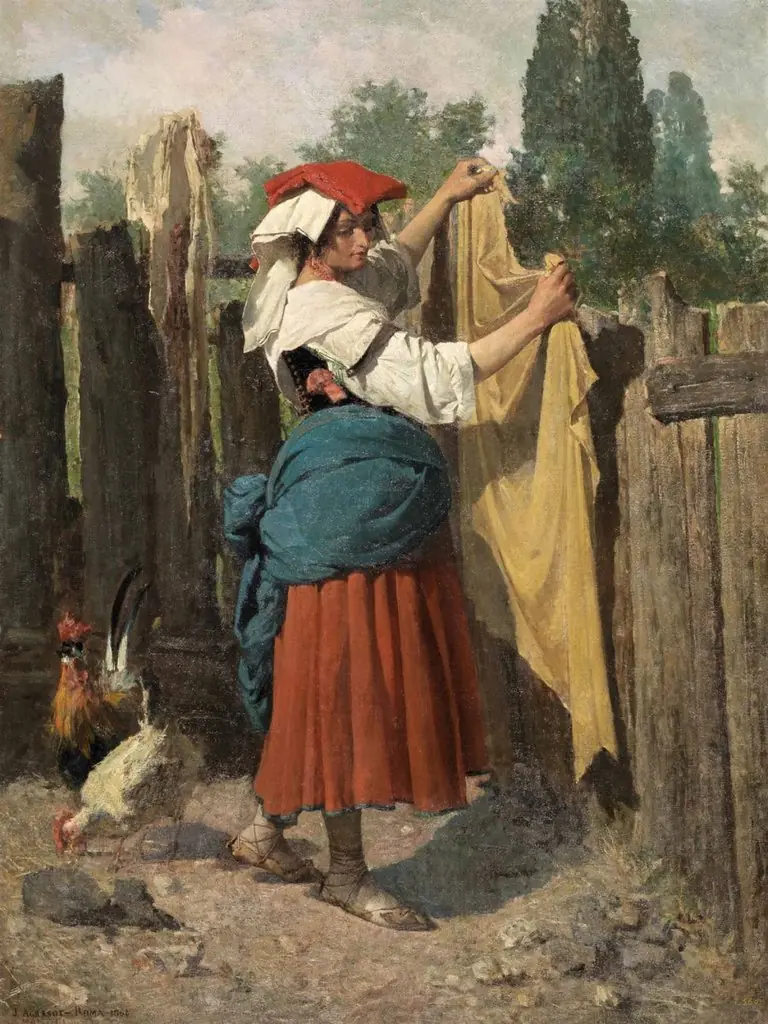
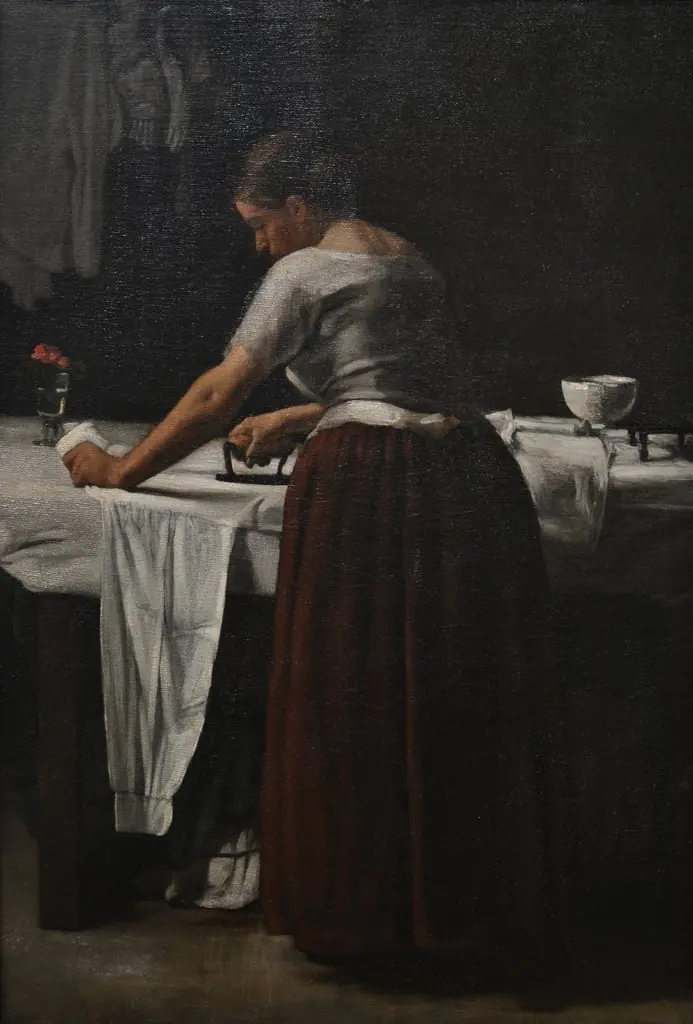
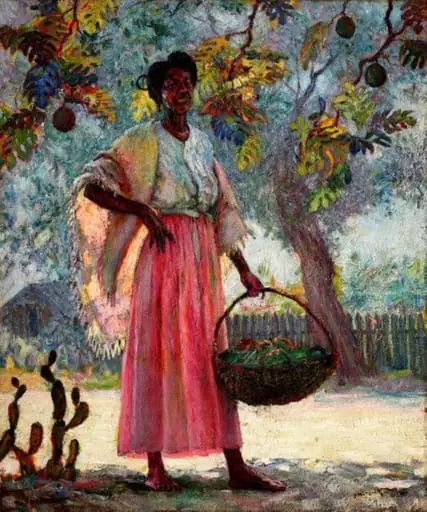
This painting shows a woman hanging a white sheet on a clothesline. She is standing in a muddy area, wearing a white headscarf, a loose white top, and a red skirt. The woman has dark skin and is looking over her shoulder. In the foreground, a black tub contains a white sheet and a round object. The background features a lush landscape with trees and grass.
The woman's attire and the setting suggest a domestic scene, possibly from the 19th century. The artist's use of color and light adds depth to the painting.
To learn more about the artist's techniques, explore the use of chiaroscuro in art.
Overview
Created in 1875, this oil on canvas by Miguel Zaragoza depicts a quiet, everyday moment. The work is part of the collection of the Museo del Prado, where it is displayed among other 19th‑century Spanish paintings.
Subject & Meaning
The composition centers on a woman of dark complexion, caught mid‑gesture as she stretches a white sheet on a line. Dressed in a loose white blouse, a red skirt and a headscarf, she glances over her shoulder, suggesting a brief pause in routine household labor. The surrounding mud and a nearby tub reinforce the domestic, labor‑focused atmosphere.
Technique & Style
Zaragoza employs a restrained palette, contrasting the bright whites of the cloth with earthy tones of the ground and foliage. Subtle chiaroscuro models the figure, while the soft illumination from an unseen light source creates depth in the background landscape of trees and grass. The brushwork is smooth, emphasizing the calm realism typical of Spanish genre painting of the period.
History & Provenance
The painting entered the Museo del Prado’s holdings after being acquired from a private collection in the early 20th century. Its provenance traces back to Zaragoza’s own studio, where it was likely exhibited in regional salons before passing through several owners before reaching the national museum.
Own this work as a print
Artist & collection