Artwork
Juego de niños
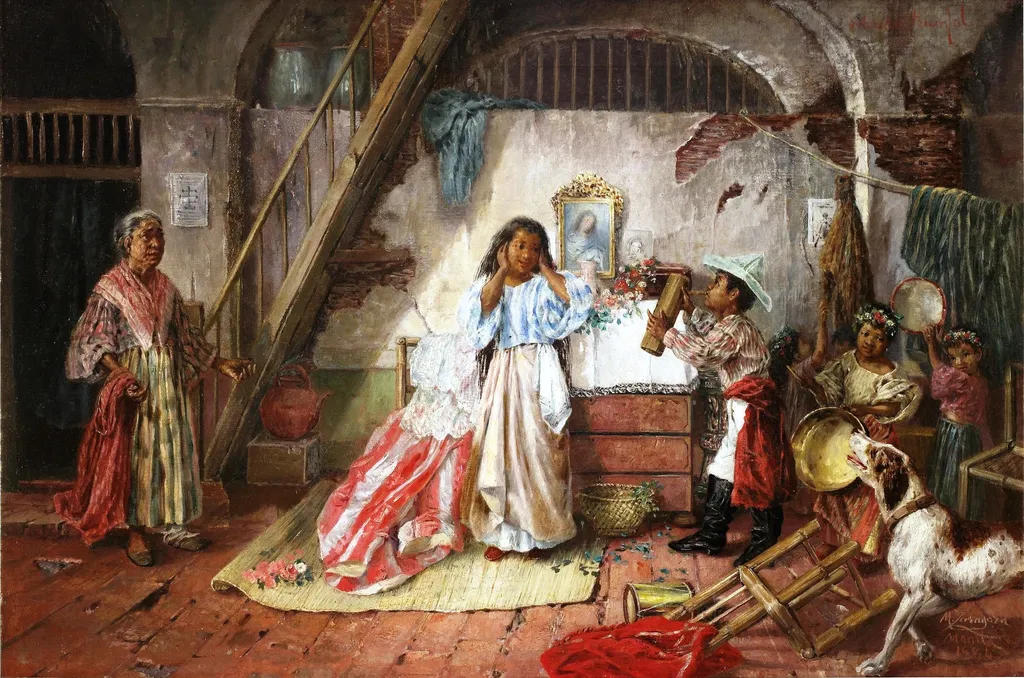
Juego de niños is an oil painting by the Post-Impressionist artist Miguel Zaragoza. It dates from 1892 and is held in the collection of the Museo del Prado.
About this work
Overview
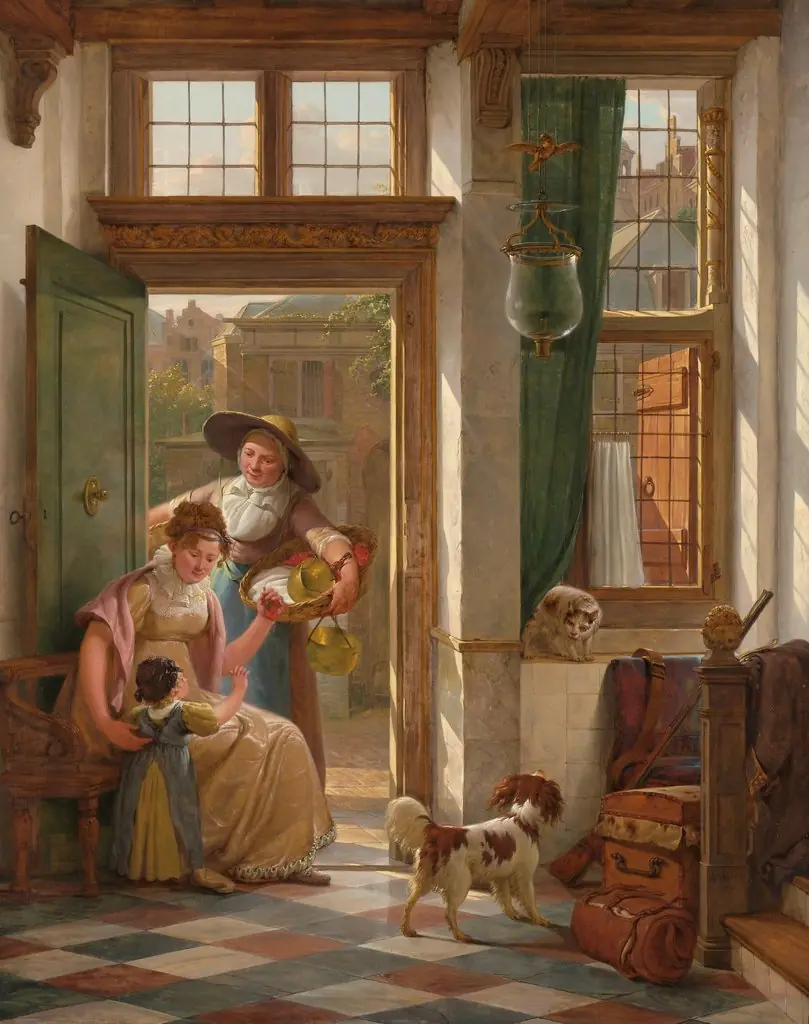
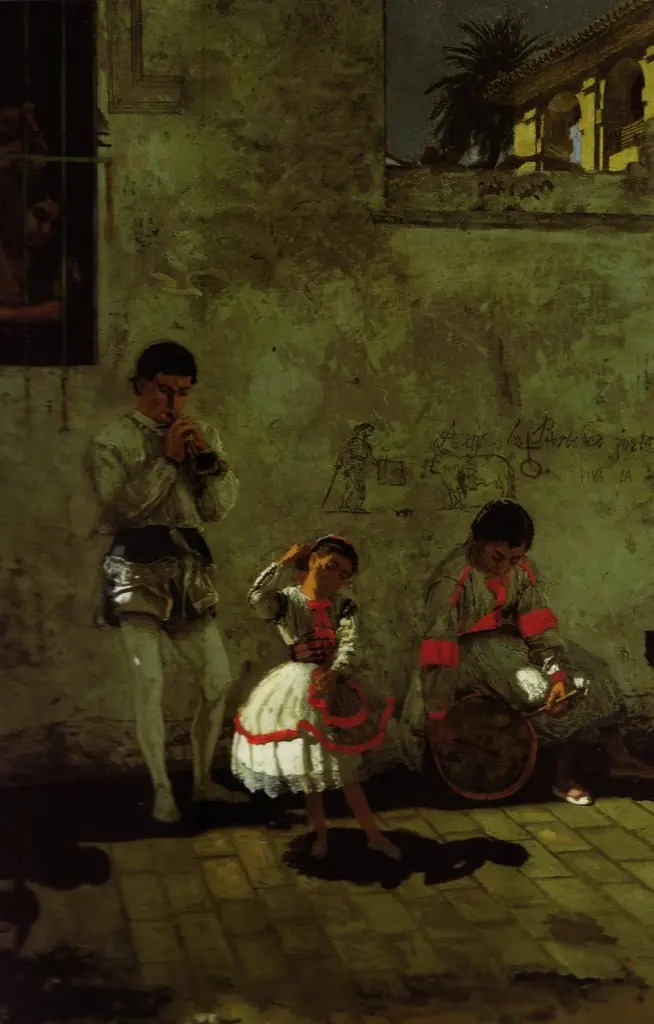
It captures a domestic interior filled with spontaneous motion, centered on a woman in a striped dress surrounded by children and a dog.
Painted in 1892 by Miguel Zaragoza, Juego de niños is an oil-on-canvas work currently housed in the Museo del Prado. It captures a domestic interior filled with spontaneous motion, centered on a woman in a striped dress surrounded by children and a dog. The composition conveys quiet domesticity infused with playful energy, rendered through loose brushwork and a warm, earthy palette typical of late 19th-century Spanish genre painting.
Subject & Meaning
The scene portrays an unposed moment of childhood play within a modest home. A woman, likely a caregiver, stands calmly on a woven mat while children engage with simple instruments and a dog investigates a tipped chair. The absence of narrative drama suggests an emphasis on everyday life, reflecting a broader 19th-century interest in authentic, unidealized domestic moments rather than theatrical or moralized scenes.
Technique & Style
Zaragoza employs fluid brushstrokes and layered pigments to suggest movement and texture without fine detail. Warm ochres, reds, and browns dominate the palette, enhancing the intimate atmosphere. The woman’s striped dress draws attention through color contrast, while the background objects—wall hangings, a basket, scattered toys—are rendered with suggestive strokes, reinforcing the painting’s sense of immediacy and informal observation.
History & Provenance
The painting entered the Museo del Prado’s collection in the late 19th century, likely acquired directly from the artist or through a Spanish cultural institution. Its presence in the museum indicates official recognition of Zaragoza’s work within the Spanish academic tradition, though he remains less documented than his contemporaries. No significant alterations or reattributions are recorded in its provenance.
Context
Created during a period when Spanish artists increasingly turned to everyday life for subject matter, Juego de niños aligns with trends seen in the works of Fortuny and Sorolla. It reflects a shift away from historical or religious themes toward intimate, observational scenes rooted in regional customs and domestic spaces, resonating with broader European realist movements of the time.
Legacy
Though not widely reproduced or studied, the painting contributes to the understanding of lesser-known Spanish genre painters of the late 1800s. Its preservation in the Prado underscores its value as a representative example of domestic realism in Spanish art. Zaragoza’s work, including this piece, offers insight into the quiet rhythms of middle-class Spanish life during a period of cultural transition.
Own this work as a print
Artist & collection