Artwork
Pești
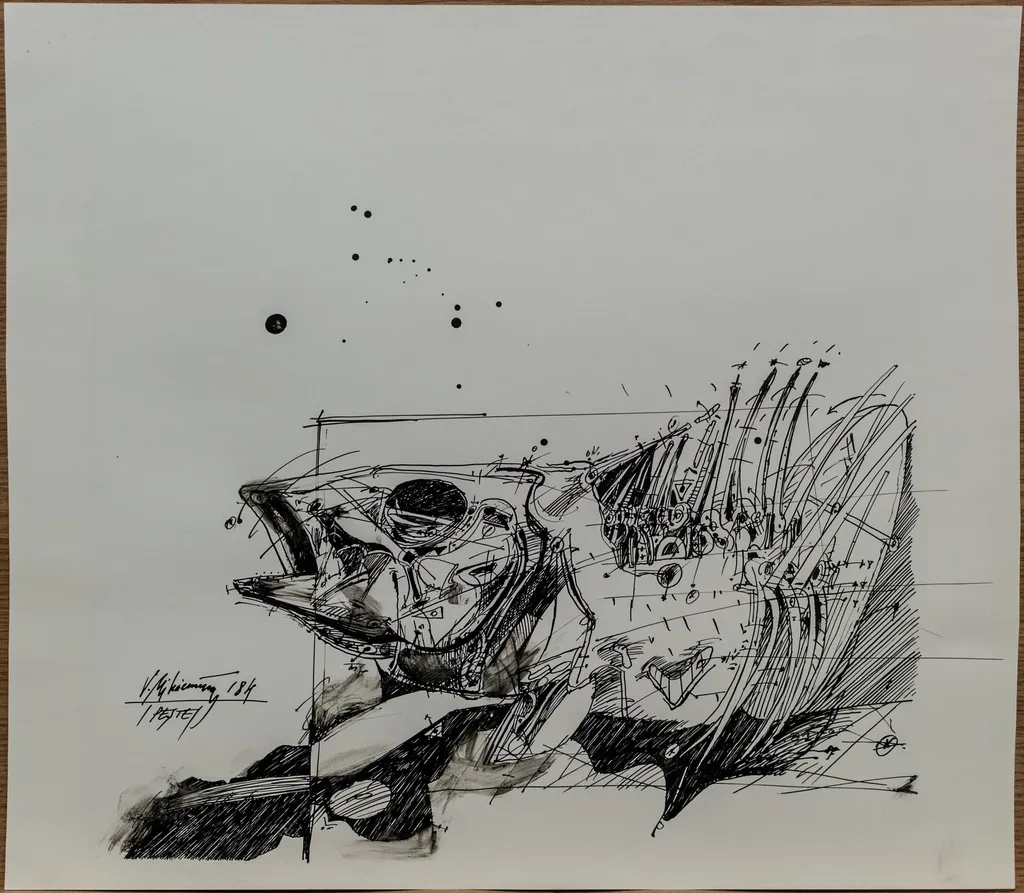
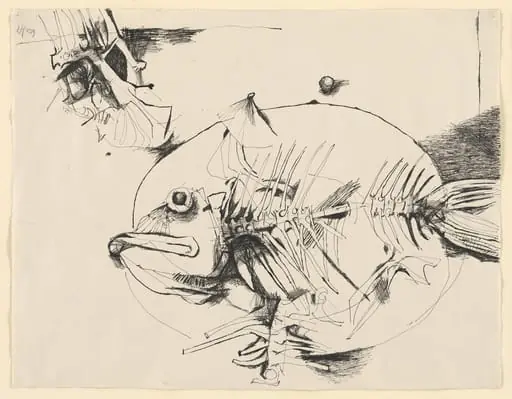
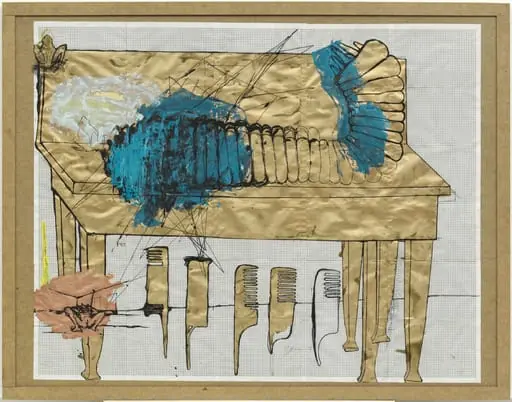
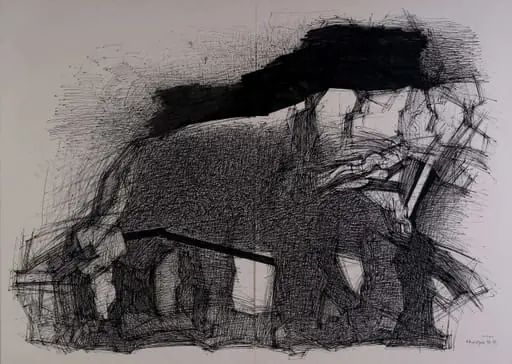
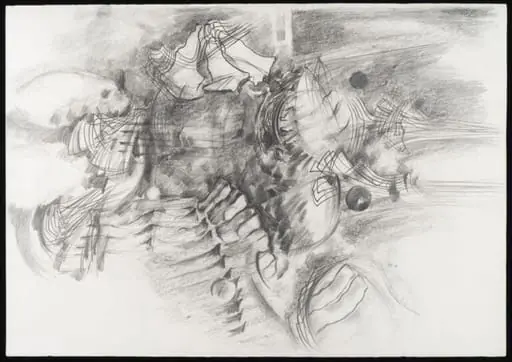
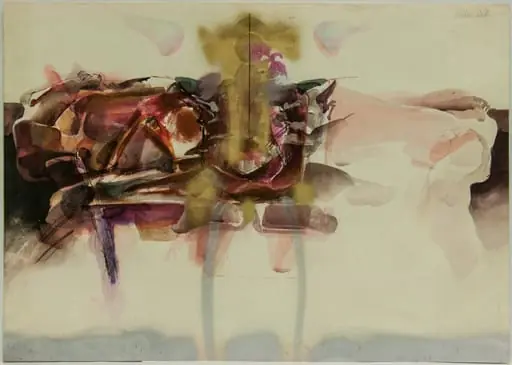
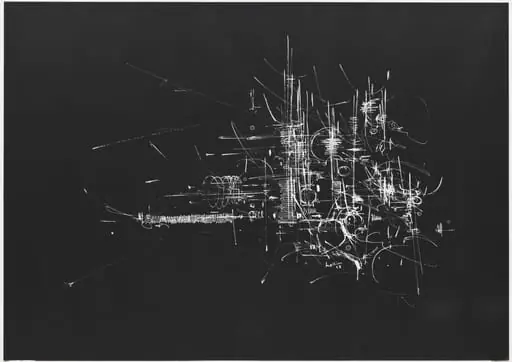
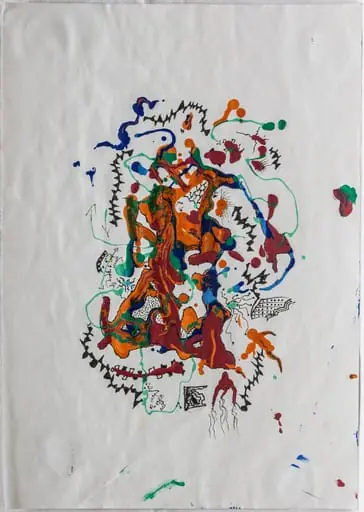
Pești is a drawing by Vintilă Mihăescu. It dates from 1950 and is held in the collection of the Gavrila Simion Eco-Museum Research Institute Tulcea.
About this work
Overview
Its minimal palette and energetic line work convey physical tension without narrative detail, emphasizing movement over representation.
Pești is a black ink drawing by Romanian artist Vintilă Mihăescu, dated around 1950. Executed on paper, it is part of the collection at the Museum of Ethnography. The work presents a dynamic, abstracted depiction of two interlocked human forms, rendered with rapid, layered strokes. Its minimal palette and energetic line work convey physical tension without narrative detail, emphasizing movement over representation.
Subject & Meaning
The drawing portrays two figures locked in a tight, ambiguous embrace—one curled inward, the other extended outward—as if caught mid-struggle or dance. The lack of facial features or contextual clues prevents a fixed interpretation, inviting readings of conflict, intimacy, or physical exertion. The composition suggests an emotional or bodily intensity, rooted in the human form rather than a specific story.
Technique & Style
Mihăescu employs dense cross-hatching and overlapping ink strokes to build volume and motion. Heavy shading creates weight in the figures, while scattered ink dots introduce texture and rhythmic variation. The absence of tone or color focuses attention on line and pressure, with each mark appearing spontaneous yet deliberate. The technique reflects a gestural approach, prioritizing energy over precision.
History & Provenance
Created circa 1950, Pești entered the collection of the Museum of Ethnography in Romania, likely through acquisition or donation during the mid-20th century. Its preservation within an ethnographic institution suggests its value as a document of artistic expression rather than a fine art object. No public record of earlier ownership or exhibition history is widely documented.
Context
Mihăescu worked during a period of state-enforced artistic conformity in Romania, yet his drawings often retained personal, expressive qualities distinct from official socialist realism. Pești’s abstracted form and emotional intensity align with underground or private artistic practices that resisted rigid ideological frameworks, offering a quiet counterpoint to state-sanctioned imagery.
Legacy
Though not widely exhibited beyond institutional holdings, Pești exemplifies Mihăescu’s commitment to expressive drawing as a means of personal inquiry. Its emphasis on gesture and texture influenced later Romanian artists exploring non-conformist styles. The work remains a quiet reference point for those studying mid-century Romanian art beyond official narratives.
Artist & collection
Artist
Vintilă Mihăescu made drawings, paintings, and sculpture that often centered on people and daily life by water.
Museum
Gavrila Simion Eco-Museum Research Institute Tulcea
Continue through works from the same source collection.