Artwork
Untitled
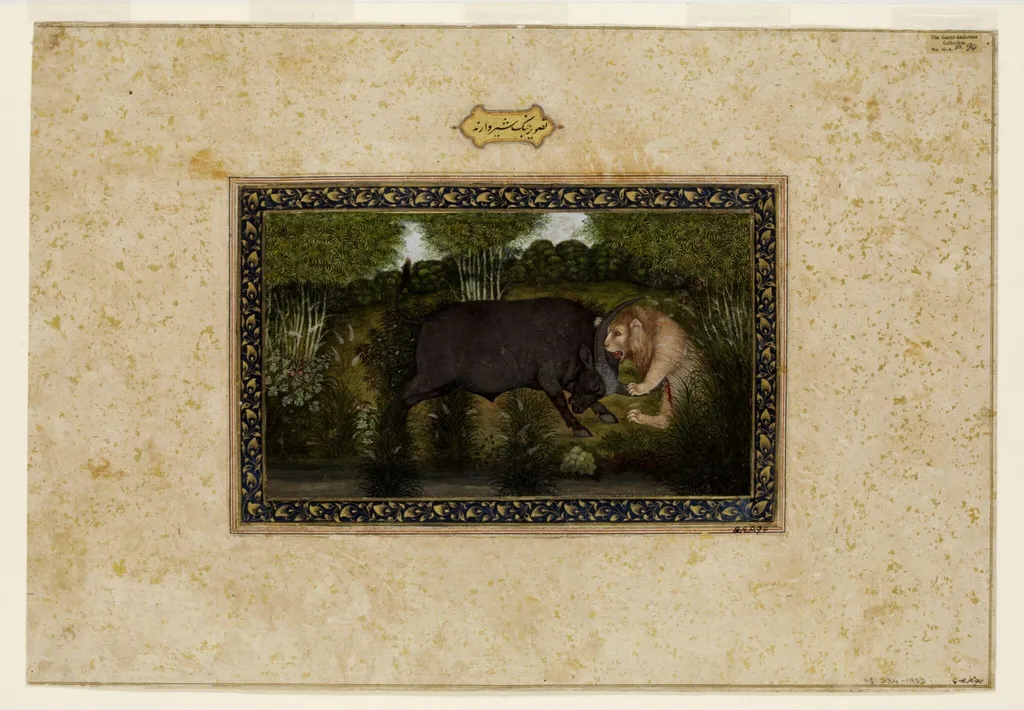
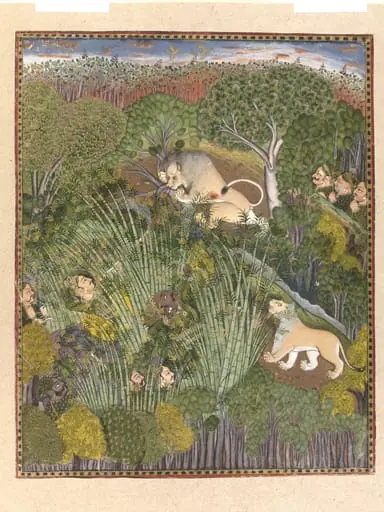
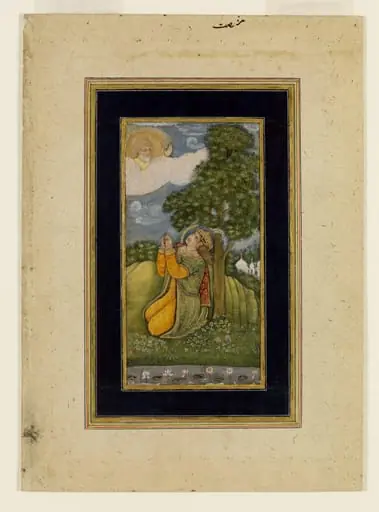
Untitled is a paint painting by the Mughal Painting artist Mihr Chand. It dates from 1760 and is held in the collection of the Victoria and Albert Museum.
About this work
Overview
The composition is contained within a dark, decorative border, typical of Mughal-influenced Indian manuscript painting.
This opaque watercolor on paper, dated 1760, is attributed to the artist Mihr Chand. It portrays a moment of predatory tension in a natural setting, with a tiger poised above a group of sheep. The composition is contained within a dark, decorative border, typical of Mughal-influenced Indian manuscript painting. The scene is rendered with deliberate focus on the animals, set against a dense woodland backdrop.
Subject & Meaning
The painting captures the instinctual violence of the wild, centering on the tiger’s imminent strike and the sheep’s clustered fear. Rather than myth or allegory, it presents a direct observation of nature’s hierarchy. The absence of human figures emphasizes the autonomy of the animal world, suggesting a contemplative interest in predator-prey dynamics as a subject worthy of artistic attention.
Technique & Style
Mihr Chand employed opaque watercolor with precise brushwork to define fur, foliage, and facial expressions. Deep greens and earthy browns establish the forest, while the tiger’s golden coat contrasts vividly, drawing the eye. The sheep’s postures and wide eyes convey anxiety through subtle modeling. The ornate border frames the scene like a miniature tableau, reflecting the tradition of courtly illustration.
History & Provenance
Created in northern India during the mid-18th century, the work likely originated in a royal atelier influenced by Mughal aesthetics. Though its early ownership is unrecorded, it aligns with a broader trend of naturalistic animal studies produced for elite patrons. Its survival suggests it was valued as a discrete artwork, not merely a manuscript illustration.
Context
This piece emerged during a period when Indian painters increasingly turned to secular and natural subjects, blending indigenous techniques with Persian and European influences. While religious and courtly themes dominated, works like this reflect a growing curiosity in depicting wildlife with psychological nuance, possibly inspired by direct observation or imported naturalist imagery.
Legacy
Mihr Chand’s painting contributes to a lesser-known strand of Indian art that prioritized realism in animal portraiture. It stands as an example of how regional studios adapted courtly traditions to explore the natural world with emotional depth. Though not widely exhibited, it remains a significant reference in studies of 18th-century Indian miniature painting.
Artist & collection
Artist
A Delhi-based miniaturist in the late 1700s, Mihr Chand painted delicate portraits and court scenes on paper the size of playing cards.

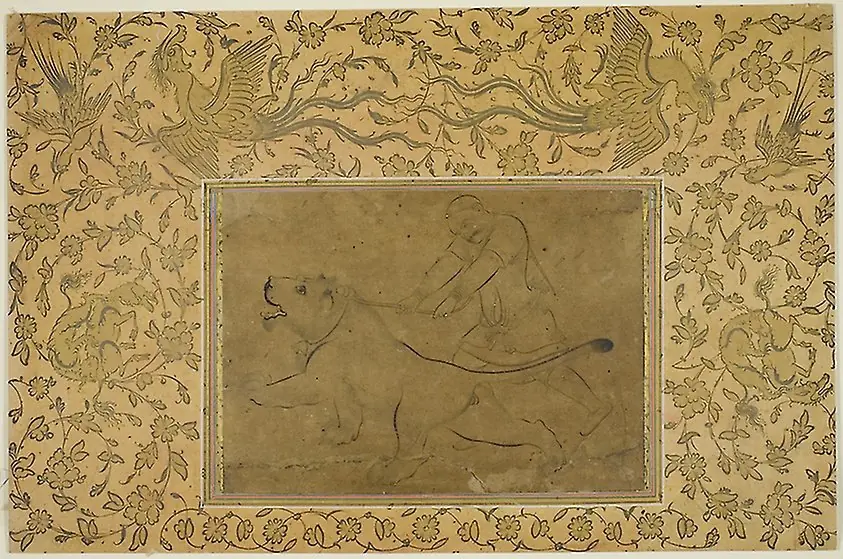 The Lion Tamer
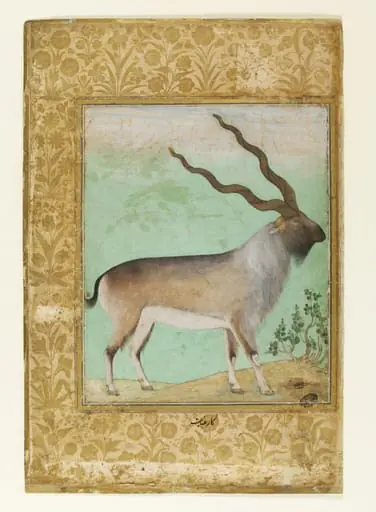 Untitled
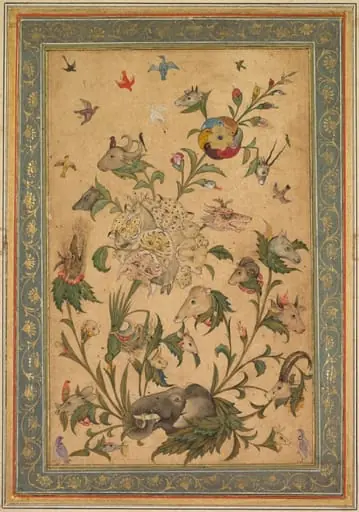 A floral fantasy of animals and birds (Waq-waq)
 Raja Durjan Sal of Kota
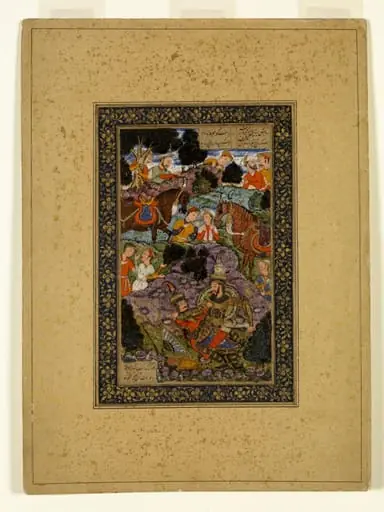 Rustam and Sohrab
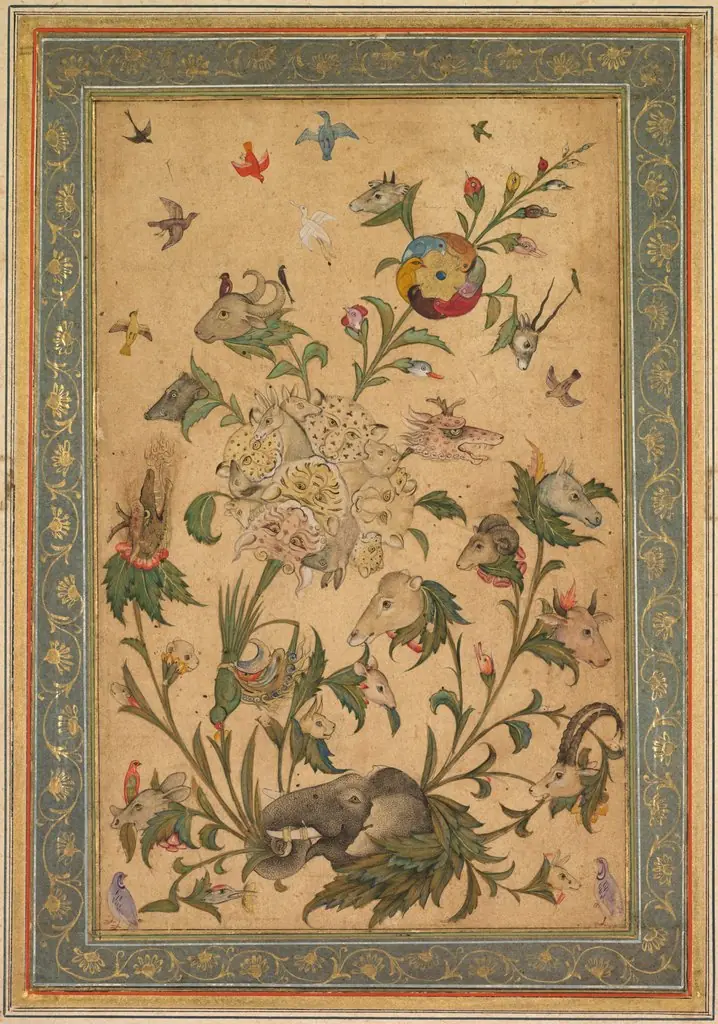 A floral fantasy of animals and birds (Waq-waq)
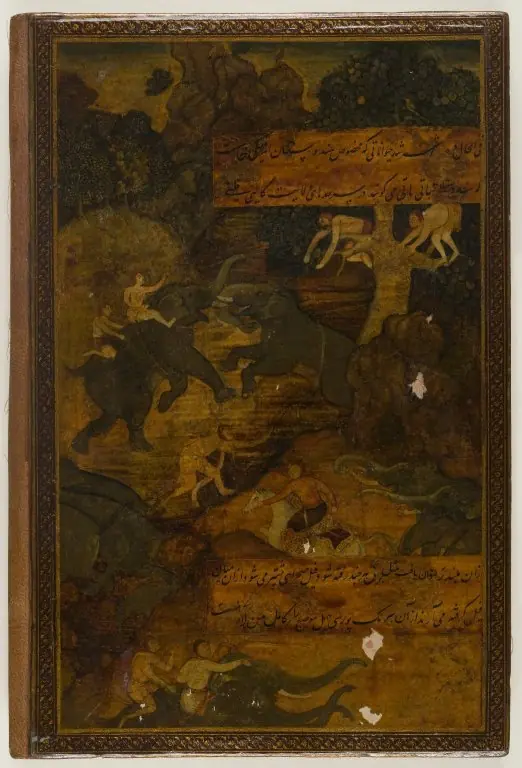 Elephant Hunt
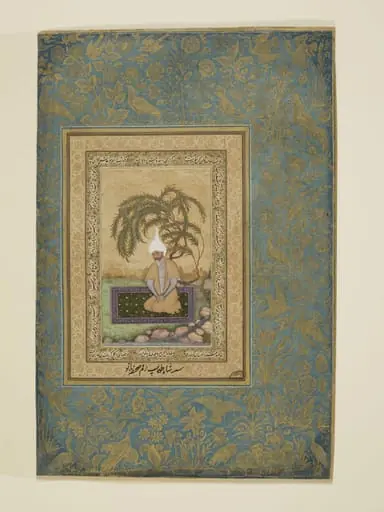 Shah Tahmasp of Iran
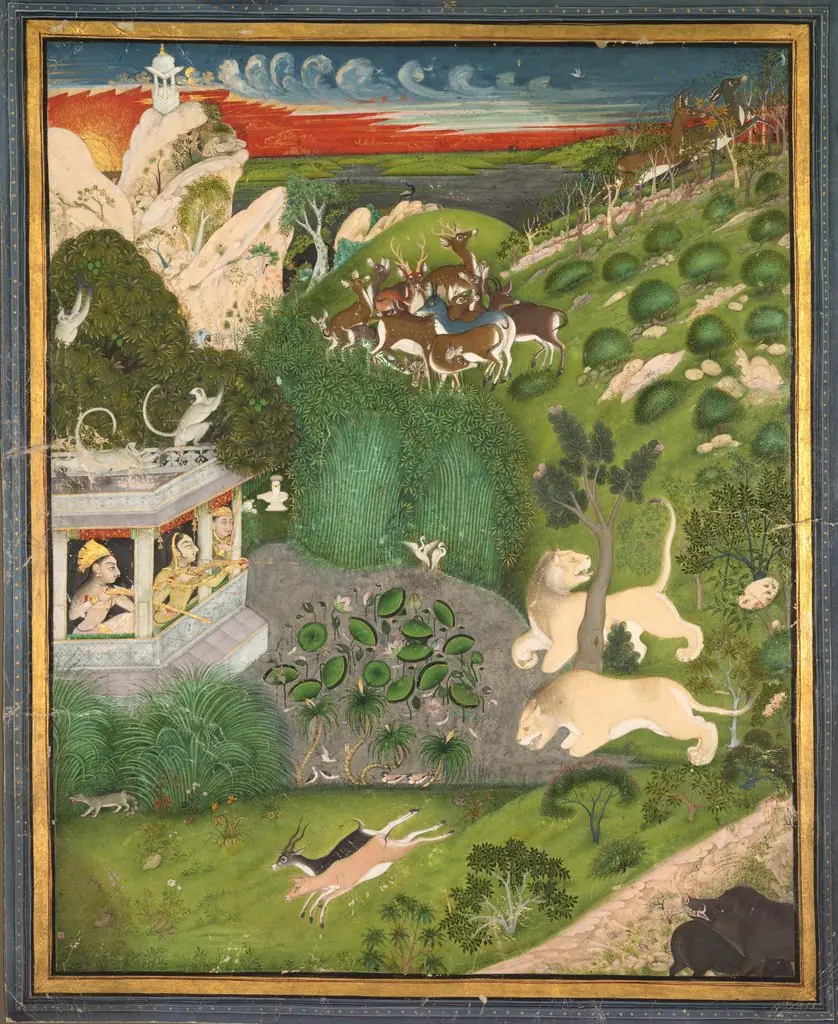 Royal women shooting from a pavilion
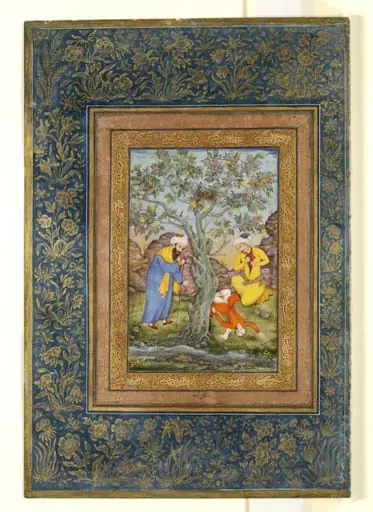 Khwaja Jahan
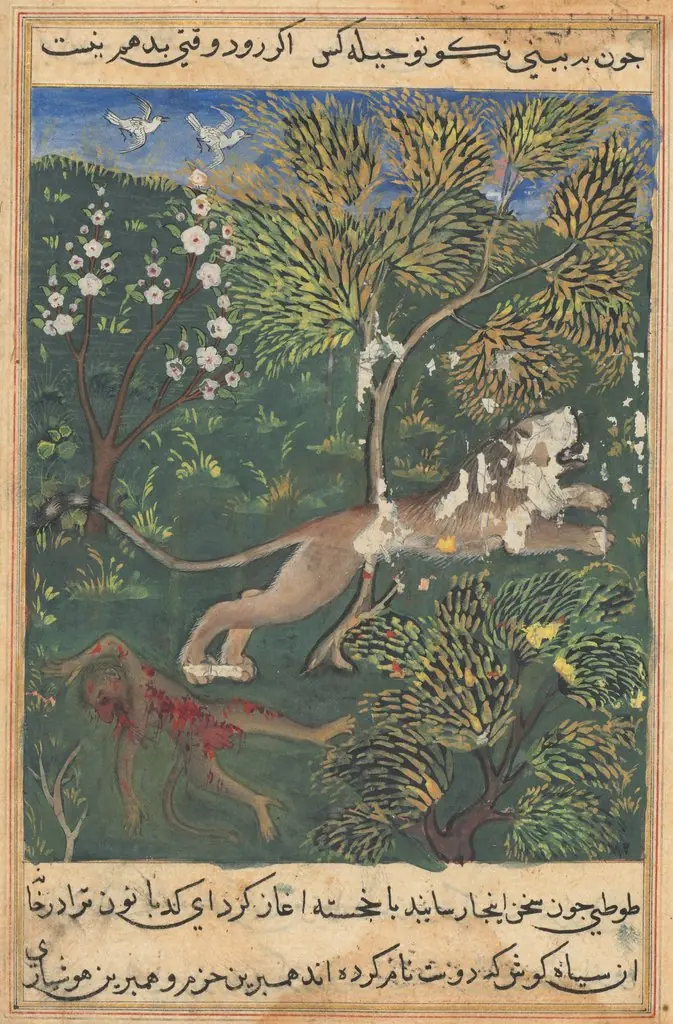 The lion, suspecting treachery on the part of the monkey, slays him and flees, from a Tuti-nama (Tales of a Parrot): Twenty-ninth Night
 Jehovah