Artwork
Rustam and Sohrab
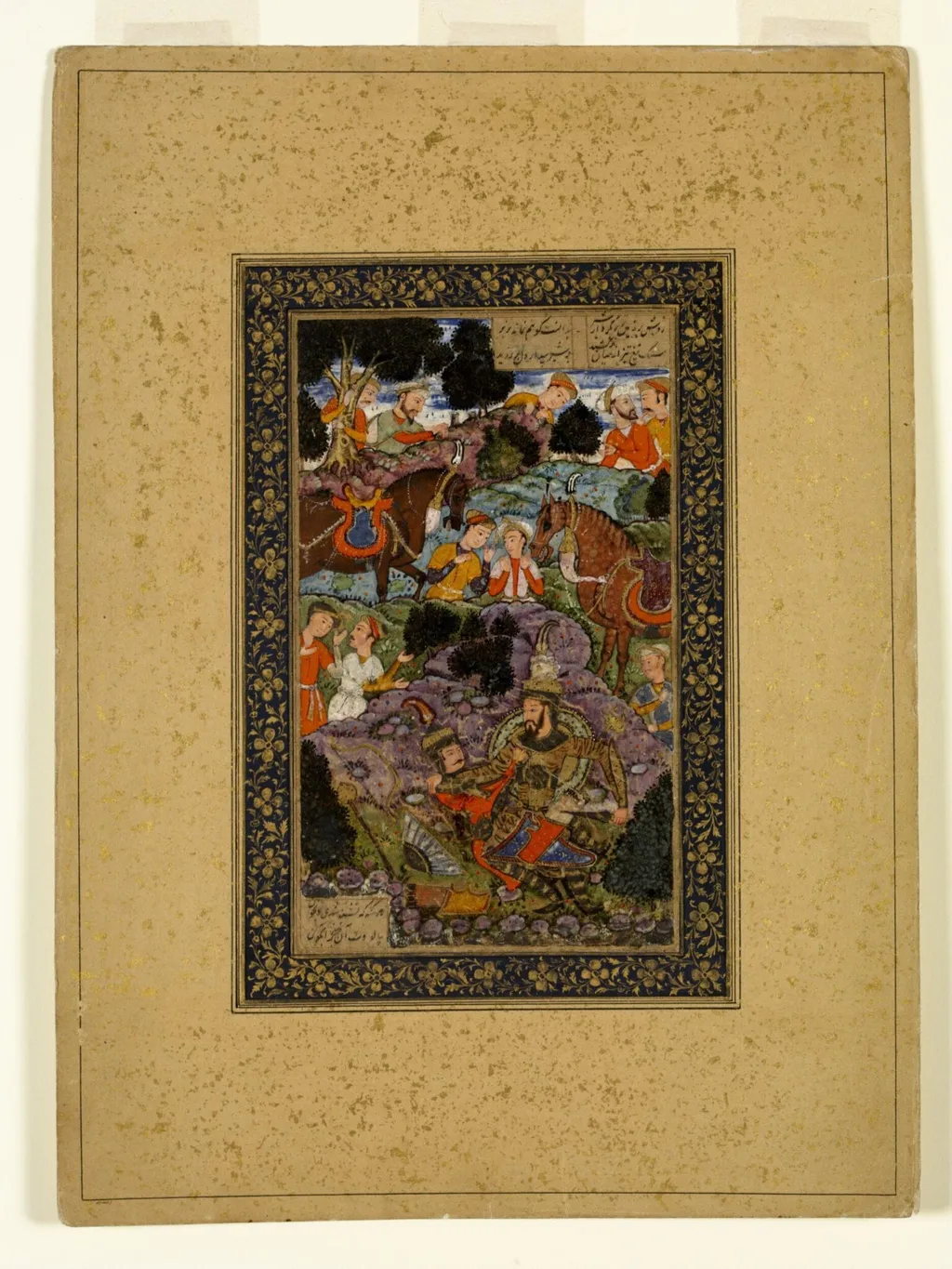
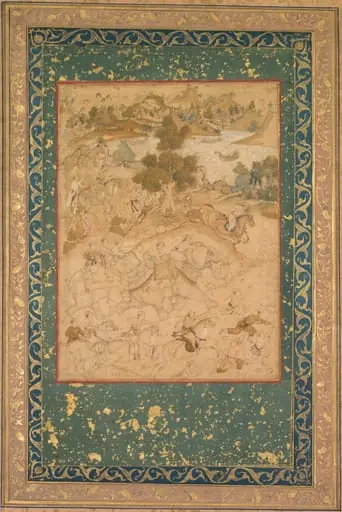
Rustam and Sohrab is a paint painting by Unknown. It dates from 1550 and is held in the collection of the Victoria and Albert Museum. This work is an opaque watercolor on paper dating from around 1550.
About this work
Overview
This work is an opaque watercolor on paper dating from around 1550. It serves as an illustration for the 10th‑century Persian epic Shahnameh, portraying the tragic encounter in which the hero Rustam slays his own son, Sohrab, unaware of their kinship.
Subject & Meaning
The composition captures the climactic moment of the duel between Rustam and Sohrab, a pivotal episode in the Shahnameh that explores themes of fate, identity, and the devastating consequences of war. The narrative tension is heightened by the surrounding chaos of battle.
Technique & Style
Executed in vivid opaque watercolor, the artist employs a palette of reds, blues, and greens to delineate flowing robes, armor, and the tumultuous battlefield. Intricate black border patterns frame the scene, while the background features stylized trees, hills, and a foreboding sky, all rendered with a decorative yet narrative focus.
History & Provenance
The piece was originally created as a manuscript illustration for a patron identified as Prince Salim. Its survival as a standalone watercolor suggests it was either detached from a larger codex or produced as a separate devotional or courtly artwork.
Context
Illustrations like this were common in Persian courtly art, where epic poetry was visualized to reinforce cultural values and royal lineage. The depiction of Rustam’s tragic mistake aligns with the Shahnameh’s role as a moral and historical compendium for the elite.
Artist & collection

 Domestic Scene
 Giacomo and Cardinal Marco, investing Andrea, Abbot of San Zeno, with his Benefice
 The Nymph of Fontainebleau
 Portrait of a Woman
 Madonna and Child with Saints in the Enclosed Garden
 Venus and Minerva
 Family Group of Four on Sofa
 Wall painting from Room H of the Villa of P. Fannius Synistor at Boscoreale
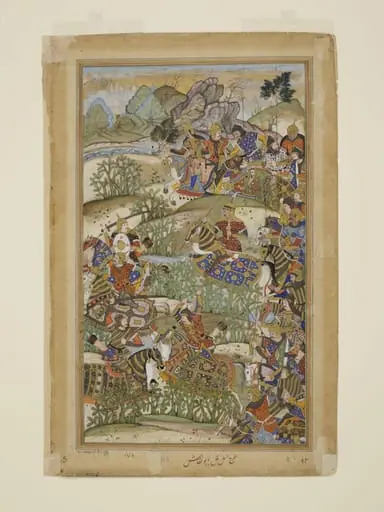 Battle of Sarnal in Gujarat
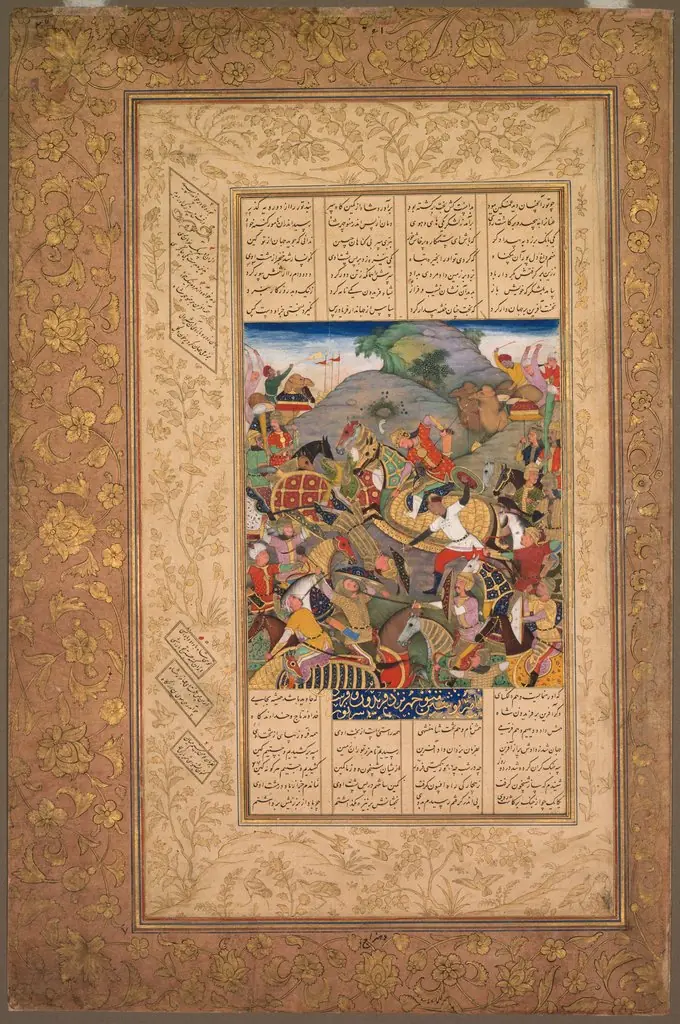 Battle between Manuchihr and Tur, from a Shah-nama (Book of Kings) of Firdausi (Persian, c. 934–1020)
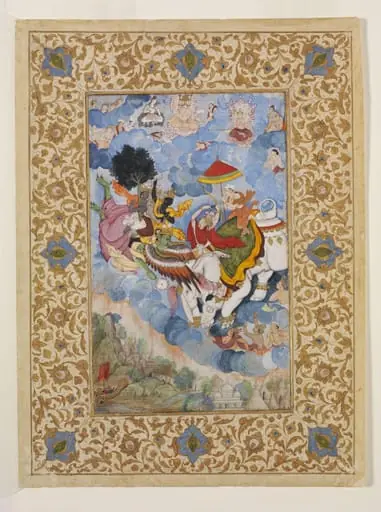 Krishna and Indra
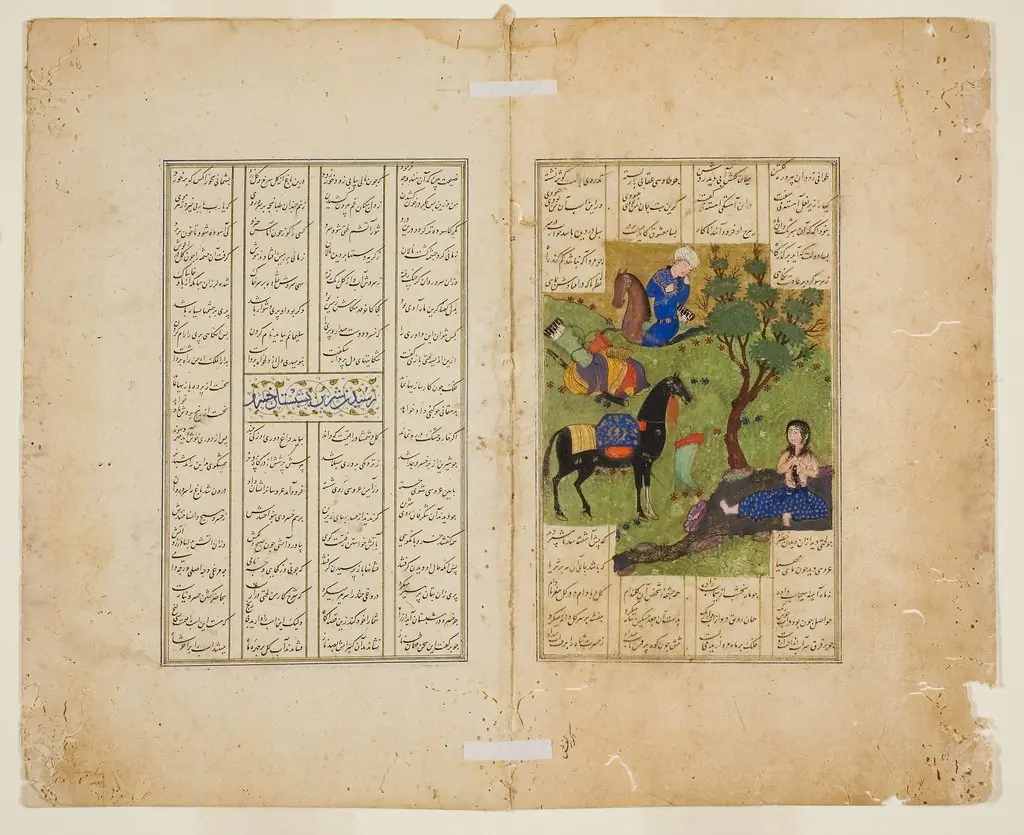 Khusrau Gazing at Shirin, from a copy of the Khamsa of Nizami
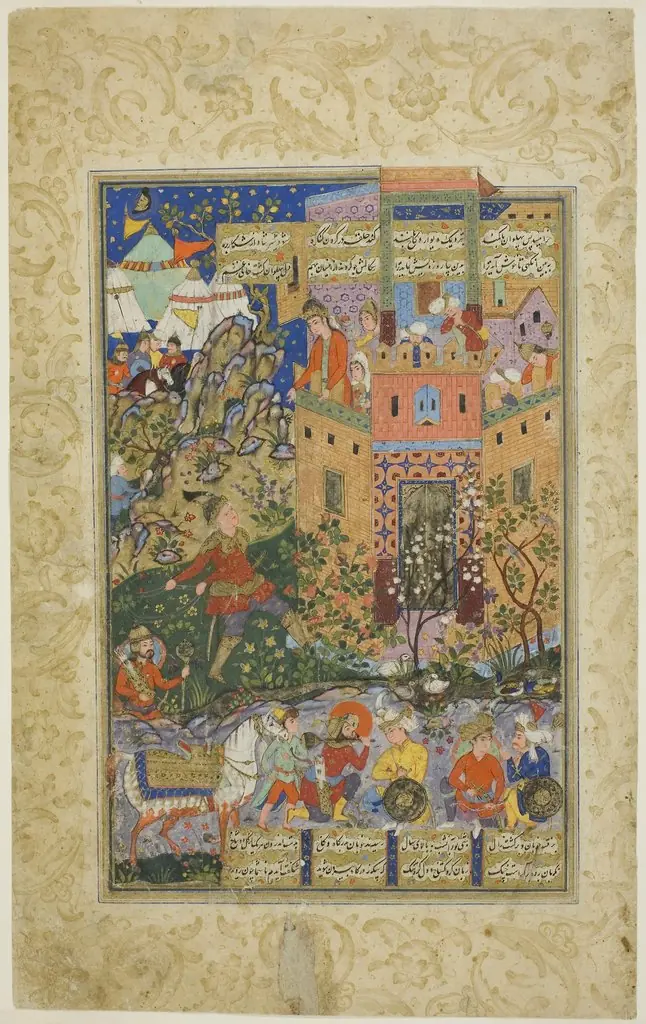 Zal Climbing to Rudaba, page from a copy of the Shahnama of Firdausi
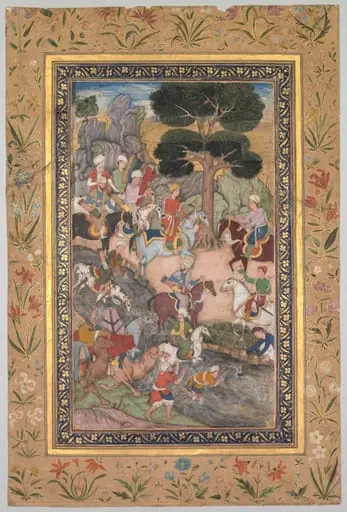 Babur meeting with Sultan Ali Mirza at the Kohik River, from a Babur-nama (Memoirs of Babur)
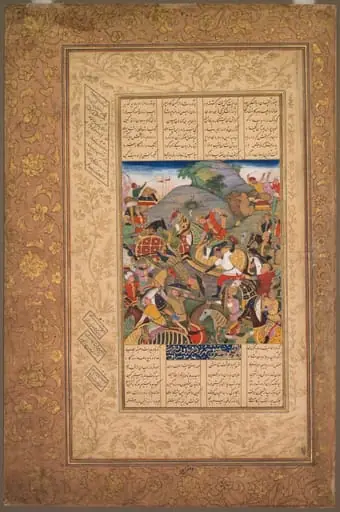 Battle between Manuchihr and Tur, from a Shah-nama (Book of Kings) of Firdausi (Persian, c. 934–1020)
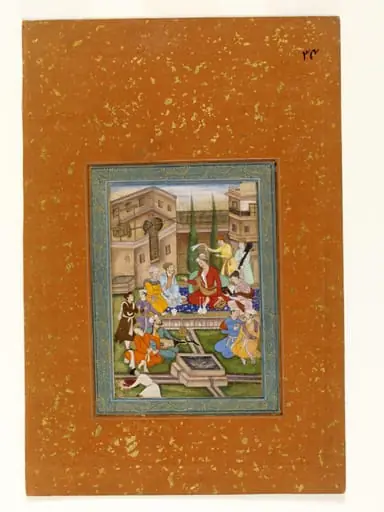 Akbar
Akbar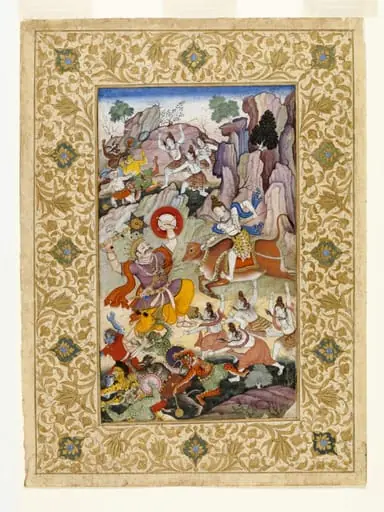 Shiva and Andhaka
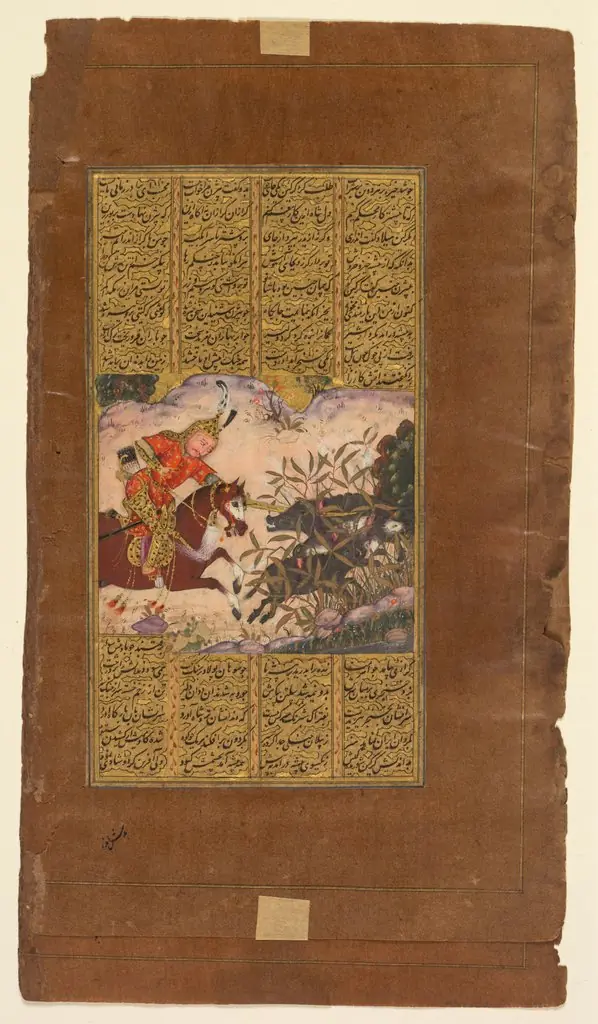 Bijan killing the wild boars of Irman, from a Shah-nama (Book of Kings) of Firdausi (Persian, about 934–1020) (verso)
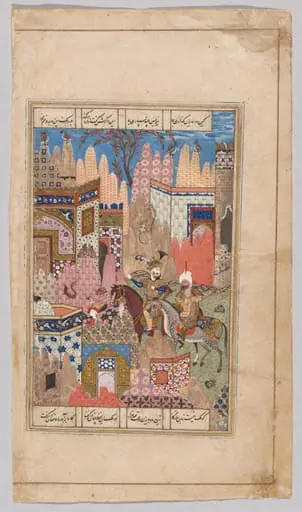 King Anushirwan and the Owls, from the Khamsa of Nizami
 Akbar supervising the capture of wild elephants at Malwa in 1564, painting 90 from an Akbar-nama (Book of Akbar) of Abu’l Fazl (Indian 1551–1602)