Artwork
Jehovah
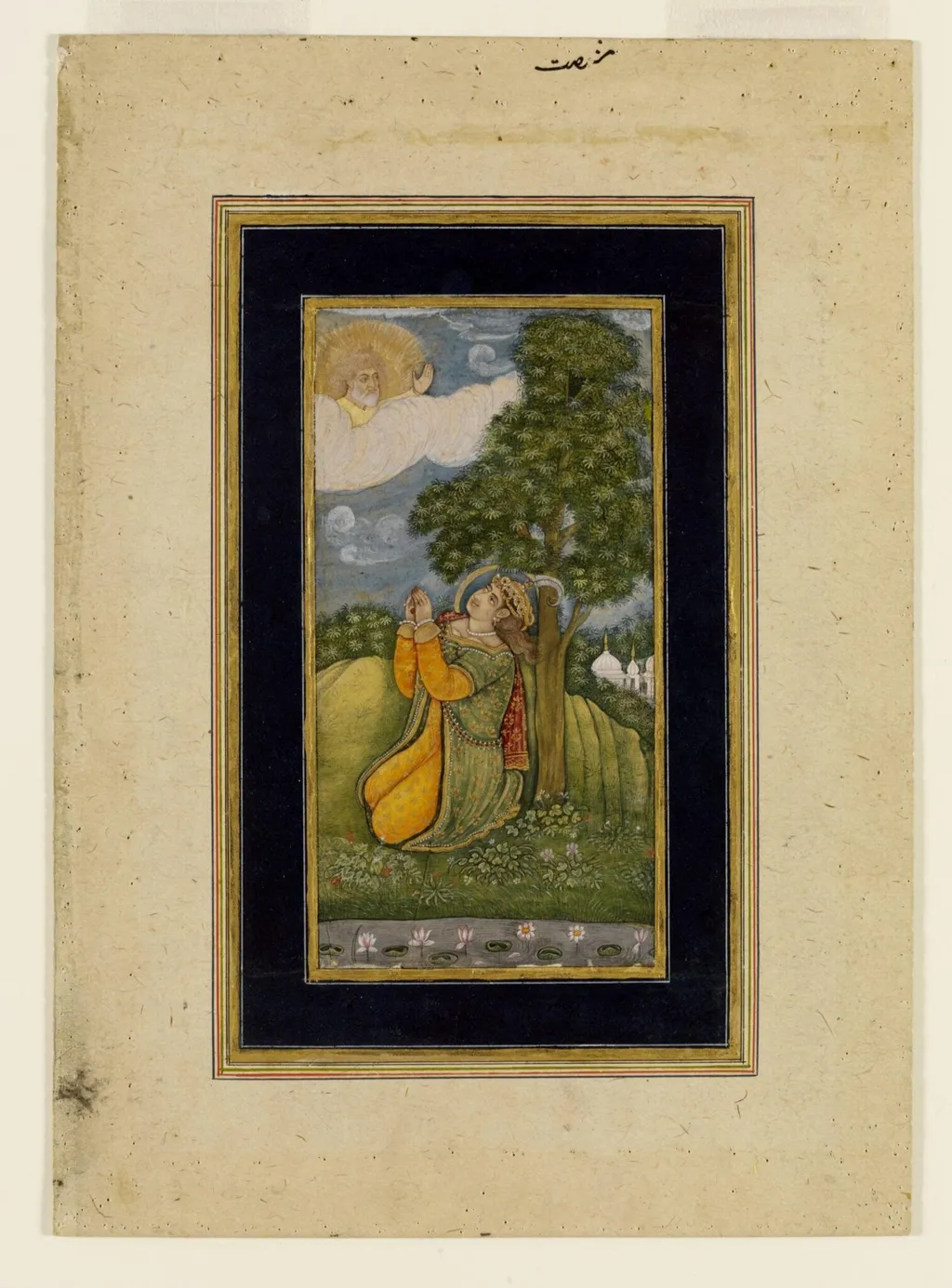
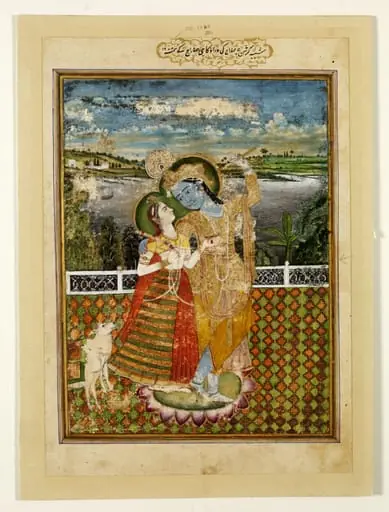
Jehovah is a paint painting by the Rococo painting artist Unknown. It dates from 1760 and is held in the collection of the Victoria and Albert Museum. Created in 1760, this work is an opaque watercolour and gold painting on paper, typical of Mughal-era devotional art.
About this work
Overview
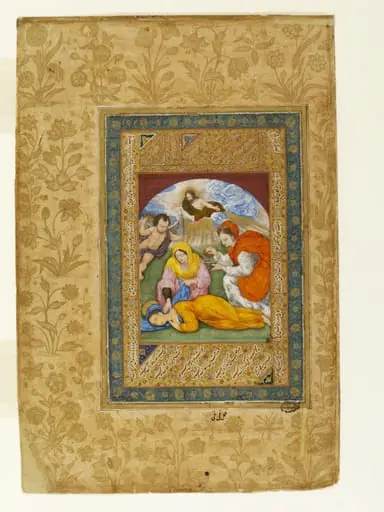
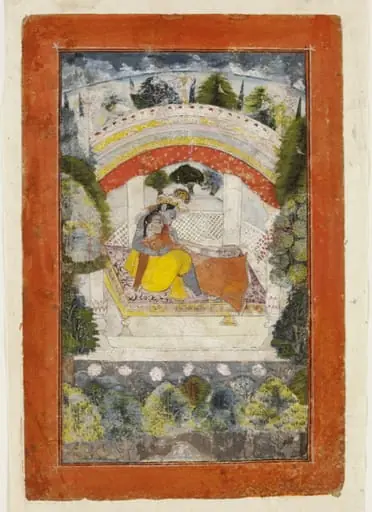
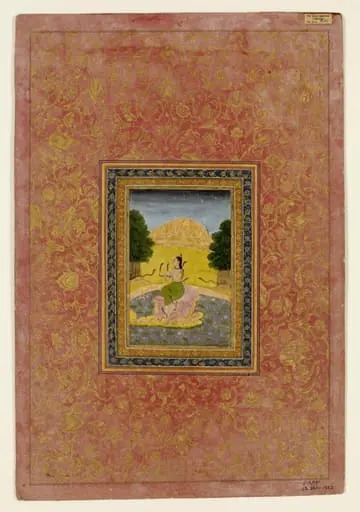
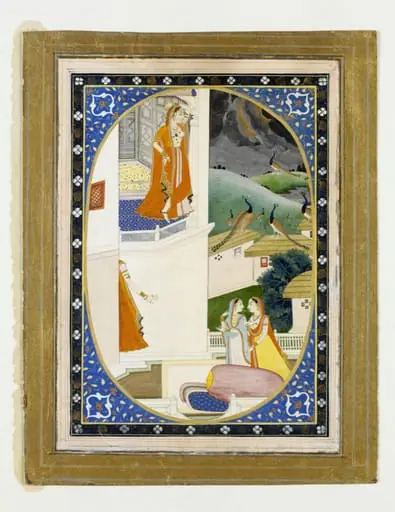
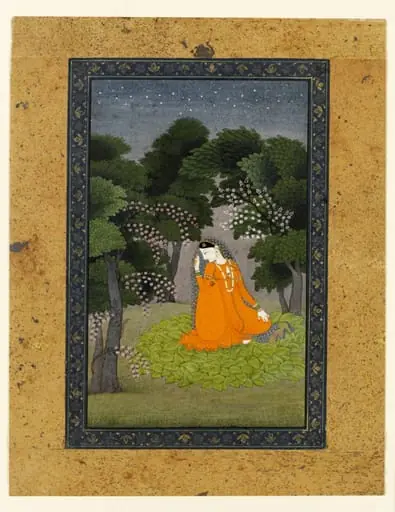
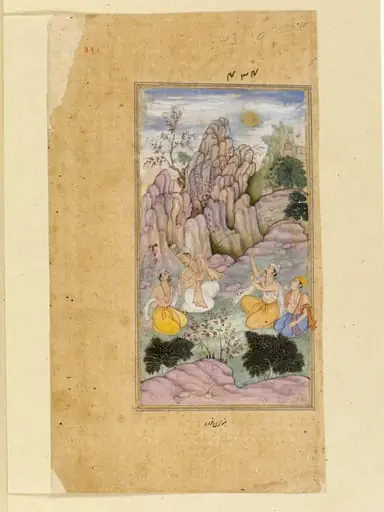
Created in 1760, this work is an opaque watercolour and gold painting on paper, typical of Mughal-era devotional art. It presents a celestial vision in which a divine figure descends to a kneeling devotee. The composition is contained within a dark frame edged with a thin gold line, enhancing the luminosity of the figures and setting the scene apart as sacred space.
Subject & Meaning
The central figure, adorned with a crown and tall aigret, kneels in prayer beneath a tree, hands clasped in devotion. Above, a winged being with flowing hair hovers in the clouds, its gesture suggesting divine presence. Though labeled 'Jehovah,' the imagery reflects a syncretic visual language, blending Islamic, Hindu, and Christian iconographic elements common in late Mughal court art.
Technique & Style
Delicate brushwork defines the clouds, foliage, and the shallow pool at the base, where lotus blooms echo spiritual purity.
The artist employed opaque watercolour with meticulous gold detailing to render light and texture. The figures emerge vividly against a dark border, their bright robes and radiant halos contrasting with the muted sky. Delicate brushwork defines the clouds, foliage, and the shallow pool at the base, where lotus blooms echo spiritual purity. The style merges Persian miniature traditions with regional Indian aesthetics.
History & Provenance
This painting likely originated in a Mughal or post-Mughal atelier, possibly commissioned for private devotion or courtly collection. Its fusion of religious symbols suggests it was made during a period of cultural exchange in northern India. It entered the Victoria and Albert Museum’s collection through 19th-century acquisitions of Indian artworks, though its exact early provenance remains undocumented.
Context
In the 18th century, Mughal artistic traditions evolved amid political fragmentation, leading to hybrid styles that incorporated diverse religious motifs. This work reflects a trend where Hindu, Islamic, and Christian imagery coexisted in visual narratives, particularly in regions where royal patrons supported pluralistic artistic expression. The inclusion of mosques in the background situates the scene within an Indian landscape, not a biblical one.
Legacy
The painting stands as an example of how devotional art in late Mughal India adapted foreign iconography into local visual vocabularies. Its preservation in the Victoria and Albert Museum allows continued study of cross-cultural religious representation. Though not widely known outside specialist circles, it contributes to understanding the fluidity of sacred imagery in colonial-era South Asia.
Artist & collection

 Domestic Scene
 Giacomo and Cardinal Marco, investing Andrea, Abbot of San Zeno, with his Benefice
 The Nymph of Fontainebleau
 Portrait of a Woman
 Madonna and Child with Saints in the Enclosed Garden
 Venus and Minerva
 Family Group of Four on Sofa
 Wall painting from Room H of the Villa of P. Fannius Synistor at Boscoreale