Artwork
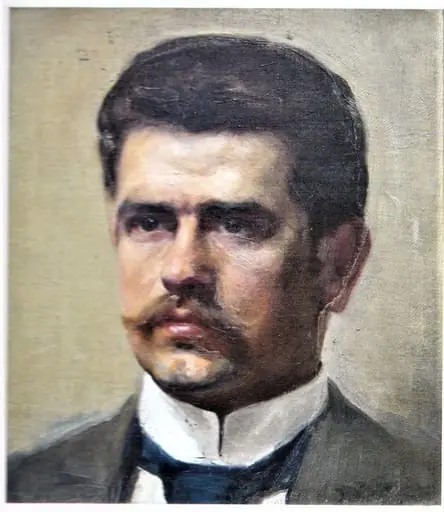
Portretul arhitectului Ziegfried Kofsinski
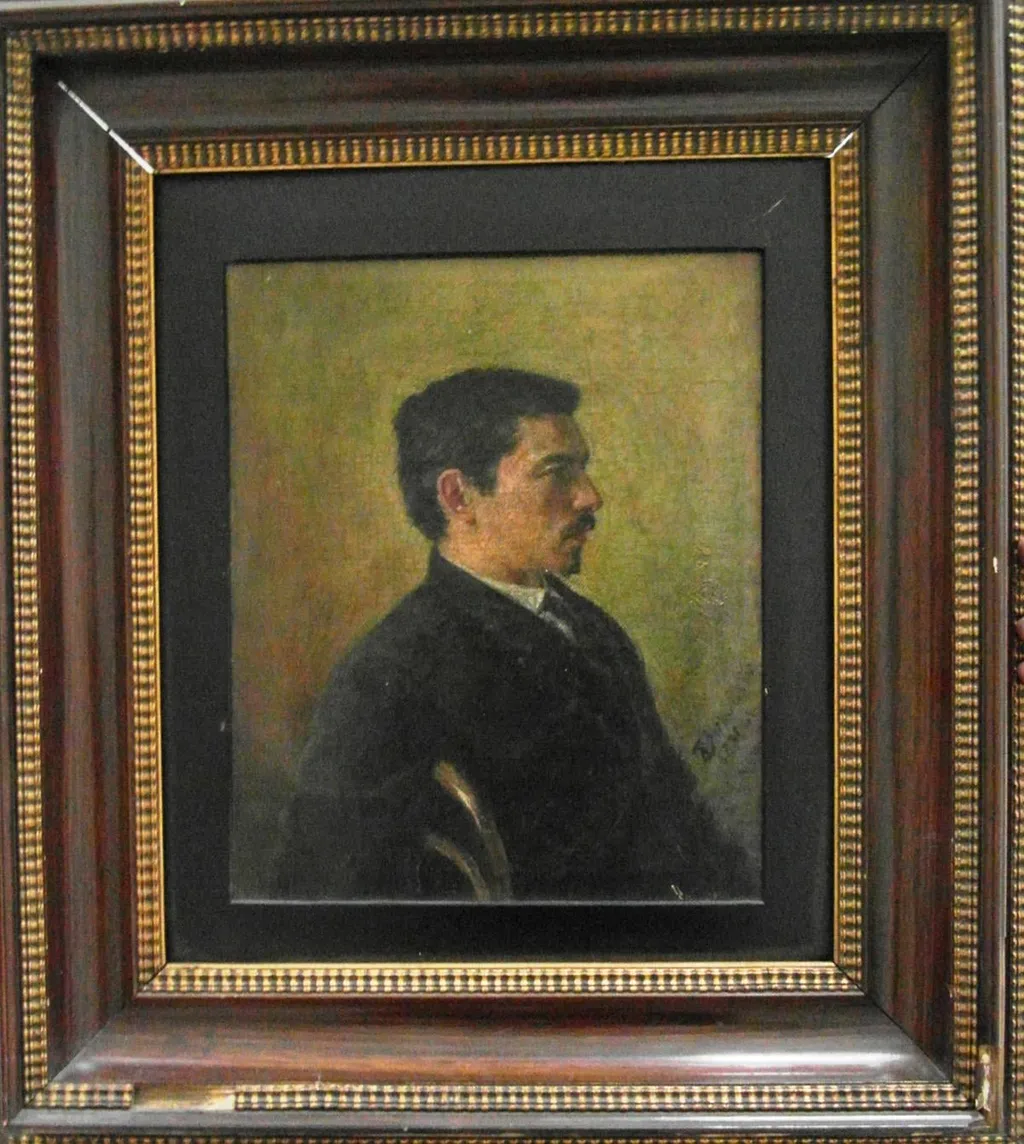
Portretul arhitectului Ziegfried Kofsinski is a print by the Impressionist artist Joseph Mikulsky. It dates from 1881 and is held in the collection of the National Museum of Romanian History.
About this work
Overview
Painted in 1881 by Joseph Mikulsky, this portrait depicts Ziegfried Kofsinski, an architect, rendered in a loose, atmospheric style.
Painted in 1881 by Joseph Mikulsky, this portrait depicts Ziegfried Kofsinski, an architect, rendered in a loose, atmospheric style. The subject is shown in a dark suit with a white collar, seated against a muted greenish-yellow background. The brushwork is deliberately unfocused, avoiding sharp definition to evoke a sense of immediacy and natural light, characteristic of late 19th-century tendencies toward observational realism.
Subject & Meaning
Ziegfried Kofsinski is portrayed with a composed, introspective expression, his gaze directed away from the viewer, suggesting contemplation rather than performance. His attire—formal yet unadorned—reflects his professional identity as an architect. The absence of symbolic objects or architectural elements shifts focus to his presence, emphasizing character over status or achievement.
Technique & Style
Mikulsky employed broad, fluid brushstrokes to model form and suggest texture without precise detail. The background and clothing are rendered with soft edges, allowing light to appear diffused rather than sharply defined. This approach, while not strictly Impressionist, shares affinities with the movement’s interest in optical perception and the fleeting effects of light, prioritizing mood over finish.
History & Provenance
The painting was completed in 1881 and has remained in private collections since its creation, with no documented public exhibition history. Its survival in relatively unchanged condition suggests careful preservation, though its origin as a commissioned portrait and the circumstances of its acquisition remain unrecorded in public archives.
Context
In the early 1880s, Central European portraiture was shifting from rigid academic conventions toward more expressive, painterly methods. Mikulsky’s handling of light and form aligns with broader trends among artists seeking to capture psychological presence through gesture and atmosphere, rather than through formal pose or elaborate detail.
Legacy
Though not widely known outside regional circles, the portrait exemplifies a quiet transition in portraiture during the late 19th century—away from idealized representation toward a more intimate, observational mode. Its restrained technique and emotional subtlety reflect a broader cultural interest in individuality expressed through understated visual language.
Artist & collection
Artist
Joseph Mikulsky knew faces the way a tailor knows fabric—inside out. While everyone else in 1881 painted velvet and pearls, he turned the architect Ziegfried Kofsinski into a puzzle of flat planes and bold lines. The…

 Portret de bărbat
 Nicolae Kretzulescu (prim ministru al Principatelor Unite, ministru de interne)
 Tânăr din familia Cantacuzino
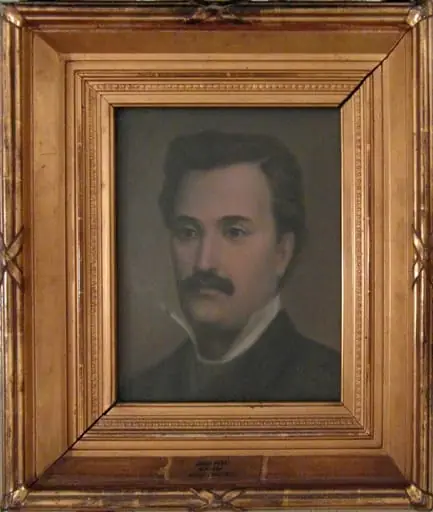 Mihai Eminescu
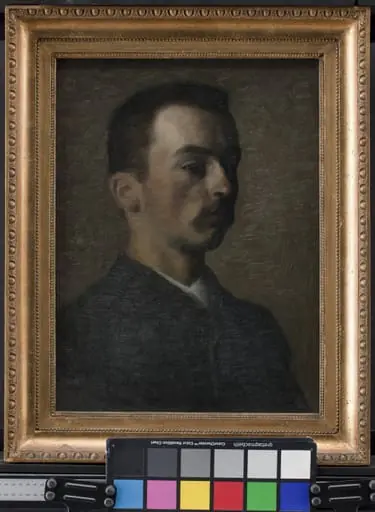 Self-Portrait
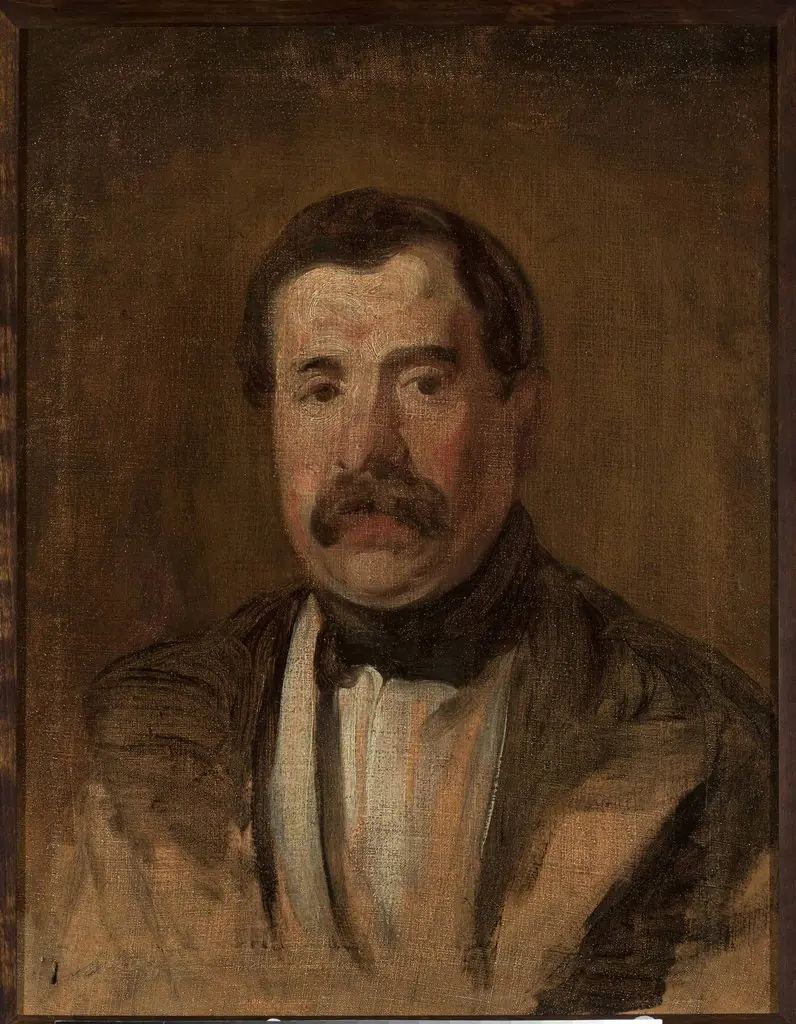 Portrait of Maksymilian Oborski
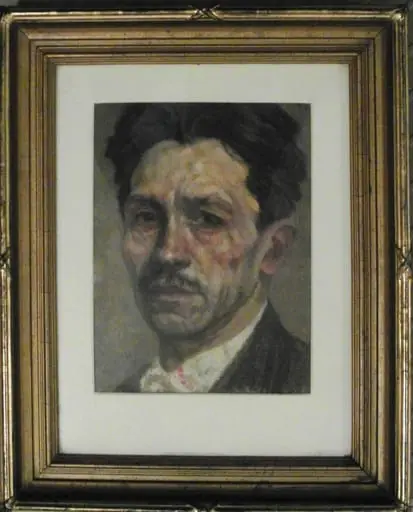 Autoportret - Castaldi, Alfonso
 Προσωπογραφία του Αλεξάνδρου Μαυροκορδάτου
 Προσωπογραφία γυναίκας ώριμης καθιστής
 Romașcu
 Portrait of Aleksander Odrowąż Bębnowski
 Autoportret