Artwork
Trompe l'Oeil: Prints with Londonio's Calling Card, Using Original Copperplates
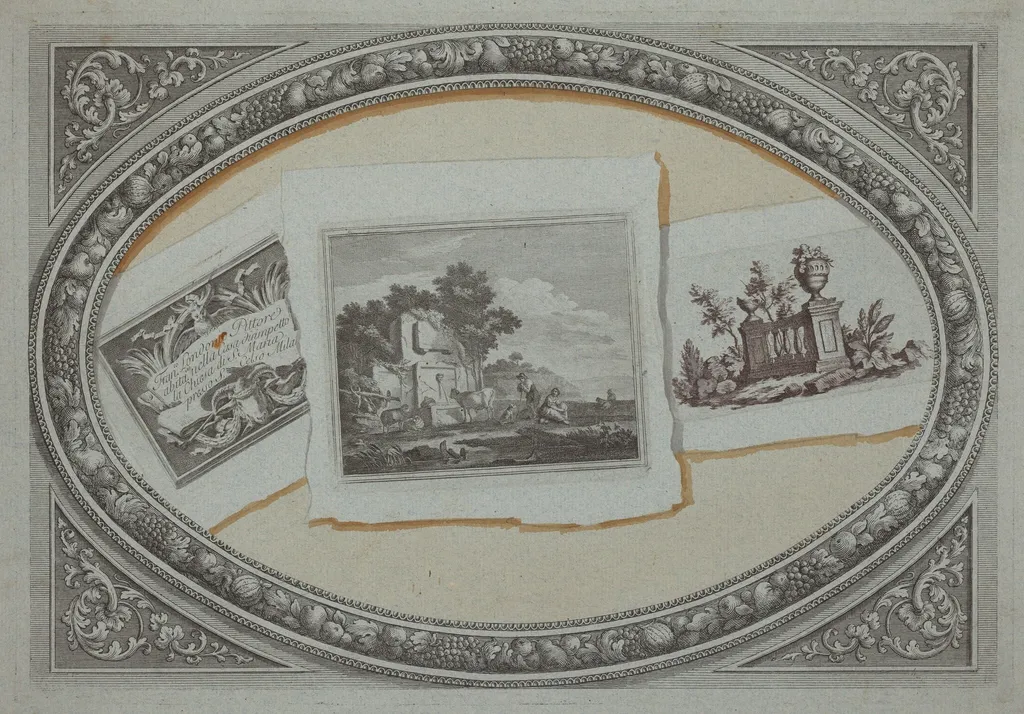
Trompe l'Oeil: Prints with Londonio's Calling Card, Using Original Copperplates is a watercolor print by the Romanticist artist Milanese 18th Century. It dates from 1790 and is held in the collection of the National Gallery of Art. This print is an example of trompe l'oeil, a technique that creates an illusion of three-dimensional reality.
About this work
Overview
This print is an example of trompe l'oeil, a technique that creates an illusion of three-dimensional reality. It is an oval-framed composition featuring three smaller scenes on a simulated wall.
Subject & Meaning
The three scenes depict distinct subjects: a calling card with a horse-drawn carriage, a landscape with a tomb and figures by a river, and a formal garden with a vase and columns. The juxtaposition of these scenes may be intended to create a sense of surprise or curiosity.
Technique & Style
The print is executed in etching and engraving, printed in black and brown ink, and enhanced with ochre watercolor on blue laid paper. The use of glazing and watercolor techniques allows for a range of tonal values and subtle color nuances, contributing to the overall illusionistic effect.
Artist & collection

Artist
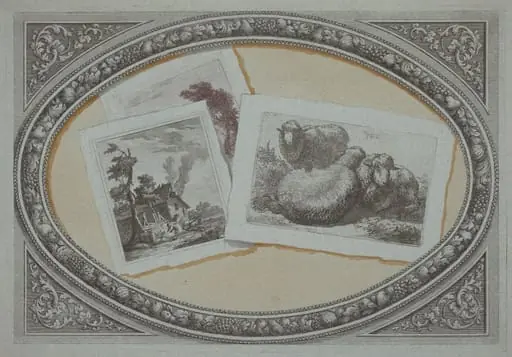
This artist made playful prints that look like real prints. They used copper plates and painted colors on top to trick your eye into seeing depth, sheep, or even a calling card. In *Trompe l'Oeil: Landscapes and Sheep,…

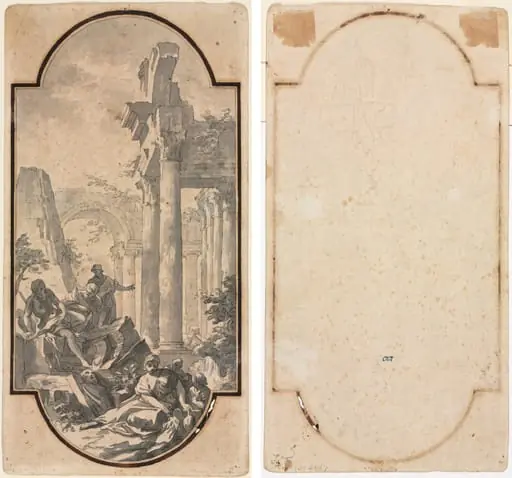 Figures Near the Ruins of a Corinthian Temple (recto); Fragment of an Arch (tracing from recto) (verso)
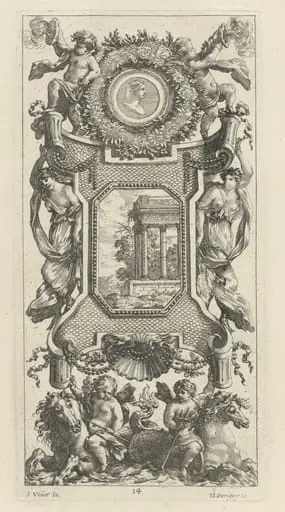 Ornamental Panel Surmounted by a Bust of a Woman and Two Putti with Flaming Trumpets
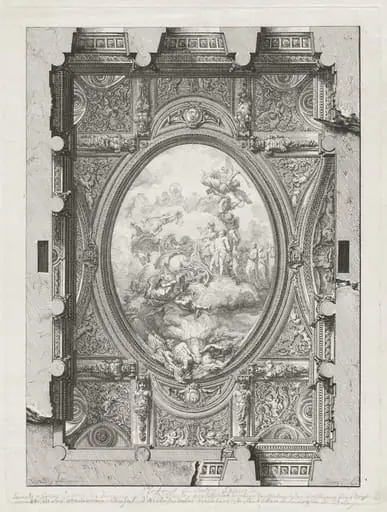 Design for the Ceiling of the Salon of the Palazzo Spinola, Genoa
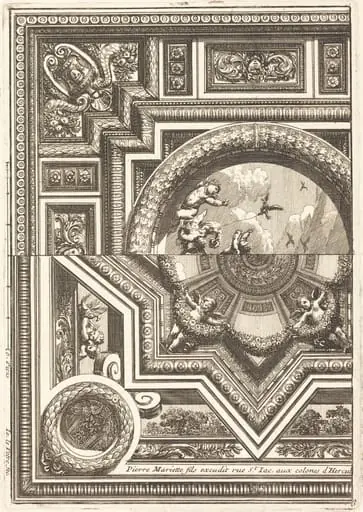 Quarts de plafons
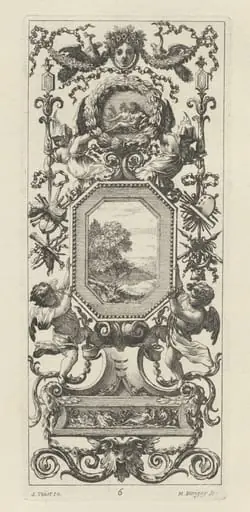 Ornamental Panel Surmounted by the Crowned Head of a Woman and Two Peacocks
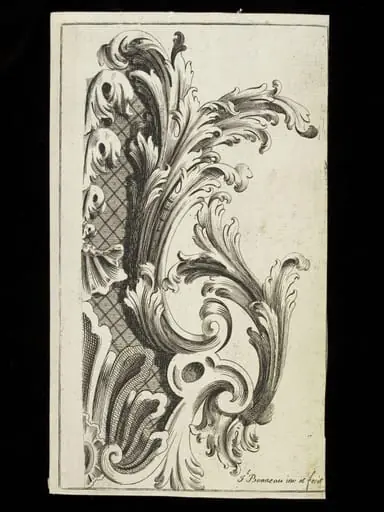 Ornament print by Jacob Bonneau
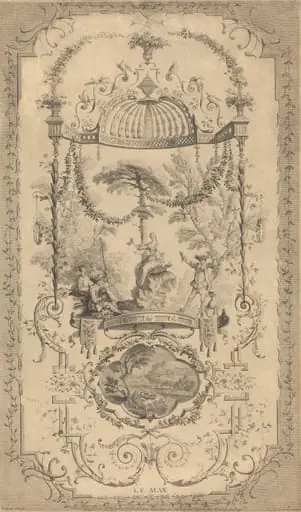 LeMay
LeMay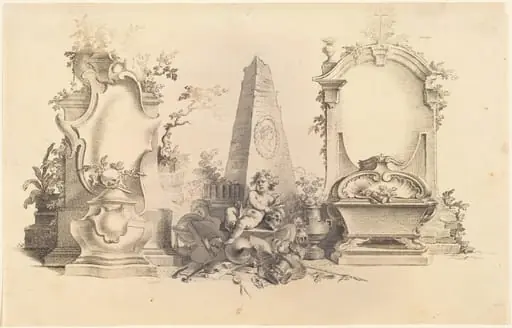 Cartouche Moderne with Emblems of Death
 Allegory of Spring (Allegorie des Frühlings)