Artwork
Trompe l'Oeil: Prints with Maria Teresa, Using Original Copperplates
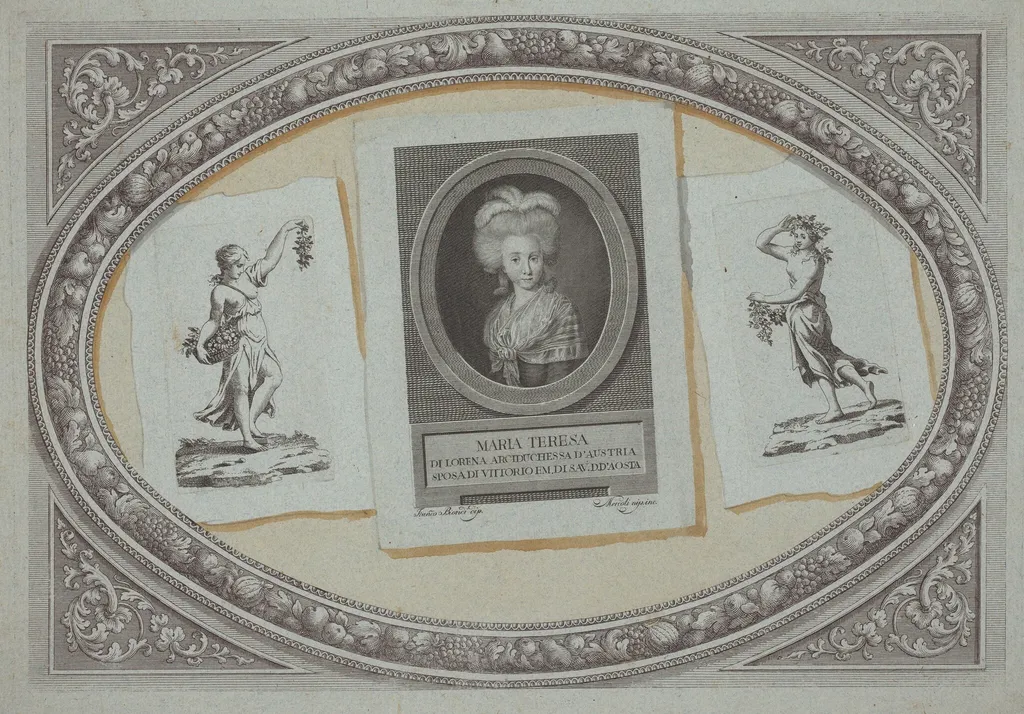
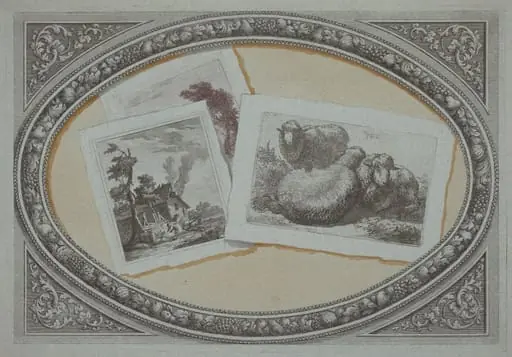
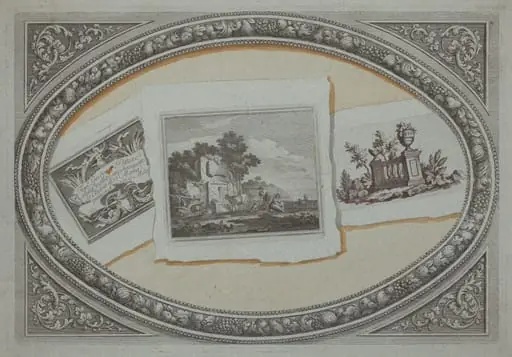
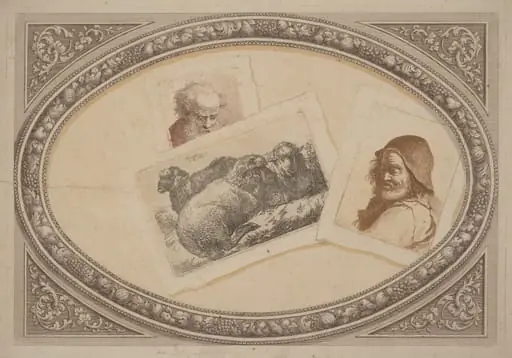
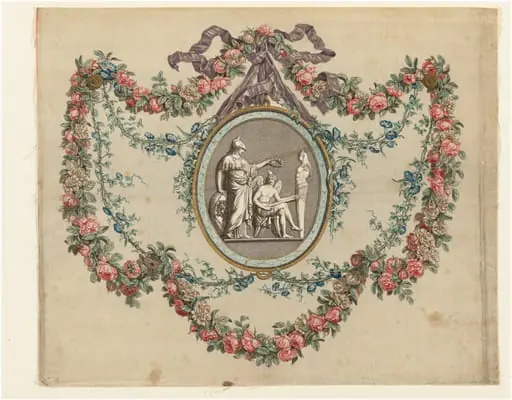
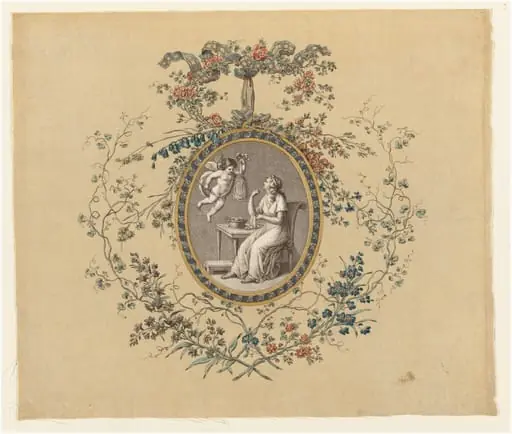
Trompe l'Oeil: Prints with Maria Teresa, Using Original Copperplates is a watercolor print by the Romanticist artist Milanese 18th Century. It dates from 1790 and is held in the collection of the National Gallery of Art. The work is a trompe‑l’oeil print that combines etching and engraving with hand‑applied watercolor.
About this work
Overview
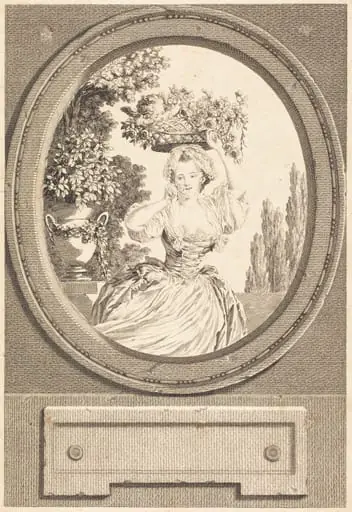
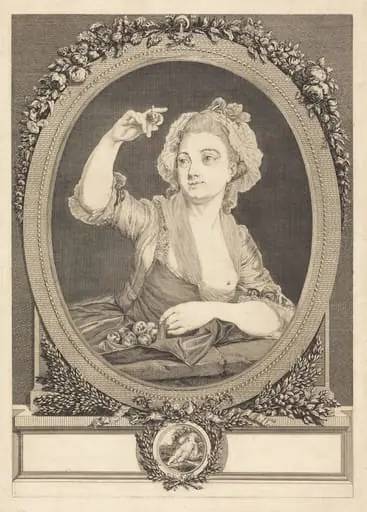
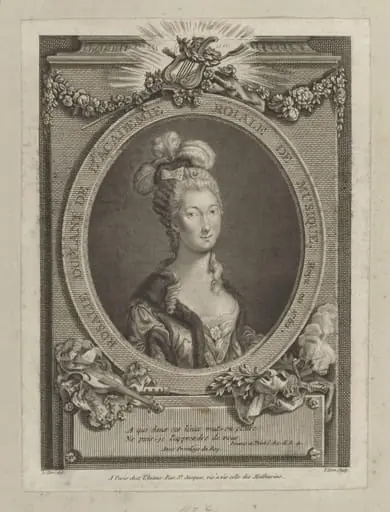
The work is a trompe‑l’oeil print that combines etching and engraving with hand‑applied watercolor. Executed on blue‑toned laid paper, the image presents a central portrait of a woman named Maria Teresa, flanked by two smaller figures rendered as if they were sculptural reliefs. Decorative borders in brown and black frame the composition, giving the impression of a framed picture within a frame.
Subject & Meaning
At the centre, Maria Teresa is depicted in a formal pose, her elaborate coiffure and high collar emphasizing status.
At the centre, Maria Teresa is depicted in a formal pose, her elaborate coiffure and high collar emphasizing status. The accompanying figures, each holding grape clusters or foliage and standing on rock‑like platforms, evoke classical motifs, suggesting themes of abundance and perhaps allegorical references to virtue or fertility. The overall arrangement creates a layered visual narrative that plays with the viewer’s perception of depth.
Technique & Style
The image was produced by first incising lines with etching and engraving tools, then printing the matrix in black and brown inks. After printing, the artist added ochre watercolor washes, glazing the surface to achieve subtle tonal variation against the blue paper. The border’s swirling, carved‑looking lines demonstrate a meticulous hand, while the three‑dimensional illusion of the side figures showcases the trompe‑l’oeil intent.
History & Provenance
Created using original copperplates, the print belongs to a series that explored illusionistic effects in the eighteenth‑century print market. Its specific provenance is not detailed, but the use of blue laid paper and the combination of engraving, etching, and watercolor align it with contemporary practices of producing decorative, collectible prints for affluent patrons.
Artist & collection

Artist
This artist made playful prints that look like real prints. They used copper plates and painted colors on top to trick your eye into seeing depth, sheep, or even a calling card. In *Trompe l'Oeil: Landscapes and Sheep,…