Artwork
Quarts de plafons
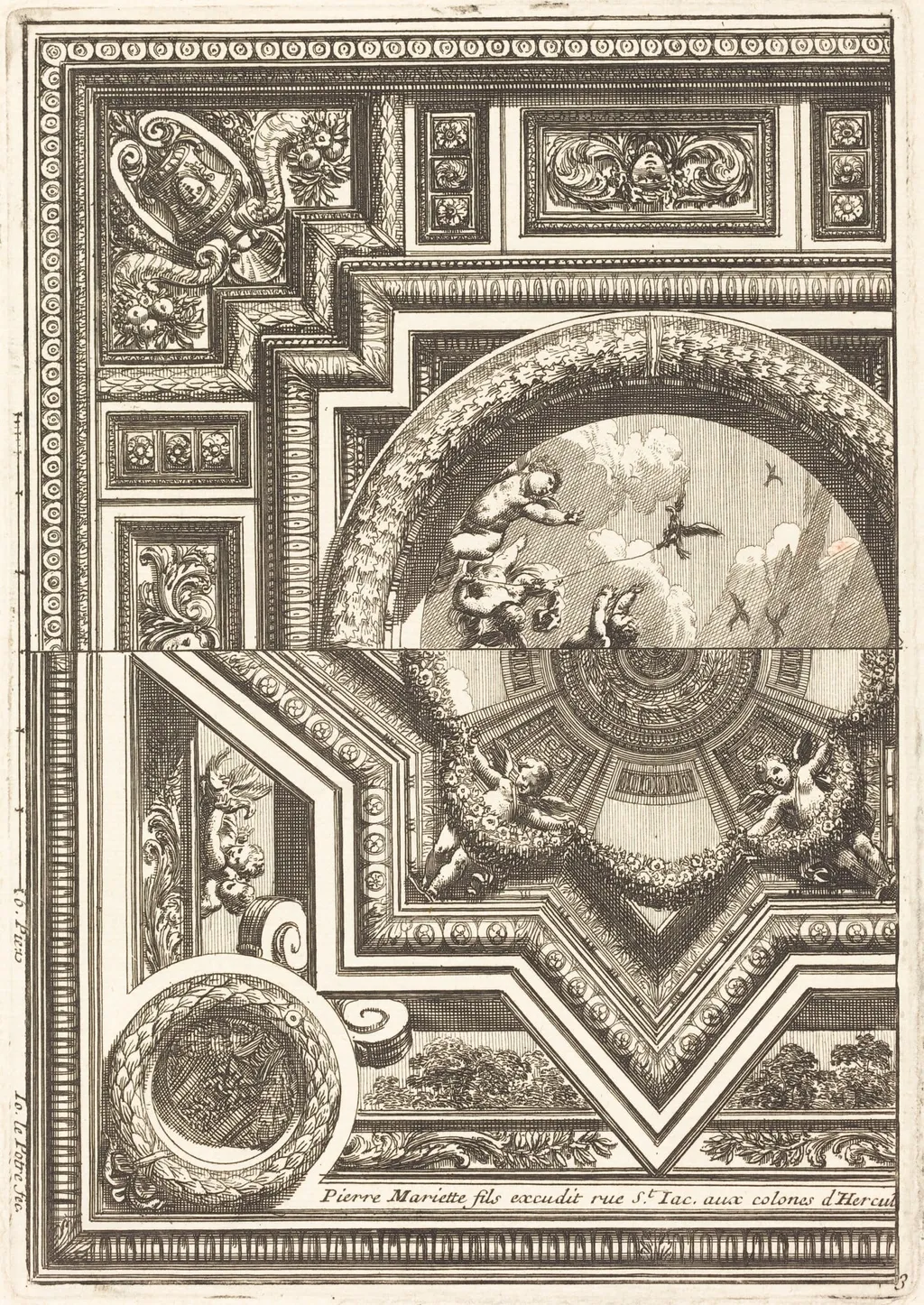
Quarts de plafons is an ink print by the Baroque artist Jean Lepautre. It dates from 1650 and is held in the collection of the National Gallery of Art.
About this work
Overview
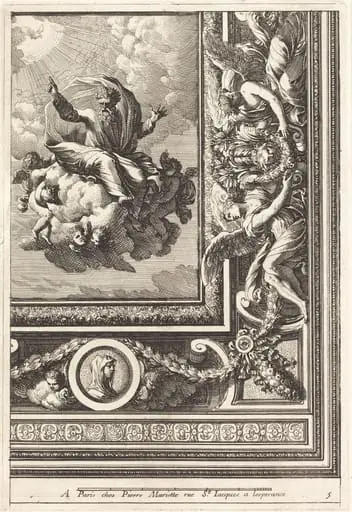
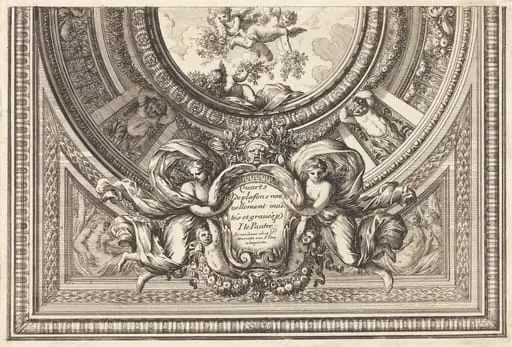
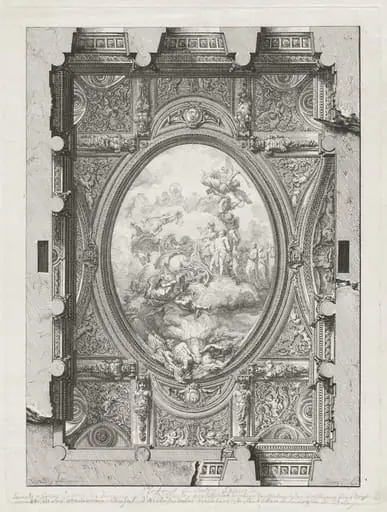
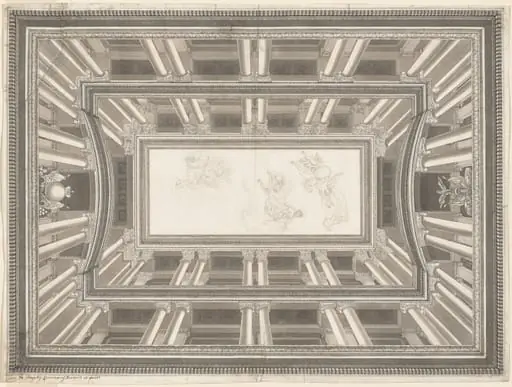
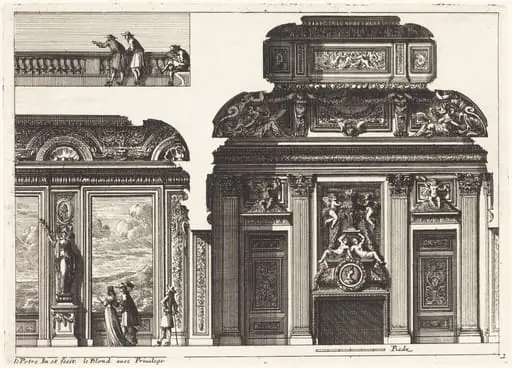
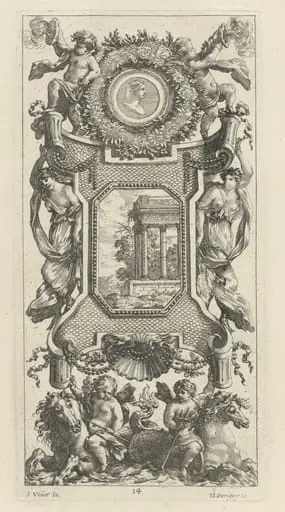
Quarts de plafons is an etching by Jean Lepautre, dated to around 1650. It presents a series of ornamental ceiling patterns, arranged in a grid-like composition. Each panel features intricate, repeating motifs that suggest architectural decoration, likely intended as templates for interior design. The work reflects the artist’s engagement with decorative arts rather than narrative imagery.
Subject & Meaning
The design elements depict stylized ceiling ornaments—swirling foliage, cartouches, and allegorical figures nestled within cloud-like forms.
The design elements depict stylized ceiling ornaments—swirling foliage, cartouches, and allegorical figures nestled within cloud-like forms. These are not literal scenes but idealized decorative motifs drawn from classical and Baroque traditions. The imagery functions as a visual catalog, offering models for ceiling painters and stucco workers, emphasizing symmetry and ornamental richness over storytelling.
Technique & Style
Lepautre employed etching, a printmaking method involving acid-bitten lines on a metal plate. The sharp, precise contours and dense cross-hatching create strong contrasts, enhancing the clarity of each ornamental detail. The style is meticulous and linear, prioritizing structural definition over tonal variation. This technique allowed for multiple impressions, making the designs accessible to artisans across France.
History & Provenance
Created during Lepautre’s early career in Paris, the print likely circulated among architects and decorators in the mid-17th century. Though no early ownership records are documented, its survival in institutional collections suggests it was valued as a reference tool. It was never intended as fine art for private collectors but as a practical resource within the decorative arts trade.
Context
In mid-1600s France, the court of Louis XIV fostered a demand for elaborate interior decoration. Lepautre’s etchings responded to this trend, providing standardized patterns for ceilings and walls. His work aligned with broader efforts to systematize design, bridging the gap between artistic vision and artisanal execution in royal and aristocratic residences.
Legacy
Quarts de plafons contributed to the dissemination of French ornamental vocabulary across Europe. Lepautre’s prints influenced subsequent generations of designers and engravers, embedding his motifs into the visual language of Baroque interiors. Though largely forgotten today, the work remains a key document in the history of applied arts and print culture.
Artist & collection