Artwork
A Landscape
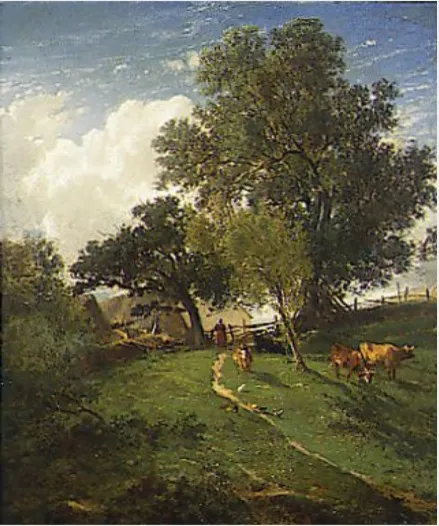
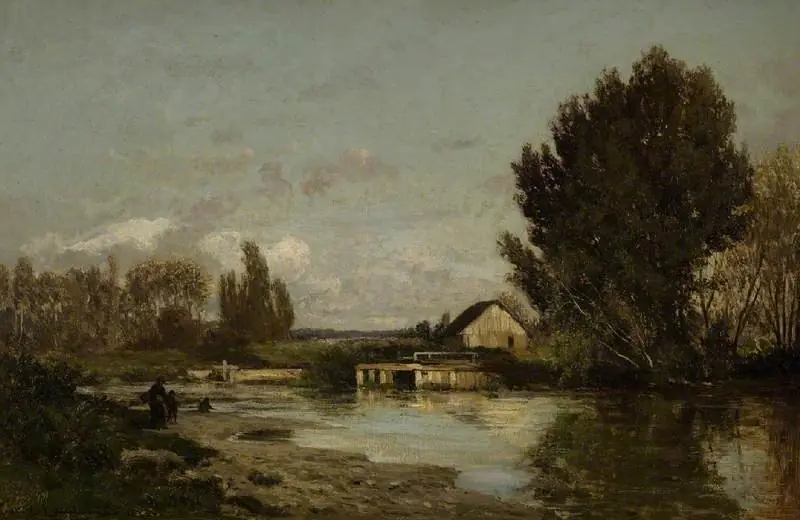
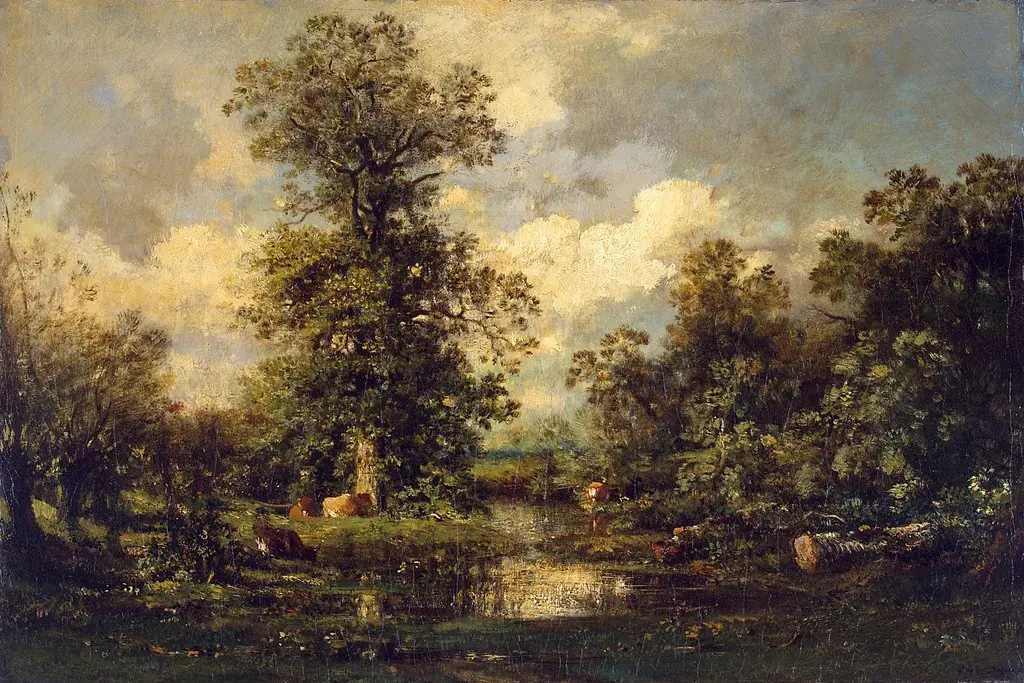
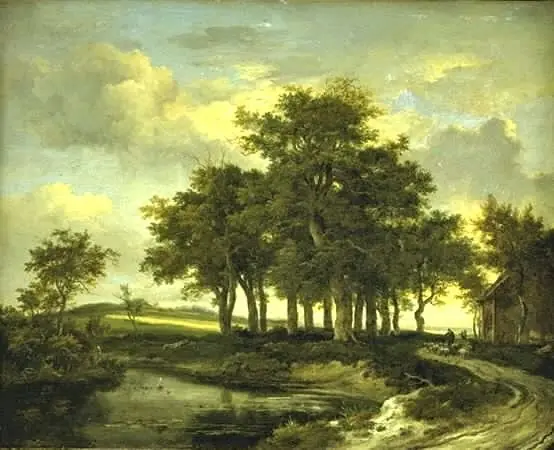
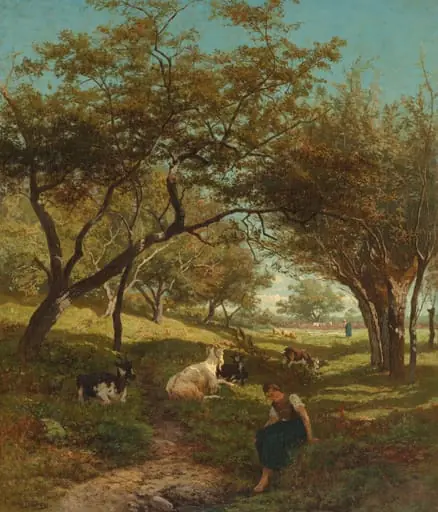
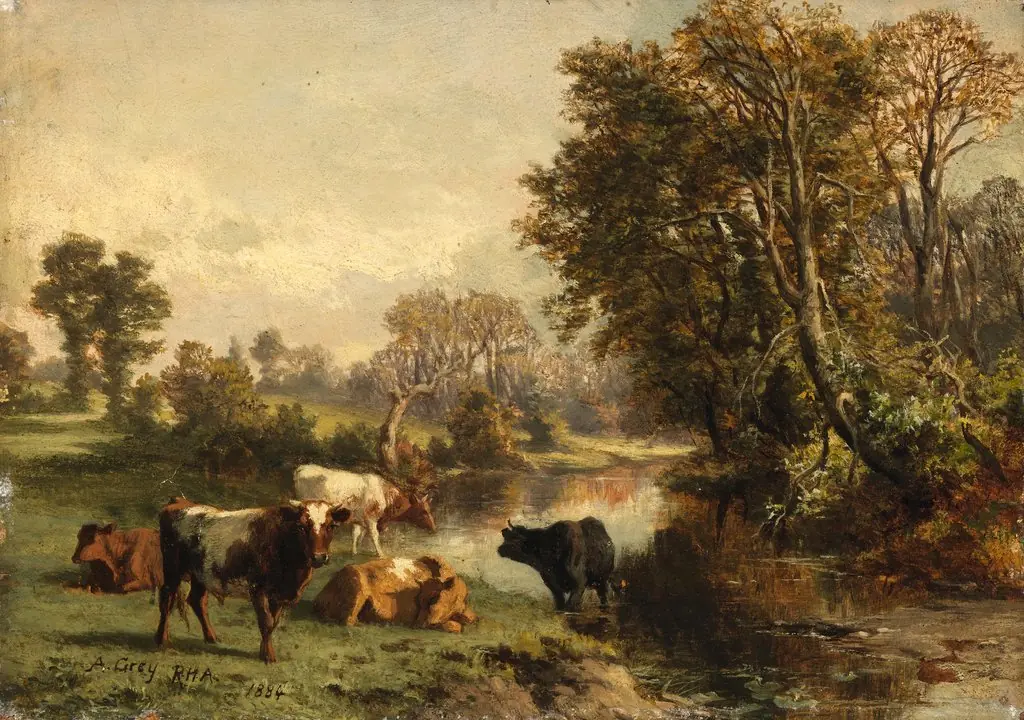
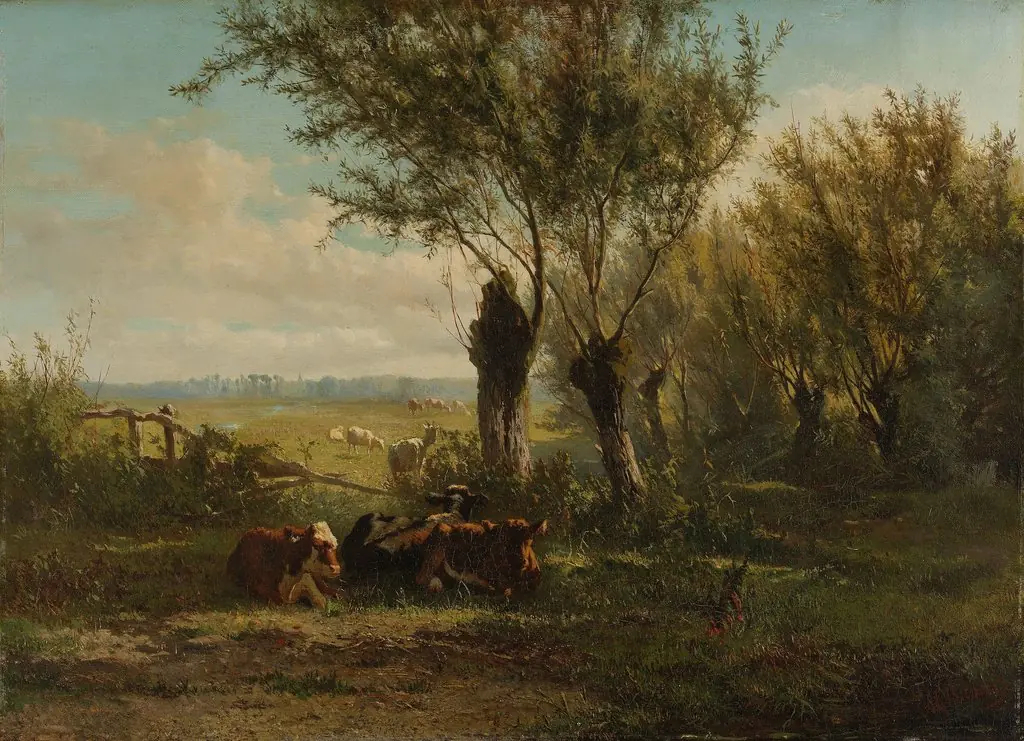
A Landscape is an oil painting by the Barbizon school artist Émile Lambinet. It dates from 1851 and is held in the collection of the National Gallery of Ireland.
About this work
Overview
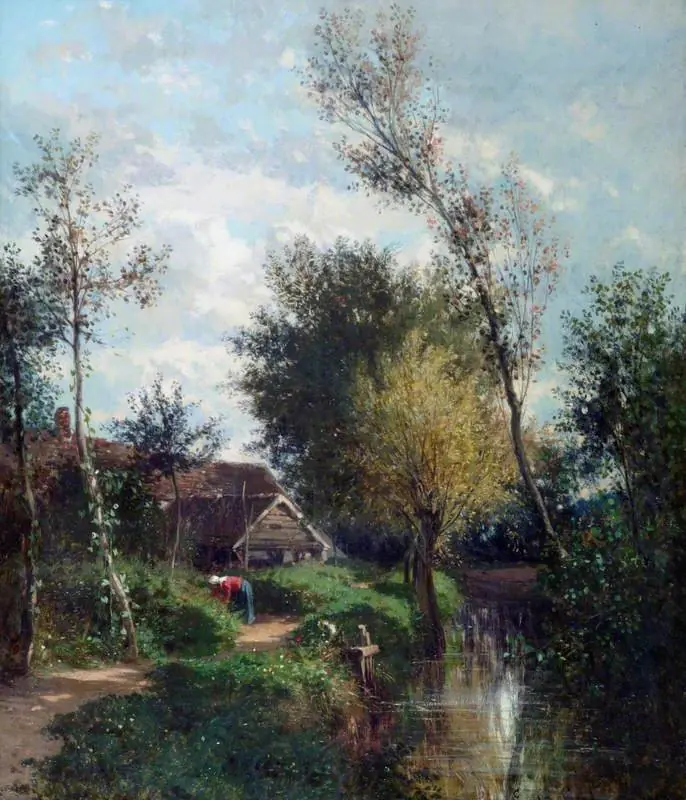
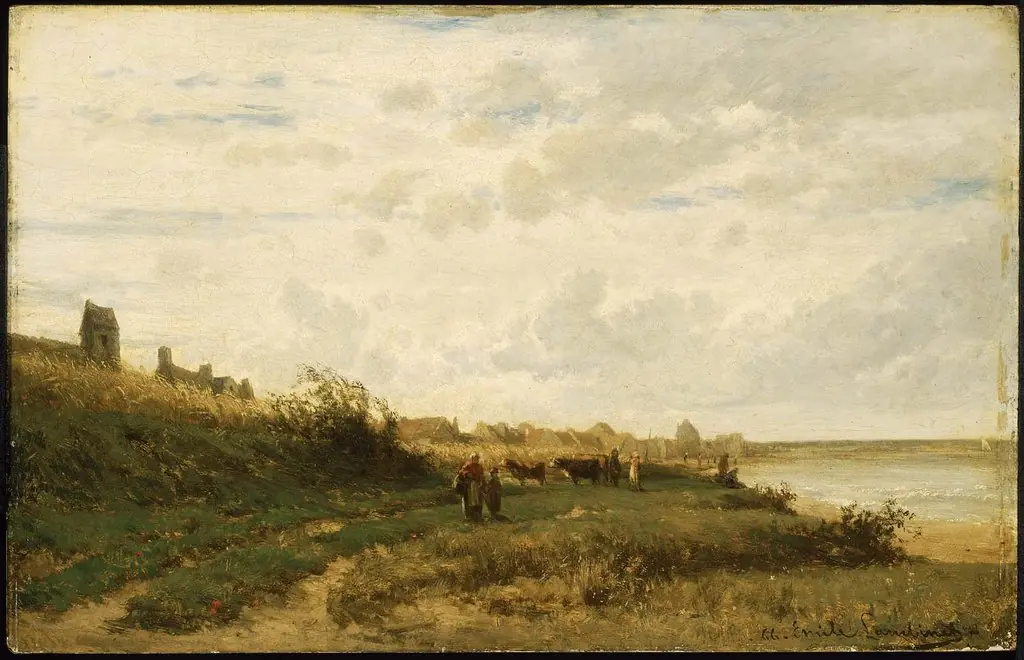
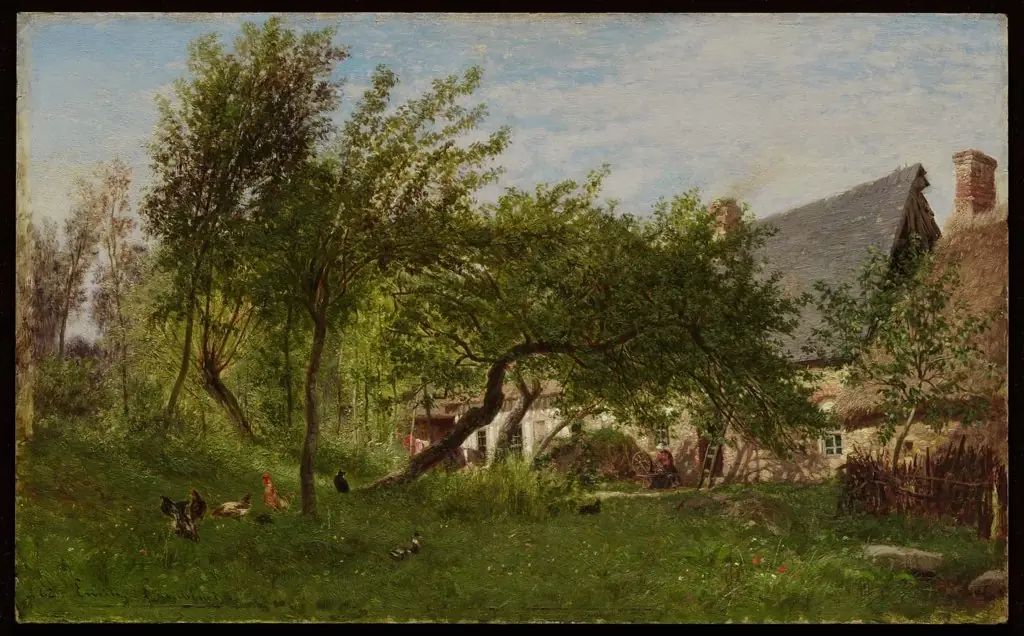
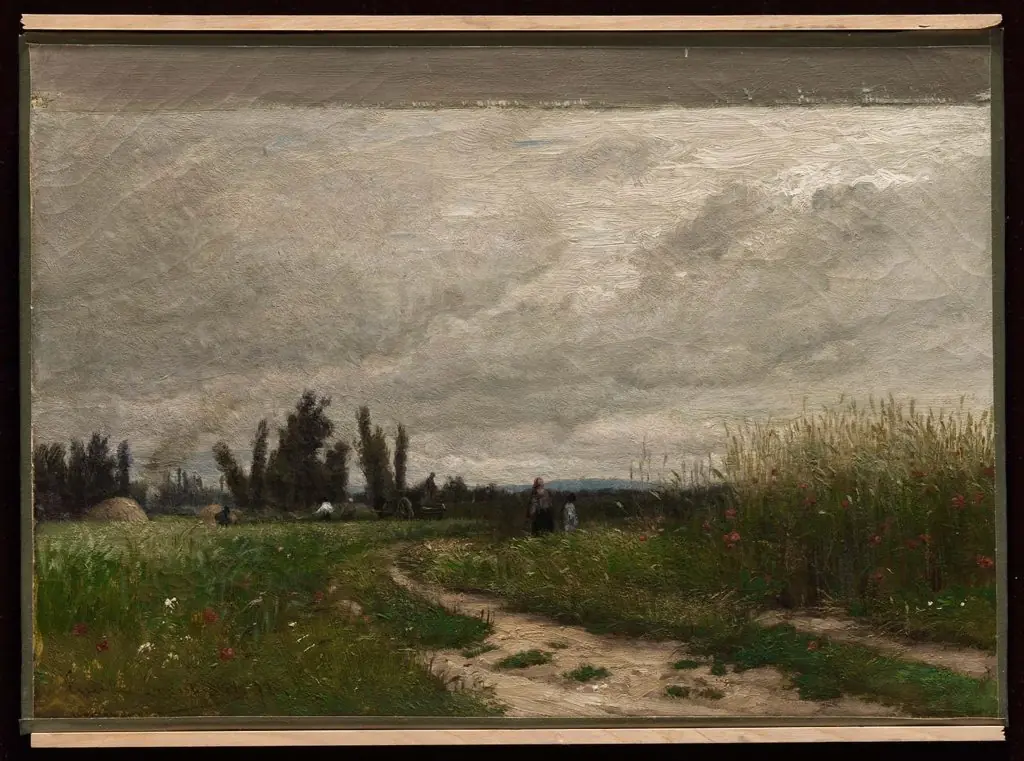
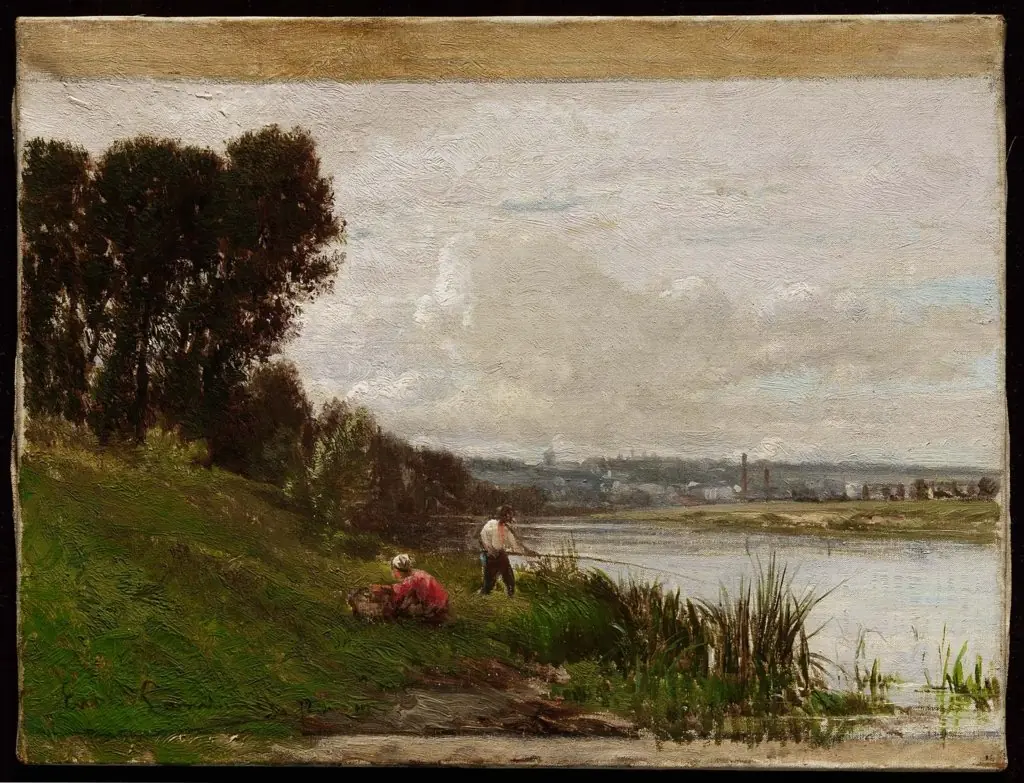
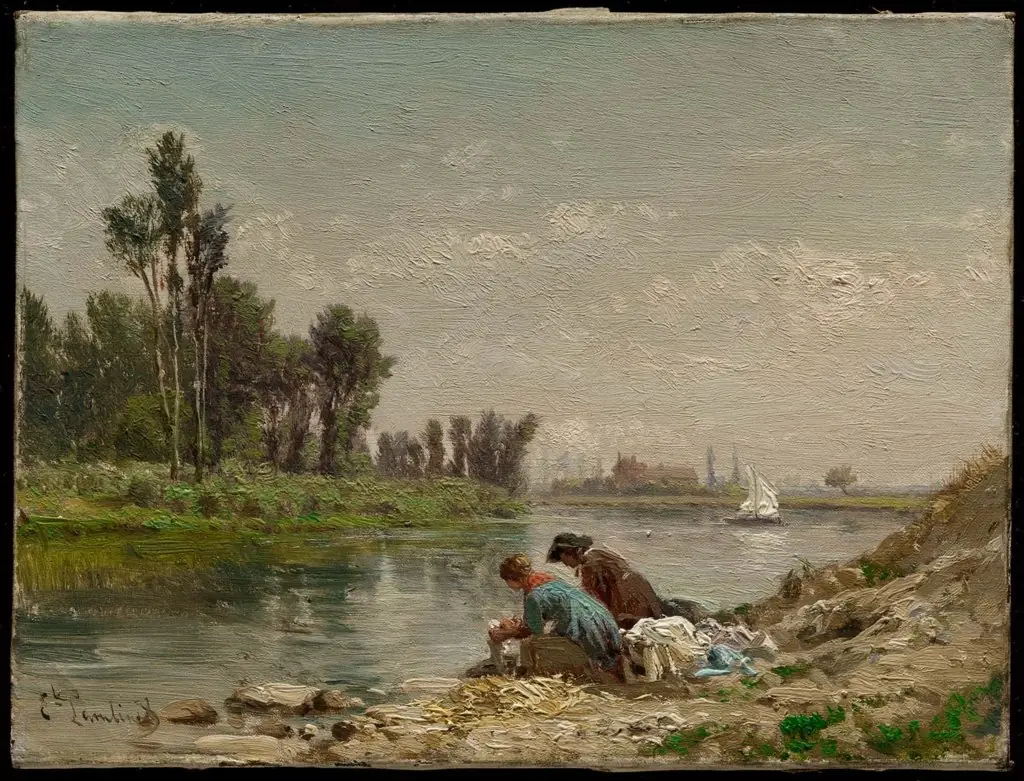
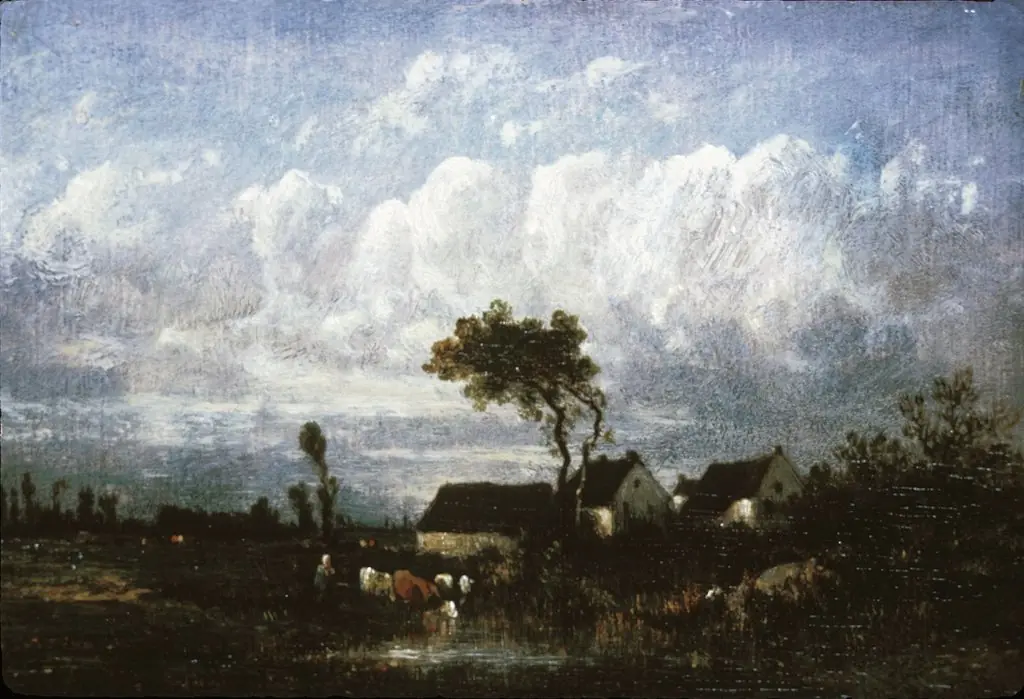
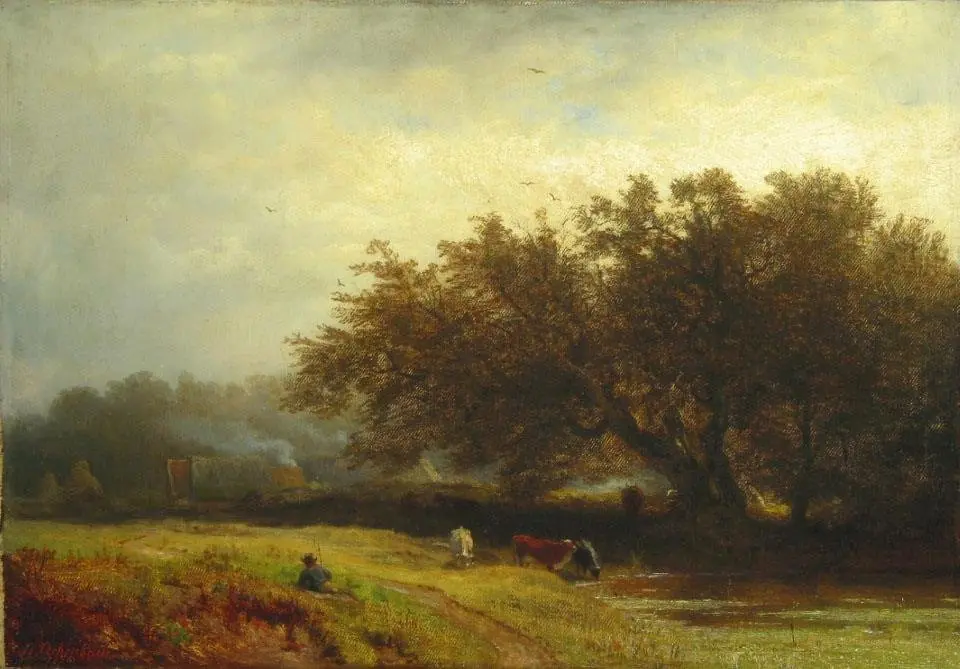
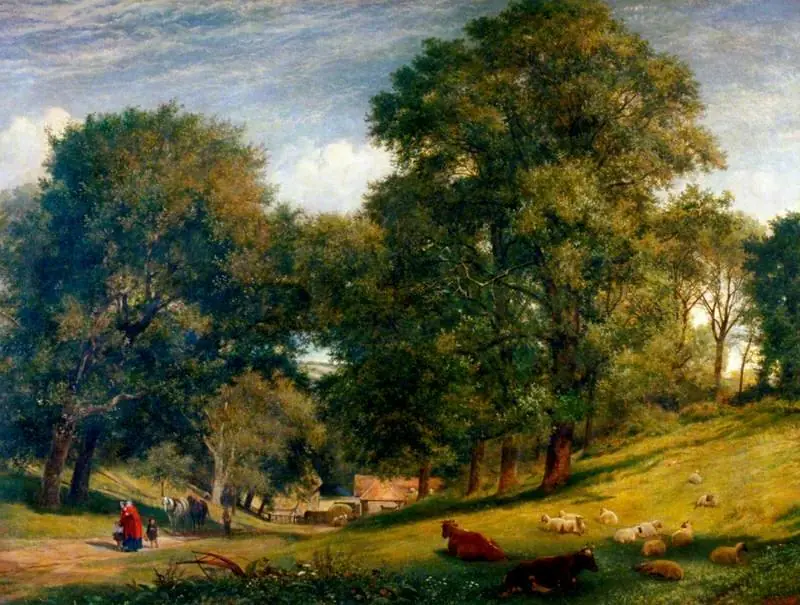
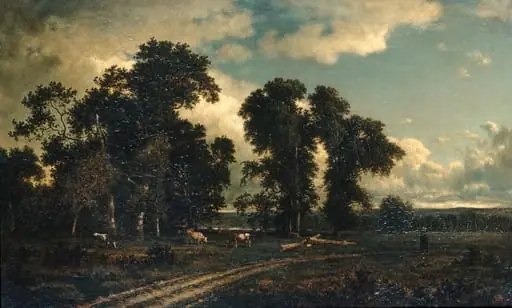
Émile Lambinet’s 1851 oil painting *A Landscape* presents a tranquil rural scene typical of mid‑nineteenth‑century French countryside art. The canvas features a dominant tree, verdant foliage, grazing cattle, and a clear sky, arranged in a balanced composition that guides the viewer’s eye toward the central trunk.
Subject & Meaning
The work depicts a peaceful agrarian setting, emphasizing the harmony between nature and pastoral life. The solitary tree anchors the composition, while the cows in the foreground introduce a subtle narrative of everyday farm activity, suggesting a timeless, unspoiled environment.
Technique & Style
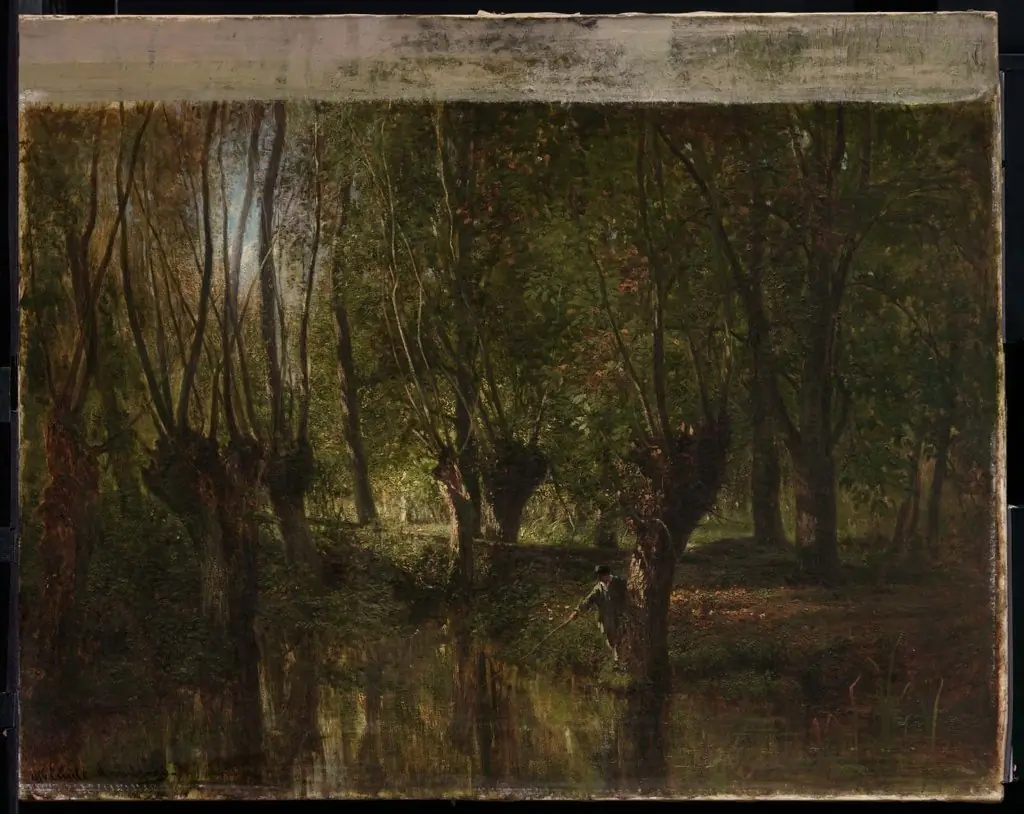
Executed in oil, Lambinet employs a palette ranging from vivid greens to warm earthy tones, creating depth through layered brushwork. The handling of light on the foliage and the atmospheric sky reflects the naturalistic approach of the Barbizon School, which favored direct observation of the landscape.
History & Provenance
Lambinet, a pupil of Horace Vernet and later of Jean‑Baptiste‑Camille Corot, spent much of his career in the Yvelines region, moving from Versailles to Bougival. *A Landscape* entered the collection of the National Gallery of Ireland, where it remains on display.
Context
Created during a period when French artists were turning away from academic conventions toward plein‑air realism, the painting aligns with the Barbizon movement’s focus on authentic depictions of rural France. Lambinet’s background in the Yvelines countryside provided direct inspiration for the scene.
Artist & collection
Artist
Émile Lambinet (1813, Versailles – 1877, Bougival) was a French painter of rural scenes. A student of Horace Vernet then Corot, he spent most of his life in Yvelines, at first in his birthplace of Versailles, then at Bougival from 1860.